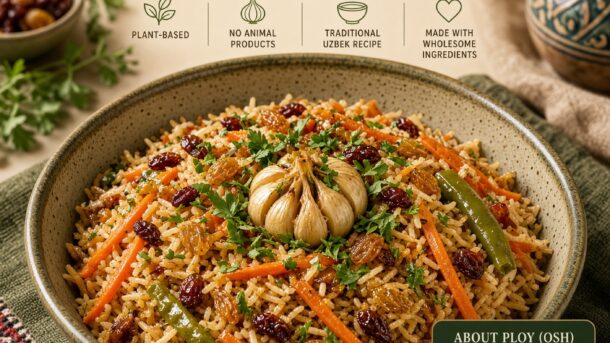
Fluffy, golden rice with long ribbons of sweet carrot, deeply caramelized onions, tender chickpeas, a whole head of soft roasted garlic, and warm cumin: this Vegan Uzbek Plov, also known as palov or osh, is the legendary national dish of Uzbekistan, made here entirely with plants.
Plov goes by many names across Central Asia. In Uzbekistan it is called osh or palov, and in Russian and many other languages it is plov. Traditionally it is cooked in a heavy cast-iron pot called a kazan, with lamb or beef, and served at weddings, celebrations, and Thursday family meals. This vegan version keeps everything that makes it special, the technique, the spices, and the rich, savory flavor, and replaces the meat with chickpeas and browned mushrooms.
The dish is built in layers. First comes the zirvak: onions are cooked in oil until deeply golden, then mushrooms, carrots, chickpeas, and spices are added and simmered into a sweet, savory base. The soaked rice is spread on top without stirring, hot water is added, and the pot is cooked until the liquid is absorbed. A whole head of garlic is tucked into the center, and the pot is covered and steamed over low heat until every grain is tender, separate, and fragrant.
The result is a one-pot meal that is rich and aromatic but not heavy. Serve it with a fresh tomato and onion salad (achichuk), pickles, and flatbread for a traditional meal.
This recipe is 100% vegan, dairy-free, gluten-free, and nut-free. It is easy to make soy-free as well.
Recipe Information
| Prep Time | Cook Time | Total Time | Servings | Calories |
|---|---|---|---|---|
| 25 mins (plus soaking) | 1 hr | 1 hr 25 mins | 6 | ~470 kcal each |
Ingredients
For the Plov
- 2 cups (400g) long-grain white rice (basmati or parboiled), rinsed until the water runs clear and soaked for 30 minutes
- ½ cup (120ml) neutral oil (sunflower or vegetable)
- 2 large yellow onions, thinly sliced into half-moons
- 8 oz (225g) cremini or button mushrooms, quartered
- 1 lb (450g) carrots (about 4 large), peeled and cut into thin matchsticks
- 1 can (15 oz / 400g) chickpeas, drained and rinsed (or 1½ cups cooked)
- 1 tbsp cumin seeds, lightly crushed
- 1 tbsp ground coriander
- 1 tsp ground turmeric (optional, for color)
- 1 tsp black pepper
- 2 tsp salt, plus more to taste
- 1 head whole garlic, outer papery skin removed, top trimmed
- 1 small dried red chili or ½ tsp chili flakes (optional)
- 3½ cups (840ml) boiling water, divided
To Finish
- 2 tbsp barberries or raisins (optional)
- Fresh dill or parsley
- A few thin slices of raw onion
To Serve
- Achichuk (sliced tomato and onion salad)
- Pickles
- Flatbread (lepeshka)
- Plain vegan yogurt
Optional Additions
- Dried apricots or raisins
- Whole peeled chickpeas for extra bulk
- Fried onion rings on top
Instructions
- Soak the rice. Rinse the rice several times until the water runs clear. Cover with warm salted water and soak for 30 minutes, then drain well.
- Brown the onions. Heat the oil in a large, heavy pot or Dutch oven (5–6 quarts) over medium-high heat until it shimmers. Add the onions and cook for 12–15 minutes, stirring often, until deeply golden brown.
- Add the mushrooms. Add the mushrooms and cook for 6–8 minutes until browned and their liquid has evaporated.
- Add carrots and chickpeas. Stir in the carrots and chickpeas and cook for 8–10 minutes, until the carrots start to soften and caramelize.
- Season the zirvak. Add the cumin, coriander, turmeric, pepper, salt, and chili. Pour in 1 cup of boiling water. Reduce the heat and simmer, uncovered, for 15 minutes until the base is rich and thick.
- Add the rice. Drain the rice and spread it evenly over the vegetables without stirring. Tuck the head of garlic into the center and sprinkle the barberries over the rice.
- Add the water. Carefully pour the remaining 2½ cups of boiling water around the edge of the pot, so it does not disturb the layers. The water should be about ½ inch (1cm) above the rice. Season with a little more salt if needed.
- Boil and steam. Cook over medium-high heat, uncovered, for 8–10 minutes without stirring until most of the water has been absorbed and small holes appear on the surface.
- Cover. Gather the rice into a mound, poke several holes in it with the handle of a wooden spoon, and cover the pot tightly with a lid. Cook over the lowest heat for 20 minutes.
- Rest. Turn off the heat and let the plov rest, covered, for 10 minutes.
- Mix and serve. Remove the garlic. Gently fold the rice and vegetables together from the bottom up. Transfer to a large platter, place the garlic in the middle, and garnish with dill and sliced onion.
Pro Tips for the Best Plov
- Rinse and soak the rice. This keeps the grains separate and fluffy.
- Do not skimp on the oil. Plov needs it for authentic flavor and texture.
- Brown the onions slowly until deep golden. This is where the color and sweetness come from.
- Cut the carrots into matchsticks, not shreds, so they hold their shape.
- Do not stir after adding the rice. The layers steam properly when left alone.
- Pour boiling water slowly around the edge to avoid disturbing the rice.
- Keep the lid tight and the heat low while the rice steams.
- Let it rest before mixing, which firms up the grains.
A Few Notes on Ingredients
Long-grain rice absorbs the broth without turning sticky. In Uzbekistan, a special devzira rice is used, but basmati or parboiled rice works well. Yellow or orange carrots are traditional, though any carrots work. Cumin is the signature spice of plov, and the whole head of garlic steams until soft and sweet, ready to squeeze onto the rice.
Barberries add a tart note, and raisins are a good, sweeter substitute.
Flavor Variations
- Wedding Plov: Add dried apricots and raisins for a sweet-savory version.
- Mushroom-Heavy Plov: Double the mushrooms and skip the chickpeas.
- Lentil Plov: Replace the chickpeas with cooked brown lentils.
- Lower-Oil Plov: Reduce the oil to ¼ cup, though the texture will be less rich.
- Instant Pot Plov: Layer as directed and pressure cook on high for 6 minutes with a natural release.
Nutritional Highlights (Per Serving)
| Calories | Protein | Carbs | Fiber | Fat |
|---|---|---|---|---|
| ~470 kcal | 9g | 70g | 6g | 17g |
Storage
- Refrigerator: Store in an airtight container for up to 4 days.
- Reheating: Sprinkle with a little water, cover, and warm in a pan or microwave.
- Freezer: Freeze in portions for up to 2 months. Thaw overnight and reheat with a splash of water.
- Leftovers: Plov is delicious cold, or fried in a pan until crispy.
Frequently Asked Questions
What is the difference between plov, palov, and osh?
They are different names for the same dish. Osh and palov are used in Uzbekistan, and plov is the Russian spelling used throughout Central Asia and Eastern Europe.
Why add a whole head of garlic?
It steams in the center and becomes soft, sweet, and spreadable, and it perfumes the rice.
Can I use basmati rice?
Yes. Rinse and soak it as directed. It cooks a little faster, so check it at 15 minutes of steaming.
What can I use instead of a kazan?
A heavy-bottomed Dutch oven or wide pot with a tight lid works well.
How do I keep the rice from getting mushy?
Do not stir after adding the rice, use the correct amount of water, and keep the heat low during steaming.
Is this the same as pilaf?
Plov is a type of pilaf. This version is distinctive for its zirvak base, layered cooking method, and cumin-garlic flavor.
Tried this recipe? Leave a comment below and let us know how it turned out! Tag us on Instagram and Facebook — we love seeing your plant-powered creations. Browse all recipes on Easy Vegan Recipes — new recipes posted every single week!