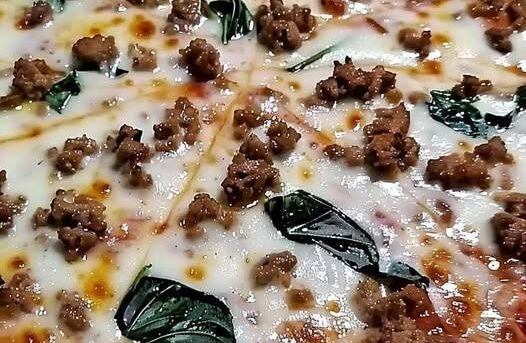
vegan pizza dough

Vegan Pizza Recipes: Homemade Crust, Melty Cheese and the Best Toppings

vegan pizzas recipe

Pizza night does not need cheese from a dairy case. With a good crust, a bright tomato sauce, and a melty vegan mozzarella, plant-based pizza is every bit as satisfying as the classic. This guide gathers our best Vegan Pizza Recipes in one place, and walks you through the choices that matter most: the crust, the cheese, the sauce, and the toppings.

Whether you want a classic Margherita-style pie with homemade stretchy cashew mozzarella, a loaded mushroom pizza, or a fast curry-spiced naan pizza for a weeknight, you will find a recipe below. Each one has a full step-by-step post, so tap through to the one that matches your mood.

Most vegan pizza problems come down to the same few things: a soggy middle, cheese that will not melt, or a crust that is pale and flat. The tips in this guide fix all three.

Many of these recipes contain wheat (the crust), and some contain tree nuts (cashews) or soy. Please check labels on your vegan cheese, flour, and yeast-free or ready-made crusts, and read each recipe for its own allergen notes.


Our Vegan Pizza Recipes

Vegan Mozzarella Pizza with Homemade Stretchy Cashew Mozzarella

Our classic Margherita-style pizza. The mozzarella is made from cashews and tapioca starch, and it melts, bubbles, and stretches. Best when you want the cheese to be the star.

Vegan Tomato Mozzarella Garlic Mushroom Pizza with Homemade Crust

A loaded pizza with garlicky tomato sauce, sliced tomatoes, and deeply browned garlic mushrooms. Best when you want a hearty, savory, meaty-tasting pie.

Vegan Curried Jackfruit and Chickpea Naan Pizza

A fast, flavorful pizza on naan with curried jackfruit, chickpeas, and a cool garlic yogurt sauce. Best for a quick weeknight dinner.

Homemade Vegan Pizza

Our all-round homemade pizza, with a crisp, blistered base, melty vegan cheese, and a generous load of toppings. Best when you want a proper pizza-night pie from scratch.

Vegan Garlic and Spinach Pizza on a Cottage Cheese Crust

A no-yeast, protein-rich crust made with vegan cottage cheese, topped with a garlicky white sauce, wilted spinach, and vegan mozzarella. Best for a quick weeknight pizza with no rising time.

Vegan Eggplant Pizzas

Thick roasted eggplant rounds used as the base and topped like mini pizzas, with no dough at all. Best when you want a low-carb, veggie-packed pizza fix.

Tomato Basil Flatbread with Vegan Mozzarella

A thin, cracker-crisp flatbread with charred edges, a slow-cooked tomato sauce, vegan mozzarella, and fresh basil. Best for summer, or when you want something lighter than a full pizza.

Crispy Baked Vegan Pizza Chips

Crunchy chickpea-flour chips with tomato, garlic, and Italian herbs that taste like pizza night in snack form. Naturally gluten-free and ready in about 35 minutes. Best for snacking or a party bowl.

Flatbread and Bread Bases to Try

If you want a different base, these doughs also work as pizza bases or pizza-night sides:


How to Choose Your Crust

  • Homemade yeast dough: The best chew and blistered edges. It takes about an hour to rise, or you can rest it overnight in the fridge for deeper flavor.
  • Naan or flatbread: The fastest option. Bake until crisp and top lightly.
  • Store-bought dough: Many are vegan, but check the label for dairy, honey, or egg.
  • Pre-baked crusts: Convenient, but check the ingredients.
  • No-yeast flatbread dough: Good when you want pizza without waiting for a rise.

How to Choose Your Cheese

  • Homemade cashew mozzarella: The best stretch and melt. It needs cashews and tapioca starch.
  • Store-bought vegan mozzarella shreds: Quick and easy. Melting varies by brand, so check the label.
  • Nutritional yeast: Not a melty cheese, but it adds savory, cheesy flavor on top.
  • Cheese-free pizza: Load up on sauce, roasted vegetables, olives, and fresh herbs, and finish with olive oil.

Tips for Better Vegan Pizza

  • Preheat your oven as hot as it will go, and heat the pizza stone or baking sheet too.
  • Cook watery toppings first. Mushrooms, zucchini, and spinach should be sautéed so they do not make the pizza soggy.
  • Use a thin layer of sauce. Too much makes the middle wet.
  • Leave a 1-inch border for a puffy crust.
  • Brush the crust edge with olive oil for color and crunch.
  • Add fresh basil, arugula, or herbs after baking.
  • Let the pizza rest for 2 minutes before slicing so the cheese sets.

Topping Ideas

  • Classic: Tomato sauce, vegan mozzarella, fresh basil
  • Mushroom: Garlic mushrooms, caramelized onion, thyme
  • Veggie: Bell peppers, red onion, olives, spinach
  • Mediterranean: Artichokes, sun-dried tomatoes, olives, arugula
  • Spicy: Jalapeños, red pepper flakes, hot honey-style maple chili drizzle
  • White pizza: Olive oil, garlic, spinach, vegan ricotta

Storage

  • Refrigerator: Store leftover slices for up to 3 days.
  • Freezer: Freeze baked slices for up to 2 months.
  • Reheating: Reheat in a hot skillet or oven for crisp crust. The microwave makes it soft.
  • Make ahead: Dough can be refrigerated for up to 2 days, and sauce for up to 5 days.

Frequently Asked Questions

Is pizza dough vegan?

Usually yes. Basic dough uses flour, water, yeast, salt, and oil. Check store-bought dough for dairy, honey, or egg.

What is the best vegan cheese for pizza?

Homemade cashew mozzarella melts and stretches well. Store-bought shreds vary by brand, so try a few.

How do I keep the crust from getting soggy?

Use a hot oven, thin sauce, and precooked watery vegetables.

Can I make vegan pizza without cheese?

Yes. Use sauce, roasted vegetables, herbs, and a drizzle of olive oil.

Can I make the dough ahead?

Yes. Refrigerate it for up to 2 days.

Which recipe should I start with?

For a classic, start with the Vegan Mozzarella Pizza. For a quick dinner, try the Curried Jackfruit Naan Pizza.


Tried these recipes? Leave a comment below and let us know how they turned out! Tag us on Instagram and Facebook — we love seeing your plant-powered creations. Browse all recipes on Easy Vegan Recipes — new recipes posted every single week!
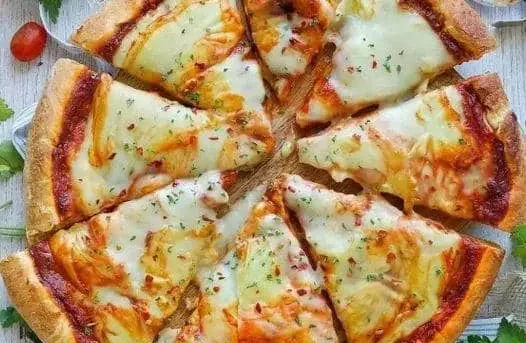
Homemade Vegan Pizza

homemade vegan pizza

There is a version of homemade pizza that most people have made at least once — the one where the dough is too thick or too thin, the base is pale and soft rather than crisp and blistered, the vegan cheese refuses to melt and sits on top in pale, rubbery chunks, and the whole thing arrives at the table looking nothing like what you had in mind. And then there is this version. The dough in this recipe uses a short, room-temperature proof and a technique that produces a base with genuine chew, a slight crisp on the underside, and the faint bubbling and char at the edges that signals a pizza cooked at the right temperature. The sauce is simple, uncooked, and bright. The vegan mozzarella is grated from a firm block at home — not pre-grated — so it melts cleanly and evenly across the surface without the anti-caking agents that prevent pre-grated vegan cheese from behaving like cheese in the oven. This homemade vegan pizza is 100% plant-based, dairy-free, and egg-free. It makes 2 large pizzas serving 4. It is on the table in under 2 hours including the dough proof, and the active work is less than 30 minutes. This is the pizza recipe you make once and then make every week.

The technique is the high-heat-and-preheated-surface method. The defining quality of a great pizza base — the crispness on the underside, the open, airy crumb, the blistered and charred edge — is produced by a combination of high heat and a hot surface that the dough contacts immediately on placement. A domestic oven at its standard 180–200°C setting produces a pizza that bakes slowly and evenly — which is exactly wrong for pizza, which needs rapid, intense heat from below and above simultaneously to cook the thin base through before the toppings are overdone and the edge is dried out rather than blistered. The high-heat-and-preheated-surface method exploits the maximum temperature available in a domestic oven (240–250°C, or as high as the oven will go) and uses a heavy baking tray or pizza stone preheated inside the oven for at least 30 minutes before baking — so the moment the pizza is slid onto the surface, the underside of the dough contacts extreme heat and begins to crisp and cook from below while the oven heat attacks from above. This rapid bilateral cooking — from the preheated surface below and the full-blast oven above — is what produces the crisp-based, properly blistered pizza in a domestic oven that would otherwise require a wood-fired oven to achieve. The dough itself is made slightly wetter than most home pizza doughs (a hydration of approximately 62–65%) because a wetter dough produces more steam in the oven, which is what creates the open, bubbly crumb structure at the crust edge; a drier dough produces a denser, more bready edge. The vegan mozzarella — grated from a firm block at the last minute — is added halfway through the bake rather than at the start, so the base has 5 minutes of undiluted top-oven heat to begin blistering before the cheese is added and the final 6–8 minutes melt it completely without overcooking the base.

This recipe makes 2 large pizzas, serving 4.


Recipe Information

Dough ProofPrep TimeBake TimeTotalServingsCalories
1 hr25 mins12–14 mins~1 hr 40 mins4~520 kcal

Ingredients

For the Pizza Dough (Makes 2 Bases)

  • 400g (3⅓ cups) strong white bread flour (bread flour) — bread flour only; its higher protein content (12–13%) develops a gluten network strong enough to trap the gas bubbles produced by the yeast and give the crust its chew; plain flour produces a flat, cracker-like base
  • 7g (1 sachet / 2¼ tsp) fast-action dried yeast (instant yeast)
  • 1 tsp fine sea salt
  • 1 tsp caster sugar — feeds the yeast during the initial activation
  • 1 tsp olive oil — plus extra for greasing
  • 260ml (1 cup + 1 tbsp) warm water — approximately 38–40°C; too hot kills the yeast; too cold slows the proof significantly; it should feel comfortably warm on the inside of your wrist, not hot

For the No-Cook Tomato Sauce

  • 1 × 400g tin good-quality chopped tomatoes — or passata; the quality of the tomatoes makes a significant difference to the finished pizza; use the best you can find
  • 2 cloves garlic, finely grated
  • 1 tbsp olive oil
  • 1 tsp dried oregano
  • ½ tsp fine sea salt
  • ½ tsp caster sugar — balances the acidity of the tomatoes
  • ¼ tsp chilli flakes — optional
  • Fresh basil — a few leaves torn and stirred through at the end

For the Toppings (Per Pizza)

  • 80–100g firm vegan mozzarella block — grated at home on the large holes of a box grater immediately before use; firm block-style only, never pre-grated (anti-caking agents prevent melting) and never fresh ball-style (too wet for pizza); the two main brands that grate and melt reliably are Violife and Sheese mozzarella-style blocks
  • Additional toppings of your choice — suggestions below; all toppings should be prepared and ready before the dough comes out of the oven

Suggested Toppings

  • Thinly sliced mushrooms — cremini, chestnut, or portobello; slice thinly so they cook through in the short bake time
  • Sliced roasted red peppers — from a jar, drained and patted dry; wet toppings make the base soggy
  • Marinated artichoke hearts — drained and roughly torn
  • Sun-dried tomatoes — oil-packed, drained
  • Pitted Kalamata olives, halved
  • Thinly sliced red onion
  • Capers — rinsed
  • Cherry tomatoes, halved — added in the last 3–4 minutes of baking so they blister without releasing too much liquid
  • Fresh rocket (arugula) — scattered over immediately after the pizza comes out of the oven; never baked
  • Fresh basil — torn and scattered after baking

Instructions

  1. Make the dough. In a large bowl, combine the bread flour, yeast, salt, and sugar. Make a well in the centre. Pour in the warm water and olive oil. Mix with a fork until a shaggy dough forms, then turn out onto a lightly floured surface and knead for 8–10 minutes until the dough is smooth, elastic, and springs back slowly when poked — it should be slightly tacky but not sticky. If using a stand mixer with a dough hook, knead on medium speed for 6 minutes. Form into a ball.
  2. First proof. Lightly oil a large bowl and place the dough ball inside. Cover tightly with cling film or a clean damp tea towel. Leave to rise at room temperature for 1 hour, or until roughly doubled in size. If your kitchen is cold (below 20°C), place the covered bowl in the oven with just the light on, or near a warm hob.
  3. Preheat the oven — and the surface. Place a heavy baking tray (or pizza stone if you have one) upside-down on the highest shelf of the oven. Preheat to the maximum temperature your oven will reach — 240–250°C fan / 260°C conventional / 500°F. Allow to preheat for a minimum of 30 minutes after reaching temperature. The surface must be genuinely scorching hot.
  4. Make the tomato sauce. While the dough proofs, combine all the sauce ingredients except the basil in a bowl and stir to combine. Leave for 15 minutes for the flavours to meld, then stir through the torn basil. The sauce should be slightly thick — if the tinned tomatoes are very liquid, drain off some of the liquid before mixing. Do not cook the sauce.
  5. Divide and shape the dough. Once the dough has doubled, punch it down gently to release the gas. Divide into 2 equal pieces. On a lightly floured surface, stretch and shape each piece into a rough circle approximately 28–30cm (11–12 inches) in diameter — use your hands rather than a rolling pin; a rolling pin presses out the gas bubbles in the dough and produces a flatter, denser edge. If the dough springs back as you stretch it, leave it to rest for 5 minutes and try again — the gluten is relaxing.
  6. Transfer to baking parchment. Place each shaped base on a piece of baking parchment cut to fit the tray. The parchment is the delivery mechanism — you will slide the pizza and its parchment directly onto the preheated surface.
  7. Sauce and pre-top. Spoon 3–4 tablespoons of the tomato sauce onto each base and spread with the back of a spoon, leaving a 2cm border at the edge for the crust. Add any toppings except the cheese, cherry tomatoes, and any fresh herbs — these go on later.
  8. Bake — high-heat stage. Carefully slide the pizza (still on its parchment) onto the preheated upside-down tray using a second flat baking tray or a pizza peel as a paddle. Bake for 5–6 minutes until the edges are beginning to puff and colour and the base is visibly setting.
  9. Add the cheese — mid-bake. Remove the oven shelf carefully and scatter the freshly grated vegan mozzarella evenly over the pizza surface. Add cherry tomatoes if using. Return to the oven for a further 6–8 minutes until the cheese is fully melted and beginning to blister in places, the crust is deep golden, and the underside (lift the edge with a spatula to check) is crisp and golden-brown with some char.
  10. Finish and serve. Remove from the oven. Scatter immediately with fresh basil, rocket, or any fresh herb toppings. Slice and serve at once — pizza waits for no one.

Pro Tips

  • Grate the mozzarella yourself, immediately before use — this is the most important single instruction in the recipe; pre-grated vegan mozzarella is coated in anti-caking agents (usually potato starch or rice flour) that form a physical barrier between the cheese particles, preventing them from melting together into the smooth, fluid, slightly blistered sheet that characterises a properly topped pizza; a firm mozzarella block grated at home arrives on the pizza free of that barrier, melts cleanly from the first minutes in the oven, and pools and bubbles in the way that pizza cheese should; do not substitute and do not grate in advance.
  • Preheat the surface for at least 30 minutes after the oven reaches temperature — an oven that has been at 250°C for 5 minutes has hot air but a relatively cold oven surface; thermal mass takes time to build; a pizza stone or heavy upside-down tray that has been in the oven for 30 minutes after reaching temperature is genuinely scorching; placing the pizza on it produces an immediate sizzle and a crust that begins to crisp from the first second of contact; a surface preheated for less time produces a pale, soft underside.
  • Keep the sauce thin and the toppings dry — too much sauce makes a soggy base that no amount of high heat can fully rescue; use 3–4 tablespoons per base, spread thinly; wet toppings (tinned artichokes, roasted peppers) must be drained and patted dry before use; fresh vegetables with high water content (zucchini, courgette) should be salted and pressed or pre-roasted before topping; every additional gram of moisture on the pizza surface works against the crisp base the technique is designed to produce.
  • Stretch, don’t roll — a rolling pin compresses the gas bubbles from the first proof into the dough and eliminates the open, airy structure that produces the chewy, blistered crust edge; hand-stretching preserves those bubbles and allows the edge to puff dramatically in the oven; the base does not need to be perfectly round; an irregular, hand-stretched shape is the mark of a pizza made correctly, not a mistake.

Pizza: From the Flatbreads of Ancient Naples to Every Kitchen in the World

Pizza as it is understood today — a yeasted flatbread base topped with tomato sauce and cheese and baked at high heat — is a product of a very specific place and a very specific period: the street food stalls of 18th-century Naples, where flatbreads topped with lard, salt, and anchovies had been sold to the city’s poor (the lazzaroni) since at least the 16th century, and where the gradual adoption of the tomato — introduced to Italy from the New World in the 16th century and initially regarded with profound suspicion as a potentially poisonous relative of deadly nightshade — transformed the flatbread from a vehicle for preserved meat into the tomato-based dish that would eventually conquer the world. The tomato’s rehabilitation in Italian cooking began in Naples and spread northward slowly over the 17th and 18th centuries; by the early 19th century, pizza marinara (tomato, garlic, olive oil, oregano) and pizza margherita — reportedly invented in 1889 by Neapolitan pizzaiolo Raffaele Esposito and named in honour of Queen Margherita of Savoy, whose visit to Naples prompted Esposito to create a pizza in the colours of the Italian flag (red tomato, white mozzarella, green basil) — had established the canonical form of the Neapolitan pizza that remains the reference point for every pizza made since. The globalisation of pizza is almost entirely the story of Italian immigration to the United States. The first documented pizzeria in America — Lombardi’s, on Spring Street in Manhattan — opened in 1905, founded by Gennaro Lombardi, a Neapolitan immigrant who had been selling pizza from his grocery store since 1897. The pizza that Italian-American communities developed over the following decades — thicker-crusted, more heavily topped, adapted to American ingredients and American portion sizes — diverged significantly from its Neapolitan origins, but carried the essential principle intact: dough, tomato, cheese, heat. The vegan pizza in this recipe stands in that lineage — from the street stalls of 18th-century Naples to a domestic oven at its maximum setting — with nothing changed except the cheese.


Flavor Variations

  • BBQ Vegan Chicken Pizza: Replace the tomato sauce with 4 tablespoons of your favourite vegan BBQ sauce per base. Top with sliced vegan chicken pieces (or shredded jackfruit cooked with BBQ sauce and smoked paprika), thinly sliced red onion, and sliced pickled jalapeños. Add the grated vegan mozzarella and bake as directed. Finish with a drizzle of additional BBQ sauce and fresh coriander. This is the crowd-pleasing, non-negotiable crowd-pleaser in the repertoire.
  • Roasted Garlic and Mushroom White Pizza: Instead of tomato sauce, blend 4 tablespoons of soaked cashews with 2 tablespoons of nutritional yeast, 1 tablespoon of lemon juice, 1 clove of roasted garlic, and enough water to reach a spreadable consistency. Use this as the base sauce. Top with thinly sliced mushrooms, caramelised onion, fresh thyme, and grated vegan mozzarella. Finish with truffle oil and fresh flat-leaf parsley after baking. The white pizza version is richer, more umami-forward, and deeply satisfying.
  • Margherita with Basil Oil: Keep it simple — tomato sauce, grated vegan mozzarella, and nothing else during the bake. The moment the pizza comes out of the oven, drizzle with a basil oil made by blending a large handful of fresh basil with 4 tablespoons of good olive oil and a pinch of salt. The simplicity of a margherita reveals the quality of every element — the dough, the sauce, the cheese — without anywhere for a weakness to hide.

Nutritional Highlights (Per Serving — Based on 4 Servings, ½ Pizza Each)

CaloriesProteinCarbsFiberFat
~520 kcal14g72g4g18g

Storage

  • Best eaten immediately — pizza is at its peak the moment it comes out of the oven; the base is crisp, the cheese is fluid, and the toppings are at the right temperature; within 20–30 minutes the base begins to soften as it absorbs moisture from the sauce and toppings.
  • Refrigerator: Store leftover pizza in a sealed container or wrapped in foil for up to 3 days. The vegan mozzarella firms back up as it cools and the base softens — both return to their correct state on reheating.
  • Reheating: The best method for reheating cold pizza is a hot dry frying pan with a lid; place the cold pizza slice in the pan over medium heat, cover with the lid, and heat for 3–4 minutes until the base is crisp again and the cheese is melted; the steam trapped by the lid remelts the cheese without drying out the toppings; do not microwave (soft, soggy base); an oven at 220°C for 8–10 minutes also works well.
  • Uncooked dough: The proofed, divided dough balls can be wrapped tightly in cling film and refrigerated for up to 48 hours — a slow cold proof actually improves the flavour of the dough. Remove from the refrigerator 30 minutes before shaping to allow the gluten to relax. Dough balls can also be frozen, wrapped tightly, for up to 1 month; defrost overnight in the refrigerator.
  • Sauce: The no-cook tomato sauce keeps in a sealed container in the refrigerator for up to 5 days — make a double batch and use it on pasta, as a dipping sauce, or on multiple pizza nights.

Frequently Asked Questions

Why is my pizza base soggy in the middle?

The most common causes are: the oven was not hot enough; the baking surface was not preheated long enough; too much sauce was used; the toppings were wet; or the pizza was too thick in the centre. Pizza needs maximum oven heat and a preheated surface — any compromise on either produces a soft centre. Use 3–4 tablespoons of sauce per base (not a thick layer), pat all wet toppings dry before use, and preheat the surface for a full 30 minutes after reaching temperature.

My vegan cheese isn’t melting — what can I do?

Pre-grated vegan cheese almost never melts properly due to its anti-caking coating. Use a firm mozzarella-style block (Violife and Sheese are the two most reliable for melting) and grate it yourself at home immediately before applying to the pizza. Adding the cheese halfway through the bake rather than at the beginning also helps — it goes into an already-hot oven and melts rapidly rather than spending the full bake time drying out.

Can I make the dough in advance?

Yes — the dough can be made up to 48 hours in advance and stored in the refrigerator after the first proof (punch down, divide into balls, wrap tightly in cling film, refrigerate). A cold-proofed dough has more flavour than a room-temperature-proofed dough and is often easier to handle as the gluten is more relaxed. Remove from the refrigerator 30 minutes before shaping.

Do I need a pizza stone?

No — a heavy baking tray (ideally a thick rimmed baking sheet or a cast-iron griddle) turned upside down and preheated for 30 minutes works very well. A pizza stone does retain heat more efficiently and produces marginally better results, but the difference is smaller than the preheating makes — a pizza stone that has been in the oven for 10 minutes performs worse than a heavy baking tray that has been in for 30.


Tried this recipe? Leave a comment below and let us know how it turned out! Tag us on Instagram and Facebook — we love seeing your plant-powered creations. Looking for more addictive vegan snack and appetizer recipes? Browse all recipes on Easy Vegan Recipes — new recipes posted every single week!