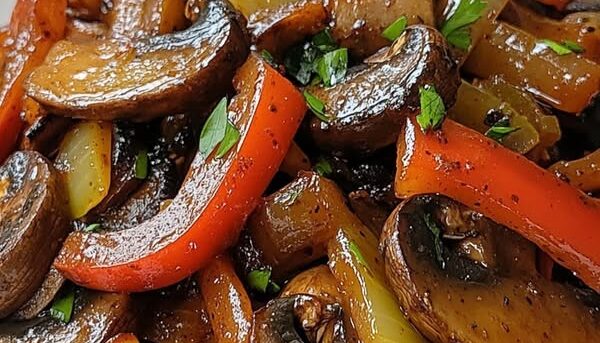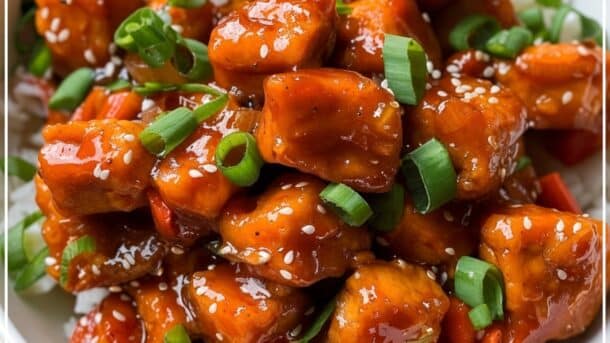
There are dishes and then there are dishes like this Vegan Tofu Manchurian — the kind that arrives at the table still sizzling from the wok, the sauce bubbling and glossy and deeply, unmistakably itself — that thick, intensely savory, gently sweet, faintly spicy, garlic-forward Indo-Chinese sauce that coats every piece of crispy tofu in a layer so glossy and so clinging and so full of flavor that the first bite is one of those immediate full-stop moments where you stop talking and focus entirely on what is happening in your mouth. The tofu is crispy — genuinely, structurally crispy, with a golden, slightly craggy battered exterior that crackles against the teeth before yielding to the soft, dense interior — and the sauce is everything: soy, garlic, ginger, green chillies, vinegar, a touch of sugar, a handful of spring onions, and a sauce base that has been reduced to the precise consistency where it coats the back of a spoon and clings to the tofu without running off. This is that recipe. The one that replaces the take-out order permanently. The one that is on the table in 45 minutes and tastes like it took twice as long. The one that is 100% plant-based, completely satisfying, and so deeply flavored that no one at the table misses anything.
The secret is the double-coat frying technique. The chronic problem with tofu in a wet sauce is textural collapse: tofu fried once in a simple dusting of cornstarch produces a coating that is crispy for approximately two minutes before the sauce soaks through it and the exterior softens into a gummy, indistinct layer with no structural integrity. The double-coat technique solves this permanently. The tofu is first pressed dry, then dipped in a wet batter of cornstarch, all-purpose flour, soy sauce, and cold water — which adheres to the tofu surface and forms the first coating layer — then dredged through a second dry coat of seasoned cornstarch. The wet-then-dry double coating creates a craggy, irregular surface with significantly more surface area than a single coating, and the dry outer layer of cornstarch fries to a rigid, crackling crust that remains distinctly crispy for 10–12 minutes in the sauce before beginning to soften — enough time to serve, plate, and eat without losing the textural contrast that makes this dish so satisfying. This is the technique used in every serious Indo-Chinese restaurant kitchen, and it is the one step that separates tofu Manchurian that stays crispy from tofu Manchurian that collapses.
What makes this recipe so outstanding is the sauce — built in the wok over maximum heat from a base of fresh garlic, ginger, and green chillies fried in sesame oil until fragrant, then deglazed with soy sauce, rice vinegar, and a small quantity of tomato ketchup (which adds body, a slight sweetness, and a red color that is characteristic of the Manchurian sauce style), thickened with a cornstarch slurry, and finished with spring onions and a drizzle of sesame oil. The sauce reduces in under 5 minutes on a properly hot wok, concentrating the flavors and producing the glossy, clingy consistency that defines the dish. The entire sauce step takes less time than the tofu frying — which means the hardest part of this recipe is already done before the sauce even begins.
This recipe is 100% vegan, comes together in 45 minutes, and produces a dinner so boldly flavored and so texturally satisfying that it will be in permanent rotation within a week of the first time you make it.
Recipe Information
| Prep Time | Cook Time | Total Time | Servings | Calories |
|---|---|---|---|---|
| 20 mins | 25 mins | 45 mins | 4 | ~380 kcal |
Ingredients
For Pressing and Marinating the Tofu
- 400g (14oz) firm or extra-firm tofu (not silken — firm tofu holds its shape through frying; silken disintegrates)
- 1 tbsp soy sauce or tamari
- 1 tsp sesame oil
- ½ tsp black pepper
- ½ tsp garlic powder
For the Double-Coat Batter
Wet batter:
- 4 tbsp cornstarch
- 3 tbsp all-purpose flour
- 1 tbsp soy sauce
- ½ tsp black pepper
- ½ tsp garlic powder
- 5–6 tbsp cold water (enough to make a thick, smooth batter that coats the back of a spoon)
Dry coat:
- 4 tbsp cornstarch
- ½ tsp fine salt
- ½ tsp black pepper
For Frying
- Neutral oil for frying (sunflower, canola, or avocado — about 500ml / 2 cups for shallow frying, or 1 litre / 4 cups for deep frying)
For the Manchurian Sauce
- 2 tbsp sesame oil (or neutral oil)
- 6 cloves garlic, finely minced (do not use a press — finely minced garlic fries more evenly)
- 1 tbsp fresh ginger, finely minced or grated
- 2–3 green chillies, finely sliced (adjust to heat preference — reduce to 1 for mild, increase to 4 for genuinely spicy)
- 1 medium onion, cut into 2cm chunks or thick rings, separated
- 1 medium green capsicum / bell pepper, cut into 2cm chunks
- 3 tbsp soy sauce or tamari
- 1 tbsp dark soy sauce (adds color and depth — substitute with extra regular soy sauce if unavailable)
- 1½ tbsp rice vinegar (or white vinegar)
- 1 tbsp tomato ketchup
- 1 tsp sugar (white or palm sugar)
- ½ tsp white pepper
- ½ tsp chilli sauce or sriracha (optional — for extra heat)
- 120ml (½ cup) water or vegetable stock
Cornstarch slurry (to thicken):
- 1½ tbsp cornstarch mixed with 3 tbsp cold water
For Finishing
- 4–5 spring onions (scallions), white and green parts separated, sliced diagonally
- 1 tsp sesame oil (finishing drizzle)
- 1 tsp toasted sesame seeds
- Fresh coriander / cilantro leaves (optional)
Instructions
- Press the tofu. Remove the tofu from its packaging and wrap in 3–4 layers of clean kitchen towel or paper towels. Place on a plate and set a heavy cutting board, pot, or weighted pan on top. Leave to press for at least 15 minutes — up to 30 minutes is better. The pressed tofu should feel noticeably drier and firmer. Pressing removes excess water from the tofu, which is essential for two reasons: dry tofu absorbs the marinade more effectively, and dry tofu fries to a crispier exterior because less steam is generated during cooking.
- Cut and marinate. Cut the pressed tofu into 3cm (1¼ inch) cubes — uniform size ensures even frying. In a bowl, combine the soy sauce, sesame oil, black pepper, and garlic powder. Add the tofu cubes and toss gently to coat. Leave to marinate for 10 minutes while you prepare the batter and sauce ingredients.
- Make the wet batter. In a bowl, whisk together the cornstarch, flour, soy sauce, black pepper, and garlic powder. Add the cold water one tablespoon at a time, whisking between additions, until a smooth, thick batter forms — it should be thick enough to cling to the tofu without running off immediately. Spread the dry coat (cornstarch, salt, black pepper) in a wide shallow dish.
- Double-coat the tofu. Working one piece at a time, dip each marinated tofu cube into the wet batter, turning to coat all sides fully. Allow the excess batter to drip off briefly, then immediately roll the batter-coated cube in the dry cornstarch mixture, pressing lightly to adhere. Set each double-coated cube on a plate or wire rack. The surface should look rough and slightly powdery — this irregular texture creates the craggy, crackling surface that stays crispy in the sauce.
- Fry the tofu. For shallow frying: heat approximately 2cm (¾ inch) of neutral oil in a wide, heavy-bottomed pan or wok over medium-high heat until a small piece of batter dropped in sizzles immediately and rises to the surface within 2 seconds (approximately 175°C / 350°F). Fry the tofu in batches — do not crowd the pan, as crowding drops the oil temperature and produces steamed rather than fried tofu. Fry for 3–4 minutes per side, turning once, until deep golden on all sides. Transfer to a wire rack (not paper towels — paper towels trap steam and soften the coating). Allow the oil to return to temperature between batches. For deep frying: 175°C / 350°F for 4–5 minutes until deep golden all over, stirring occasionally for even color.
- Build the Manchurian sauce. Heat 2 tablespoons of sesame oil in a large wok or wide, heavy skillet over maximum heat until the oil is smoking slightly. Add the white parts of the spring onions, the garlic, ginger, and green chillies. Stir-fry for 60–90 seconds, tossing constantly, until fragrant and the garlic is just beginning to turn golden at the edges — do not let it burn. Add the onion chunks and green capsicum pieces and stir-fry for 2 minutes until the vegetables are slightly softened but still have bite and are beginning to char at the edges. The charring is desirable — it adds a smoky depth that is characteristic of wok-cooked Indo-Chinese food.
- Add the sauce ingredients. Add the soy sauce, dark soy sauce, rice vinegar, tomato ketchup, sugar, white pepper, and chilli sauce if using. Stir to combine with the vegetables and bring to a rapid boil — the sauce will be thin and fragrant. Add the water or vegetable stock and return to a boil. Stir the cornstarch slurry to recombine and pour it into the wok in a steady stream while stirring constantly. The sauce will thicken within 30–45 seconds into a glossy, clingy consistency. Taste and adjust seasoning — it should be intensely savory, slightly sweet, faintly sour from the vinegar, and distinctly garlicky.
- Add the tofu and toss. Add the crispy fried tofu to the sauce and toss gently but quickly to coat every piece — use a large spoon or a folding motion rather than stirring vigorously, which can break the coating. Work fast: the tofu should be in the sauce for no more than 60–90 seconds before serving. Scatter the green parts of the spring onions over the top, drizzle with the finishing sesame oil, and sprinkle with toasted sesame seeds.
- Serve immediately. Transfer to a serving dish or serve directly from the wok. Vegan Tofu Manchurian is served immediately — the longer it sits in the sauce, the more the crispy coating softens. Serve with steamed jasmine rice, fried rice, or hakka noodles, with extra chilli sauce or sliced green chillies on the side.
Pro Tips
- Press the tofu long enough — 15 minutes is the minimum; 30 is better; overnight in the refrigerator under light weight is best. Every minute of pressing removes water that would otherwise generate steam during frying and prevent the coating from achieving its full crispiness. Properly pressed tofu fries to a significantly crisper coating than unpressed tofu, and the difference is immediately apparent.
- Use the double-coat technique without shortcuts — the wet batter followed by the dry cornstarch coat is both steps, not one or the other. The wet batter alone produces a smooth, somewhat gummy coating that the sauce penetrates quickly. The dry cornstarch alone produces a thin, lightly crisped coating with less structural integrity. The combination produces a craggy, layered crust that holds for the full service window. Do not skip either step.
- Cook the sauce over maximum heat — Manchurian sauce built over moderate heat lacks the characteristic smoky intensity of the dish. The wok must be fully preheated and screaming hot before the garlic goes in. The slight charring of the vegetables and the rapid reduction of the sauce over maximum heat are what produce the deep, complex flavor that distinguishes a great Manchurian from a competent one. If your stove cannot achieve this, preheat the wok empty for 3 full minutes before adding the oil.
- Toss and serve immediately — once the fried tofu is added to the sauce, the clock is running. The dish is at its best the moment it hits the table: the exterior is still crackling against the glossy sauce and the interior is hot and soft. After 10 minutes the coating softens noticeably; after 20 minutes it is fully soft. Manchurian is a dish that waits for no one.
Manchurian Sauce: The Indo-Chinese Flavor That Conquered a Continent
Tofu Manchurian — and the entire Manchurian sauce category — is one of the most distinctive and beloved inventions of Indo-Chinese cuisine, the culinary tradition that emerged from the Chinese immigrant community in Kolkata (Calcutta) beginning in the late nineteenth century and became one of India’s most popular restaurant food styles. The Manchurian sauce itself was reportedly invented in 1975 by Nelson Wang, a Chinese-Indian chef at the Cricket Club of India in Mumbai, who was reportedly asked by a guest to create something new and responded by combining Chinese cooking techniques (the wok, the stir-fry, the cornstarch thickening) with Indian flavor sensibilities (the aggressive use of garlic, ginger, green chilli, and vinegar in the sauce). Wang’s original creation was a chicken Manchurian — chunks of chicken in a dark, glossy, intensely garlicky sauce — and it became one of the most widely imitated restaurant dishes in Indian culinary history within a decade of its creation. The vegetarian and vegan adaptations followed inevitably: the Manchurian sauce is so powerfully flavored and so complete in itself that it requires no animal product to be deeply satisfying, and gobi Manchurian (cauliflower), paneer Manchurian, and tofu Manchurian became staples of Indian vegetarian restaurant menus across the country. The name “Manchurian” refers to the Manchuria region of northeastern China and was applied by Wang as an evocation of Chinese culinary authority — the actual dish has no relationship to Manchurian cooking, but the name stuck and became the generic term for the entire family of Indo-Chinese dark-sauced dishes that followed. Today, Manchurian is so thoroughly embedded in Indian food culture that it is considered by most Indians not as a fusion dish but simply as one of their own — a genuinely Indo-Chinese creation that belongs equally to both traditions.
Flavor Variations
- Dry Tofu Manchurian: Reduce the water in the sauce to 2 tablespoons and the cornstarch slurry to 1 teaspoon mixed with 2 teaspoons water for a “dry” version where the sauce clings to the tofu in a thick, almost-caramelized coat rather than a flowing sauce — ideal as a starter or appetizer. Dry Manchurian is served garnished with extra spring onions and sesame seeds and eaten with toothpicks as a party dish.
- Tofu Manchurian with Extra Vegetables: Add 1 cup of thinly sliced red cabbage, ½ cup of frozen edamame (thawed), and ½ cup of baby corn halved lengthwise to the wok alongside the onion and capsicum for a more substantial, more colorful version that functions as a complete one-wok meal rather than a side dish. The additional vegetables absorb the sauce beautifully and add crunch and sweetness.
- Szechuan Tofu: Replace the Manchurian sauce with a Szechuan sauce — doubanjiang (Chinese fermented chilli bean paste, 1 tablespoon), soy sauce, rice vinegar, sugar, Szechuan peppercorns (½ teaspoon, crushed), and dried red chillies — for a distinctly Chinese rather than Indo-Chinese version with the numbing heat and complex spice profile that defines Szechuan cooking. The double-coat frying technique remains identical.
Nutritional Highlights (Per Serving)
| Calories | Protein | Carbs | Fiber | Fat |
|---|---|---|---|---|
| ~380 kcal | 16g | 32g | 3g | 20g |
Storage
- Best fresh: Vegan Tofu Manchurian is at its best served immediately — within 5 minutes of the tofu being added to the sauce. The longer the fried tofu sits in the sauce, the more the coating softens. Plan to serve immediately after tossing.
- Leftovers: Store leftover Manchurian in an airtight container in the refrigerator for up to 3 days. The coating will be soft after refrigeration, but the flavor is excellent and deepens overnight as the tofu absorbs the sauce. Reheat in a wok or frying pan over high heat for 2–3 minutes, tossing to heat through.
- Storing components separately: For meal-prep purposes, fry the tofu and make the sauce separately, storing each in the refrigerator for up to 3 days. Reheat the sauce in a wok, re-crisp the tofu in the oven at 200°C (400°F) for 8 minutes on a wire rack, then toss together just before serving. This method preserves the textural contrast of the finished dish much better than storing the combined dish.
- Freezer: The fried tofu freezes well — freeze on a tray in a single layer, then transfer to a bag, for up to 1 month. Re-crisp directly from frozen in an oven at 200°C for 12–14 minutes. The sauce freezes separately for up to 2 months. Thaw in the refrigerator and reheat in a wok before combining with re-crisped tofu.
Frequently Asked Questions
My tofu coating isn’t staying crispy — what went wrong?
Three possible causes: the tofu was not pressed dry enough before battering (residual water generates steam during frying and prevents crisping); the oil was not hot enough when the tofu was added (below 175°C / 350°F produces absorption rather than crisping); or the pan was crowded (which drops the oil temperature dramatically). Check these three variables first. The double-coat technique functions correctly when the tofu is dry, the oil is properly hot, and the pan is not overcrowded.
Can I air-fry the tofu instead of frying in oil?
Yes — spray the double-coated tofu cubes generously with cooking oil spray and air-fry at 200°C (400°F) for 15–18 minutes, turning once halfway, until deep golden and crispy. The air-fried version is less crackling and slightly less golden than the oil-fried version, but it is excellent and significantly lower in fat. Add 2 minutes to the time if the cubes are larger than 3cm.
What type of tofu is best for this recipe?
Firm or extra-firm tofu is essential. Firm tofu holds its cube shape through pressing, marinating, battering, and frying without crumbling. Extra-firm tofu produces an even denser, meatier texture that some people prefer. Silken or soft tofu cannot be used — it breaks apart during pressing and frying and will not produce distinct, individually coated pieces. If your tofu feels soft even after pressing, freeze it first (frozen and thawed tofu becomes significantly denser and more porous, which improves frying and sauce absorption simultaneously).
Can I make this gluten-free?
Yes — substitute tamari for all soy sauce, replace the all-purpose flour in the batter with rice flour or an additional 2 tablespoons of cornstarch, and verify that your other sauces (dark soy, ketchup, chilli sauce) are gluten-free. Rice flour produces a slightly crispier coating than all-purpose flour in the batter. All other steps remain identical.
Tried this recipe? Leave a comment below and let us know how it turned out! Tag us on Instagram and Facebook — we love seeing your plant-powered creations. Looking for more addictive vegan snack and appetizer recipes? Browse all recipes on Easy Vegan Recipes — new recipes posted every single week!