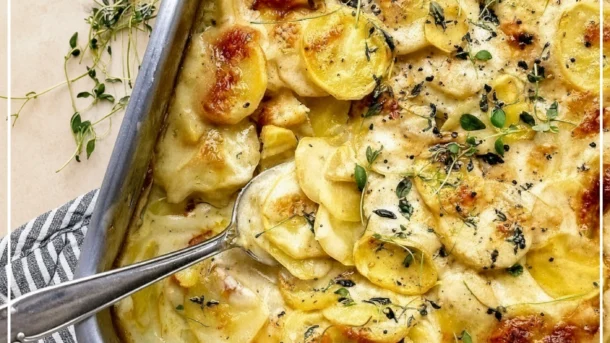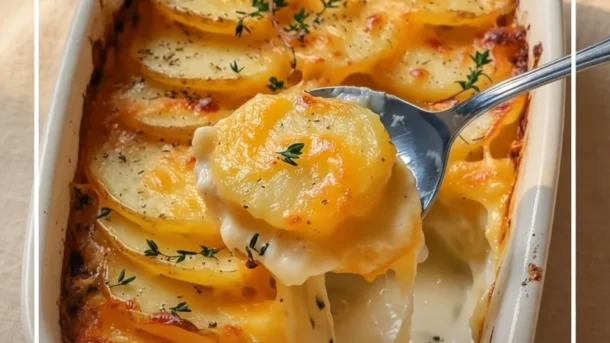
There are side dishes that complete a meal. And then there are side dishes like these Vegan Scalloped Potatoes — the kind that become the meal, that make everything else on the table a pleasant supporting act to the real event happening in the baking dish, that come out of the oven bubbling and golden and smelling so extraordinarily of caramelized cream and garlic and herbs that people are already seated and ready before you have even called them to the table. This is that dish. The one that makes holiday tables feel genuinely special. The one that gets requested at every family gathering from the moment it first appears. The one that is so deeply, warmly, extravagantly comforting that eating it feels like being taken care of in the most fundamental and delicious way possible.
These are scalloped potatoes of extraordinary luxury and extraordinary deliciousness — thin, even slices of tender potato layered in a deep baking dish with a cashew cream sauce of such silky, garlic-scented richness that it is completely and utterly indistinguishable from the finest dairy cream, seasoned generously with fresh thyme, garlic, nutmeg, and an extraordinary amount of nutritional yeast that creates a deep, savory, almost cheesy depth throughout every layer, and baked until the top is deeply golden and slightly crisped while the layers beneath are completely yielding, perfectly tender, and bathed in a sauce that has thickened around them into something that is simultaneously sauce and custard and pure comfort.
What makes this recipe so genuinely outstanding is the cashew cream sauce. Raw cashews soaked briefly in boiling water and blended with garlic, nutritional yeast, lemon, and vegetable broth into the most velvety, dairy-free cream imaginable — a cream so rich, so silky, and so deeply flavored that it performs every function that dairy cream performs in scalloped potatoes, including the slow thickening during baking as its proteins and starches concentrate around the potato layers into a sauce of extraordinary body and richness. There is no compromise here. No thinness. No absence. Just a different and in many ways more interesting path to the same extraordinary result.
This recipe is 100% vegan, naturally gluten-free, ready in 75 minutes of largely unattended baking, and absolutely magnificent served as a holiday side dish, a weeknight comfort dinner, or the centrepiece of any gathering where you want to demonstrate beyond any possible doubt that plant-based cooking is not about deprivation but about genuine, luxurious abundance.
Recipe Information
| Prep Time | Cook Time | Total Time | Servings | Calories |
|---|---|---|---|---|
| 20 mins | 55 mins | 75 mins | 6 | ~380 kcal |
Ingredients
For the Cashew Cream Sauce
- 1½ cups (200g) raw cashews, soaked in boiling water for 20 minutes then drained
- 2 cups (480ml) vegetable broth
- 1 cup (240ml) unsweetened oat milk
- 6 tbsp nutritional yeast
- 4 cloves garlic, minced
- 2 tbsp lemon juice
- 1 tbsp white miso paste
- 1 tsp onion powder
- ½ tsp nutmeg
- ½ tsp salt
- ¼ tsp white pepper
For the Potato Layers
- 1.2kg (about 6 medium) Yukon Gold or Russet potatoes, peeled and very thinly sliced
- 1 medium white onion, very thinly sliced
- 4 cloves garlic, very thinly sliced
- 2 tbsp fresh thyme leaves (or 1 tsp dried thyme)
- 1 tbsp fresh rosemary, very finely chopped
- Salt and black pepper for seasoning between layers
For the Top
- ½ cup (60g) vegan cheese, shredded (optional but spectacular)
- 1 tbsp vegan butter, cut into small pieces
- Extra fresh thyme for garnish
- Smoked paprika for color
Optional Add-ins Between Layers
- 1 cup (150g) frozen spinach, thawed and squeezed dry
- 1 cup (100g) mushrooms, thinly sliced and sautéed
- ½ cup (60g) sun-dried tomatoes, roughly chopped
- 1 medium leek, thinly sliced and softened in olive oil
To Serve
- As a holiday side dish alongside roasted vegetables
- With a simple green salad
- As a main course with crusty bread
- Alongside vegan roasts and mains
- With steamed green beans or asparagus
- At any gathering as the star side dish
Instructions
- Preheat the oven and soak the cashews. Preheat your oven to 375°F (190°C) and grease a deep 23 x 33cm (9 x 13 inch) baking dish generously with vegan butter or olive oil. Place the cashews in a bowl, cover with boiling water, and soak for 20 minutes. This soaking time is essential — properly soaked cashews blend to a completely smooth, silky cream. Under-soaked cashews produce a grainy sauce.
- Slice the potatoes. While the cashews soak slice the potatoes into very thin, even rounds — approximately 3mm (⅛ inch) thick. A mandoline produces the most consistently thin, even slices and is strongly recommended for this recipe. Consistent slice thickness is critical — uneven slices produce unevenly cooked layers with some pieces perfectly tender while others are still firm. Place the sliced potatoes in a bowl of cold water to prevent browning while you prepare the sauce.
- Make the cashew cream sauce. Drain the soaked cashews and place in a high-speed blender with the vegetable broth, oat milk, nutritional yeast, minced garlic, lemon juice, white miso paste, onion powder, nutmeg, salt, and white pepper. Blend on the highest speed for 90 seconds until completely smooth, silky, and flowing with absolutely no graininess or texture remaining. Taste the sauce — it should be deeply savory, slightly tangy, richly flavored, and with a pronounced cheesy depth from the nutritional yeast. Adjust seasoning confidently — this sauce needs to season the entire dish.
- Sauté the aromatics. Heat a small amount of olive oil in a skillet over medium heat. Add the thinly sliced onion and cook for 4–5 minutes until softened. Add the sliced garlic and cook for 60 seconds until fragrant. Set aside.
- Begin layering. Drain the potato slices and pat dry with kitchen towels — removing surface moisture produces more even cooking and better absorption of the cream sauce. Begin building the layers in the prepared baking dish. Start with a thin layer of cashew cream sauce spread across the base of the dish. Add a single layer of overlapping potato slices — arrange them like overlapping scales, each slice covering approximately half of the previous one for the most even, beautiful presentation. Scatter some of the softened onion and garlic mixture over the potatoes. Season generously with salt and pepper. Scatter fresh thyme and rosemary. Pour a generous ladle of cashew cream sauce over the layer — enough to just cover the potatoes.
- Continue layering. Repeat the layering process — potatoes, onion, herbs, seasoning, cream sauce — until all ingredients are used, finishing with a layer of potatoes on top. Pour the remaining cashew cream sauce over the final potato layer — it should come just to the top of the potatoes but not overflow. Press the top layer of potatoes gently into the sauce with the back of a spoon.
- Top and cover. If using vegan cheese scatter it evenly over the top potato layer. Dot with the small pieces of vegan butter. Scatter extra thyme leaves and a light dusting of smoked paprika over the surface. Cover the baking dish tightly with aluminum foil — the steam trapped under the foil during the first stage of baking is what cooks the potatoes through to complete tenderness before the top is allowed to brown.
- Bake covered then uncovered. Bake covered for 40 minutes until the potatoes are just tender when pierced through the foil with a thin knife — the knife should meet only slight resistance. Remove the foil and bake uncovered for a further 15–20 minutes until the top is deeply golden, slightly crisped at the edges, and the sauce is bubbling vigorously around the sides of the dish.
- Rest before serving. Remove from the oven and allow to rest for 10 minutes before serving — this resting time allows the sauce to thicken and set slightly, producing cleaner, more beautiful servings rather than the flowing, loose result of a dish served immediately from the oven. Garnish with fresh thyme leaves and serve directly from the baking dish at the table.
Pro Tips for Perfect Vegan Scalloped Potatoes
- Slice the potatoes on a mandoline. Consistent, paper-thin slices are the foundation of great scalloped potatoes — and consistent slices require a mandoline or extremely careful, skilled knife work. Uneven slices produce uneven cooking with some layers perfectly tender and others still firm when the dish is done. A mandoline set to 3mm produces the ideal slice for this recipe.
- Season every layer generously. Scalloped potatoes require confident, layered seasoning — salt added only to the sauce will not penetrate every layer evenly. Season each potato layer with salt and pepper before adding the sauce for a dish that is uniformly, deeply seasoned throughout rather than well-seasoned on top and bland in the middle.
- Use Yukon Gold potatoes. Yukon Gold potatoes have a naturally buttery flavor, a waxy texture that holds their shape during baking rather than dissolving, and a beautiful golden color that makes the finished dish look particularly appetizing. Russet potatoes also work well — they are starchier and produce a slightly softer result. Avoid red-skinned potatoes which stay too firm.
- Blend the cashew sauce for the full 90 seconds. A perfectly smooth, completely lump-free cashew cream requires sustained high-speed blending. Any residual graininess in the sauce will be visible in the finished dish and will affect the texture of the cream as it thickens during baking. Blend until the sauce flows like thick dairy cream with absolutely no texture remaining.
- Cover tightly for the first 40 minutes. The steam trapped under the foil during the first stage of baking is essential for cooking the potato layers through to complete tenderness. Uncovering too early produces undercooked potatoes beneath a beautifully browned top — a common and deeply frustrating mistake. Keep covered until the potatoes are just tender before removing the foil to brown the top.
- Rest for 10 minutes before serving. The sauce in freshly baked scalloped potatoes is liquid and flowing — resting for 10 minutes allows it to thicken and set to the perfect consistency for serving. A dish served immediately from the oven produces servings that fall apart. A dish rested for 10 minutes produces beautiful, layered servings that hold their shape on the plate.
The History of Scalloped Potatoes
Scalloped potatoes — known in French culinary tradition as gratin dauphinois — is one of the most beloved and most enduringly popular potato preparations in the entire Western culinary canon. The dish originated in the Dauphiné region of southeastern France where it appears in cookbooks as early as the eighteenth century in a form that is essentially identical to the modern preparation — thinly sliced potatoes baked in cream and garlic until tender and golden.
The name scalloped derives from the old English culinary term to scallop — meaning to bake in a sauce in a shallow dish — which was applied to numerous preparations in nineteenth century American cooking. The French original uses nothing more than potatoes, cream, garlic, salt, and pepper — a preparation of such austere simplicity and such extraordinary result that it has remained largely unchanged for over two centuries.
What makes scalloped potatoes so enduringly beloved across cultures and generations is their extraordinary textural transformation during baking. Raw potato slices are firm, starchy, and relatively flavorless. After 55 minutes in a hot oven bathed in cream they become completely yielding, deeply flavored from the garlic and herbs that surround them, and coated in a sauce that has thickened around them during baking into something halfway between cream and custard — simultaneously rich and light, substantial and flowing, warming and luxurious.
This vegan version achieves exactly this transformation through the cashew cream sauce — which behaves during baking in a remarkably similar way to dairy cream, thickening slowly as its proteins concentrate and its starches absorb the moisture released by the potatoes, setting to the characteristic layered, custard-like consistency of the original.
Flavor Variations
- Truffle Scalloped Potatoes: Add 2 tablespoons of truffle oil to the cashew cream sauce and finish with a drizzle of additional truffle oil before serving for an extraordinarily luxurious version that is particularly spectacular for holiday entertaining.
- Spinach and Artichoke Scalloped Potatoes: Add layers of thawed frozen spinach and roughly chopped artichoke hearts between the potato layers for a version inspired by spinach artichoke dip that is extraordinarily rich and deeply satisfying.
- Sweet Potato Scalloped Potatoes: Replace half the regular potatoes with thinly sliced sweet potato for a version with a beautiful orange-and-white layered appearance and a natural sweetness from the sweet potato that contrasts magnificently with the savory cream sauce.
- Mushroom Scalloped Potatoes: Add layers of thinly sliced cremini mushrooms sautéed with garlic and thyme between the potato layers for a version with deep, earthy umami richness that makes the finished dish taste significantly more complex than the potato-only version.
Nutritional Highlights (Per Serving)
| Calories | Protein | Carbs | Fiber | Fat |
|---|---|---|---|---|
| ~380 kcal | 12g | 52g | 5g | 15g |
At 380 calories per serving these scalloped potatoes deliver genuine indulgence alongside meaningful nutrition. Potatoes provide complex carbohydrates, Vitamin C, potassium, Vitamin B6, and resistant starch that supports gut microbiome health. The cashew cream sauce contributes 12 grams of plant-based protein per serving alongside heart-healthy monounsaturated fats, magnesium, phosphorus, and zinc. The nutritional yeast provides B vitamins including B12 in fortified varieties alongside all nine essential amino acids. Fresh thyme contributes thymol with potent antimicrobial and antioxidant properties. Garlic contributes allicin with cardiovascular protective and antimicrobial properties.
Storage
- Refrigerator: Store cooled scalloped potatoes covered tightly in the baking dish or in an airtight container in the refrigerator for up to 4 days. The dish actually improves significantly on day 2 as the sauce continues to absorb into the potato layers and the flavors deepen and meld. Reheat covered with foil in a 350°F (175°C) oven for 20–25 minutes until heated through, removing the foil for the final 5 minutes to re-crisp the top.
- Freezer: Scalloped potatoes freeze well for up to 2 months. Cool completely before covering tightly with plastic wrap and foil. Thaw overnight in the refrigerator and reheat covered in a 350°F (175°C) oven for 30–35 minutes. The texture of the potatoes changes slightly during freezing — they become slightly softer — but the flavor remains excellent.
- Make ahead: This is an outstanding make-ahead dish for holidays and entertaining. Assemble completely, cover tightly, and refrigerate for up to 24 hours before baking. Add 10–15 minutes to the covered baking time when cooking from cold. The assembled unbaked dish can also be frozen for up to 1 month — thaw completely in the refrigerator before baking.
- Individual portions: Reheat individual portions in a small oven-safe dish at 350°F (175°C) for 15 minutes or in the microwave for 2–3 minutes — adding a splash of plant milk if the sauce has become too thick during storage.
Frequently Asked Questions
What potatoes work best for scalloped potatoes?
Yukon Gold potatoes are the finest choice — their naturally buttery flavor, waxy texture, and beautiful golden color make them ideal for this preparation. They hold their shape during baking without dissolving and their inherent flavor complements the cashew cream sauce beautifully. Russet potatoes produce a slightly softer, starchier result that some people prefer. Avoid red-skinned potatoes which stay too firm even after extended baking.
Why are my scalloped potatoes still firm after baking?
Firm potatoes after the full baking time are caused by potato slices that are too thick, insufficient liquid in the sauce, or potatoes that were not covered tightly during the first stage of baking. Slice potatoes to a maximum of 3mm thickness, ensure the sauce comes just to the top of the final potato layer before baking, and keep the foil on tightly for the full first 40 minutes of baking.
Can I make this recipe without a blender?
Yes — use store-bought vegan cream cheese or vegan heavy cream as the base instead of the cashew cream. Combine 300g of vegan cream cheese with 2 cups of vegetable broth, the nutritional yeast, garlic, lemon juice, and seasonings and whisk vigorously until smooth. The result will be slightly different in flavor but still deeply creamy and delicious.
How thin should I slice the potatoes?
Approximately 3mm (⅛ inch) is the ideal thickness — thin enough to become completely tender during baking and to absorb the cream sauce fully, thick enough to retain some structure and integrity in the finished dish rather than dissolving into mush. A mandoline set to the thinnest setting and then backed up slightly produces the ideal slice consistently.
Can I add cheese to this recipe?
Yes — a generous layer of shredded vegan cheese on top before the final uncovered baking produces a beautiful golden, slightly crisped cheese topping that adds visual drama and additional savory depth. Vegan mozzarella, vegan cheddar, or vegan Gruyère style cheese all work beautifully. Add in the final 15–20 minutes of uncovered baking for the best melt and color.
Is this dish suitable for holiday entertaining?
This is one of the finest dishes available for holiday entertaining — it assembles in advance, bakes largely unattended, improves when made a day ahead, feeds a crowd generously from a single dish, and produces a presentation so beautiful and a flavor so extraordinary that it consistently becomes the most discussed dish at any gathering where it appears.
Tried this recipe? Leave a comment below and let us know how it turned out! Tag us on Instagram and Facebook — we love seeing your plant-powered creations. Looking for more indulgent vegan side dish and comfort food recipes? Browse all recipes on Easy Vegan Recipes — new recipes posted every single week!