There are flatbreads you eat because something quick is needed. And then there are flatbreads like this Vegan Spinach and Cheese Gozleme — the kind that comes off the pan blistered and golden in patches, that releases a cloud of steam scented with garlic and melted cheese the moment you tear into it, and that delivers a combination of soft, slightly chewy dough and a rich, savory spinach and cheese filling so satisfying that it is genuinely difficult to stop at one. This is that gozleme. The one that makes a Turkish street food classic feel completely at home in any plant-based kitchen. The one that turns a handful of pantry staples into something that tastes like it came from a market stall in Istanbul.
Gozleme is a traditional Turkish savory flatbread, rolled thin and folded around a filling before being cooked on a hot griddle or pan until the dough is blistered, slightly crisp at the edges, and tender throughout, with the filling inside melted and fragrant. This vegan version uses a simple yeast-free dough that comes together in minutes and a filling of sautéed spinach, garlic, and a vegan feta and mozzarella blend that melts beautifully and provides the salty, tangy, creamy character that makes the original so beloved.
What makes this gozleme so outstanding is the dough technique — rolled extremely thin so it cooks through quickly on the stovetop without ever needing an oven, and folded into a flat parcel that seals the filling inside while still allowing it to spread to the edges, ensuring every single bite contains both bread and filling in perfect proportion.
This recipe is 100% vegan, ready in just 30 minutes, requires no oven, and is absolutely wonderful served hot off the pan with a wedge of lemon and a dollop of vegan yogurt alongside.
Recipe Information
Prep Time
Cook Time
Total Time
Servings
Calories
15 mins
15 mins
30 mins
4
~340 kcal
Ingredients
For the Dough
2 cups (240g) all-purpose flour, plus extra for rolling
1 tsp salt
¾ cup (180ml) warm water
2 tbsp olive oil
For the Filling
5 cups (150g) fresh spinach, roughly chopped
1 tbsp olive oil
3 cloves garlic, minced
¾ cup (90g) vegan feta, crumbled
½ cup (60g) vegan mozzarella, shredded
2 tbsp fresh dill, finely chopped
½ tsp nutmeg
Salt and black pepper to taste
For Cooking
3 tbsp olive oil or vegan butter, for the pan
Optional Add-ins
¼ tsp chili flakes for gentle heat
2 spring onions, finely sliced
1 tbsp nutritional yeast for extra savory depth
Sun-dried tomatoes, finely chopped
To Serve
Fresh lemon wedges
Vegan yogurt or tzatziki
Fresh parsley or dill
A simple side salad
Instructions
Make the dough. In a large bowl combine the flour and salt. Add the warm water and olive oil and mix with a spoon then your hands until a soft, slightly tacky dough forms. Knead for 4–5 minutes on a lightly floured surface until smooth and elastic. Cover with a damp towel and rest for 15 minutes — this relaxes the gluten and makes the dough much easier to roll thin.
Make the filling. Heat the olive oil in a skillet over medium heat. Add the garlic and cook for 30 seconds until fragrant. Add the spinach in batches, stirring until wilted — about 2–3 minutes total. Transfer to a colander and press out excess liquid, then roughly chop. In a bowl combine the squeezed spinach with the vegan feta, mozzarella, dill, nutmeg, salt, and pepper.
Divide and roll the dough. Divide the rested dough into 4 equal pieces. On a lightly floured surface roll each piece out as thinly as possible into a large rectangle or oval, roughly 30 x 20cm — the dough should be almost translucent in places. Thin rolling is essential for gozleme to cook through properly on the stovetop.
Fill and fold. Spread a quarter of the filling over one half of the rolled dough, leaving a small border. Fold the other half over the filling and press the edges to seal, or fold into thirds like a letter for a more traditional rectangular shape. Press gently to spread the filling evenly inside.
Cook on a hot pan. Heat a large dry skillet or griddle over medium heat and brush lightly with olive oil. Place one folded gozleme in the pan and cook for 3–4 minutes per side, brushing the top with a little more oil before flipping, until both sides are golden with blistered, slightly charred patches and the filling inside is hot and the cheese has melted.
Slice and serve. Transfer to a board and cut into wide strips with a sharp knife or pizza cutter. Serve immediately while hot, with lemon wedges and a side of vegan yogurt.
Pro Tips for the Best Vegan Gozleme
Roll the dough as thin as you can manage. Thick dough will not cook through on the stovetop before the outside burns. Aim for a thickness you can almost see through.
Squeeze the spinach thoroughly. Excess moisture in the filling will make the dough soggy and prevent proper sealing.
Cook over medium, not high, heat. A pan that is too hot will char the outside before the filling is properly warmed and the cheese has melted.
Brush with oil between flips for the best golden, blistered finish characteristic of authentic gozleme.
Rest the dough fully. Skipping the rest makes the dough spring back and resist rolling thin.
The Story of Gozleme
Gozleme is one of the most beloved street foods in Turkey, traditionally made by women cooking on large flat griddles called sac at markets and festivals. The name comes from the Turkish word goz, meaning eye, referring to the small blistered bubbles that appear on the dough as it cooks. Traditional fillings include spiced minced meat, potato, or — as in this version — spinach and cheese, one of the most popular vegetarian options found at Turkish markets. This plant-based adaptation keeps the same beloved combination of tender dough and rich, savory filling that has made gozleme a favorite far beyond Turkey’s borders.
Flavor Variations
Mushroom and Spinach Gozleme: Add sautéed mushrooms to the filling for extra earthiness and substance.
Spicy Gozleme: Add chili flakes and a pinch of cumin to the filling for a warmer, spiced version.
Potato and Herb Gozleme: Replace half the spinach with mashed potato seasoned with herbs for a heartier, more traditional-style filling.
Nutritional Highlights (Per Serving)
Calories
Protein
Carbs
Fiber
Fat
~340 kcal
10g
40g
3g
14g
Storage
Refrigerator: Store cooked gozleme in an airtight container for up to 3 days. Reheat in a dry pan over medium heat for 2–3 minutes per side to restore crispness.
Freezer: Freeze cooked, cooled gozleme wrapped individually for up to 1 month. Reheat from frozen in a pan over low-medium heat until heated through.
Dough: Unfilled dough can be made ahead and refrigerated for up to 24 hours, wrapped tightly.
Frequently Asked Questions
Can I bake these instead of pan frying?
Yes — bake at 400°F (200°C) for 12–15 minutes, though the texture will be drier and less blistered than the traditional stovetop method.
What vegan cheese works best?
A good vegan feta provides the essential salty tang, while vegan mozzarella adds the melt. A blend of both gives the most authentic result.
Can I make the dough gluten-free?
Yes, with a 1:1 gluten-free flour blend, though the dough will be more delicate and harder to roll paper thin.
Tried this recipe? Leave a comment below and let us know how it turned out! Tag us on Instagram and Facebook — we love seeing your plant-powered creations. Looking for more satisfying vegan flatbread and dinner recipes? Browse all recipes on Easy Vegan Recipes — new recipes posted every single week!
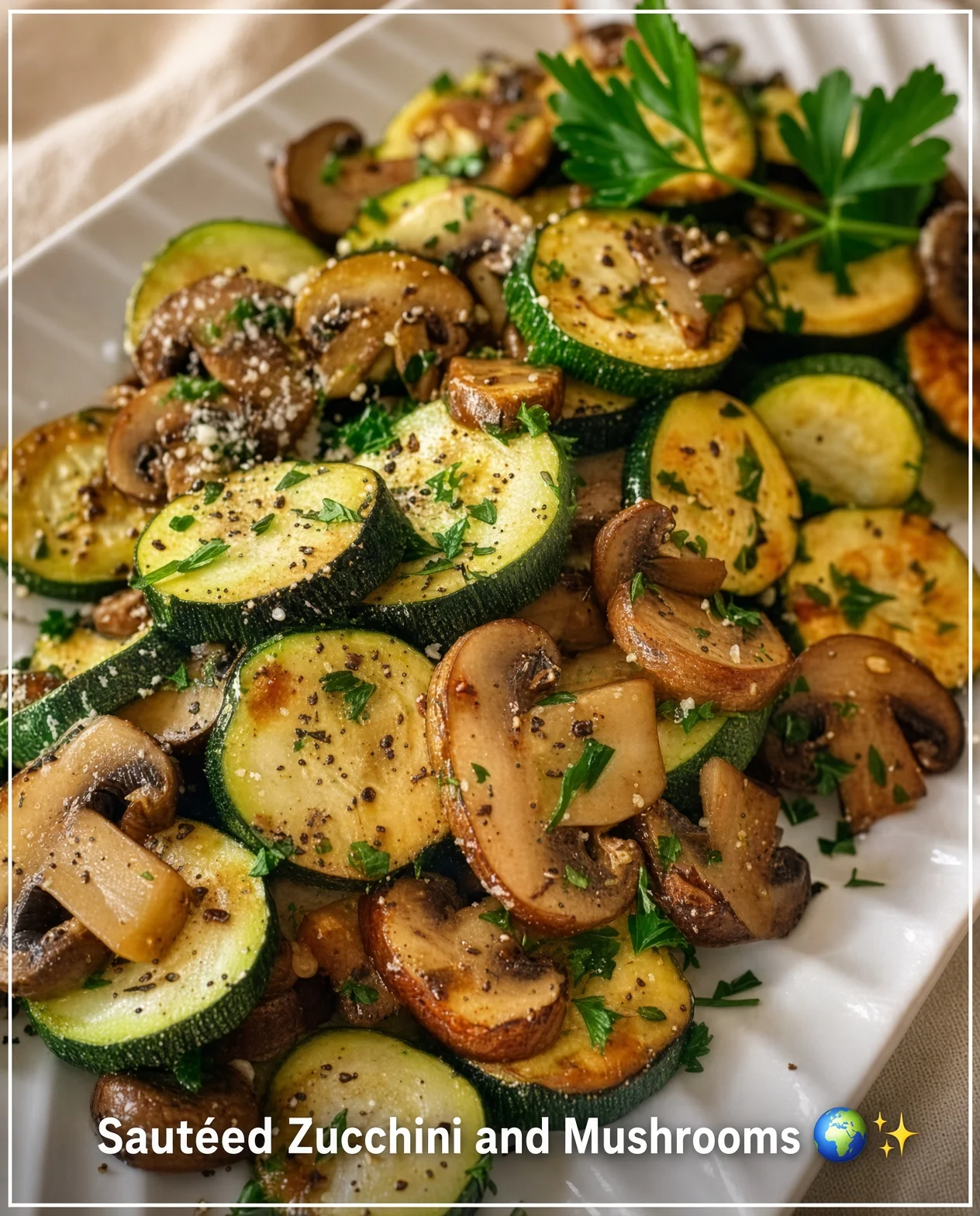
Some of the best things that happen in a kitchen happen quickly and without ceremony — a hot pan, a few good ingredients, and ten minutes of attentive cooking that produces something so much more flavorful than the sum of its parts that it becomes a staple by the second time you make it. Sautéed Zucchini and Mushrooms is exactly that kind of recipe. It is thin rounds of zucchini and thickly sliced mushrooms cooked together in a wide, hot skillet with olive oil, garlic, and a small but precisely deployed arsenal of pantry seasonings until the mushrooms are deeply browned and caramelized at the edges, the zucchini is tender and golden on both sides with a soft center that still holds its shape, and the whole skillet smells of garlic, thyme, and something rich and savory and deeply satisfying in the way that only well-cooked alliums and fungi can smell. It is finished with a small squeeze of lemon, a handful of fresh parsley, and — for those who want it — a scattering of chilli flakes that adds a gentle background heat without turning it into a spicy dish. It is served as a side alongside anything that needs it (pasta, rice, crusty bread, grilled protein, a bowl of lentils) or, frankly, eaten directly from the pan with a fork while standing at the hob, which is how most of it disappears in any household that makes it regularly. It is 100% vegan, naturally gluten-free, made in one pan in under 15 minutes, and one of those recipes that earns a permanent place in the weeknight rotation because it requires almost no thought and consistently produces excellent results. The technique is the secret.
The technique is the sequential sear and deglaze method. The fundamental problem with sautéing two vegetables together — particularly a high-moisture vegetable like zucchini and a high-moisture vegetable like mushrooms — is that if they are added to the pan simultaneously, they compete for the pan’s heat and release their moisture at the same time, creating a pool of liquid on the pan surface that brings the temperature below the Maillard reaction threshold (approximately 140–150°C / 285–300°F) and turns what should be a searing, caramelizing process into a steaming, braising process. Steamed mushrooms are pale, soft, and faintly rubbery; steamed zucchini is watery and collapses into itself. The sequential sear and deglaze method prevents this by treating each vegetable as a separate searing problem. Stage one — mushroom sear: the mushrooms go into the pan alone, in a single layer, in a very hot pan with enough oil to just coat the base, and they are not stirred or moved for a full 3 minutes. This uninterrupted contact time allows the moisture to escape from the mushrooms’ surface and evaporate away from the pan rather than pooling, and allows the direct contact between the mushroom surface and the hot pan to reach the temperature required for Maillard browning. Only once the underside is deeply golden are they turned. Stage two — deglaze and zucchini: once the mushrooms are browned and removed from the pan, the fond (the brown, caramelized deposits left by the mushrooms on the pan surface) is deglazed with a splash of vegetable stock or dry white wine, which lifts the concentrated flavor compounds off the pan base and turns them into a small amount of intensely flavored liquid. The zucchini is then added into this liquid and cooked over high heat until the liquid evaporates and the zucchini begins to take on golden color from the now-dry, flavor-coated pan surface. The mushrooms are returned in the final minute with the garlic, thyme, and lemon, and the whole skillet is tossed together over high heat. The result is a dish in which both vegetables have been individually seared to their optimal texture and then brought together in a combined, deglazing-enriched pan that makes the whole dramatically more flavorful than cooking them together from the start would produce.
This recipe serves 4 as a side dish, or 2 as a light main with crusty bread or over pasta.
Recipe Information
Prep Time
Cook Time
Total Time
Servings
Calories
5 mins
12 mins
17 mins
4
~165 kcal
Ingredients
400g (14oz) mushrooms — cremini (chestnut) mushrooms are the first choice for this recipe; their lower moisture content and deeper flavor compared to white button mushrooms means they brown more readily and taste more intensely savory. Portobello mushrooms, thickly sliced, are an excellent substitute for a meatier, more substantial result. Mixed wild mushrooms (shiitake, oyster, king oyster) produce an outstanding version with complex, layered savory depth. Avoid white button mushrooms if possible — they have the highest moisture content and are the hardest to get good browning on.
2 medium zucchini (courgette), approximately 400g / 14oz total — sliced into rounds approximately 5mm (¼ inch) thick; this thickness allows the cut surface to make good contact with the pan for color while the center stays tender rather than becoming mushy
3 tbsp olive oil, divided (2 tbsp for the mushrooms, 1 tbsp for the zucchini)
4 cloves garlic, thinly sliced (sliced rather than minced — thin slices of garlic go slightly golden and nutty in the final pan toss rather than burning or disappearing into the dish; minced garlic added at the same stage would burn)
1 tsp fresh thyme leaves (or ½ tsp dried thyme — fresh thyme is strongly preferred; its aromatic, slightly piney freshness lifts the whole dish in a way dried thyme only approximates)
3 tbsp vegetable stock or dry white wine (for the deglaze — vegetable stock keeps the dish alcohol-free and adds a small savory note; dry white wine adds acidity and depth; water works in a pinch but contributes no flavor)
1 tbsp lemon juice (fresh — added at the very end, off the heat; it brightens the whole dish and prevents the savory earthiness of the mushrooms from becoming heavy)
½ tsp fine salt, plus more to taste
¼ tsp black pepper, freshly ground
¼ tsp chilli flakes (optional — adds a gentle background warmth; increase to ½ teaspoon for a more assertive heat)
A large handful of fresh flat-leaf parsley, roughly chopped (do not skip — the fresh green parsley provides color contrast, freshness, and herbal brightness that the dish genuinely needs as a counterpoint to all the rich, savory, umami notes)
Flaky sea salt for finishing (optional but excellent — a pinch over the finished dish adds texture and a small burst of clean saltiness against the deeper flavors)
Instructions
Prep the vegetables. Wipe the mushrooms clean with a damp cloth (do not wash under running water — mushrooms absorb water readily and wet mushrooms steam rather than sear). Slice thickly — approximately 5mm (¼ inch) for cremini, or into 1cm thick slices for portobello. Slice the zucchini into rounds approximately 5mm thick. Keep the two vegetables in separate piles — they go into the pan at different times.
Mushroom sear — Stage 1. Heat a wide, heavy skillet (cast iron or stainless steel — both retain heat well; non-stick is acceptable but produces less fond for the deglaze) over high heat until the pan is visibly hot. Add 2 tablespoons of the olive oil and swirl to coat the base. Add the mushrooms in a single layer — do not crowd; if necessary, cook in two batches. The mushrooms should sizzle aggressively on contact with the pan. Do not stir, do not press, do not move them. Leave undisturbed for exactly 3 minutes. After 3 minutes, check the underside: it should be deeply golden-brown. Turn each mushroom and cook for a further 2 minutes on the second side. Transfer the browned mushrooms to a bowl. Season with a pinch of salt and pepper.
Deglaze — transition step. With the pan still hot, add the vegetable stock or dry white wine. It will spit and steam vigorously. Use a wooden spoon or spatula to scrape up all the brown deposits (the fond) from the pan base — stir and scrape for 30 seconds until the liquid has reduced slightly and the fond is fully dissolved into it. This small amount of intensely flavored liquid is the foundation for the zucchini stage.
Zucchini sear — Stage 2. Add the remaining 1 tablespoon of olive oil to the deglazing liquid in the hot pan. Add the zucchini rounds in a single layer (again, batches if the pan is crowded — each round needs direct pan contact). Cook over high heat, undisturbed, for 2 minutes until the underside is golden. Turn each round and cook for a further 1–2 minutes until the second side has color and the zucchini is just tender — it should still hold its shape; if it is collapsing, it is slightly overcooked.
Combine and finish. Return the browned mushrooms to the pan with the zucchini. Add the sliced garlic, fresh thyme, chilli flakes (if using), and the remaining salt and pepper. Toss everything together over high heat for 1–2 minutes until the garlic is fragrant and just beginning to turn golden at the edges (not brown — golden). Remove from the heat. Add the lemon juice and fresh parsley and toss once more. Taste and adjust seasoning — add more salt, pepper, or lemon as needed.
Serve. Transfer to a serving bowl or serve directly from the skillet. Finish with a pinch of flaky sea salt if desired. Serve immediately — this dish is best eaten hot, straight from the pan.
Pro Tips
Dry mushrooms, hot pan — these are the two non-negotiable conditions for good mushroom searing. Wet mushrooms bring the pan temperature down immediately and produce steam; a pan that is not genuinely hot before the oil goes in will never catch up. The mushrooms should sizzle loudly on contact — if they go in with a gentle hiss rather than an aggressive spit, take them out, heat the pan for another minute, and try again.
Do not stir the mushrooms — this is the instruction most home cooks find hardest to follow and most important to follow. Every time you stir or move a mushroom that is searing, you interrupt the continuous contact between the mushroom surface and the hot pan that is driving the Maillard reaction. 3 minutes of uninterrupted contact produces a deeply golden crust; 3 minutes of constant stirring produces pale, steamed mushrooms. Set a timer and leave them alone.
Season the mushrooms when they come off the heat, not before — salt draws moisture out of mushroom cells rapidly. Seasoning raw mushrooms before they go into the pan draws out surface moisture that then pools in the pan and steams the mushrooms rather than them searing. Add salt only after the mushrooms are browned and in the bowl.
The deglaze is where the dish’s depth comes from — do not skip this step or reduce it to a perfunctory scrape. The fond left by the mushrooms contains concentrated Maillard reaction compounds — proteins and sugars that have browned and caramelized at high heat — and dissolving them into the liquid and then cooking the zucchini in that liquid means the zucchini absorbs all of that flavor. A pan deglazed properly tastes as though it has been cooking for 40 minutes; a pan that is merely wiped and reused loses all of that.
Fungi Through History: Mushrooms, Mystery, and the Science of Umami
Mushrooms occupy one of the more unusual positions in human culinary history: they were eaten enthusiastically by some ancient civilizations and regarded with profound suspicion by others, a division that maps remarkably closely onto lines of cultural familiarity and ecological exposure rather than any intrinsic quality of the mushroom itself. Ancient Romans ate mushrooms extensively — the Emperor Claudius was said to have been poisoned via a mushroom dish — and ancient Chinese and Japanese medicinal and culinary traditions assigned mushrooms a prestigious, almost pharmacological status that made them central to elite cooking for centuries. In contrast, many Northern and Central European cultures historically treated wild mushrooms with deep suspicion (the English word “toadstool” — literally a stool for toads — reflects a longstanding folk belief in the poisonous or supernatural character of fungi), while some sub-Saharan African culinary traditions historically avoided mushrooms almost entirely as culturally coded inedible. The scientific explanation for the mushroom’s extraordinary savory quality — the quality that makes a browned cremini mushroom taste so deeply satisfying and “meaty” — is the same as for Parmesan and for fermented soy sauce: the high concentration of free glutamates in mushroom tissue, particularly in cremini and shiitake varieties. Mushrooms also contain two additional umami compounds — guanosine monophosphate (GMP) and inosine monophosphate (IMP) — that are synergistic with glutamate, meaning their combined effect on the palate’s umami receptors is dramatically greater than the sum of each compound alone. This synergistic effect is the scientific basis for the long-established culinary observation that adding mushrooms to a dish makes everything else in it taste deeper, richer, and more savory: the mushroom’s GMP and IMP are amplifying the glutamate in every other ingredient simultaneously. It is one of the most useful pieces of food science a cook can know, and it explains exactly why a handful of browned mushrooms in this pan makes even the zucchini taste more flavorful.
Flavor Variations
Balsamic and Rosemary: Replace the lemon juice with 1 tablespoon of good balsamic vinegar, stirred in off the heat alongside the parsley. Replace the fresh thyme with 1 teaspoon of finely chopped fresh rosemary (added at the same point as the thyme in the recipe — rosemary added earlier can turn slightly bitter). The balsamic adds a sweet, tangy, slightly syrupy depth that transforms the dish from bright and lemony to rich and rounded. Excellent alongside roasted chicken-style seitan or a baked sweet potato.
Soy and Ginger: Add 1 tablespoon of soy sauce and 1 teaspoon of freshly grated ginger to the pan when the garlic goes in (Stage 5), tossing to coat all the vegetables. Replace the fresh parsley with fresh coriander (cilantro) and the lemon with a squeeze of lime. Scatter with toasted sesame seeds. The soy-ginger version has a completely different flavor profile — savory, umami-forward, slightly Asian in character — and is excellent served over steamed rice with a drizzle of toasted sesame oil.
Creamy Garlic: After the garlic and thyme have become fragrant in Stage 5, add 3 tablespoons of full-fat coconut cream (the solid layer from the top of a refrigerated can of coconut milk) or a good vegan single cream. Stir to coat all the vegetables and cook for 1 minute until the cream has thickened slightly and coated each piece. Add the lemon juice and parsley as usual. The creamy garlic version is richer, more sauce-like, and excellent tossed through pasta or spooned over polenta.
Nutritional Highlights (Per Serving — Based on 4 Servings)
Calories
Protein
Carbs
Fiber
Fat
~165 kcal
5g
9g
3g
12g
Storage
Refrigerator: Keeps well in a sealed container for up to 3 days. The flavors meld and deepen overnight and the refrigerated version is often more intensely flavored than the freshly made dish. The zucchini will soften further on refrigeration.
Reheating: Reheat in a hot skillet over medium-high heat for 2–3 minutes, tossing occasionally, until heated through and any excess moisture has evaporated. Add a fresh squeeze of lemon and a pinch of salt before serving. Microwave reheating works but produces a steamed texture rather than a sautéed one — the skillet reheat is strongly preferred.
Freezer: Not recommended. Both zucchini and mushrooms lose significant texture and become watery after freezing and thawing. This dish is fast enough to make fresh — there is little benefit to freezing.
As a pasta sauce: Leftovers make an excellent quick pasta sauce — reheat in the skillet, add 3–4 tablespoons of pasta cooking water to loosen, and toss with freshly cooked pasta. The starchy pasta water emulsifies with the olive oil and creates a light sauce that coats each strand.
Frequently Asked Questions
Why do my mushrooms always come out pale and rubbery instead of golden?
Pale, rubbery mushrooms are almost always caused by one of three things: (1) the pan was not hot enough when the mushrooms went in; (2) the pan was crowded, causing mushrooms to steam in each other’s moisture rather than sear; or (3) the mushrooms were stirred too frequently. Review the three conditions: very hot pan, single layer with space between, no stirring for 3 full minutes. Get all three right and the mushrooms will be golden every time.
Can I use a non-stick pan?
A non-stick pan works but produces a noticeably inferior result for two reasons: non-stick coatings conduct heat less evenly than cast iron or stainless steel, reducing searing performance; and non-stick pans produce little to no fond for the deglaze, which means the deglaze step produces very little flavor benefit. If non-stick is all that is available, skip the deglaze (there will be nothing to deglaze) and proceed directly to the zucchini stage after removing the mushrooms.
Can I make this dish ahead of time?
This dish is fastest and best made to order, but it holds well in the refrigerator for up to 3 days and reheats quickly in a hot skillet. For a dinner party, the mushroom sear and deglaze can be done up to 2 hours ahead, with the zucchini and final combination done just before serving — the mushrooms will keep at room temperature for this window without any loss of quality.
What is the best mushroom variety for this recipe?
Cremini (chestnut) mushrooms are the best all-round choice: lower moisture than white button mushrooms, deeper flavor, readily available, and reasonably priced. For a more special occasion version, a mixture of shiitake and oyster mushrooms produces extraordinary results — the shiitake provides deep glutamate-rich umami, and the oyster mushrooms have a silky, slightly delicate texture that contrasts beautifully with the firmer zucchini. King oyster mushrooms, thickly sliced, are the single most visually dramatic option and develop a slightly meaty, scallop-like texture when well-seared.
Tried this recipe? Leave a comment below and let us know how it turned out! Tag us on Instagram and Facebook — we love seeing your plant-powered creations. Looking for more addictive vegan snack and appetizer recipes? Browse all recipes on Easy Vegan Recipes — new recipes posted every single week!
Fluffy, separate grains of rice cooked in a savory garlic and thyme broth with deeply browned mushrooms: this Easy One-Pot Vegan Mushroom Rice is a simple, budget-friendly side or main dish that is ready in about 35 minutes with just one pot.
This is not a risotto, which needs constant stirring, or a paella, which needs a special pan. It is a pilaf-style rice, which means the rice is toasted briefly in oil with the aromatics, then simmered with broth until every grain is tender and infused with flavor. There is no stirring and no fuss.
The mushrooms do most of the work. Cooked in a hot pot until their liquid evaporates and they turn golden brown, they develop a deep, meaty, savory flavor that seasons the whole dish. Onion, garlic, fresh thyme, a splash of soy sauce, and a spoonful of tomato paste add even more depth, and a squeeze of lemon and fresh parsley at the end keep it bright.
Serve it as a side with roasted vegetables or tofu, or make it the main with a green salad and a spoonful of vegan yogurt. Leftovers are great in burritos, stuffed peppers, and quick fried rice the next day.
This recipe is dairy-free, egg-free, gluten-free, and nut-free. It contains soy (soy sauce) and is gluten-free if you use tamari. Please check labels on your broth and soy sauce.
Recipe Information
Prep Time
Cook Time
Total Time
Servings
Calories
10 mins
25 mins
35 mins
4–6
~310 kcal each
Ingredients
2 tbsp olive oil or vegan butter, divided
1 lb (450g) cremini mushrooms, sliced
1 medium onion, finely diced
4 garlic cloves, minced
1 tbsp tomato paste
1½ cups (300g) long-grain white rice or basmati, rinsed well
2¼ cups (540ml) vegetable broth
1 tbsp soy sauce or tamari
1 tsp fresh thyme leaves (or ½ tsp dried)
1 bay leaf
½ tsp salt, plus more to taste
½ tsp black pepper
1 tbsp lemon juice
2 tbsp chopped fresh parsley
To Serve
Extra parsley
Lemon wedges
Vegan yogurt, optional
Instructions
Brown the mushrooms. Heat 1 tablespoon of oil in a large pot or deep skillet with a lid over medium-high heat. Add the mushrooms in a single layer. Cook for 6–8 minutes, stirring only now and then, until the liquid evaporates and they are golden brown. Remove about a third and set aside for topping.
Cook the aromatics. Add the remaining oil and the onion to the pot. Cook for 4–5 minutes until soft. Add the garlic and tomato paste. Cook for 1 minute.
Toast the rice. Add the rinsed, drained rice. Stir for 1–2 minutes until the grains look slightly translucent at the edges.
Add the liquid. Pour in the broth and soy sauce. Add the thyme, bay leaf, salt, and pepper. Stir once and bring to a boil.
Simmer. Reduce the heat to the lowest setting, cover tightly, and cook for 15 minutes without lifting the lid.
Rest. Remove from the heat and let the rice stand, covered, for 10 minutes.
Finish. Remove the bay leaf. Fluff the rice with a fork. Stir in the lemon juice and parsley. Taste and adjust the salt and pepper.
Serve. Top with the reserved mushrooms and extra parsley. Serve with lemon wedges.
Pro Tips for the Best Mushroom Rice
Rinse the rice until the water runs mostly clear. This prevents gumminess.
Brown the mushrooms well. This is where most of the flavor comes from.
Do not stir the rice once it is simmering, and do not lift the lid.
Use a heavy pot with a tight-fitting lid.
Rest the rice off the heat for 10 minutes so the grains finish steaming.
Fluff with a fork, not a spoon.
Salt the mushrooms lightly at the end, since broth and soy sauce are salty.
Add the lemon at the end for brightness.
A Few Notes on Ingredients
Basmati or long-grain white rice gives fluffy, separate grains. Short-grain rice would turn sticky. For brown rice, use 2½ cups of broth and cook for 40–45 minutes. Cremini mushrooms have the best flavor, but a mix of shiitake and cremini is even better. Tomato paste adds a savory depth, and soy sauce adds umami.
Flavor Variations
Herb Version: Add fresh rosemary or sage.
Creamy Version: Stir in a splash of plant cream.
Spicy Version: Add red pepper flakes.
Wine Version: Add a splash of vegan white wine before the broth.
Veggie Version: Add peas or spinach at the end.
Brown Rice Version: Use brown rice with extra broth and time.
Nutritional Highlights (Per Serving)
Calories
Protein
Carbs
Fiber
Fat
~310 kcal
8g
55g
3g
6g
Storage
Refrigerator: Store for up to 4 days.
Freezer: Freeze in portions for up to 3 months.
Reheating: Warm in the microwave or a skillet with a splash of water.
Make ahead: Make it a day ahead. It reheats well.
Frequently Asked Questions
Why is my rice mushy?
It may have too much liquid or was stirred. Use the exact ratio, do not stir, and rest it covered.
Can I use brown rice?
Yes. Use 2½ cups of broth and cook for 40–45 minutes.
Can I make it in a rice cooker?
Yes. Sauté the mushrooms and aromatics first, then add them with the rice and broth to the cooker.
Can I freeze it?
Yes. Freeze in portions for up to 3 months.
Is it gluten-free?
Yes, if you use tamari and gluten-free broth.
How is this different from your other mushroom and rice recipes?
This is an easy pilaf-style rice cooked in one pot with no stirring. Our Creamy Mushroom Vegan Risotto is a creamy, stirred Italian dish, and our Vegan Mushroom Paella is a Spanish dish with saffron.
Tried this recipe? Leave a comment below and let us know how it turned out! Tag us on Instagram and Facebook — we love seeing your plant-powered creations. Browse all recipes on Easy Vegan Recipes — new recipes posted every single week!
We use cookies on our website to give you the most relevant experience by remembering your preferences and repeat visits. By clicking “Accept”, you consent to the use of ALL the cookies.
This website uses cookies to improve your experience while you navigate through the website. Out of these, the cookies that are categorized as necessary are stored on your browser as they are essential for the working of basic functionalities of the website. We also use third-party cookies that help us analyze and understand how you use this website. These cookies will be stored in your browser only with your consent. You also have the option to opt-out of these cookies. But opting out of some of these cookies may affect your browsing experience.
Necessary cookies are absolutely essential for the website to function properly. These cookies ensure basic functionalities and security features of the website, anonymously.
Cookie
Duration
Description
cookielawinfo-checkbox-analytics
11 months
This cookie is set by GDPR Cookie Consent plugin. The cookie is used to store the user consent for the cookies in the category "Analytics".
cookielawinfo-checkbox-functional
11 months
The cookie is set by GDPR cookie consent to record the user consent for the cookies in the category "Functional".
cookielawinfo-checkbox-necessary
11 months
This cookie is set by GDPR Cookie Consent plugin. The cookies is used to store the user consent for the cookies in the category "Necessary".
cookielawinfo-checkbox-others
11 months
This cookie is set by GDPR Cookie Consent plugin. The cookie is used to store the user consent for the cookies in the category "Other.
cookielawinfo-checkbox-performance
11 months
This cookie is set by GDPR Cookie Consent plugin. The cookie is used to store the user consent for the cookies in the category "Performance".
viewed_cookie_policy
11 months
The cookie is set by the GDPR Cookie Consent plugin and is used to store whether or not user has consented to the use of cookies. It does not store any personal data.
Functional cookies help to perform certain functionalities like sharing the content of the website on social media platforms, collect feedbacks, and other third-party features.
Performance cookies are used to understand and analyze the key performance indexes of the website which helps in delivering a better user experience for the visitors.
Analytical cookies are used to understand how visitors interact with the website. These cookies help provide information on metrics the number of visitors, bounce rate, traffic source, etc.
Advertisement cookies are used to provide visitors with relevant ads and marketing campaigns. These cookies track visitors across websites and collect information to provide customized ads.