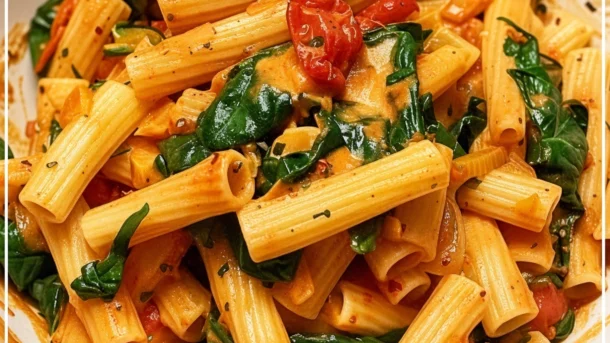
weeknight pasta

Vegan Spinach Basil Tomato Pasta

vegan spinach basil tomato pasta

Some of the best pasta dishes are also the simplest — the ones where a small number of excellent ingredients, treated correctly, produce a result that is so much more than the sum of its parts that it seems almost implausible. Vegan Spinach Basil Tomato Pasta is exactly this kind of dish. It is made from ingredients that most kitchens keep on hand at all times — pasta, tinned tomatoes, fresh spinach, garlic, basil, olive oil — but the method transforms them into a sauce that is bright, intensely flavored, glossy, and deeply satisfying: a sauce with real tomato acidity and sweetness, the gentle bitterness of wilted spinach, the perfume of fresh basil stirred through at the last moment off the heat, and a depth from the garlic that comes not from long cooking but from an initial bloom in good olive oil that develops the garlic’s sweetness while preserving its pungency. It is ready in 25 minutes from start to finish. It is naturally vegan, naturally dairy-free, and naturally egg-free — there is no substitution happening here, no dairy being replaced by something vegan; the dish is simply made from plants in the way it has always been made in the parts of Italy where tomatoes, spinach, and basil grow side by side from April through September. The pasta water starch is incorporated deliberately into the sauce, not discarded, and this single technique step is what gives the sauce its body, its glossiness, and its ability to cling to the pasta rather than sitting as a separate pool at the base of the bowl. The technique is what separates a genuinely good pasta al pomodoro from a tin of tomatoes poured over boiled pasta.

The technique is the pasta-water emulsification method. The fundamental quality difference between a restaurant-quality tomato sauce and a home version that looks and tastes noticeably thinner is almost always pasta water. Pasta cooking water is not plain water — after 8–10 minutes of cooking, it contains a high concentration of dissolved starch from the pasta surface, transforming it from a neutral liquid into a light, starchy liquid that acts as an emulsifier and thickener when incorporated into a sauce. The pasta-water emulsification method uses this starch-enriched water in two specific stages. Stage one — intentionally starchy water: at the start of cooking, the pasta water is seasoned generously with salt (pasta water should taste like mild sea water — approximately 1 tablespoon of fine salt per 4 litres of water) and the pasta is cooked in the minimum amount of water that allows the pasta to move freely, rather than in a large pot of water; the smaller volume of water becomes proportionally more starch-concentrated during cooking. Stage two — sauce finish with pasta water and reserved pasta: the pasta is pulled from the water 1 minute before its package-directed al dente time (it will finish cooking in the sauce), transferred directly into the tomato sauce using tongs or a spider strainer (not drained through a colander, which discards all the pasta water and removes the pasta’s surface starch), and 80–100ml of the reserved pasta cooking water is added to the sauce immediately. The pan is then tossed vigorously over medium-high heat for 60–90 seconds — this agitation emulsifies the starch, olive oil, and tomato liquid into a cohesive, glossy sauce that coats every strand of pasta. The spinach is wilted directly in the sauce during this final toss, the basil is added off the heat, and the result is a pasta whose sauce has body, shine, and grip rather than the flat, watery quality of a sauce assembled without this step.

This recipe serves 4.


Recipe Information

Prep TimeCook TimeTotal TimeServingsCalories
5 mins20 mins25 mins4~420 kcal

Ingredients

For the Pasta and Sauce

  • 400g (14oz) dried pasta — spaghetti, linguine, or rigatoni work best; long pasta (spaghetti, linguine) benefits most from the tossing technique as the strands distribute the sauce evenly; short pasta with ridges (rigatoni, penne rigate) traps sauce in its tubes and grooves; smooth penne is the least effective shape for a cling-style sauce
  • 1 tbsp fine salt — for the pasta water; this amount is correct and not excessive; properly salted pasta water is the single most impactful seasoning step in the recipe
  • 2 × 400g (14oz) tins of whole peeled tomatoes or crushed tomatoes — whole peeled tomatoes crushed by hand during cooking produce a slightly more textured, less uniform sauce; crushed tomatoes produce a smoother result; both are excellent and the choice is personal
  • 5 tbsp good extra-virgin olive oil — divided; 3 tablespoons for cooking, 2 tablespoons stirred through at the end off the heat; the finishing olive oil is important and should be a good-quality, flavorful oil, as it is uncooked and its character comes through clearly
  • 6 cloves garlic, thinly sliced — sliced rather than minced; thin slices cook more gently than finely minced garlic, develop a slightly sweeter, more mellow flavor, and remain visible in the finished sauce as tender, translucent slivers
  • ½ tsp chilli flakes (optional — use peperoncino if available; standard dried chilli flakes work perfectly)
  • 1 tsp sugar — balances the acidity of the tinned tomatoes; taste the sauce after 10 minutes of simmering and add a second teaspoon if the tomatoes taste particularly acidic
  • 1 tsp fine salt — for the sauce; add gradually and taste as you go
  • ½ tsp black pepper

For the Spinach and Basil

  • 150g (5oz) fresh baby spinach — added directly to the sauce in the final toss; baby spinach wilts in 30–60 seconds in a hot sauce and requires no pre-cooking
  • A large bunch of fresh basil (approximately 25–30 leaves) — torn, not cut; a knife bruises basil and causes the cut edges to blacken; torn basil retains its aroma and color; added entirely off the heat — basil added to a hot pan loses its aromatic brightness almost immediately
  • 2 tbsp finishing extra-virgin olive oil (from the 5 tbsp measured above)

Optional Finishing

  • Vegan Parmesan (nutritional yeast, cashew parmesan, or a commercial vegan Parmesan), to serve
  • Toasted pine nuts, scattered over the finished pasta
  • A squeeze of fresh lemon juice — a small squeeze (¼ lemon) stirred through the finished pasta brightens the entire dish; highly recommended

Instructions

  1. Start the pasta water. Fill a large saucepan with water and bring to a boil over high heat. Add 1 tablespoon of fine salt once boiling. Use a slightly smaller pot than you might normally use for pasta — the more concentrated starch water is intentional.
  2. Make the garlic oil base. While the water comes to a boil, heat 3 tablespoons of the olive oil in a large, wide saucepan or deep skillet over medium-low heat. Add the sliced garlic and chilli flakes if using. Cook gently for 3–4 minutes, stirring occasionally, until the garlic is softened, fragrant, and just barely golden at the edges — the goal is slow, gentle cooking that develops sweetness, not quick browning that develops bitterness. The oil should be gently bubbling around the garlic, not spitting.
  3. Add the tomatoes. Add the tinned tomatoes to the garlic oil. If using whole peeled tomatoes, crush each one in your hand over the pan as you add it (or use a fork to break them up once they are all in the pan). Season with the sugar, 1 teaspoon of salt, and black pepper. Stir well, increase heat to medium, and bring to a gentle simmer. Cook uncovered for 12–15 minutes, stirring occasionally, until the sauce has reduced slightly and deepened in color. Taste and adjust salt and sugar.
  4. Cook the pasta. Add the pasta to the boiling salted water and cook for 2 minutes less than the package’s al dente direction. Before draining, reserve 200ml (¾ cup) of the pasta cooking water in a heatproof jug or mug — this is more than you will need, but having extra is better than not having enough.
  5. Finish the sauce with pasta water emulsification — Stage 1 and 2. Using tongs or a spider strainer, transfer the pasta directly from the cooking water into the tomato sauce — do not drain through a colander. Add 80ml of the reserved pasta water to the sauce immediately. Increase the heat to medium-high. Toss the pasta vigorously in the sauce for 60–90 seconds — lift and fold repeatedly so every strand is coated and the sauce visibly thickens and becomes glossy. If the sauce looks too thick at any point, add a splash more pasta water and toss again. The pasta will finish cooking in this stage.
  6. Add the spinach. Add the baby spinach to the pan in large handfuls, tossing as you add it. The spinach will wilt and reduce dramatically in 30–60 seconds of tossing in the hot sauce. Continue tossing until all the spinach is just wilted and evenly distributed.
  7. Finish and serve. Remove from the heat. Add the remaining 2 tablespoons of finishing olive oil, the torn basil leaves, and a squeeze of lemon juice if using. Toss once more off the heat — the basil will release its aroma into the warm pasta without cooking. Taste and add a final pinch of salt if needed. Divide between four bowls. Finish with vegan Parmesan and toasted pine nuts if desired. Serve immediately — pasta is best eaten the moment it is ready.

Pro Tips

  • Never discard the pasta water before you have transferred the pasta to the sauce — this is the single most common pasta-cooking mistake at home, and it is irreversible. Keep the pasta water in the pot until the pasta is safely transferred. A ladle or heatproof jug next to the hob is the simplest system: scoop out 200ml of pasta water before you even think about removing the pasta from the pot.
  • The pasta finishes cooking in the sauce — this is intentional, not undercooking. Pasta pulled 2 minutes early from the boiling water and tossed for 60–90 seconds in a hot sauce arrives at al dente exactly. Pasta cooked to al dente in the water and then tossed in a hot sauce becomes overcooked. Trust the timing.
  • Use the best olive oil you can afford for the finishing drizzle — finishing olive oil is uncooked and its flavor comes through directly and completely. A peppery, grassy, high-quality extra-virgin olive oil elevates the finished dish dramatically. The cooking olive oil (used for the garlic base) can be a less expensive variety since cooking diminishes its character; the finishing oil should be the good bottle.
  • Basil blackens on contact with a knife blade — use your hands to tear it into rough pieces of roughly the same size. Torn basil stays green and aromatic for much longer than cut basil, and the irregular torn edges are visually more appealing in the finished bowl than uniform knife-cut pieces.

The Tomato’s Unlikely Journey to the Center of Italian Cuisine

The idea that Italian cooking is inseparable from the tomato is so deeply embedded in global culinary culture that it comes as a genuine surprise to most people to learn that tomatoes arrived in Italy less than 500 years ago, and that for at least a century after their arrival they were regarded with deep suspicion rather than culinary enthusiasm. Tomatoes are native to western South America — the wild ancestor of the cultivated tomato (Solanum pimpinellifolium) originated in the Andes, and the first cultivated tomatoes were developed by pre-Columbian civilizations in Mexico and Central America, possibly as early as 500 BCE. Spanish conquistadors carried tomato seeds back to Europe from Mexico in the early 16th century, and the plant reached Italy — where the warm Mediterranean climate suited it perfectly — by approximately 1548, when the first documented Italian mention of tomatoes appears in a letter noting that “some large golden apples” had been grown in the garden of Cosimo de’ Medici’s Tuscan estate. The name “pomodoro” (golden apple) — rather than the Spanish “tomate” — suggests that the earliest Italian tomatoes were yellow-fleshed varieties rather than the red ones that would dominate later. Despite growing well in the Italian climate, tomatoes were initially treated as ornamental curiosities rather than food: they are members of the Solanaceae family, which includes deadly nightshade and mandrake, and European botanists categorized them as potentially poisonous (the leaves and stems of tomato plants are indeed mildly toxic, containing solanine). The first Italian recipe using tomatoes as a culinary ingredient dates to a 1692 Neapolitan cookbook, and even then tomatoes remained primarily a southern Italian ingredient for another century. The mass adoption of tomatoes in Italian cooking — the development of the ragù, the pizza marinara, the simple pasta al pomodoro — happened during the late 18th and 19th centuries, and was driven as much by the tomato’s productivity, cheapness, and versatility as by any particular culinary insight. The dish that seems most quintessentially Italian — pasta tossed in a bright, fresh tomato sauce with olive oil and basil — is, historically, barely two centuries old.


Flavor Variations

  • Puttanesca Style: Add 60g (¼ cup) of pitted kalamata olives (roughly chopped), 2 tablespoons of capers (rinsed), and an additional ½ teaspoon of chilli flakes to the tomato sauce along with the tinned tomatoes. Omit the basil and finish with fresh flat-leaf parsley instead. Puttanesca is a sauce of contrasts — briny, spicy, sweet, and deeply savory — and the spinach folds in beautifully, its mildness balancing the assertive flavors of the olives and capers.
  • Creamy Tomato and Spinach: After the pasta-water toss, stir in 3 tablespoons of full-fat coconut cream or cashew cream (cashews blended with water to a thick cream) and toss until the cream is fully incorporated into the sauce. The result is a blush-pink, silky, slightly richer sauce that softens the tomato’s acidity and produces a dish closer in character to a vegan pasta rosa or a vodka sauce (without the vodka). Finish with basil as directed.
  • White Bean and Tomato Pasta: Add 1 × 400g tin of drained cannellini beans or butter beans to the tomato sauce along with the tinned tomatoes and cook for the full 15 minutes. The beans break down slightly at the edges during cooking and thicken the sauce naturally while adding protein and a creamy, starchy texture. This variation is substantially more filling than the base recipe and makes an excellent complete meal. Finish with a drizzle of chilli oil in addition to the finishing olive oil.

Nutritional Highlights (Per Serving — Based on 4 Servings)

CaloriesProteinCarbsFiberFat
~420 kcal13g65g6g13g

Storage

  • Refrigerator: Store leftover pasta in a sealed container for up to 3 days. The pasta will absorb the remaining sauce during storage and may look dry when reheated. To reheat: place in a saucepan with a splash of water over medium heat, tossing as it heats, until the sauce loosens and the pasta is warmed through. Do not microwave if possible — it heats unevenly and tends to make the pasta gummy; stovetop reheating with a splash of water is consistently better.
  • The sauce (separate from the pasta): The tomato sauce freezes beautifully for up to 3 months. If you want to meal-prep this dish, cook the sauce in advance and freeze it; cook the pasta fresh when serving and finish with pasta water emulsification using fresh pasta water each time. A frozen sauce portion thawed and finished with fresh pasta water produces a result indistinguishable from freshly made.
  • Not ideal for advance assembly: unlike a baked pasta, this dish is best assembled at the moment of serving — the pasta-water emulsification technique that gives the sauce its glossiness and body works optimally when the pasta, hot pasta water, and sauce are all hot simultaneously. A pasta assembled in advance and reheated will be good but will not have the same glossy, cohesive sauce of a freshly made batch.
  • Leftover tip: cold leftover pasta, eaten directly from the container, is a genuine pleasure and an Italian domestic tradition — many people find it more satisfying than the reheated version, as the sauce has fully absorbed into the pasta overnight.

Frequently Asked Questions

The sauce tastes acidic. How do I fix it?

Tinned tomatoes vary significantly in acidity depending on brand, variety, and harvest season. The two tools for correcting acidity are sugar and salt — add ½ teaspoon of sugar and a pinch of salt, stir, and taste again after 2 minutes of simmering; repeat if needed. A longer cooking time also mellows acidity — 5 more minutes of gentle simmering will noticeably reduce the sharp edge. A small knob of vegan butter stirred through at the end (the “mantecatura” technique) also rounds acidity and adds gloss, and is fully vegan with plant-based block butter.

Can I use fresh tomatoes instead of tinned?

Yes — ripe, in-season fresh tomatoes produce a brighter, lighter sauce than tinned, while out-of-season fresh tomatoes produce a flat, disappointing sauce that tinned tomatoes will always surpass. Use approximately 800g (1¾ lb) of ripe tomatoes, roughly chopped. Add them to the garlic oil and cook for 20–25 minutes, slightly longer than the tinned version, until they have broken down and reduced to a thick sauce. Pass through a fine mesh sieve if you want a smooth sauce, or leave with the skins and seeds for a more rustic result.

My pasta is sticking together after I transferred it to the sauce. How do I prevent this?

Pasta sticks together when it sits in its own heat without moisture after being removed from the cooking water. The solution is to move quickly — transfer the pasta to the sauce within 30 seconds of pulling it from the water, and add the pasta water immediately. If pasta has already stuck, the pasta water added to the hot pan will loosen it within 30 seconds of vigorous tossing. Do not add oil to the pasta after draining to prevent sticking — oil coats the pasta surface and prevents the sauce from adhering, directly undermining the emulsification technique.

How do I make this gluten-free?

Use certified gluten-free pasta in place of standard pasta. The pasta-water emulsification technique works identically with gluten-free pasta — gluten-free pasta releases similar amounts of starch into the cooking water, sometimes more, which can actually produce a particularly glossy sauce. Note that gluten-free pasta tends to become gummy more quickly than wheat pasta after cooking, so the timing of pulling it 2 minutes before al dente and finishing in the sauce is even more important for gluten-free varieties.


Tried this recipe? Leave a comment below and let us know how it turned out! Tag us on Instagram and Facebook — we love seeing your plant-powered creations. Looking for more addictive vegan snack and appetizer recipes? Browse all recipes on Easy Vegan Recipes — new recipes posted every single week!
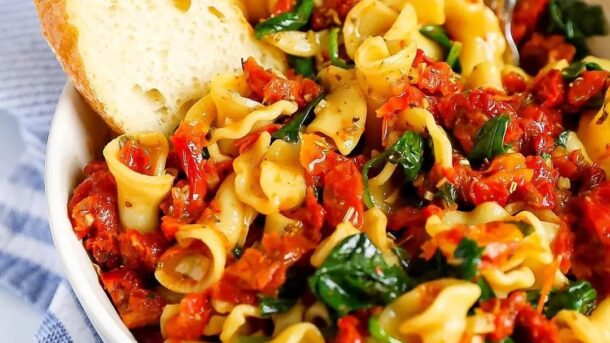
Creamy Vegan Tuscan Pasta with Sun-Dried Tomatoes and Spinach

Unknown 306684865 824264728566611 2962685386403606298 N 1 610x343

Creamy, garlicky, and packed with sun-dried tomatoes and tender spinach, this Vegan Tuscan Pasta is the kind of dinner that tastes like a restaurant special but comes together in a single pan in about 30 minutes. A silky, dairy-free cream sauce coats every strand of pasta, with bursts of tangy sun-dried tomato, wilted greens, and a hint of smoky paprika and Italian herbs that make each forkful rich and deeply satisfying.

Tuscan-style dishes are inspired by the rustic, flavorful cooking of Tuscany, where simple ingredients are treated with respect. Sun-dried tomatoes, garlic, olive oil, fresh herbs, and leafy greens appear again and again, and this pasta brings those flavors together in a creamy sauce that feels indulgent without being heavy.

The secret to the sauce is a blend of full-fat coconut milk and nutritional yeast, thickened with a little cornstarch and boosted by the oil from the sun-dried tomato jar. The result is velvety, cheesy, and tangy, with none of the coconut flavor you might expect. Fresh garlic, a splash of white wine or vegetable broth, and a squeeze of lemon add depth and brightness.

Mushrooms are optional but highly recommended. They add a meaty, savory dimension that makes the dish more filling and satisfying. Serve it with crusty bread and a simple green salad for a complete meal.

This recipe is 100% vegan, easy to make gluten-free, and ready in 30 minutes, making it perfect for busy weeknights and special dinners alike.


Recipe Information

Prep TimeCook TimeTotal TimeServingsCalories
10 mins20 mins30 mins4~520 kcal

Ingredients

For the Pasta

  • 12 oz (340g) penne, rigatoni, or fettuccine
  • 2 tbsp olive oil or oil from the sun-dried tomato jar
  • 8 oz (225g) cremini mushrooms, sliced (optional)
  • ½ cup (75g) sun-dried tomatoes in oil, drained and sliced
  • 5 cloves garlic, minced
  • 5 cups (150g) fresh baby spinach
  • Fresh basil or parsley to finish

For the Creamy Tuscan Sauce

  • 1 can (400ml) full-fat coconut milk
  • ½ cup (120ml) vegetable broth
  • ¼ cup (60ml) dry white wine (or extra vegetable broth)
  • 3 tbsp nutritional yeast
  • 1 tbsp cornstarch mixed with 2 tbsp cold water
  • 1 tbsp lemon juice
  • 1 tsp Italian seasoning
  • 1 tsp smoked paprika
  • ½ tsp onion powder
  • ½ tsp salt, plus more to taste
  • ¼ tsp black pepper
  • ¼ tsp chili flakes (optional)

To Serve

  • Vegan parmesan
  • Fresh basil leaves
  • Chili flakes
  • Toasted pine nuts
  • Lemon wedges
  • Crusty garlic bread

Instructions

  1. Boil the pasta. Cook the pasta in a large pot of well-salted water until al dente, according to package directions. Reserve 1 cup of the pasta water, then drain.
  2. Cook the mushrooms. Heat 1 tablespoon of oil in a large, deep skillet over medium-high heat. Add the mushrooms in a single layer and cook for 5–6 minutes without stirring too often, until deeply golden. Remove half for topping if desired.
  3. Build the flavor. Reduce the heat to medium. Add the remaining oil, sun-dried tomatoes, and garlic and cook for 1–2 minutes until fragrant. Stir in the Italian seasoning, paprika, and chili flakes.
  4. Deglaze. Pour in the white wine and scrape up any browned bits from the pan. Simmer for 1–2 minutes until reduced by half.
  5. Make the sauce. Add the coconut milk, vegetable broth, nutritional yeast, onion powder, salt, and pepper. Bring to a gentle simmer and cook for 4–5 minutes. Stir in the cornstarch slurry and cook for 1–2 minutes more until the sauce thickens enough to coat the back of a spoon.
  6. Wilt the spinach. Add the spinach in handfuls, stirring until wilted, about 1–2 minutes.
  7. Combine. Add the cooked pasta to the sauce and toss to coat. Add reserved pasta water, a splash at a time, until the sauce is silky and clings to the pasta. Stir in the lemon juice.
  8. Taste and adjust. Add more salt, pepper, lemon, or nutritional yeast as needed. The sauce should taste creamy, savory, tangy, and balanced.
  9. Serve. Divide among bowls and top with basil, vegan parmesan, chili flakes, and any reserved mushrooms. Serve right away while the sauce is at its creamiest.

Pro Tips for the Creamiest Tuscan Pasta

  • Use full-fat coconut milk. Light coconut milk makes a thin, watery sauce. Full-fat gives richness and body.
  • Use the oil from the sun-dried tomato jar. It is infused with tomato flavor and adds depth to the sauce.
  • Do not overcook the pasta. It continues to soften in the sauce, so pull it a minute early.
  • Save the pasta water. The starch helps the sauce cling and become silky.
  • Add the cornstarch slurry slowly. It thickens fast. Stop when the sauce coats a spoon.
  • Brown the mushrooms properly. Crowding the pan steams them. Cook in batches if needed.
  • Finish with lemon. A little acid cuts through the richness and wakes up all the flavors.

Why This Pasta Is So Satisfying

Creamy pasta works because of the balance between richness, acidity, and savory depth. Coconut milk gives body, nutritional yeast adds a cheesy, nutty umami, sun-dried tomatoes bring concentrated sweetness and tang, and garlic and herbs add aromatic warmth. Lemon and wine brighten everything so the sauce never feels heavy.

Sun-dried tomatoes are especially rich in lycopene, a powerful antioxidant, and the oil they are packed in helps your body absorb it. Spinach provides iron, folate, and vitamins A and K. Nutritional yeast is often fortified with B vitamins, including B12, and mushrooms contribute selenium and extra umami.

Together these ingredients make a pasta that feels indulgent but delivers meaningful nutrition, with about 15 grams of plant-based protein per serving.


Flavor Variations

  • Tuscan Pasta with White Beans: Stir in a can of drained cannellini beans for extra protein and a creamy texture.
  • Roasted Red Pepper Tuscan Pasta: Add chopped jarred roasted red peppers for sweetness and a smoky edge.
  • Tuscan Gnocchi: Swap the pasta for pan-fried potato gnocchi for a soft, pillowy version.
  • Spicy Tuscan Pasta: Add extra chili flakes and a spoonful of calabrian chili paste for a fiery version.

Nutritional Highlights (Per Serving)

CaloriesProteinCarbsFiberFat
~520 kcal15g68g6g20g

Storage

  • Refrigerator: Store in an airtight container for up to 4 days. The sauce thickens as it chills.
  • Reheating: Warm gently in a pan with a splash of plant milk or broth, stirring until creamy again.
  • Freezer: Cream-based pasta does not freeze perfectly, but the sauce alone freezes well for up to 2 months. Add freshly cooked pasta when reheating.
  • Meal prep: Cook the pasta slightly under al dente, since it will soften when reheated.

Frequently Asked Questions

Can I make this pasta without coconut milk?

Yes. Use unsweetened oat cream, soy cream, or a cashew cream made from soaked cashews blended with water. The flavor will be slightly milder and equally creamy.

Does this taste like coconut?

Not noticeably. The garlic, sun-dried tomatoes, herbs, and nutritional yeast overpower the coconut flavor, leaving a rich, savory cream sauce.

What can I use instead of white wine?

Use vegetable broth with a teaspoon of lemon juice or white wine vinegar to keep the acidity and depth.

Can I make this gluten-free?

Use gluten-free pasta and check that the broth and seasonings are certified gluten-free. Cook the pasta slightly less to avoid mushiness.

Can I add vegan sausage or chicken?

Yes. Sliced vegan Italian sausage or plant-based chicken strips work wonderfully. Brown them first and add them back with the pasta.

What pasta shape works best?

Short shapes like penne, rigatoni, and fusilli hold the sauce well. Long pasta like fettuccine or linguine is also excellent.


Tried this recipe? Leave a comment below and let us know how it turned out! Tag us on Instagram and Facebook — we love seeing your plant-powered creations. Looking for more easy vegan pasta and dinner recipes? Browse all recipes on Easy Vegan Recipes — new recipes posted every single week!
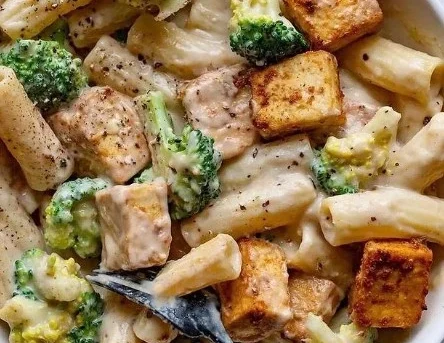
Creamy Vegan Pasta with Air Fryer Tofu, Peas and Lemon Garlic Sauce

creamy vegan pasta with air fryer tofu

Silky, garlicky, and brightened with fresh lemon, this Creamy Vegan Pasta with Air Fryer Tofu is the kind of dinner that feels indulgent but comes together quickly. Al dente pasta is tossed in a velvety white bean and cashew cream sauce, then topped with golden, crispy air fryer tofu and sweet green peas. It is rich without being heavy, and every bite is packed with flavor and texture.

The sauce is the heart of this dish. Instead of heavy cream, it uses a blend of cannellini beans and soaked cashews, which together create an ultra-smooth, creamy base with a mild, buttery flavor. Roasted garlic, nutritional yeast, lemon juice, and a touch of Dijon mustard give it depth and tang, while a splash of starchy pasta water helps it cling to every strand. It is naturally dairy-free and surprisingly light.

The tofu is cooked in the air fryer, which makes it unbelievably crisp with very little oil. Pressed tofu is cubed, tossed in cornstarch and seasonings, and air fried until the edges are golden and crunchy. It adds protein and a satisfying contrast to the creamy pasta, and it takes just 12 to 15 minutes.

Peas add sweetness and color, a handful of fresh basil or parsley adds brightness, and a sprinkle of black pepper and chili flakes finishes the dish. Serve it with a simple green salad and garlic bread for an easy, cozy meal.

This recipe is 100% vegan, can be made gluten-free, and is ready in about 30 minutes.


Recipe Information

Prep TimeCook TimeTotal TimeServingsCalories
10 mins20 mins30 mins4~560 kcal

Ingredients

For the Air Fryer Tofu

  • 1 block (400g) extra-firm tofu, pressed for 15 minutes and cut into 2cm cubes
  • 2 tbsp cornstarch
  • 1 tbsp soy sauce or tamari
  • 1 tbsp olive oil
  • 1 tsp garlic powder
  • 1 tsp smoked paprika
  • ½ tsp onion powder
  • ½ tsp salt
  • ¼ tsp black pepper

For the Pasta

  • 12 oz (340g) fettuccine, penne, or rigatoni
  • 1 cup (150g) frozen peas
  • 2 tbsp fresh basil or parsley, chopped
  • Zest of 1 lemon

For the Creamy Lemon Garlic Sauce

  • 1 can (400g) cannellini beans, drained and rinsed
  • ½ cup (70g) raw cashews, soaked in hot water for 20 minutes and drained
  • 1 cup (240ml) unsweetened plant milk
  • 4 cloves garlic, minced (or 1 head roasted garlic)
  • 3 tbsp nutritional yeast
  • 2 tbsp lemon juice
  • 1 tbsp olive oil
  • 1 tsp Dijon mustard
  • 1 tsp onion powder
  • ¾ tsp salt, plus more to taste
  • ¼ tsp black pepper
  • Pinch of nutmeg

To Serve

  • Extra lemon zest
  • Vegan parmesan
  • Chili flakes
  • Fresh basil
  • Cracked black pepper
  • Garlic bread

Instructions

  1. Press and season the tofu. Wrap the tofu in a clean towel and press for 15 minutes. Cut into cubes and toss gently with soy sauce and oil, then add the cornstarch, garlic powder, paprika, onion powder, salt, and pepper and toss until every piece is coated.
  2. Air fry the tofu. Preheat the air fryer to 400°F (200°C). Arrange the tofu in a single layer in the basket and cook for 12–15 minutes, shaking the basket every 5 minutes, until golden and crisp.
  3. Boil the pasta. Meanwhile, cook the pasta in well-salted water until al dente. Add the peas for the final minute. Reserve 1 cup of the pasta water, then drain.
  4. Make the sauce. In a high-speed blender combine the beans, cashews, plant milk, garlic, nutritional yeast, lemon juice, olive oil, mustard, onion powder, salt, pepper, and nutmeg. Blend for 1–2 minutes until completely smooth and velvety.
  5. Warm the sauce. Pour the sauce into the empty pasta pot over medium-low heat and warm for 2–3 minutes, stirring often. Do not boil. Thin with reserved pasta water, a splash at a time, until silky.
  6. Combine. Add the cooked pasta and peas to the sauce and toss until evenly coated. Add more pasta water if the sauce is too thick. Stir in the lemon zest and fresh herbs.
  7. Taste and adjust. Add more salt, lemon juice, or pepper as needed. The sauce should taste creamy, savory, and bright.
  8. Serve. Divide the pasta among bowls and top with the crispy tofu. Finish with lemon zest, vegan parmesan, chili flakes, and cracked pepper. Serve right away.

Pro Tips for the Creamiest Pasta and Crispiest Tofu

  • Press the tofu well. Dry tofu crisps better and absorbs seasoning more effectively.
  • Coat with cornstarch. It forms a thin crust that turns crisp in the air fryer.
  • Do not crowd the basket. Tofu needs space and airflow to crisp up. Cook in batches if needed.
  • Blend the sauce until perfectly smooth. A high-speed blender gives the silkiest sauce. If yours is less powerful, soak the cashews longer.
  • Use pasta water. The starch helps the sauce cling and become glossy.
  • Warm the sauce gently. High heat can make a bean-based sauce thick or grainy.
  • Add lemon at the end. It keeps the flavor bright and fresh.

Why This Sauce Is So Creamy

Cannellini beans have a naturally smooth, creamy texture and a mild flavor, making them an excellent base for dairy-free sauces. When blended with cashews, which add richness and a subtle sweetness, they create a sauce with a silky mouthfeel that rivals cream. Nutritional yeast contributes savory, cheesy depth, and Dijon mustard adds a gentle tang.

Because the sauce is made with beans and nuts, it brings protein, fiber, and healthy fats instead of the saturated fat in heavy cream. Tofu adds even more protein, and peas provide fiber and vitamin C. A serving provides around 28 grams of plant-based protein, making this a surprisingly filling dinner.

The air fryer also helps keep the dish lighter. It circulates hot air to crisp the tofu with only a tablespoon of oil, so you get the crunch of fried tofu without the heaviness.


Flavor Variations

  • Broccoli Lemon Pasta: Add steamed broccoli florets alongside the peas.
  • Spicy Garlic Pasta: Add extra chili flakes and a teaspoon of chili oil.
  • Mushroom Cream Pasta: Add sautéed mushrooms for extra umami.
  • Pesto Cream Pasta: Stir 2 tablespoons of vegan pesto into the sauce for a green, herby twist.

Nutritional Highlights (Per Serving)

CaloriesProteinCarbsFiberFat
~560 kcal28g74g10g18g

Storage

  • Refrigerator: Store pasta and tofu separately in airtight containers for up to 4 days. The sauce thickens as it cools.
  • Reheating: Reheat pasta in a skillet with a splash of plant milk or water. Re-crisp the tofu in the air fryer for 3–4 minutes.
  • Sauce: Keeps for 5 days in the refrigerator, and freezes for up to 2 months.
  • Meal prep: Pack the tofu separately so it stays crisp.

Frequently Asked Questions

Can I make the sauce without cashews?

Yes. Replace the cashews with an extra half can of beans and a tablespoon of olive oil, or use sunflower seeds for a nut-free version.

Can I bake the tofu instead?

Yes. Bake at 425°F (220°C) for 25–30 minutes, turning once, until golden and crisp.

How do I make this gluten-free?

Use gluten-free pasta and tamari instead of soy sauce, and check labels on the other ingredients.

Can I use a different bean?

Great northern beans or white butter beans also work and are similarly creamy.

Can I make the sauce ahead?

Yes. Make it up to 5 days ahead and reheat gently with a splash of plant milk.

What other vegetables can I add?

Spinach, asparagus, zucchini, or sun-dried tomatoes are all great additions.


Tried this recipe? Leave a comment below and let us know how it turned out! Tag us on Instagram and Facebook — we love seeing your plant-powered creations. Looking for more easy vegan pasta and dinner recipes? Browse all recipes on Easy Vegan Recipes — new recipes posted every single week!

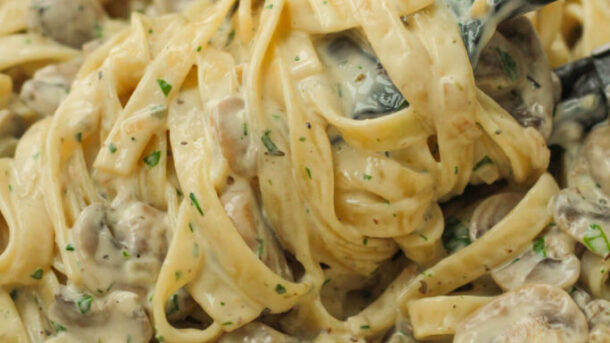
Creamy Vegan Alfredo-Style Mushroom Pasta with a No-Blender Garlic Béchamel Sauce, Golden Seared Mushrooms and Fresh Parsley

Vegan mushroom alfredo

Silky ribbons of fettuccine coated in a rich, garlicky cream sauce and topped with golden seared mushrooms: this Creamy Vegan Alfredo-Style Mushroom Pasta delivers all the comfort of the classic Italian-American favorite, with no dairy, no nuts, and no blender required.

The sauce is a simple, classic technique: a roux. Vegan butter and flour are cooked together briefly, then whisked with warm oat milk and vegetable broth until thick and velvety. Garlic, nutritional yeast, a spoonful of Dijon mustard, a pinch of nutmeg, and a squeeze of lemon give it that savory, cheesy, slightly tangy Alfredo flavor, and a splash of starchy pasta water makes it glossy and clingy. It all comes together in one skillet in about ten minutes.

The mushrooms provide the savory, meaty depth. A mix of cremini and oyster mushrooms is seared in a hot pan without crowding, until deeply golden and crisp at the edges, then finished with garlic and thyme. A bit of white wine or broth lifts all the browned bits into the sauce.

It is a quick weeknight dinner that feels restaurant-worthy, with ingredients you can find at any grocery store. Serve it with a green salad and garlic bread, and finish with cracked black pepper, parsley, and a dusting of vegan parmesan.

This recipe is 100% vegan and dairy-free, and nut-free. It contains gluten (pasta, flour) and may contain soy, depending on your plant milk and butter. See the swaps below.


Recipe Information

Prep TimeCook TimeTotal TimeServingsCalories
10 mins25 mins35 mins4~520 kcal each

Ingredients

For the Pasta

  • 12 oz (340g) fettuccine, tagliatelle, or pappardelle
  • Salt, for the pasta water

For the Seared Mushrooms

  • 2 tbsp olive oil
  • 1 lb (450g) mixed mushrooms (cremini and oyster), sliced or torn
  • 2 garlic cloves, minced
  • 1 tsp fresh thyme leaves (or ½ tsp dried)
  • ¼ tsp salt
  • Black pepper, to taste

For the Garlic Béchamel Alfredo Sauce

  • 3 tbsp vegan butter
  • 4 garlic cloves, minced
  • 3 tbsp all-purpose flour
  • 2 cups (480ml) unsweetened oat milk or soy milk, warm
  • ½ cup (120ml) vegetable broth, warm
  • ¼ cup (30g) nutritional yeast
  • 1 tsp Dijon mustard
  • 1 tbsp lemon juice
  • ¼ tsp ground nutmeg
  • ¾ tsp salt, plus more to taste
  • ½ tsp white or black pepper
  • ½ cup (120ml) reserved pasta water, as needed

To Serve

  • Fresh parsley
  • Vegan parmesan
  • Cracked black pepper
  • Lemon zest

Optional Additions

  • A splash of white wine
  • Baby spinach or peas
  • Chili flakes
  • Toasted breadcrumbs

Instructions

  1. Boil the pasta. Cook the pasta in a large pot of well-salted water until al dente. Reserve 1 cup of the pasta water, then drain.
  2. Sear the mushrooms. Heat the olive oil in a large, wide skillet over medium-high heat. Add the mushrooms in a single layer (in two batches if needed). Cook without stirring for 3–4 minutes, then stir and cook for 4–5 minutes more until deeply golden. Add the garlic, thyme, salt, and pepper for the last minute. Transfer to a plate.
  3. Start the roux. In the same pan over medium-low heat, melt the vegan butter. Add the garlic and cook for 30 seconds. Whisk in the flour and cook for 1–2 minutes, stirring, until it smells nutty but has not browned.
  4. Add the liquids. Gradually pour in the warm oat milk and broth, whisking constantly to prevent lumps. Cook for 4–5 minutes, whisking, until the sauce thickens and coats the back of a spoon.
  5. Season. Stir in the nutritional yeast, mustard, lemon juice, nutmeg, salt, and pepper. Taste and adjust.
  6. Combine. Add the drained pasta to the sauce and toss with tongs, adding pasta water a splash at a time until the sauce is glossy and silky.
  7. Add the mushrooms. Fold in two-thirds of the mushrooms.
  8. Serve. Divide among bowls. Top with the remaining mushrooms, parsley, vegan parmesan, lemon zest, and black pepper.

Pro Tips for the Best Alfredo-Style Pasta

  • Warm the milk before adding. Cold milk is more likely to make the roux lumpy.
  • Whisk constantly while adding the liquid.
  • Sear the mushrooms in batches. Crowding makes them steam.
  • Do not salt the mushrooms early. Salt draws out water.
  • Add the pasta water gradually. Its starch makes the sauce cling.
  • Finish with lemon. A little acid brightens the cream.
  • Serve immediately. The sauce thickens as it cools.
  • Reheat gently with a splash of milk or water.

A Few Notes on Ingredients

Oat milk is naturally creamy and slightly sweet, so it works well here, but unsweetened soy milk gives the most protein. Nutritional yeast adds cheesy flavor, and nutmeg adds the classic Alfredo warmth. Mushrooms bring umami and a meaty texture.

Use unsweetened, plain plant milk, since flavored milk will change the taste.


Flavor Variations

  • Gluten-Free: Use gluten-free pasta and a 1:1 gluten-free flour or 2 tablespoons of cornstarch.
  • Garlicky Broccoli Alfredo: Add steamed broccoli florets.
  • Cashew Version: Blend soaked cashews into the milk for a richer sauce.
  • Spicy Alfredo: Add chili flakes.
  • Creamy Spinach Version: Wilt in spinach at the end.

Nutritional Highlights (Per Serving)

CaloriesProteinCarbsFiberFat
~520 kcal17g76g6g14g

Storage

  • Refrigerator: Store in an airtight container for up to 3 days. The sauce thickens.
  • Reheating: Warm gently in a skillet with a splash of plant milk or water.
  • Freezer: Not recommended, since the sauce can separate.
  • Make ahead: Make the sauce a day ahead and reheat with a splash of milk.

Frequently Asked Questions

Why is my sauce lumpy?

The liquid was added too quickly or was cold. Whisk constantly, add warm milk gradually, and blend with an immersion blender if needed.

Can I make the sauce without flour?

Use 1 tablespoon of cornstarch mixed with a little cold milk instead.

Can I make it nut-free?

Yes. This recipe is nut-free as written.

Can I use other mushrooms?

Yes. Shiitake, portobello, and button mushrooms all work.

Why does the sauce taste flat?

It likely needs more salt, lemon, or nutritional yeast. Adjust to taste.

How is this different from your other mushroom pasta recipes?

This sauce is a no-blender roux-based béchamel with seared mixed mushrooms. Our Vegan Mushroom Alfredo uses a blended cashew sauce, and our Creamy Vegan Mushroom Pasta uses a blended nut-free white bean sauce with spinach and thyme.


Tried this recipe? Leave a comment below and let us know how it turned out! Tag us on Instagram and Facebook — we love seeing your plant-powered creations. Browse all recipes on Easy Vegan Recipes — new recipes posted every single week!