
vegan sushi rolls

Vegan Sushi Rolls for Beginners

vegan sushi rolls

Perfectly seasoned sushi rice rolled with creamy avocado, crisp cucumber, sweet carrot, and nutty sesame inside toasted nori, sliced into neat rounds and dipped in soy sauce: these Vegan Sushi Rolls are easier to make at home than you think, and they are fresh, colorful, and fun.

Making sushi at home comes down to three things: well-cooked, properly seasoned rice, a good filling, and a simple rolling technique. This beginner-friendly guide walks through all three. The rice is cooked until sticky and tender, then folded with a mixture of rice vinegar, sugar, and salt that gives it its classic, slightly tangy flavor. The fillings are simple raw and cooked vegetables that need almost no prep.

You do not need special equipment, although a bamboo sushi mat makes rolling much easier. If you do not have one, a clean kitchen towel or a sheet of parchment paper wrapped in plastic wrap works well. A sharp knife wiped between cuts gives clean, even slices.

This recipe gives you a classic roll (nori on the outside) and an inside-out roll (rice on the outside with sesame seeds), plus ideas for different fillings. Serve with soy sauce or tamari, pickled ginger, and a little wasabi. It makes a fun dinner, a party spread, or a make-ahead lunch.

This recipe is 100% vegan and dairy-free. It contains soy and sesame, and it is gluten-free if you use tamari. Please check labels on your rice vinegar, soy sauce, and nori.


Recipe Information

Prep TimeCook TimeTotal TimeServingsCalories
35 mins20 mins55 mins4 (about 32 pieces)~340 kcal each

Ingredients

For the Sushi Rice

  • 2 cups (400g) sushi rice (short-grain)
  • 2½ cups (600ml) water, plus extra for rinsing
  • ¼ cup (60ml) rice vinegar
  • 2 tbsp sugar
  • 1 tsp salt

For the Fillings

  • 1 ripe avocado, sliced into thin strips
  • 1 small cucumber, cut into long matchsticks
  • 1 medium carrot, cut into long matchsticks
  • 1 red bell pepper, cut into thin strips
  • 4 green onions, cut into long pieces (optional)

For Rolling

  • 6 sheets nori (seaweed)
  • 2 tbsp toasted sesame seeds (for inside-out rolls)
  • Small bowl of water, for sealing

To Serve

  • Soy sauce or tamari
  • Pickled ginger
  • Wasabi
  • Sriracha mayo (vegan mayo and sriracha)
  • Sesame seeds

Optional Additions

  • Baked tofu strips
  • Marinated shiitake mushrooms
  • Mango strips
  • Sweet potato (roasted)
  • Vegan cream cheese
  • Pickled radish

Instructions

  1. Rinse the rice. Rinse the sushi rice in a bowl of cold water, swirling and draining, until the water runs mostly clear, about 4–5 rinses. Drain well.
  2. Cook the rice. Cook the rice with the water in a covered pot. Bring to a boil, reduce to the lowest heat, and cook covered for 15 minutes. Remove from the heat and rest, covered, for 10 minutes. (In a rice cooker, use the sushi rice setting.)
  3. Season the rice. Warm the vinegar, sugar, and salt until dissolved. Spread the rice in a large shallow bowl and pour the vinegar mixture over it. Fold gently with a spatula, using cutting motions, until evenly seasoned. Let the rice cool to room temperature.
  4. Prepare the fillings. Cut all the vegetables into long, thin strips about the same length as the nori sheet.
  5. Set up. Place a bamboo mat on your counter, with a layer of plastic wrap on top. Place a nori sheet shiny side down on the mat.
  6. Spread the rice. Wet your hands to prevent sticking. Spread about ¾ cup of rice over the nori in a thin, even layer, leaving a 1-inch border at the top.
  7. Add the fillings. Lay a few strips of avocado, cucumber, carrot, and pepper in a line across the bottom third of the rice.
  8. Roll. Lift the edge of the mat nearest you and roll it over the filling, tucking it in tightly. Continue rolling and gently press to shape. Wet the top border with water to seal.
  9. Inside-out roll (optional). Flip the nori sheet so the rice side is facing down on the plastic wrap, sprinkle with sesame seeds, flip it again, add the fillings, and roll.
  10. Slice. Wet a sharp knife and cut each roll in half, then cut each half into 3–4 pieces, wiping the knife between cuts.
  11. Serve. Arrange on a platter with soy sauce, pickled ginger, and wasabi.

Pro Tips for the Best Sushi Rolls

  • Use sushi rice. Other rice will not stick together.
  • Rinse the rice until the water runs clear.
  • Cool the rice before rolling. Warm rice makes the nori soggy.
  • Wet your hands to keep the rice from sticking.
  • Do not overfill the roll. Less filling rolls better.
  • Roll tightly and press gently.
  • Use a very sharp, wet knife for clean slices.
  • Dry the vegetables so the nori stays crisp.
  • Keep the rice covered with a damp towel while you work.

A Few Notes on Ingredients

Sushi rice is a short-grain rice that becomes sticky when cooked, which holds the rolls together. Rice vinegar gives the rice its sushi flavor. Nori is dried seaweed, and it is sold in toasted sheets in the Asian aisle.

Choose a firm, just-ripe avocado so it slices neatly and does not turn mushy in the roll.


Flavor Variations

  • Sweet Potato Rolls: Add roasted sweet potato strips.
  • Tofu Rolls: Add baked or marinated tofu.
  • Mango Avocado Rolls: Use mango with avocado and cucumber.
  • Spicy Rolls: Add sriracha mayo.
  • Mushroom Rolls: Use soy-glazed shiitake.
  • Sushi Bowl: Skip the rolling and serve the rice and fillings in a bowl.
  • Gluten-Free: Use tamari.

Nutritional Highlights (Per Serving)

CaloriesProteinCarbsFiberFat
~340 kcal7g66g6g6g

Storage

  • Refrigerator: Store rolls wrapped for up to 1 day. The rice hardens as it chills.
  • Freezer: Not recommended.
  • Rice: Keep leftover seasoned rice covered at room temperature for the day.
  • Make ahead: Prepare the vegetables and the rice a few hours ahead, and roll just before serving.

Frequently Asked Questions

Do I need a bamboo mat?

No, but it helps. A clean kitchen towel with plastic wrap works too.

Can I use brown rice?

Yes, but it is less sticky. Use short-grain brown rice and add a little extra water.

Why is my sushi falling apart?

The roll may be too loose, overfilled, or the rice may be too dry. Roll tightly, use less filling, and seal the edge with water.

Can I make sushi ahead of time?

It is best fresh. You can prepare the fillings and rice ahead and roll before serving.

What can I use instead of nori?

Rice paper, cucumber slices, or thin omelet-style crepes work as wrappers.

How is this different from your other sushi recipe?

This is a beginner’s classic maki guide with sushi rice, avocado, cucumber, and carrot. Our Spicy Tomato Sushi Rolls with Forbidden Rice use black rice and tomato in place of fish.


Tried this recipe? Leave a comment below and let us know how it turned out! Tag us on Instagram and Facebook — we love seeing your plant-powered creations. Browse all recipes on Easy Vegan Recipes — new recipes posted every single week!
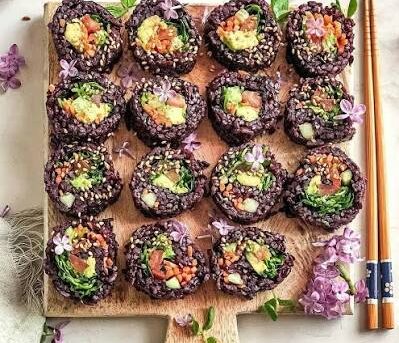
Spicy Tomato Sushi Rolls with Forbidden Rice

stunning spicy tomato sushi rolls with forbidden rice

There are meals you make because dinner is needed. And then there are meals like these Spicy Tomato Sushi Rolls with Forbidden Rice — the kind that arrive on the board as sixteen dramatic, jewel-like rounds of deep purple-black forbidden rice wrapped around a vivid filling of spicy marinated tomato, creamy avocado, and fresh greens, so visually extraordinary that people stop and stare before they reach for one. This is that meal. The one that looks like it belongs on the table of a fine dining restaurant and is made entirely in your own kitchen. The one that proves plant-based cooking is not just nourishing but genuinely, breathtakingly beautiful.

These inside-out sushi rolls use cooked forbidden rice — the striking deep purple-black short grain rice that turns the entire roll into something visually dramatic — seasoned with rice vinegar, sugar, and salt in the traditional sushi rice manner, then rolled outside-in around a filling of roma tomatoes marinated in sesame oil, soy sauce, and chili until they take on a rich, deeply savory, slightly spicy character, with layers of ripe avocado and fresh greens that add creaminess and brightness to every single piece.

What makes these rolls so outstanding is the forbidden rice — its natural deep purple-black pigment from anthocyanins produces a color so dramatic against the vivid red tomato and green avocado filling that each sliced roll is a genuinely beautiful thing, making this one of the most visually impressive plant-based dishes in the entire collection.

This recipe is 100% vegan, naturally gluten-free when made with tamari, ready in about 60 minutes, and absolutely magnificent arranged on a board and served with pickled ginger, wasabi, and a small bowl of soy sauce alongside.


Recipe Information

Prep TimeCook TimeTotal TimeServingsCalories
30 mins30 mins60 mins4~380 kcal

Ingredients

For the Forbidden Rice

  • 1½ cups (300g) black forbidden rice
  • 2 cups (480ml) water
  • 3 tbsp rice vinegar
  • 1 tbsp sugar
  • 1 tsp salt

For the Spicy Marinated Tomato Filling

  • 4 roma tomatoes, deseeded and cut into long strips
  • 2 tbsp soy sauce or tamari
  • 1 tbsp sesame oil
  • 1 tbsp rice vinegar
  • 1 tsp sriracha or chili garlic sauce
  • 1 tsp maple syrup
  • ½ tsp smoked paprika

For the Roll Filling

  • 2 ripe avocados, sliced into long strips
  • 1 cup (30g) fresh spinach, watercress, or microgreens
  • ½ cucumber, cut into thin matchsticks
  • 4 nori sheets

For Serving

  • Soy sauce or tamari for dipping
  • Pickled ginger
  • Wasabi paste
  • Sesame seeds scattered over the finished rolls
  • Edible flowers for garnish (optional — as shown)

Instructions

  1. Cook the forbidden rice. Rinse the black rice thoroughly until the water runs less purple. Combine with 2 cups of water in a saucepan, bring to a boil, reduce to the lowest simmer, cover, and cook for 30–35 minutes until the water is absorbed and the rice is tender. Remove from heat and let steam covered for 10 minutes. Transfer to a wide bowl.
  2. Season the rice. In a small bowl dissolve the sugar and salt in the rice vinegar by whisking or warming briefly. Pour over the warm rice and fold through gently with a rice paddle or spatula until evenly seasoned. Fan the rice gently as you fold to help it cool — seasoned sushi rice should be used at body temperature, not hot. Cover with a damp towel while preparing the filling.
  3. Marinate the tomatoes. Combine the soy sauce, sesame oil, rice vinegar, sriracha, maple syrup, and smoked paprika in a shallow dish. Add the tomato strips and toss gently to coat. Marinate for 15 minutes — the tomatoes absorb the marinade and take on a deeply savory, spicy character that replicates the umami depth of traditional sushi fillings.
  4. Prepare the rolling station. Place a bamboo sushi mat on a clean surface and cover with plastic wrap — this prevents the rice from sticking to the mat during inside-out rolling. Fill a small bowl with water for wetting your hands.
  5. Build the inside-out roll. Place a sheet of nori shiny-side down on the plastic-wrapped mat. With wet hands, spread a thin, even layer of forbidden rice over the entire nori sheet, pressing gently to adhere. The rice layer should be approximately 5mm thick — thin enough to roll cleanly, thick enough to hold the filling.
  6. Flip the nori. Carefully flip the entire nori sheet rice-side down onto the plastic wrap so the rice is now on the outside and the nori is facing up. This is the inside-out configuration that puts the dramatic black rice on the exterior.
  7. Add the filling. Arrange a line of marinated tomato strips, avocado slices, fresh greens, and cucumber along the bottom third of the now-upward-facing nori.
  8. Roll tightly. Using the mat, lift the bottom edge and roll firmly and tightly over the filling, pressing as you go to maintain a compact, even cylinder. Continue rolling to the far edge, pressing firmly at the end to seal.
  9. Slice and serve. Using a very sharp knife dipped in water and wiped between each cut, slice each roll into 8 even pieces. Arrange on a board, scatter sesame seeds over the top, add edible flowers if using, and serve immediately with soy sauce, pickled ginger, and wasabi alongside.

Pro Tips

  • Wet your hands thoroughly before handling the rice — forbidden rice is stickier than white sushi rice and sticks to dry hands, tearing the nori and disrupting the even layer.
  • Use the rice at body temperature — hot rice tears the nori; cold rice does not adhere properly. Body temperature is the traditional sushi rice standard and produces the cleanest rolling experience.
  • Cover the mat with plastic wrap before rolling — this is essential for inside-out rolls and prevents the rice from sticking to the mat surface.
  • Use a very sharp knife and wipe between every cut — forbidden rice is stickier than white rice and requires a clean, sharp blade to slice without dragging the filling out of the roll.
  • Pat the marinated tomato strips gently dry before placing in the roll — excess marinade makes the roll too wet and can cause it to fall apart during slicing.

Why Forbidden Rice Makes This Dish So Spectacular

Forbidden rice — also known as black rice or purple rice — gets its dramatic deep purple-black color from anthocyanins, the same group of pigments that give blueberries, purple cabbage, and acai their distinctive colors. These pigments are powerful antioxidants, making forbidden rice not only visually extraordinary but also one of the most antioxidant-rich rice varieties available.

The name “forbidden” derives from ancient China, where black rice was so prized for its nutritional value and rarity that it was reserved exclusively for the Emperor and the imperial court — commoners who grew or consumed it faced severe punishment. Today it is widely available and its dramatic color, slightly nutty flavor, and firm, slightly chewy texture make it one of the most rewarding ingredients in plant-based cooking.

When used as the exterior rice in inside-out sushi rolls, the deep purple-black color creates a visual contrast against any filling that is genuinely dramatic — particularly against the vivid red of spicy marinated tomato and the bright green of avocado, producing rolls that look almost too beautiful to eat.


Flavor Variations

  • Mango and Avocado Forbidden Rice Rolls: Replace the spicy tomato filling with fresh mango strips and avocado for a sweeter, more tropical version with an equally beautiful color contrast.
  • Crispy Tofu Forbidden Rice Rolls: Add thin strips of sesame-crusted crispy tofu alongside the tomato filling for extra protein and texture.
  • Cucumber and Cream Cheese Rolls: Fill with vegan cream cheese and cucumber for a simpler, more accessible version that is particularly appealing as a first sushi-making project.

Nutritional Highlights (Per Serving — 8 pieces)

CaloriesProteinCarbsFiberFat
~380 kcal9g58g8g14g

Storage

  • Best fresh: These rolls are at their best within 1 hour of making — the rice begins to harden and the nori softens during storage.
  • Refrigerator: Store wrapped tightly in plastic wrap for up to 1 day. The texture will be slightly different but the flavor remains excellent.
  • Do not freeze: Sushi rolls do not freeze well — the rice becomes hard and grainy and the fillings lose their texture entirely.
  • Components: The marinated tomato filling and seasoned rice can be made ahead and stored separately — assemble the rolls fresh when ready to serve.

Frequently Asked Questions

Where do I find forbidden rice?

Black forbidden rice is available at Asian grocery stores, health food stores, and increasingly at mainstream supermarkets in the rice or health food aisle. It is also widely available online.

Can I use regular sushi rice instead of forbidden rice?

Yes — regular short grain white sushi rice works with the same technique and filling for a more classic visual result. The forbidden rice is specifically chosen for its dramatic color and slightly nuttier flavor.

Do I need a bamboo sushi mat?

A bamboo sushi mat makes rolling significantly easier and produces more even, professional rolls. A clean kitchen towel covered with plastic wrap can be used as a substitute, though the rolls may be slightly less even.


Tried this recipe? Leave a comment below and let us know how it turned out! Tag us on Instagram and Facebook — we love seeing your plant-powered creations. Looking for more addictive vegan snack and appetizer recipes? Browse all recipes on Easy Vegan Recipes — new recipes posted every single week!