Smoky, a little spicy, and loaded with black beans, sweet corn, and tender vegetables, this Vegan Enchilada Soup has all the flavor of a pan of enchiladas in a cozy, spoonable bowl. It is thick, hearty, and ready in about 35 minutes in one pot, and a drizzle of cashew crema and a handful of crushed tortilla chips make every bite taste like a fiesta.
Enchilada sauce is the heart of the soup. Instead of simmering the vegetables in plain broth, you build a rich, red, chili-spiced base with tomato paste, cumin, smoked paprika, chili powder, and a can of red enchilada sauce. The sauce brings the deep, slightly smoky flavor that makes enchiladas so craveable, and it thickens the soup naturally with no cream or cheese needed.
Black beans and pinto beans add plant protein and heartiness, sweet corn brings pops of sweetness, and diced bell pepper and onion round out the vegetables. A little masa harina or a blended portion of the soup gives it a thick, stew-like body, and a squeeze of lime at the end brightens the whole pot.
Load your bowl with toppings: avocado, fresh cilantro, crushed tortilla chips, vegan sour cream, and sliced jalapeños. Serve with warm tortillas or cornbread, and you have a complete, comforting dinner for any night of the week. It is perfect for meal prep and freezes beautifully, too.
This soup is 100% vegan, dairy-free, egg-free, and naturally gluten-free.
Recipe Information
Prep Time
Cook Time
Total Time
Servings
Calories
10 mins
25 mins
35 mins
6 servings
~310 kcal
Ingredients
For the Soup
1 tbsp olive oil
1 large yellow onion, diced
1 red bell pepper, diced
4 cloves garlic, minced
2 tbsp tomato paste
2 tsp chili powder
1½ tsp ground cumin
1 tsp smoked paprika
½ tsp dried oregano
¼ tsp cayenne pepper (optional)
1 can (10 oz / 280g) red enchilada sauce
4 cups (960ml) vegetable broth
1 can (14 oz / 400g) fire-roasted diced tomatoes
1 can (15 oz / 425g) black beans, drained and rinsed
1 can (15 oz / 425g) pinto beans, drained and rinsed
1½ cups (about 200g) frozen or fresh sweet corn
2 tbsp masa harina or cornmeal, mixed with ¼ cup water (to thicken)
1–2 tbsp lime juice
1 tsp salt, plus more to taste
½ tsp black pepper
For the Quick Cashew Crema (Optional)
½ cup (70g) raw cashews, soaked in hot water for 15 minutes and drained
¼ cup (60ml) water
1 tbsp lime juice
¼ tsp salt
For Toppings
Diced avocado
Fresh cilantro
Crushed tortilla chips
Sliced jalapeños
Vegan sour cream or cashew crema
Lime wedges
Sliced radishes
To Serve
Warm corn tortillas
Cornbread
Rice
Simple green salad
Optional Additions
Diced zucchini or sweet potato
Chopped spinach or kale
Smoked tofu or crumbled tempeh
Chipotle in adobo
Instructions
Sauté. Heat the oil in a large pot over medium heat. Cook the onion and bell pepper for 5–6 minutes until softened. Add the garlic and cook for 1 minute.
Bloom the spices. Stir in the tomato paste, chili powder, cumin, paprika, oregano, and cayenne and cook for 1–2 minutes, until fragrant and slightly darkened.
Add the liquids. Pour in the enchilada sauce, broth, and diced tomatoes. Stir well and scrape up any browned bits.
Simmer. Add the beans and corn and bring to a boil. Reduce the heat and simmer for 15–20 minutes, stirring occasionally.
Thicken. Stir in the masa harina slurry and simmer for 5 more minutes until the soup thickens. Alternatively, blend 2 cups of the soup and return it to the pot.
Make the crema. Blend the cashews, water, lime juice, and salt until completely smooth.
Season. Stir in the lime juice, salt, and pepper, and taste, adjusting the spices.
Serve. Ladle into bowls and top with avocado, cilantro, crushed chips, jalapeños, and a drizzle of crema.
Pro Tips for the Best Enchilada Soup
Bloom the spices. Cooking them in oil deepens their flavor.
Use fire-roasted tomatoes. They add smoky depth.
Check your enchilada sauce. Some brands contain dairy or are very salty, so read the label.
Thicken for body. Masa harina or a partial blend gives a stew-like texture.
Add lime at the end. It brightens the whole soup.
Make it ahead. The flavor improves after a day.
Pile on the toppings. Fresh toppings balance the smoky soup.
Why This Soup Is Good for You
Beans are an excellent source of plant protein, fiber, iron, and folate, and corn adds natural sweetness and fiber. Bell peppers and tomatoes provide vitamin C and lycopene, and spices such as cumin and chili add flavor without extra fat.
The soup is cholesterol free and satisfying enough for a main meal. Each serving has about 12 grams of plant protein and 11 grams of fiber, and it is naturally low in fat.
Flavor Variations
Smoky Chipotle Enchilada Soup: Add chipotle in adobo for heat.
Creamy Enchilada Soup: Stir in coconut milk or cashew cream.
Enchilada Soup with Jackfruit: Add shredded jackfruit for a “pulled” texture.
Slow Cooker Enchilada Soup: Cook on low for 6–8 hours and add the lime at the end.
Nutritional Highlights (Per Serving)
Calories
Protein
Carbs
Fiber
Fat
~310 kcal
12g
54g
11g
5g
Storage
Refrigerator: Store in an airtight container for up to 5 days.
Freezer: Freeze for up to 3 months. Add fresh toppings after thawing.
Reheating: Warm on the stove with a splash of broth.
Meal prep tip: Keep the toppings separate and add them fresh.
Frequently Asked Questions
Is enchilada sauce vegan?
Most canned red enchilada sauces are vegan, but always check the label for dairy or lard.
Can I make it spicier?
Yes. Add cayenne, chipotle in adobo, or sliced jalapeños.
Can I make it in a slow cooker?
Yes. Sauté the vegetables and spices first, then cook everything on low for 6–8 hours.
Can I make it in an Instant Pot?
Yes. Sauté, add everything, and pressure cook on high for 8 minutes with a natural release.
How do I thicken it?
Use the masa harina slurry, or blend part of the soup and stir it back in.
How is this different from your Cozy Vegan Chili?
This soup has a bright, red enchilada-sauce base and is thinner and brothier, while our Cozy Vegan Chili is a thick, long-simmered stew.
Tried this recipe? Leave a comment below and let us know how it turned out! Tag us on Instagram and Facebook — we love seeing your plant-powered creations. Looking for more cozy vegan soups? Browse all recipes on Easy Vegan Recipes — new recipes posted every single week!
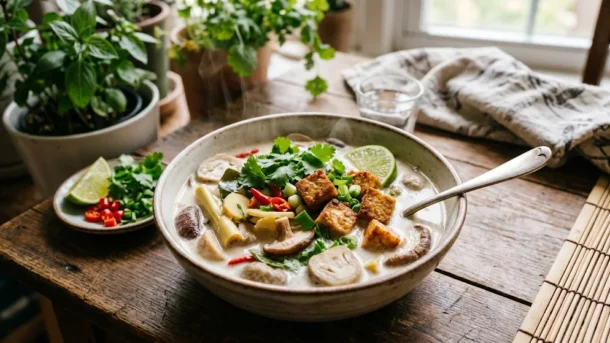
Creamy, fragrant, tangy, and gently spicy, this Vegan Coconut Soup is a Thai-inspired bowl of comfort that tastes like your favorite takeout, ready in about 30 minutes. Rich coconut milk is simmered with lemongrass, ginger, garlic, and lime leaves, then loaded with tender mushrooms, crispy tofu, and fresh herbs. It is soothing, bright, and deeply satisfying.
The soup is inspired by Thai tom kha, the famous coconut and galangal soup. Its signature flavor comes from a balance of creamy coconut milk, sour lime, salty soy sauce, a hint of sweetness, and a little heat. Lemongrass and ginger (a handy substitute for harder-to-find galangal) perfume the broth, while kaffir lime leaves add a floral citrus aroma. If you cannot find lime leaves, a little lime zest does a great job.
Mushrooms soak up the flavorful broth and bring a meaty, savory depth, and crispy pan-seared tofu adds protein and texture. A splash of lime juice at the end and a spoonful of chili paste make it vibrant and lively, and a handful of fresh cilantro or Thai basil finishes the bowl.
Serve it on its own as a light meal, over jasmine rice or rice noodles for a heartier dinner, or with a side of spring rolls. It is perfect for cold nights, for when you are feeling under the weather, and for anyone who loves bold, fresh flavors.
This soup is 100% vegan, dairy-free, egg-free, and easy to make gluten-free with tamari.
Recipe Information
Prep Time
Cook Time
Total Time
Servings
Calories
10 mins
20 mins
30 mins
4 servings
~380 kcal
Ingredients
For the Soup
1 tbsp coconut or neutral oil
3 cloves garlic, minced
2 tbsp fresh ginger, thinly sliced or grated
2 stalks lemongrass, bottom 4 inches only, bruised and cut into 2-inch pieces
4–5 kaffir lime leaves (or 1 tsp lime zest)
1–2 tbsp Thai red curry paste (optional, for more heat)
8 oz (225g) shiitake or cremini mushrooms, sliced
4 cups (960ml) vegetable broth
2 cans (13.5 oz / 400ml each) full-fat coconut milk
2 tbsp soy sauce or tamari
1 tbsp coconut sugar or maple syrup
1 small red bell pepper, sliced
3 tbsp fresh lime juice
1 cup (about 30g) baby spinach or bok choy
Salt, to taste
For the Crispy Tofu
1 block (14 oz / 400g) extra-firm tofu, pressed and cubed
2 tbsp cornstarch
2 tbsp neutral oil
Pinch of salt
To Finish
Fresh cilantro or Thai basil
Sliced scallions
Red chili slices
Lime wedges
Chili oil
To Serve
Steamed jasmine rice
Rice noodles
Vegan spring rolls
Fresh cucumber salad
Optional Additions
Baby corn
Cherry tomatoes
Bamboo shoots
Vegan fish sauce
Instructions
Crisp the tofu. Toss the pressed tofu cubes with the cornstarch and salt. Heat 2 tablespoons of oil in a skillet over medium-high heat and cook the tofu for 8–10 minutes, turning, until golden and crisp. Set aside.
Build the base. In a large pot, heat 1 tablespoon of oil over medium heat. Add the garlic, ginger, lemongrass, and curry paste and cook for 1–2 minutes, until fragrant.
Add the mushrooms. Add the mushrooms and cook for 4–5 minutes until they begin to soften and brown.
Simmer. Pour in the broth and coconut milk. Add the lime leaves, soy sauce, and sugar. Bring to a gentle simmer (do not boil hard) and cook for 10–12 minutes.
Add the vegetables. Add the red bell pepper and cook for 3 minutes, then stir in the spinach until wilted.
Season. Remove from the heat. Stir in the lime juice and taste, adding more soy sauce, lime, or sugar to balance.
Remove the aromatics. Fish out the lemongrass pieces and lime leaves, or warn diners that they are not for eating.
Serve. Ladle into bowls, top with crispy tofu, herbs, scallions, and chili, and serve hot.
Pro Tips for the Best Coconut Soup
Use full-fat coconut milk. It gives a rich, creamy body.
Bruise the lemongrass. Smashing it releases its fragrance.
Simmer gently. A hard boil can make the coconut milk separate.
Add lime at the end. Heat dulls its freshness.
Balance the flavors. Adjust salty, sour, sweet, and spicy to your taste.
Crisp the tofu separately. Add it to the bowls so it stays crunchy.
Do not eat the aromatics. Lemongrass and lime leaves are for flavor only.
Why This Coconut Soup Is Good for You
Mushrooms provide B vitamins and selenium, and tofu adds complete plant protein and calcium. Ginger, garlic, and lemongrass are traditional aromatics that give the soup its bright, soothing flavor, and bell pepper and greens add vitamin C and fiber.
The soup is dairy free and cholesterol free. Coconut milk is rich, so enjoy it in a bowl-sized portion, and use light coconut milk if you prefer a lighter version. Each serving has about 15 grams of plant protein.
Flavor Variations
Spicy Coconut Soup: Add more curry paste and chili slices.
Coconut Noodle Soup: Add cooked rice noodles to each bowl.
Pumpkin Coconut Soup: Add diced pumpkin or butternut squash.
Lighter Coconut Soup: Use half light coconut milk and half broth.
Nutritional Highlights (Per Serving)
Calories
Protein
Carbs
Fiber
Fat
~380 kcal
15g
20g
4g
28g
Storage
Refrigerator: Store in an airtight container for up to 4 days. Keep the tofu separate.
Freezer: Freeze the soup base for up to 2 months. The coconut milk may separate slightly, so stir well when reheating.
Reheating: Warm gently over low heat. Re-crisp the tofu in a skillet.
Make ahead: Make the broth ahead and add the vegetables and tofu when serving.
Frequently Asked Questions
What is galangal and can I use ginger instead?
Galangal is a citrusy, pine-like root used in Thai soups. Fresh ginger is a good substitute, though the flavor is slightly different.
Where can I find lemongrass and lime leaves?
Check Asian grocery stores, well-stocked supermarkets, or the freezer section. Lime zest can replace lime leaves.
Is this soup spicy?
It is mild by default. Add curry paste, chili slices, or chili oil for more heat.
Can I make it gluten-free?
Use tamari instead of soy sauce and check that your curry paste is gluten-free.
Can I use light coconut milk?
Yes, but the soup will be thinner and less rich.
How is this different from your coconut miso chickpea soup and coconut curry noodle soup?
This is a Thai-style soup with lemongrass, lime leaves, mushrooms, and tofu, while our Vegan Coconut Miso Chickpea Soup is a miso-flavored chickpea soup and our Vegan Creamy Coconut Curry Noodle Soup is a curry-based noodle bowl.
Tried this recipe? Leave a comment below and let us know how it turned out! Tag us on Instagram and Facebook — we love seeing your plant-powered creations. Looking for more cozy vegan soups? Browse all recipes on Easy Vegan Recipes — new recipes posted every single week!
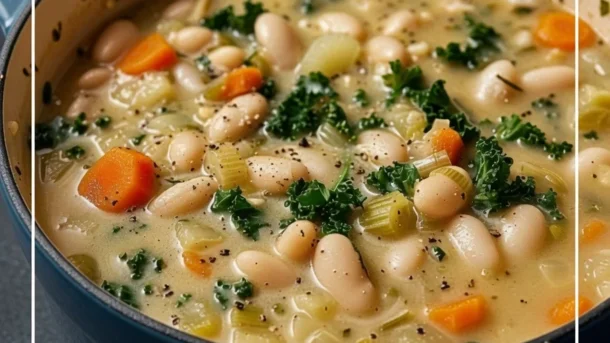
There is a particular kind of soup that is not showy, not dramatic, not built around an unusual ingredient or a technique that requires explanation — and that is, quietly, one of the most satisfying things you can eat. This Vegan White Bean Soup is that kind of soup. It is a soup of humble ingredients: white beans, onion, celery, carrot, garlic, tomato, leafy greens, vegetable stock, and herbs. It is a soup that has been made in some version across the Mediterranean and Southern Europe for centuries and that has never needed to be reinvented because it was right the first time. But within that simplicity there is a very specific technique that separates a white bean soup that is merely good from one that is genuinely memorable — a soup where the broth is thick and velvety and deeply savory, where the beans are creamy and yielding without being mushy, where the vegetables are soft but not collapsed, and where every spoonful delivers a unified, coherent flavor rather than the impression of separate ingredients floating in water. This recipe produces that soup, reliably and repeatedly, in approximately 40 minutes from start to finish, using a single pot, and it is the kind of soup that makes a person feel genuinely well-taken-care-of in a way that very few other things in cooking manage to achieve.
The secret is the smash-and-simmer technique. The single most important element of a great white bean soup is the broth’s body — that thick, slightly viscous, deeply savory quality that distinguishes a properly made bean soup from one that tastes of thin vegetable stock with beans floating in it. The smash-and-simmer technique achieves this by removing approximately one-third of the cooked beans from the soup at the point when the vegetables are fully tender, mashing them roughly with a fork or a potato masher into a coarse, thick paste, and stirring them back into the pot. The mashed beans dissolve almost completely into the broth, releasing their starch into the liquid and thickening it from within — not with the abrupt, slightly starchy quality of cornstarch or flour, but with the smooth, creamy, protein-rich body that only beans can provide. The remaining two-thirds of the beans stay whole, providing the textural contrast of intact, creamy beans against the thickened broth. The effect is extraordinary: the same pot of soup before and after the smash-and-simmer step tastes and feels completely different. Before: a pleasant, clear vegetable broth with beans. After: a thick, velvety, deeply unified soup where the broth and the beans feel like one thing rather than two things in the same bowl. It is one of those techniques that costs almost no effort and transforms the result so dramatically that it is impossible to go back to making white bean soup without it.
What makes this recipe so outstanding is the layering of flavor built before the stock and beans are added. The foundation is a soffritto — the Italian aromatic base of onion, celery, carrot, and garlic cooked slowly in olive oil until completely soft, translucent, and beginning to caramelize at the edges. Unlike a French mirepoix (which is used as a flavor base for stocks and sauces and typically removed before serving), an Italian soffritto is cooked directly into the dish and becomes part of it, and the 10–12 minutes of gentle cooking that a proper soffritto requires is the difference between a soup whose vegetable flavors are raw and separate and one where they have melded into a single, unified aromatic base. To the soffritto is added tomato paste (caramelized for 2 minutes until brick-dark), dried rosemary, dried thyme, and a whole sprig of fresh rosemary that simmers in the pot throughout the cooking and is removed before serving. The fresh rosemary performs a different function from the dried: dried rosemary contributes its ground, woody, slightly camphorous flavor throughout the cooking; the whole fresh sprig releases a more volatile, floral, top-note rosemary aroma into the broth that dried rosemary cannot replicate. Together, the dried herbs in the soffritto and the fresh sprig in the broth give the soup a herbal depth that has both body (from the dried) and brightness (from the fresh) — a technique borrowed from the Tuscan ribollita tradition, the closest relative of this soup in the Italian canon.
This recipe is 100% vegan, naturally gluten-free, and produces a soup that is genuinely better on the second and third days as the flavors continue to develop. It serves 6 generously from a single pot and freezes beautifully.
Recipe Information
Prep Time
Cook Time
Total Time
Servings
Calories
10 mins
30 mins
40 mins
6 servings
~340 kcal
Ingredients
For the Soffritto Base
3 tbsp extra-virgin olive oil (plus more for drizzling at the table)
1 large yellow onion, finely diced (approximately 200g)
2 medium carrots, finely diced (approximately 150g)
6 cloves garlic, finely minced
2 tbsp tomato paste
1 tsp dried rosemary
1 tsp dried thyme
½ tsp dried oregano
¼ tsp red chilli flakes (optional — adds a gentle background warmth)
½ tsp fine salt (for the soffritto stage; more added later to the broth)
¼ tsp ground black pepper
For the Soup
2 cans (2 × 400g / 14oz each) white beans — cannellini beans are the first choice (their large size and creamy, buttery texture make them ideal for this soup); navy beans or butter beans also work well; drain and rinse both cans
150g (5oz) cavolo nero (Tuscan black kale), kale, or baby spinach — cavolo nero is the most traditional choice and adds a slightly bitter, deeply savory note that regular kale and spinach do not have; if using kale or cavolo nero, strip the leaves from the tough central stems and roughly chop; if using spinach, add it in the last 2 minutes only as it wilts very rapidly
For Finishing
Juice of ½ lemon (added off the heat — brightens the entire soup and is the single most important finishing step; do not skip)
Extra-virgin olive oil, for drizzling generously into each bowl
Flaky sea salt and freshly ground black pepper, for finishing
Crusty bread or sourdough, for serving (essential)
Optional: 2 tbsp nutritional yeast stirred into the soup in the last 5 minutes (adds a savory, slightly cheesy depth that amplifies the soup’s umami without dairy)
Optional: freshly grated lemon zest over each bowl at serving
Instructions
Build the soffritto. Heat the olive oil in a large, heavy-bottomed pot or Dutch oven over medium heat until shimmering. Add the diced onion, celery, and carrot with ½ teaspoon of salt. Cook, stirring occasionally, for 10–12 minutes over medium heat until the vegetables are completely soft, translucent, and just beginning to turn golden at the edges. Do not rush this stage by increasing the heat — a soffritto that is browned quickly at high heat rather than softened slowly at medium heat loses the sweet, rounded depth that comes from gentle, patient cooking. Add the minced garlic and cook for 1 further minute, stirring, until fragrant.
Caramelize the tomato paste and bloom the spices. Add the tomato paste, dried rosemary, dried thyme, dried oregano, chilli flakes, and black pepper to the pot. Stir vigorously over medium-high heat for 2 minutes until the tomato paste has darkened from bright red to a deep brick color and is beginning to stick slightly to the bottom of the pot. This caramelization step concentrates the tomato paste’s flavor and adds a subtle sweetness that raw tomato paste does not have.
Add the liquid and beans. Pour in the diced tomatoes (with their juices) and stir to deglaze the pot, scraping up any caramelized bits from the bottom. Add the vegetable stock, drained cannellini beans, fresh rosemary sprig, and bay leaves. Stir to combine. Bring to a boil over high heat, then reduce the heat to medium-low and simmer, partially covered, for 15 minutes until the vegetables are completely tender throughout and the broth has deepened in color and flavor.
Apply the smash-and-simmer technique. Using a slotted spoon, remove approximately one-third of the beans from the pot (approximately 1 heaped cup of beans) and place them in a shallow bowl. Mash them thoroughly with a fork or potato masher into a coarse, thick paste — some texture is fine and desirable; the goal is not a smooth purée but a rough, thick mash that will dissolve readily into the broth. Stir the mashed beans back into the pot and increase the heat to medium. Cook uncovered for a further 5 minutes, stirring occasionally, until the broth has thickened to a velvety, soup-coating consistency. The soup is ready at this stage when a spoonful of broth lifted and dropped back into the pot leaves a visible trail on the surface for 1–2 seconds before closing.
Add the greens. Add the roughly chopped cavolo nero or kale and stir to submerge it in the broth. Cook for 3–5 minutes until the greens are completely wilted and tender (cavolo nero takes slightly longer than regular kale; both are done when the leaves are dark, completely soft, and have lost their raw bitterness). If using baby spinach, add it in the final 2 minutes only.
Finish the soup. Remove and discard the fresh rosemary sprig and bay leaves. Stir in the nutritional yeast if using. Remove from heat and add the lemon juice — stir well and taste the soup immediately after the lemon is added, because the acidity transforms the flavor: it brightens the herbs, sharpens the savory notes, and makes the soup taste more coherent and more complete. Adjust the seasoning with salt and pepper to taste. The soup should be richly savory, slightly herbal, with a gentle tomato note and a bright, clean finish.
Serve. Ladle into deep bowls. Drizzle each bowl generously with extra-virgin olive oil — not as a decoration but as a genuine flavor component; the fruity, peppery quality of a good olive oil adds a final layer of depth that completes the soup. Scatter with flaky sea salt, a few grinds of black pepper, and lemon zest if using. Serve with crusty bread alongside for mopping the bowl.
Pro Tips
Use good vegetable stock — the stock is the primary liquid of this soup and its quality is directly detectable in the finished result. A weak, watery stock produces a weak, watery soup that the beans and vegetables cannot compensate for. Use a good shop-bought stock (Marigold Swiss bouillon powder is excellent) or homemade; if using shop-bought, taste it before adding and reduce the additional salt accordingly, as many commercial stocks are quite salty.
Do not drain the canned tomatoes — the juice in the can is flavorful and adds body to the broth. Add it all.
Add the lemon juice off the heat — lemon juice added to a boiling soup loses much of its volatile citrus aroma in the steam; added off the heat and stirred in, it retains the bright, fresh quality that makes it one of the most effective finishing moves in soup-making. Taste immediately after adding and adjust the quantity to your preference.
This soup is better on day two — like most bean soups and stews, this one improves enormously after overnight refrigeration. The flavors meld and deepen, the broth thickens further, and the beans absorb more of the herbed broth flavor. Make it the day before for a dinner party and simply reheat gently, adding a splash of stock if it has thickened too much.
The White Bean and the Tuscan Table: A 600-Year History in a Bowl
The white bean — specifically the cannellini, the large, white, kidney-shaped bean that is the defining ingredient of this soup — has a history in Tuscany that is inseparable from the region’s identity, its cuisine, and its reputation for a kind of food that is simultaneously simple and profound. The Tuscans are called mangiafagioli (bean-eaters) by other Italians — a term that was originally slightly derogatory but has become a mark of pride, because the Tuscan tradition of cooking dried beans slowly in terracotta pots in the dying heat of a wood-fired oven, seasoned with nothing more than olive oil, sage, and garlic, produces a dish that is considered among the finest expressions of Italian cucina povera (the cuisine of poverty, which is to say the cuisine of making extraordinary things from inexpensive, plentiful ingredients). The cannellini bean itself is a variety of Phaseolus vulgaris — the common bean native to Central and South America, introduced to Europe by Spanish and Portuguese traders in the early sixteenth century. Before its arrival, the primary legume of the Italian kitchen was the fava bean (Vicia faba), cultivated in the Mediterranean since at least 6000 BCE; within 200 years of the cannellini’s introduction it had so thoroughly integrated into Tuscan cooking that it is now considered an entirely native ingredient. The ribollita — the Florentine bread and bean soup that is the ancestor of this recipe — dates in its recognizable modern form to at least the fifteenth century, though its origins as a peasant dish of re-boiled (ribollita, literally) leftover minestrone poured over stale bread are considerably older. The smash-and-simmer technique in this recipe is the modern equivalent of what Tuscan cooks have always done to thicken their bean soups: not with flour or cream, but with the beans themselves, ground on the inside of the pot with a spoon and stirred back into the broth.
Flavor Variations
Tuscan White Bean and Roasted Garlic Soup: Roast a whole head of garlic (top sliced off, drizzled with olive oil, wrapped in foil, roasted at 200°C / 400°F for 40 minutes until completely soft and caramelized) and squeeze the entire head of roasted garlic into the soup alongside the stock and beans in place of raw minced garlic. The roasted garlic is sweeter, deeper, and more rounded than raw garlic and gives the soup a distinctly Tuscan character that is worth the extra 40 minutes of passive roasting time.
White Bean and Sun-Dried Tomato Soup with Basil: Add 80g of sun-dried tomatoes packed in oil (roughly chopped) to the soffritto alongside the tomato paste, and replace the leafy greens with a large handful of fresh basil leaves torn in at the very end. The sun-dried tomatoes add a concentrated, slightly sweet, intensely savory tomato depth that fresh or canned tomatoes cannot replicate, and the fresh basil brightens the soup into something closer to a pesto-flavored bean soup than a ribollita-style one.
Smoky White Bean and Chorizo-Style Soup: Add 200g of vegan chorizo or spicy vegan sausage (sliced into rounds and seared in the pot before the soffritto, then set aside and returned with the stock) and 1 additional teaspoon of smoked paprika to the spice blend. The smoky, spiced sausage transforms the soup from a Tuscan-style bean soup into something closer to a Spanish fabada asturiana — a completely different, bolder, more assertive character that is equally excellent.
Nutritional Highlights (Per Serving)
Calories
Protein
Carbs
Fiber
Fat
~340 kcal
16g
48g
14g
9g
Storage
Refrigerator: The soup keeps in a sealed container in the refrigerator for up to 5 days and improves significantly after the first 24 hours. Reheat gently over medium-low heat, stirring; add a splash of water or vegetable stock if the soup has thickened to a stew-like consistency during storage (this is normal and expected — the beans continue absorbing liquid).
Freezer: Cool completely and freeze in portioned containers for up to 3 months. The beans and broth freeze and thaw very well; the leafy greens become very soft but remain palatable. For the best result, freeze the soup before adding the greens and add fresh greens when reheating. Thaw overnight in the refrigerator and reheat gently on the stove.
The soup thickens considerably in storage — this is the starch from the smashed beans continuing to absorb liquid. A stored soup that appears almost solid can be loosened to serving consistency with ¼–½ cup of water or stock stirred in during reheating; it will not have lost any flavor, and the thickened version is excellent served over crusty bread as a ribollita-style dish.
Do not freeze with bread added — if serving this as a ribollita (ladled over thick slices of stale crusty bread placed in the bottom of the bowl), freeze the soup separately and add the bread fresh at serving.
Frequently Asked Questions
Can I use dried beans instead of canned?
Yes — dried cannellini beans produce a superior result: they hold their shape better during cooking, absorb the broth’s flavors more completely, and have a creamier, more substantial texture than canned. Soak 350g (12oz) of dried cannellini beans in cold water overnight (or for at least 8 hours), drain and rinse, then cook in unsalted water for 60–90 minutes until just tender before using in place of the canned beans. The cooking liquid from the dried beans (the pot liquor) is flavorful and can be used in place of some of the vegetable stock for an even richer, more bean-forward broth. The total recipe time increases by 1½–2 hours when using dried beans, but the result is noticeably better.
Can I make this in a slow cooker?
Yes — build the soffritto and caramelize the tomato paste on the stove first (this step cannot be done in a slow cooker and is too important to skip), then transfer everything to the slow cooker with the beans, stock, canned tomatoes, herbs, and bay leaves. Cook on low for 6–8 hours or high for 3–4 hours. Apply the smash-and-simmer technique in the last 30 minutes, then add the greens and cook for a further 15 minutes on high. Finish with lemon juice and olive oil as described.
My soup tastes flat — what’s missing?
The most common causes of flat white bean soup are: insufficient soffritto cooking time (the vegetables were not cooked long enough to develop their sweetness — the soffritto must be genuinely soft and beginning to turn golden, not just slightly softened); tomato paste not caramelized (raw tomato paste has a sharp, slightly metallic flavor; caramelized tomato paste is sweet and deep); inadequate salt (taste at every stage and season as you go, not only at the end); and most commonly, the lemon juice was not added. The lemon juice is the most transformative single finishing step in this recipe — a flat, slightly heavy soup becomes bright, coherent, and deeply satisfying the moment the lemon is added and stirred in. If the soup still tastes flat after the lemon, add a tablespoon of nutritional yeast and taste again.
Is this soup the same as ribollita?
This soup is closely related to ribollita but is not identical. Ribollita (literally “re-boiled”) is a Florentine dish that traditionally includes stale or toasted Tuscan bread either stirred into the soup (where it absorbs the broth and thickens it further) or placed in the bottom of the bowl and ladled over. This recipe omits the bread component, making it a white bean minestra rather than a true ribollita, and is lighter in body than the original. To make it more ribollita-style, place thick slices of day-old sourdough or Tuscan bread in the bottom of each bowl before ladling in the soup, allowing the bread to absorb the broth and swell into the bowl.
Tried this recipe? Leave a comment below and let us know how it turned out! Tag us on Instagram and Facebook — we love seeing your plant-powered creations. Looking for more addictive vegan snack and appetizer recipes? Browse all recipes on Easy Vegan Recipes — new recipes posted every single week!
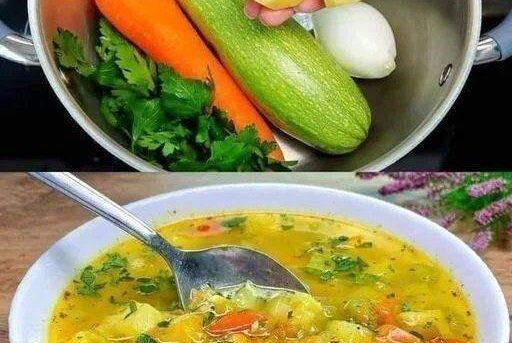
A big pot of Easy Vegan Vegetable Soup is the kind of simple, nourishing meal that never goes out of style. Tender potatoes, carrots, celery, and green beans simmer in a light, savory tomato broth with garlic, thyme, and bay leaf, and the whole pot is ready in about 40 minutes with one pot and basic ingredients.
This is a classic, brothy vegetable soup, with no pasta, no beans, and no cream, just a good variety of vegetables and a broth with real flavor. That makes it light, healthy, and easy to customize with whatever is in your fridge.
The flavor comes from the first step. Onion, carrot, and celery are cooked in olive oil until soft and sweet, then garlic, tomato paste, and herbs are cooked briefly to deepen the taste. A splash of soy sauce adds savory depth, and a squeeze of lemon at the end brightens everything.
The vegetables go in at different times so that nothing turns to mush. Potatoes and carrots go in first, green beans and peas toward the end. If you like a thicker soup, mash a few of the potatoes against the side of the pot. It makes the broth silky without any cream.
This soup is dairy-free, egg-free, and gluten-free (if your broth and soy sauce, or tamari, are gluten-free). It is also nut-free. Check the label on your vegetable broth, because some contain allergens such as celery or soy.
Recipe Information
Prep Time
Cook Time
Total Time
Servings
Calories
15 mins
30 mins
45 mins
6
~160 kcal each
Ingredients
For the Soup
2 tbsp olive oil
1 large yellow onion, diced
3 carrots, peeled and sliced
3 celery stalks, sliced
4 garlic cloves, minced
2 tbsp tomato paste
1½ tsp dried thyme
1 tsp dried oregano
½ tsp smoked paprika
3 medium Yukon gold potatoes (about 450g), cut into ½-inch cubes
1 can (400g) diced tomatoes, with juices
6 cups (1.5 litres) vegetable broth
2 bay leaves
1 tbsp soy sauce or tamari
1½ cups (170g) green beans, trimmed and cut into 1-inch pieces
1 cup (140g) frozen peas
2 cups (60g) baby spinach or chopped kale, optional
1 tbsp lemon juice
Salt and black pepper, to taste
To Serve
Fresh parsley, chopped
Crusty bread
Extra black pepper
Instructions
Cook the base. Heat the olive oil in a large pot over medium heat. Add the onion, carrots, and celery with a pinch of salt. Cook for 7–8 minutes, stirring, until softened.
Add the aromatics. Add the garlic, tomato paste, thyme, oregano, and smoked paprika. Cook for 1–2 minutes, stirring, until the tomato paste darkens slightly and smells fragrant.
Add the potatoes and broth. Stir in the potatoes, diced tomatoes, vegetable broth, bay leaves, and soy sauce. Bring to a boil, then reduce the heat to a gentle simmer.
Simmer. Cover partly and cook for 12 minutes, until the potatoes are just starting to soften.
Add the green beans. Stir in the green beans and cook for 6–8 minutes, until the potatoes are tender and the beans are bright and just tender.
Finish. Stir in the peas and spinach. Cook for 2 minutes. Remove the bay leaves. Stir in the lemon juice. Taste and adjust the salt and pepper.
Serve. Ladle into bowls, top with parsley, and serve with crusty bread.
Pro Tips for the Best Vegetable Soup
Cook the onion, carrot, and celery slowly. This builds the flavor.
Cook the tomato paste for a minute to remove its raw taste.
Cut vegetables to a similar size so they cook evenly.
Add quick-cooking vegetables at the end.
Season in layers. Taste at the end and add salt as needed.
Add lemon juice at the end for brightness.
Mash a few potatoes against the pot for a thicker broth.
Use a good vegetable broth, since it is the base of the soup.
A Few Notes on Ingredients
Yukon gold potatoes hold their shape and add a creamy texture. Any vegetable broth works, and low-sodium broth gives you control over the salt. Fresh or frozen green beans work. You can add or swap vegetables such as zucchini, corn, parsnip, or cabbage, adjusting the timing for how quickly each cooks. Soy sauce adds umami, and a pinch of nutritional yeast also works.
Flavor Variations
Italian Version: Add Italian seasoning and a Parmesan-style vegan topping.
Hearty Version: Add white beans or chickpeas.
Noodle Version: Add small pasta in the last 10 minutes.
Spicy Version: Add chili flakes.
Creamy Version: Blend 2 cups of soup and stir it back in.
Green Version: Add extra kale and fresh herbs.
Nutritional Highlights (Per Serving)
Calories
Protein
Carbs
Fiber
Fat
~160 kcal
4g
27g
5g
4g
Storage
Refrigerator: Store for up to 5 days.
Freezer: Freeze for up to 3 months. Leave out the peas and spinach and add them fresh when reheating.
Reheating: Warm on the stove, adding a splash of broth if needed.
Make ahead: Soups taste even better the next day.
Frequently Asked Questions
Can I use frozen vegetables?
Yes. Add them near the end of cooking.
How do I make it thicker?
Mash some of the potatoes, or blend a cup of soup and stir it back in.
Can I make it in a slow cooker?
We have not tested it. Cook the base on the stove first, then slow cook the remaining ingredients.
Can I freeze it?
Yes. Freeze without the peas and spinach for the best texture.
Why is my soup bland?
It likely needs more salt, a splash of lemon, or a longer cook of the base vegetables.
How is this different from your other vegetable soups?
This is a classic brothy soup with potatoes, green beans, and carrots. Our Vegan Chickpea and Orzo Vegetable Soup has chickpeas and pasta, and our Vegan Veggie Tortilla Soup has a spicy tomato chipotle broth.
Tried this recipe? Leave a comment below and let us know how it turned out! Tag us on Instagram and Facebook — we love seeing your plant-powered creations. Browse all recipes on Easy Vegan Recipes — new recipes posted every single week!
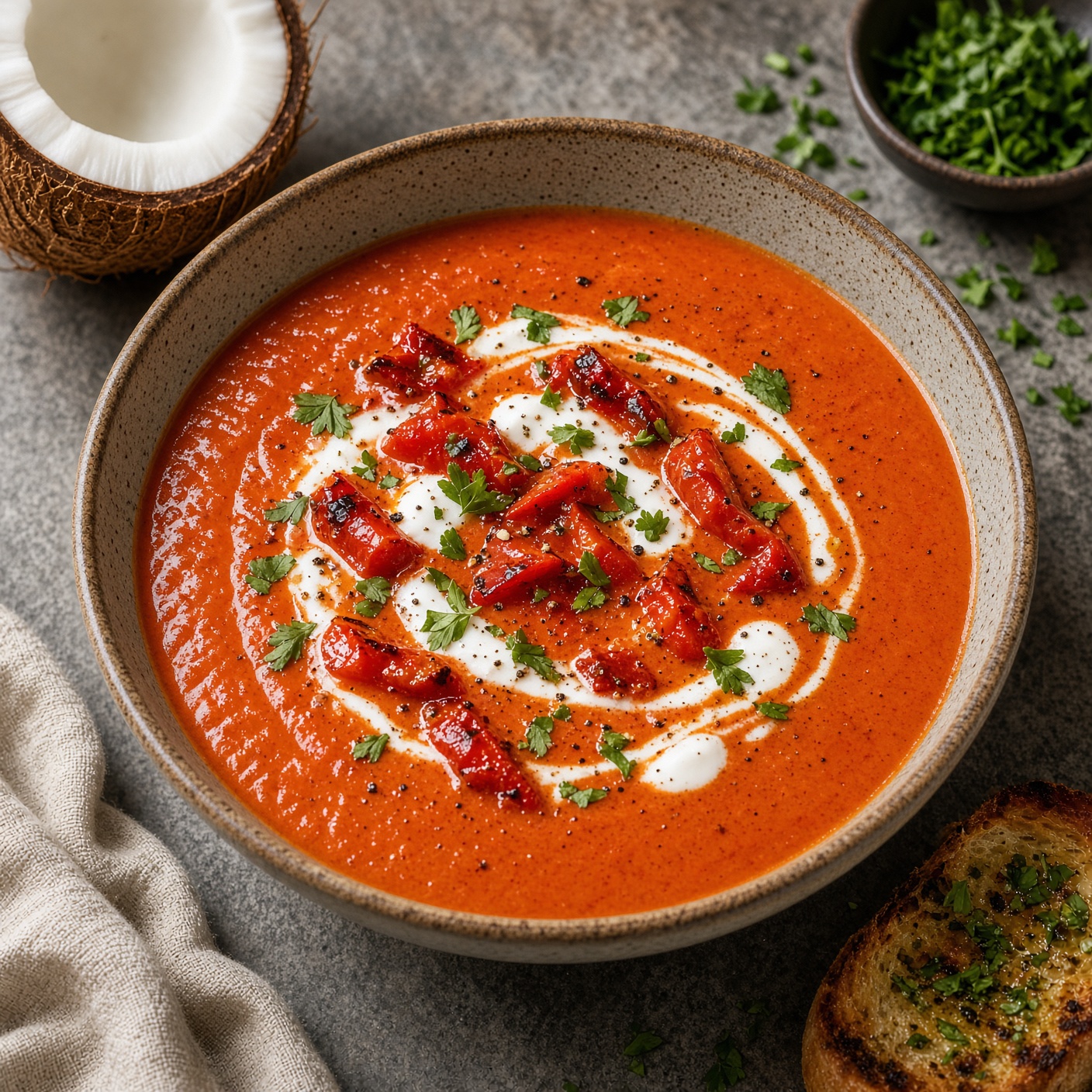
Sweet, smoky roasted red peppers and ripe tomatoes blended into a velvety, vibrant red soup with a silky swirl of coconut milk and a handful of fresh basil: this Vegan Coconut and Roasted Red Pepper Tomato Soup is a rich, cozy, dairy-free classic that tastes like it simmered for hours and takes about 50 minutes, mostly hands-off.
Roasting is the secret. Tomatoes, red bell peppers, onion, and garlic are tossed with olive oil and smoked paprika and roasted until caramelized and slightly charred at the edges. High heat concentrates their sweetness and adds a deep, smoky flavor that you cannot get from simmering alone. Everything is then blended with vegetable broth until smooth.
The coconut milk is what makes this soup special. A can of full-fat coconut milk is stirred in at the end, turning the soup creamy and mellow without any dairy, and softening the tomato acidity. It does not taste strongly of coconut, just rich and rounded, with a faint tropical sweetness. A little lemon juice at the end brightens it back up.
Serve it with a crusty piece of bread, a vegan grilled cheese for dunking, or a scoop of rice. Garnish with basil, a drizzle of coconut milk, and cracked black pepper. It freezes beautifully, so make a big batch.
This recipe is 100% vegan and dairy-free, gluten-free (check your broth), and nut-free. It contains coconut.
Recipe Information
Prep Time
Cook Time
Total Time
Servings
Calories
10 mins
40 mins
50 mins
5
~230 kcal each
Ingredients
For the Roasted Vegetables
2 lb (900g) ripe Roma or plum tomatoes, halved lengthwise
3 large red bell peppers, quartered and seeded
1 large yellow onion, cut into wedges
5 garlic cloves, unpeeled
3 tbsp olive oil
1 tsp smoked paprika
¾ tsp salt
¼ tsp black pepper
For the Soup
2½ cups (600ml) vegetable broth
1 can (13.5 oz / 400ml) full-fat coconut milk, shaken well
1 tbsp tomato paste
1 tsp maple syrup or sugar, to balance acidity
1 tbsp lemon juice
½ cup (12g) fresh basil leaves, plus more to serve
Salt and black pepper, to taste
To Serve
A swirl of coconut milk
Fresh basil
Cracked black pepper
Crusty bread or vegan grilled cheese
Chili flakes
Optional Additions
A pinch of cayenne
White beans for protein
Toasted croutons
Pesto swirl
Instructions
Heat the oven. Preheat the oven to 425°F (220°C). Line two large baking sheets with parchment paper.
Roast the vegetables. Toss the tomatoes, peppers, onion, and garlic with the olive oil, paprika, salt, and pepper. Spread in a single layer, with the tomatoes cut side up. Roast for 35–40 minutes, until the vegetables are soft and charred at the edges.
Prepare the garlic. Let the garlic cool slightly, then squeeze the soft cloves out of their skins.
Combine. Transfer the roasted vegetables, garlic, and all the juices from the pan to a large pot. Add the broth and tomato paste and bring to a simmer. Cook for 10 minutes.
Blend. Add the basil. Blend with an immersion blender until completely smooth, or in batches in a regular blender with the lid vented.
Add the coconut milk. Stir in the coconut milk and maple syrup. Simmer gently for 3–5 minutes without boiling hard.
Season. Stir in the lemon juice and season with salt and pepper. Add a splash of broth if the soup is too thick.
Serve. Ladle into bowls and swirl in a little coconut milk. Top with basil, pepper, and chili flakes.
Pro Tips for the Best Roasted Tomato Pepper Soup
Roast the vegetables until charred in places. That is where the smoky sweetness comes from.
Use ripe, flavorful tomatoes. Roma tomatoes are meaty and less watery.
Spread the vegetables in a single layer, using two pans if needed.
Scrape the pan juices into the soup. They are full of flavor.
Shake the coconut milk can well so it is evenly creamy.
Add the coconut milk after blending and do not boil hard, or it may separate.
Add lemon or a pinch of sugar at the end. Tomato soups vary in acidity.
Blend until very smooth for a velvety texture.
A Few Notes on Ingredients
Roasted tomatoes and red peppers are sweet and smoky. Coconut milk gives the soup its creaminess, and tomato paste adds depth. Smoked paprika adds warmth. Basil adds a fresh, herby aroma.
If you use canned tomatoes, use two 28-ounce cans of whole peeled tomatoes and roast them for 25 minutes.
Flavor Variations
Lighter Soup: Use light coconut milk.
Coconut-Free: Stir in oat cream or cashew cream instead.
Spicy Soup: Add cayenne or chipotle.
Hearty Soup: Add white beans or small pasta.
Thai-Style Soup: Add red curry paste and lime juice.
Nutritional Highlights (Per Serving)
Calories
Protein
Carbs
Fiber
Fat
~230 kcal
4g
22g
6g
16g
Storage
Refrigerator: Store in an airtight container for up to 5 days.
Freezer: Freeze in portions for up to 3 months. Thaw overnight and whisk when reheating.
Reheating: Warm gently on the stovetop, stirring often.
Make ahead: The flavor deepens overnight.
Frequently Asked Questions
Does it taste like coconut?
Only slightly. The roasted tomato and pepper flavors are dominant, and the coconut just adds creaminess.
Can I use canned tomatoes?
Yes. Use two 28-ounce cans of whole peeled tomatoes and roast for 25 minutes.
Can I make it without coconut milk?
Yes. Use oat cream, cashew cream, or leave it out for a lighter soup.
Why did my soup separate?
It may have been boiled after adding the coconut milk. Whisk it and reheat gently.
Can I freeze it?
Yes. Freeze for up to 3 months and whisk when reheating.
How is this different from your other soups?
This is a smooth, creamy tomato and roasted red pepper soup with coconut milk. Our Thai-Style Vegan Coconut Soup is a lemongrass and ginger soup with mushrooms and tofu, and our Vegan Sweet Potato, Red Pepper and Red Lentil Soup is a lentil soup with sweet potato.
Tried this recipe? Leave a comment below and let us know how it turned out! Tag us on Instagram and Facebook — we love seeing your plant-powered creations. Browse all recipes on Easy Vegan Recipes — new recipes posted every single week!
Charred aubergine and sweet roasted red peppers blended into a velvety, smoky, deep red soup, swirled with a lemony garlic yogurt and served with warm bread: this Smoky Vegan Red Pepper and Aubergine Soup (also called eggplant soup) is a cozy, richly flavored bowl that tastes far more complex than its short ingredient list suggests.
The smoky flavor is the heart of the soup. Aubergines are roasted at high heat, or charred under the broiler, until the skins blister and the insides collapse into a soft, creamy, almost buttery pulp. Red peppers are roasted alongside them until their skins are blackened and their flesh is sweet and jammy. Peeled and blended with sautéed onion and garlic, smoked paprika, and a little cumin, they make a soup that is naturally thick and silky, with no need for cream.
This soup is different from a classic tomato and red pepper soup. The aubergine adds body and a deeper, earthier, more savory flavor, and it gives the soup a velvety texture that is hard to get with vegetables alone. A small amount of tomato paste adds depth, and a splash of lemon juice at the end keeps it bright.
The topping makes each bowl special. A spoonful of plain vegan yogurt stirred with garlic and lemon adds a cool, tangy contrast to the smoky soup, and a drizzle of olive oil, a pinch of smoked paprika, and fresh parsley finish it off. Serve with toasted pita, crusty bread, or garlic toast for dipping.
This recipe is 100% vegan, dairy-free, gluten-free, and nut-free. Please check labels on your broth, yogurt, and spices. Pair with bread for a full meal.
Preheat. Heat the oven to 425°F (220°C). Line a large baking sheet with parchment.
Roast the vegetables. Score the cut sides of the aubergine in a crosshatch pattern. Place the aubergines and peppers cut side down on the baking sheet. Drizzle the aubergine with 2 tablespoons of the oil and sprinkle with salt. Drizzle the garlic head with the remaining oil and wrap in foil. Add to the pan.
Roast. Roast for 35–40 minutes, until the aubergine is very soft and collapsed and the pepper skins are wrinkled and charred. For extra smoke, broil for the last 3–4 minutes.
Steam the peppers. Place the roasted peppers in a bowl and cover with a plate for 10 minutes, then peel off the skins.
Prepare the aubergine. Scoop the soft flesh from the aubergine skins. Squeeze the roasted garlic from its skins.
Sauté the onion. Heat the oil in a large pot over medium heat. Cook the onion for 6–8 minutes until soft. Stir in the paprika, cumin, and tomato paste and cook for 1 minute.
Simmer. Add the aubergine flesh, peeled peppers, roasted garlic, broth, salt, and pepper. Bring to a boil, then simmer for 10 minutes.
Blend. Blend the soup until completely smooth using an immersion blender or a regular blender, in batches. Return to the pot if needed.
Season. Stir in the lemon juice and chili flakes. Taste and adjust the salt and acidity. Add a splash of broth or water if too thick.
Make the swirl. Stir the yogurt, garlic, lemon juice, and salt together.
Serve. Ladle into bowls. Top with a spoonful of yogurt, a drizzle of olive oil, smoked paprika, and herbs. Serve with warm bread.
Pro Tips for the Best Aubergine Soup
Roast the aubergine until it is completely collapsed and soft.
Score the aubergine so it cooks evenly and absorbs the oil.
Char the peppers well for a smoky flavor, then peel the skins.
Steam the peppers under a plate so the skins slip off easily.
Use an immersion blender for easy cleanup.
Add the lemon at the end to brighten the flavors.
Season generously. Aubergine needs salt.
For extra smoke, roast the aubergine directly over a gas flame or under the broiler.
A Few Notes on Ingredients
Aubergine (eggplant) becomes creamy and silky when roasted, which thickens the soup naturally. Roasted red peppers add sweetness and color. Smoked paprika adds a smoky flavor. Tomato paste adds depth and a rich red color.
Jarred roasted red peppers can be used as a shortcut. Use about 1½ cups, drained.
Flavor Variations
Creamy Version: Stir in a splash of coconut milk.
Spicy Version: Add harissa or extra chili flakes.
Protein Version: Add chickpeas or white beans.
Tahini Version: Swirl in tahini and lemon juice.
Slow Roasted Version: Roast at 375°F (190°C) for 60 minutes for deeper flavor.
Gluten-Free: Serve with gluten-free bread.
Nutritional Highlights (Per Serving)
Calories
Protein
Carbs
Fiber
Fat
~210 kcal
4g
24g
9g
12g
Storage
Refrigerator: Store in an airtight container for up to 5 days.
Freezer: Freeze for up to 3 months.
Reheating: Warm gently on the stove with a splash of broth.
Make ahead: The flavor improves overnight.
Frequently Asked Questions
Is aubergine the same as eggplant?
Yes. Aubergine is the name used in the UK and much of the world, and eggplant is the name used in the US.
Why is my soup bitter?
The aubergine may be old or may not have been roasted enough. Roast it until fully soft and season well.
Do I have to peel the peppers?
Yes. The skins can be tough and papery in a smooth soup.
Can I make it without roasting?
Roasting gives the smoky flavor. Skipping it will make a blander soup.
Can I use jarred peppers?
Yes. Use about 1½ cups of drained jarred roasted red peppers.
How is this different from your other red pepper soups?
This is a smoky, savory soup made with charred aubergine and red peppers, with no tomatoes or coconut as the main base. Our Vegan Coconut and Roasted Red Pepper Tomato Soup is a tomato-based soup with coconut milk, and our Vegan Sweet Potato Red Pepper Red Lentil Soup is a lentil soup.
Tried this recipe? Leave a comment below and let us know how it turned out! Tag us on Instagram and Facebook — we love seeing your plant-powered creations. Browse all recipes on Easy Vegan Recipes — new recipes posted every single week!
We use cookies on our website to give you the most relevant experience by remembering your preferences and repeat visits. By clicking “Accept”, you consent to the use of ALL the cookies.
This website uses cookies to improve your experience while you navigate through the website. Out of these, the cookies that are categorized as necessary are stored on your browser as they are essential for the working of basic functionalities of the website. We also use third-party cookies that help us analyze and understand how you use this website. These cookies will be stored in your browser only with your consent. You also have the option to opt-out of these cookies. But opting out of some of these cookies may affect your browsing experience.
Necessary cookies are absolutely essential for the website to function properly. These cookies ensure basic functionalities and security features of the website, anonymously.
Cookie
Duration
Description
cookielawinfo-checkbox-analytics
11 months
This cookie is set by GDPR Cookie Consent plugin. The cookie is used to store the user consent for the cookies in the category "Analytics".
cookielawinfo-checkbox-functional
11 months
The cookie is set by GDPR cookie consent to record the user consent for the cookies in the category "Functional".
cookielawinfo-checkbox-necessary
11 months
This cookie is set by GDPR Cookie Consent plugin. The cookies is used to store the user consent for the cookies in the category "Necessary".
cookielawinfo-checkbox-others
11 months
This cookie is set by GDPR Cookie Consent plugin. The cookie is used to store the user consent for the cookies in the category "Other.
cookielawinfo-checkbox-performance
11 months
This cookie is set by GDPR Cookie Consent plugin. The cookie is used to store the user consent for the cookies in the category "Performance".
viewed_cookie_policy
11 months
The cookie is set by the GDPR Cookie Consent plugin and is used to store whether or not user has consented to the use of cookies. It does not store any personal data.
Functional cookies help to perform certain functionalities like sharing the content of the website on social media platforms, collect feedbacks, and other third-party features.
Performance cookies are used to understand and analyze the key performance indexes of the website which helps in delivering a better user experience for the visitors.
Analytical cookies are used to understand how visitors interact with the website. These cookies help provide information on metrics the number of visitors, bounce rate, traffic source, etc.
Advertisement cookies are used to provide visitors with relevant ads and marketing campaigns. These cookies track visitors across websites and collect information to provide customized ads.