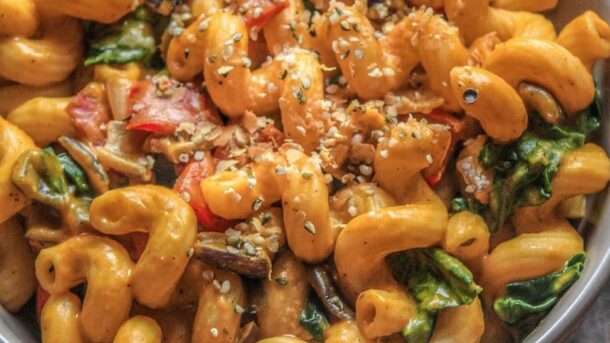
There are pasta dishes that define what pasta can be. And then there are dishes like this Vegan Spaghetti Carbonara — the kind that makes you understand in a single forkful exactly why carbonara became one of the most beloved pasta preparations in the entire world, that coats every strand of spaghetti in a sauce so silky, so deeply savory, so perfectly balanced between richness and lightness that it seems to defy the logic of its own simplicity, and that does all of this without a single egg, without a gram of guanciale, and without a trace of Pecorino Romano. This is that carbonara. The one that makes Italians pause. The one that makes people who have eaten the dairy original their entire lives set down their forks and genuinely reconsider what they thought they knew about plant-based cooking. The one that is simultaneously the most technically satisfying and the most deeply delicious pasta you will make all week.
Traditional carbonara is a dish of extraordinary elegance built on a foundation of radical simplicity — eggs, cured pork, Pecorino Romano, black pepper, and pasta cooking water combined with such precise technique that the eggs are cooked by the heat of the pasta alone into a sauce of remarkable silkiness without ever scrambling. It is one of the great technical achievements of Italian cooking and one of the most difficult pasta preparations to execute correctly even with the original ingredients.
This vegan version replicates every sensory element of the original through plant-based means that are arguably more interesting than the dairy equivalents. Silken tofu blended with nutritional yeast, white miso, and turmeric creates a sauce base with the same silky, egg-like consistency and deeply savory flavor that eggs provide in the original. Smoked tempeh or vegan bacon provides the smoky, salty, slightly fatty element that guanciale contributes. Reserved pasta cooking water — starchy, hot, and emulsifying — creates the glossy, coating sauce that is the defining characteristic of great carbonara. And an extraordinary amount of freshly cracked black pepper — more than seems reasonable, more than seems comfortable — provides the specific warm, slightly floral heat that gives carbonara its characteristic depth.
This recipe is 100% vegan, ready in just 25 minutes, and absolutely spectacular served immediately — carbonara waits for no one and no one who is eating this pasta should be made to wait for anything.
Recipe Information
| Prep Time | Cook Time | Total Time | Servings | Calories |
|---|---|---|---|---|
| 10 mins | 15 mins | 25 mins | 4 | ~480 kcal |
Ingredients
For the Carbonara Sauce
- 300g silken tofu, drained
- 4 tbsp nutritional yeast
- 1 tbsp white miso paste
- 1 tbsp lemon juice
- 1 tsp garlic powder
- ¼ tsp turmeric (for the characteristic golden color)
- ½ tsp salt
- ¼ tsp white pepper
For the Smoky Vegan Bacon
- 200g smoked tempeh or vegan bacon, diced into small pieces
- 1 tbsp olive oil
- 1 tbsp soy sauce or tamari
- 1 tsp smoked paprika
- ½ tsp maple syrup
- ¼ tsp black pepper
For the Pasta
- 400g spaghetti or linguine
- 1 tbsp salt (for pasta water)
- 1 cup (240ml) pasta cooking water, reserved before draining
For Finishing
- 2 tsp freshly cracked black pepper — this is non-negotiable and should be more than seems reasonable
- Additional nutritional yeast for serving
- Fresh parsley, finely chopped
- Extra black pepper at the table
Optional Add-ins
- 1 cup (30g) fresh baby spinach (stir in with the sauce)
- ½ cup (60g) frozen peas (add to pasta water in final minute)
- 4 cloves roasted garlic, mashed into the sauce
- 1 tbsp capers for brininess
- Vegan Parmesan for serving
Instructions
- Make the silken tofu carbonara sauce. Place the drained silken tofu, nutritional yeast, white miso paste, lemon juice, garlic powder, turmeric, salt, and white pepper in a blender. Blend on high speed for 60–90 seconds until completely smooth, silky, and flowing like a thick cream. Taste the sauce — it should be deeply savory, slightly tangy, with a rich umami depth from the miso and nutritional yeast. Adjust seasoning as needed. Set aside.
- Cook the smoky vegan bacon. Heat the olive oil in a large skillet over medium-high heat. Add the diced smoked tempeh or vegan bacon and cook for 3–4 minutes, stirring occasionally, until golden and beginning to crisp. Add the soy sauce, smoked paprika, maple syrup, and black pepper and stir to coat. Cook for a further 2 minutes until the tempeh is deeply golden, slightly sticky, and smelling extraordinary. Remove from the pan and set aside — reserve the pan for finishing the pasta.
- Cook the pasta. Bring a large pot of generously salted water to a vigorous boil. Add the spaghetti and cook according to package instructions until al dente — tender with just a slight resistance at the center. Before draining reserve at least one full cup of the starchy pasta cooking water — this liquid is the key to the silky, emulsified sauce of great carbonara.
- Temper the sauce. This is the most critical step — the technique that separates great vegan carbonara from merely decent pasta with a tofu sauce. Add 3–4 tablespoons of the hot pasta cooking water to the blended tofu sauce and whisk vigorously to combine. This tempering warms the sauce and loosens it to the correct consistency for coating pasta. The starch in the pasta water also helps the sauce emulsify and adhere to the spaghetti more effectively.
- Combine pasta and sauce. Drain the pasta and immediately add it to the reserved skillet over the lowest possible heat. Pour the tempered sauce over the hot pasta and toss vigorously and continuously with tongs for 60–90 seconds — coating every strand in the silky sauce. Add the reserved pasta water a splash at a time, tossing between additions, until the sauce flows freely between the strands and coats them in a glossy, silky film. The sauce should not be pooling at the bottom of the pan — it should be coating the pasta in a thin, even layer.
- Add the black pepper. Add the full 2 teaspoons of freshly cracked black pepper to the pasta and toss to incorporate throughout. This is the moment where carbonara finds its soul — the pepper is not a background note but a defining flavor that provides the warm, slightly floral heat that is the characteristic of this dish. Add more if you love pepper — traditional Roman carbonara is more aggressively peppered than most people expect.
- Add the smoky vegan bacon. Add three quarters of the cooked smoky tempeh to the pasta and toss to distribute evenly throughout. Reserve the remaining quarter for topping each bowl — both for visual appeal and to ensure a visible, generous serving of the smoky element in every bowl.
- Serve immediately. Divide the carbonara between warmed bowls — speed is essential here as carbonara thickens rapidly as it cools. Top each bowl with the reserved smoky tempeh, a generous additional crack of black pepper, a dusting of nutritional yeast, and fresh parsley. Serve immediately — carbonara at the table is one of the finest experiences in all of plant-based pasta cooking.
Pro Tips for Perfect Vegan Carbonara
- Use silken tofu — no other variety. Firm or extra firm tofu does not blend to the smooth, flowing, egg-like consistency that makes this sauce so silky and so convincing as a carbonara base. Silken tofu — sometimes labelled soft silken or extra soft — contains more water and a finer protein structure that blends to a completely smooth, pourable cream. It is the correct and only suitable choice for this application.
- Temper the sauce before adding to the pasta. Adding cold blended tofu sauce directly to hot pasta produces a sauce that clumps and seizes rather than flowing smoothly between the strands. Adding hot pasta water to the sauce first — warming it gradually — produces a silky, flowing sauce that coats the pasta evenly and behaves identically to a properly made egg-based carbonara sauce.
- Work over the lowest possible heat. The defining technical challenge of carbonara is cooking the sauce by the residual heat of the pasta alone — without direct heat which would scramble eggs in the traditional version and curdle tofu in the vegan version. Keep the heat at the absolute minimum and work quickly.
- Use more black pepper than seems comfortable. Traditional Roman carbonara uses an extraordinary amount of freshly cracked black pepper — enough that the pepper flavor is immediately, prominently present rather than merely a background note. The pepper in carbonara is not seasoning — it is an ingredient. Use freshly cracked pepper from a pepper mill rather than pre-ground for the most vibrant, complex pepper flavor.
- Reserve more pasta water than you think you need. The pasta water is the liquid that creates the silky, glossy, emulsified sauce of great carbonara — and you can always use more than you think. Reserve a full cup minimum and use it generously to achieve the flowing, coating consistency that is the hallmark of great carbonara.
- Serve in warmed bowls immediately. Carbonara thickens dramatically as it cools — within 2–3 minutes of leaving the pan it begins to set. Warm your serving bowls with hot water for 60 seconds before serving and bring the pot to the table rather than plating in the kitchen whenever possible.
The Art and History of Carbonara
Carbonara is one of the most debated and most fiercely protected pasta preparations in all of Italian cooking — a dish with a contested history, a small number of strictly defined traditional ingredients, and a passionate community of purists who regard any deviation from the original recipe as a culinary transgression of the highest order.
The most widely accepted theory traces carbonara’s origins to Rome in the mid-twentieth century — possibly created during or immediately after World War II when American soldiers stationed in Italy introduced bacon and eggs as rations that Roman cooks incorporated into local pasta preparations. The name is thought to derive from carbone — the Italian word for charcoal — either in reference to the char workers who ate the dish or to the generous amount of black pepper that gives the sauce its characteristic speckled appearance.
The traditional Roman carbonara uses exactly four ingredients beyond the pasta and salt — guanciale (cured pork cheek), eggs (whole eggs and additional yolks), Pecorino Romano, and black pepper. No cream. No garlic. No onion. No parsley. The extraordinary richness and silkiness of the sauce is achieved entirely through the emulsification of the egg yolks with the rendered fat from the guanciale and the starchy pasta cooking water — a technique of such precision and elegance that it remains one of the great achievements of Italian culinary tradition.
This vegan version honours the spirit and the technique of carbonara while replacing every animal product with plant-based alternatives that perform the same functional role. Silken tofu performs the role of eggs — providing the silky, protein-based sauce base that emulsifies with the pasta water and coats the spaghetti. Nutritional yeast and white miso perform the role of Pecorino Romano — providing the salty, savory, umami depth that aged cheese contributes. Smoked tempeh performs the role of guanciale — providing smokiness, saltiness, and a fatty richness that punctuates every forkful. Black pepper remains exactly as it always was — irreplaceable and abundant.
Flavor Variations
- Truffle Vegan Carbonara: Add 1 tablespoon of truffle oil to the blended tofu sauce and use exclusively smoked oyster mushrooms instead of tempeh for an extraordinarily luxurious version that is genuinely spectacular for special occasions.
- Mushroom Carbonara: Replace the smoked tempeh with 300g of cremini mushrooms sautéed until deeply golden with smoked paprika, soy sauce, and garlic for a lighter, more vegetable-forward version with the same smoky depth.
- Lemon and Herb Carbonara: Add the zest of two lemons to the sauce and finish with fresh basil and tarragon for a brighter, more aromatic version that is particularly beautiful in spring and summer.
- Broccolini Carbonara: Add blanched broccolini to the pasta when tossing with the sauce for a version that adds nutritional substance, textural variety, and a beautiful green color contrast to the pale, golden sauce.
Nutritional Highlights (Per Serving)
| Calories | Protein | Carbs | Fiber | Fat |
|---|---|---|---|---|
| ~480 kcal | 24g | 64g | 4g | 12g |
At 480 calories per serving this carbonara delivers an outstanding nutritional profile for a pasta dinner — 24 grams of complete plant-based protein from the silken tofu, tempeh, and nutritional yeast, making it one of the highest protein plant-based pasta dishes available. The silken tofu provides all nine essential amino acids alongside calcium, iron, and isoflavones with hormonal balancing properties. The tempeh contributes fermentation-derived probiotic benefits alongside its significant protein content and B vitamins. The nutritional yeast provides B vitamins including B12 in fortified varieties. The white miso contributes beneficial fermentation compounds that support gut microbiome health.
Storage
- Serve immediately always. Carbonara is one of the few pasta dishes that genuinely cannot be stored and reheated successfully — the sauce sets to a thick, gluey consistency during storage and does not return to its original silky texture when reheated regardless of how much liquid is added. Make it fresh and serve it immediately — it takes only 25 minutes and is worth every one of them.
- Sauce separately: The blended tofu carbonara sauce stores in the refrigerator for up to 4 days in a sealed container. Make a batch of sauce in advance and store it — when ready to eat cook the pasta, make the smoky tempeh, and temper the sauce with hot pasta water as directed for a meal that comes together in under 15 minutes.
- Smoky tempeh: The cooked smoky tempeh stores in the refrigerator for up to 5 days and reheats in a hot pan in 2 minutes — making it an outstanding meal prep component that can be used throughout the week in pasta, grain bowls, wraps, and sandwiches.
- Leftover pasta: If you do have leftover assembled carbonara reheat in a pan over medium-low heat with a generous splash of water or plant milk, stirring continuously, until loosened and heated through. The texture will be different from fresh but still deeply delicious.
Frequently Asked Questions
Why did my sauce turn out grainy?
A grainy sauce is caused by blending the tofu insufficiently or using a variety other than silken tofu. Blend for the full 90 seconds on the highest speed and ensure you are using silken — not firm or extra firm — tofu. If graininess persists strain the blended sauce through a fine mesh sieve before using.
Can I use a different pasta shape?
Yes — while spaghetti is the most traditional shape for carbonara any long pasta works beautifully. Linguine, tagliatelle, fettuccine, and bucatini are all excellent choices. Shorter shapes like rigatoni or penne also work but capture the sauce differently — in pockets rather than coating — which produces a different but equally delicious result.
How do I prevent the sauce from clumping?
Clumping is prevented by tempering the sauce before adding it to the pasta — stirring hot pasta water into the cold blended sauce to warm it gradually before it touches the hot pasta. Working over the lowest possible heat and tossing continuously and quickly also prevents the proteins in the tofu from setting before they have coated all the pasta.
Can I make this recipe gluten-free?
Yes — use gluten-free spaghetti and replace the soy sauce in the tempeh marinade with tamari. Gluten-free pasta releases slightly different amounts of starch into the cooking water — the sauce may need slightly more pasta water to achieve the correct flowing consistency.
What is white miso paste and where do I find it?
White miso — shiro miso in Japanese — is a fermented soybean paste with a mild, sweet, slightly salty flavor that is significantly less intense than darker miso varieties. It is available in most supermarkets in the Asian foods section or in health food stores. It keeps for months in the refrigerator and is one of the most useful and versatile ingredients in plant-based cooking.
Can I use vegan bacon instead of smoked tempeh?
Yes — store-bought vegan bacon works beautifully in this recipe. Cook according to package instructions until crispy then chop into small pieces and add to the pasta in the same way as the smoked tempeh. The flavor will be slightly different depending on the brand but the smoky, salty element that the vegan bacon contributes is essentially the same.
Tried this recipe? Leave a comment below and let us know how it turned out! Tag us on Instagram and Facebook — we love seeing your plant-powered creations. Looking for more luxurious vegan pasta and Italian-inspired dinner recipes? Browse all recipes on Easy Vegan Recipes — new recipes posted every single week!