This Vegan Chocolate Banana Ice Cream is a simple, no-churn delight made with just a few wholesome ingredients. Frozen bananas create a naturally creamy base, while cocoa powder delivers rich chocolate flavor—no dairy, eggs, or added sugar needed (unless you want a touch of sweetness). It’s the perfect guilt-free treat for hot days, post-workout snacks, or whenever a chocolate craving strikes. Ready in minutes with a high-powered blender or food processor!
Ingredients (Serves 2–4)
4–5 ripe bananas, peeled, sliced, and frozen solid (overnight is best)
3–4 tablespoons unsweetened cocoa powder (Dutch-processed for deeper flavor)
1–2 tablespoons maple syrup, agave, or date syrup (optional, to taste)
1 teaspoon pure vanilla extract
Pinch of salt
¼–½ cup unsweetened plant-based milk (almond, oat, or coconut), as needed for blending
Optional Mix-Ins: Dark chocolate chips (vegan), chopped nuts, peanut butter swirl, fresh berries, or a sprinkle of cinnamon
Instructions
Prep the bananas: Ensure bananas are fully frozen. If they’ve been frozen in large chunks, let them thaw slightly for 5–10 minutes for easier blending.
Blend: Add the frozen banana slices, cocoa powder, vanilla, salt, and optional sweetener to a food processor or high-speed blender. Pulse to break up the bananas, then blend on high, scraping down the sides as needed. Add plant milk 1 tablespoon at a time until smooth and creamy (like soft-serve consistency). Avoid over-blending to prevent it from becoming too liquid.
Customize: If adding mix-ins like chocolate chips or nut butter, pulse them in at the end or fold by hand.
Freeze or serve: Enjoy immediately as soft-serve, or transfer to a loaf pan or container and freeze for 1–2 hours for a firmer scoopable texture. Let it sit at room temperature for a few minutes before scooping if frozen solid.
Prep time: 5–10 minutes (plus freezing bananas) Total time: 10 minutes active
Nutritional Facts (Approximate per Serving, 1 cup)
Calories: 150–220 kcal (depending on add-ins and sweetener)
Protein: 2–4g
Total Fat: 1–3g (plus more from nut butters)
Carbohydrates: 35–45g
Dietary Fiber: 5–7g
Natural Sugars: From bananas (no refined sugar if unsweetened)
Note: Much lighter than traditional ice cream, with potassium and resistant starch from bananas for gut health.
Health Benefits
Naturally Sweet & Nutrient-Dense: Bananas provide potassium, vitamin B6, and fiber for heart health, energy, and digestion.
Antioxidant Boost: Cocoa powder is rich in flavonoids that support mood and cardiovascular wellness.
Vegan & Whole Food: Dairy-free, refined-sugar-optional, and full of real ingredients—great for plant-based, gluten-free, or lighter diets.
Weight-Friendly Treat: Lower in calories and fat than store-bought versions, with natural creaminess from bananas.
Tips and Variations
Extra Creamy: Use frozen coconut milk cubes or a spoonful of cashew butter.
Flavor Twists: Add espresso powder for mocha, mint extract for chocolate-mint, or frozen berries for chocolate-berry.
No Food Processor? Let bananas thaw more and mash vigorously by hand, though texture won’t be as smooth.
Storage: Best enjoyed fresh or within 1–2 weeks in the freezer. Cover tightly to prevent freezer burn; thaw slightly before eating.
Make It a Sundae: Top with warm vegan chocolate sauce, nuts, and banana slices.
Serving Suggestions
Scoop into bowls or cones, layer in parfaits with granola and fruit, or blend into smoothies. Pair with fresh strawberries or a sprinkle of sea salt for contrast. It’s kid-approved and perfect for summer parties or movie nights.
This Vegan Chocolate Banana Ice Cream proves healthy desserts can be incredibly delicious and easy. Blend up a batch today and enjoy creamy chocolate goodness without the guilt! 🍌🍫
Tried this recipe? Leave a comment below and let us know how it turned out! Browse all our vegan recipes to keep enjoying ultimate delicious and healthy lifestyle.
Vegan Upside Down Strawberry Cake: A Sweet, Fruity Summer Delight
This Vegan Upside Down Strawberry Cake flips the script on traditional baking, with juicy strawberries caramelizing beautifully on top (which becomes the bottom after flipping!). Moist, fluffy, and bursting with fresh strawberry flavor, it’s naturally egg- and dairy-free while remaining incredibly delicious. Perfect for summer gatherings, picnics, or a special treat any time of year. The caramelized fruit topping adds a jammy sweetness without needing extra frosting.
Ingredients (Serves 8–10)
For the Strawberry Topping:
2–3 cups fresh strawberries, hulled and halved (or sliced)
⅓ cup coconut sugar or brown sugar
2–3 tablespoons vegan butter or coconut oil, melted
Optional: 1 teaspoon vanilla extract or a splash of lemon juice for brightness
1 cup (240ml) unsweetened plant-based milk (almond, oat, or soy)
⅓ cup (80ml) neutral oil (like avocado or melted coconut oil) or applesauce for oil-free
1 tablespoon apple cider vinegar or lemon juice
2 teaspoons vanilla extract
Optional: Zest of 1 lemon or ½ cup strawberry puree for extra flavor and moisture
Instructions
Preheat the oven: Set to 350°F (175°C). Grease a 9-inch round cake pan generously with vegan butter or oil.
Prepare the topping: In a small bowl, mix the melted vegan butter/oil with the sugar. Spread it evenly across the bottom of the pan. Arrange the strawberry halves cut-side down in a single layer over the sugar mixture. Set aside.
Make the batter: In a large bowl, whisk together the flour, sugar, baking powder, baking soda, and salt. In a separate bowl or measuring cup, combine the plant milk, oil/applesauce, vinegar, and vanilla. Pour the wet ingredients into the dry and stir gently until just combined—do not overmix for a tender crumb.
Assemble and bake: Carefully pour the batter over the arranged strawberries. Smooth the top with a spatula. Bake for 35–45 minutes, or until a toothpick inserted in the center comes out clean or with a few moist crumbs.
Cool and flip: Let the cake cool in the pan for 10–15 minutes. Run a knife around the edges, then place a serving plate over the pan and carefully invert it. Tap gently if needed to release the cake. Let it cool slightly before slicing.
Prep time: 15 minutes Bake time: 35–45 minutes Total time: About 1 hour
Nutritional Facts (Approximate per Serving, for 8 slices)
Calories: 220–320 kcal (lower with oil-free option)
Protein: 3–5g
Total Fat: 8–12g (varies with oil use)
Carbohydrates: 35–45g
Dietary Fiber: 2–4g
Sugars: 18–25g (mostly from fruit and added sugar)
Note: Values depend on exact ingredients and substitutions. Strawberries add natural vitamins and antioxidants.
Health Benefits
Antioxidant-Rich: Fresh strawberries are loaded with Vitamin C, manganese, and polyphenols that support immunity, skin health, and fight inflammation.
Plant-Based Goodness: No cholesterol or animal products; fiber from fruit and flour aids digestion and blood sugar control.
Heart-Friendly Options: Using applesauce instead of oil reduces fat while keeping it moist and lighter.
Allergen-Friendly: Easily made gluten-free and nut-free depending on your milk and flour choices—great for sharing with friends and family.
Mood-Boosting Treat: A wholesome dessert that satisfies sweet cravings without heavy ingredients.
Tips and Variations
Gluten-Free: Use a 1:1 gluten-free flour blend and check other ingredients.
Oil-Free: Substitute oil with more applesauce or mashed banana for a lower-fat version.
Variations: Add rhubarb for a tart twist, blueberries or peaches for different fruits, or orange zest for a citrusy note. Fold in chocolate chips for a decadent touch.
Storage: Store covered at room temperature for 1–2 days or in the fridge for up to 5 days. It freezes well—wrap slices individually.
Serving Tip: Serve warm with vegan vanilla ice cream, coconut whipped cream, or a dusting of powdered sugar.
Serving Suggestions
Enjoy this cake as a stunning centerpiece for brunches, birthdays, or afternoon tea. Pair with fresh berries, a mint garnish, or a hot cup of tea/coffee. It’s beautiful on its own but elevates any dessert table.
This Vegan Upside Down Strawberry Cake proves that plant-based desserts can be elegant, moist, and full of real fruit flavor. Bake one today and impress everyone with its gorgeous presentation and irresistible taste! 🍓🍰
Tried this recipe? Leave a comment below and let us know how it turned out! Browse all our vegan recipes to keep enjoying ultimate delicious and healthy lifestyle.
This Vegan Chocolate Bundt Cake is a decadent dessert that’s perfect for chocolate lovers. Not only is it completely dairy-free and eggless, but it also delivers a rich, moist texture with an intense chocolate flavor. In addition, it’s simple to make using everyday ingredients, making it ideal for both beginners and experienced bakers.
Ingredients
For the Cake:
2 cups all-purpose flour
1½ cups sugar
¾ cup cocoa powder
2 tsp baking soda
½ tsp salt
1½ cups plant-based milk (almond, soy, or oat)
½ cup vegetable oil
1 tbsp apple cider vinegar
2 tsp vanilla extract
1 cup hot coffee (or hot water, for enhanced chocolate flavor)
For the Chocolate Glaze:
1 cup powdered sugar
3 tbsp cocoa powder
2–4 tbsp plant-based milk
1 tsp vanilla extract
Instructions
1. Preheat the Oven
First, preheat your oven to 350°F (175°C). Then, generously grease a bundt pan to prevent sticking.
2. Mix the Dry Ingredients
Next, in a large bowl, whisk together flour, sugar, cocoa powder, baking soda, and salt. This ensures even distribution.
3. Combine the Wet Ingredients
Meanwhile, in another bowl, mix plant-based milk, oil, apple cider vinegar, and vanilla extract. Stir until well combined.
4. Make the Batter
Now, pour the wet ingredients into the dry ingredients. Then, mix until just combined. However, do not overmix. Afterward, slowly add the hot coffee and stir until the batter becomes smooth and slightly thin.
5. Bake the Cake
Next, pour the batter evenly into the prepared bundt pan. Bake for 40–50 minutes, or until a toothpick inserted comes out clean. Then, allow the cake to cool in the pan for 10–15 minutes before turning it out onto a wire rack.
6. Prepare the Glaze
Meanwhile, in a bowl, whisk together powdered sugar, cocoa powder, plant-based milk, and vanilla extract until smooth. Adjust consistency as needed.
7. Glaze and Serve
Finally, once the cake has completely cooled, drizzle the chocolate glaze over the top. Allow it to set slightly before slicing and serving.
Tips for Best Results
For deeper flavor, always use hot coffee instead of water.
Additionally, make sure to grease the bundt pan thoroughly to avoid sticking.
For variation, you can add chocolate chips or chopped nuts to the batter.
Why You’ll Love This Cake
This cake is rich, moist, and incredibly satisfying. Moreover, it’s perfect for celebrations, gatherings, or simply as a treat with coffee or tea.
Tried this recipe? Leave a comment below and let us know how it turned out! Browse all our vegan recipes to keep enjoying ultimate delicious and healthy lifestyle.
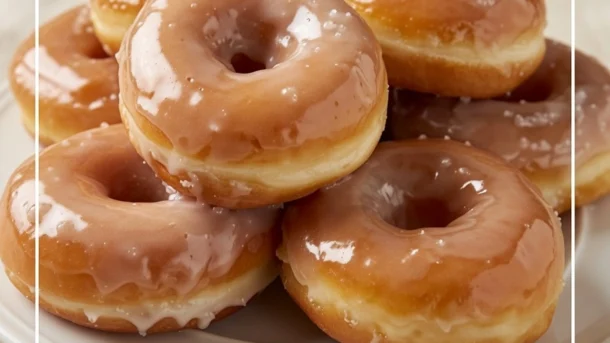
There are moments in baking that stop you completely. And then there are moments like pulling a batch of these Vegan Homemade Krispy Kremes from the hot oil — watching them emerge golden and impossibly light and already puffing up in that characteristic way that makes a great donut look like it is barely holding together from the inside out — dipping them immediately into the warm vanilla glaze and watching that glaze set to a barely-there, translucent, sweet coating that clings to the surface in a way that is so immediately, recognizably right that you understand in that moment exactly why Krispy Kreme became one of the most beloved donut brands in the entire world. These are those donuts. Light as air. Pillowy beyond belief. Glazed to perfection. And completely, entirely plant-based.
These donuts are built on a yeasted dough of extraordinary delicacy — enriched with oat milk, vegan butter, and just enough sugar to feed the yeast and create the characteristic sweetness that makes a great glazed donut so distinctive, and leavened with active dry yeast that produces a rise so dramatic and a crumb so impossibly light and airy that the finished donuts seem to weigh almost nothing despite their generous size. The secret to their legendary lightness is threefold — the enriched dough, the double rise that develops both flavor and structure, and the brief frying at the precise correct temperature that creates a barely-there crust and a completely, gloriously tender interior.
What makes this recipe so genuinely outstanding is its commitment to replicating not merely the flavor of a Krispy Kreme donut but its specific, extraordinary texture. The original Krispy Kreme donut is not merely sweet and fried — it is a specific textural experience of a crust so thin it is almost nonexistent, an interior so soft and pillowy it barely resists the bite, and a glaze so perfectly balanced between sweet and vanilla that it enhances rather than overwhelms everything beneath it. Achieving this in a plant-based version requires specific techniques — the right flour, the right liquid temperature for activating the yeast, the right oil temperature for frying, and the right glaze consistency for dipping — and this recipe delivers all of them.
This recipe is 100% vegan, ready in approximately 2 hours including rising time, and absolutely magnificent eaten warm — ideally within 30 seconds of being glazed, when the glaze is still slightly warm and the donut interior is at its most extraordinary.
Recipe Information
Prep Time
Rise Time
Cook Time
Total Time
Servings
Calories
20 mins
1.5 hours
20 mins
2 hrs 10 mins
12
~280 kcal
Ingredients
For the Donut Dough
3 cups (360g) all-purpose flour plus extra for dusting
2¼ tsp (7g) active dry yeast or instant yeast
¼ cup (50g) cane sugar
½ tsp fine salt
¾ cup (180ml) oat milk, warmed to 110°F (43°C)
¼ cup (55g) vegan butter, melted and slightly cooled
Chocolate glaze: Replace 3 tbsp powdered sugar with 3 tbsp cocoa powder and add 50g melted vegan dark chocolate
Strawberry glaze: Replace oat milk with fresh strawberry puree
Cinnamon sugar: Skip the glaze and roll warm donuts in cinnamon sugar
Filled donuts: Skip cutting the hole and fill with vegan vanilla cream or jam
To Serve
Warm from the fryer with fresh glaze
With a cup of coffee or oat milk latte
Stacked on a plate for the most beautiful presentation
With extra glaze for dipping alongside
Instructions
Activate the yeast. Warm the oat milk to exactly 110°F (43°C) — warm enough to activate the yeast but not so hot it kills it. A kitchen thermometer is ideal here. Add the sugar and yeast to the warm milk, stir gently, and leave for 5–10 minutes until the surface is foamy and the mixture smells distinctly yeasty. If no foam develops after 10 minutes the yeast is dead — start again with fresh yeast and correctly tempered milk.
Make the flax egg. Combine the flaxseed meal and water in a small bowl, stir, and rest for 5 minutes until gel-like.
Make the dough. In a large bowl or stand mixer bowl combine the flour and salt. Add the activated yeast mixture, melted vegan butter, flax egg, and vanilla extract. Mix with a wooden spoon or dough hook until a shaggy dough forms then knead for 8–10 minutes by hand on a lightly floured surface — or 6 minutes on medium speed in a stand mixer — until the dough is smooth, elastic, and slightly tacky but not sticky. It should spring back slowly when poked. This kneading develops the gluten structure that gives the donuts their characteristic chew and ability to hold the light, airy texture created by the yeast.
First rise. Place the dough in a lightly oiled bowl, cover with a clean damp kitchen towel or plastic wrap, and leave in a warm place for 60–75 minutes until doubled in size. The ideal proofing environment is a turned-off oven with just the light on — approximately 80°F (27°C) — which provides the consistent warmth that produces the most reliable, even rise.
Shape the donuts. Turn the risen dough out onto a lightly floured surface and roll to approximately 1.5cm (½ inch) thickness — not thinner or the donuts will be dense after frying. Use a 9cm (3½ inch) round cutter to cut out circles and a 3cm (1¼ inch) cutter or the cap of a bottle for the holes. Re-roll the scraps once to cut additional donuts. Place the cut donuts and holes on a parchment-lined baking sheet with space between each one.
Second rise. Cover the cut donuts loosely with a clean kitchen towel and allow to rise for a further 30–45 minutes until visibly puffed and pillowy — they will not double in size but should look noticeably lighter and more voluminous than when first cut. Do not skip this second rise — it is what produces the extraordinarily light, airy interior that defines a great glazed donut.
Make the glaze. While the donuts complete their second rise whisk together the sifted powdered sugar, warm oat milk, melted vegan butter, vanilla extract, and salt until completely smooth and flowing — the glaze should be thick enough to coat the back of a spoon but thin enough to drip slowly from it. If too thick add oat milk one teaspoon at a time. If too thin add powdered sugar one tablespoon at a time. Keep warm — a glaze that has cooled and thickened will not create the characteristic thin, translucent Krispy Kreme coating.
Fry the donuts. Heat the oil in a large deep pot to exactly 350°F (175°C) — use a thermometer and maintain this temperature throughout frying. Too cool and the donuts absorb oil and are greasy. Too hot and the exterior burns before the interior cooks. Carefully lower 2–3 donuts into the oil at a time — never crowd the pot. Fry for 60–90 seconds per side until deep golden on both sides. Remove with a slotted spoon and drain on a wire rack set over a baking sheet for 30 seconds — not paper towel which makes the bottom soggy.
Glaze immediately. Dip each warm donut into the glaze face down, hold for 3 seconds, lift and allow excess to drip off, then place glaze-side up on the wire rack. The glaze should be thin, translucent, and set within 60–90 seconds on the warm donut. Glaze the donut holes too — they are arguably the best part. Eat immediately for the most extraordinary experience.
Pro Tips for Perfect Vegan Krispy Kreme Style Donuts
Temperature is everything — measure it. The yeast activation temperature, the oil frying temperature, and the glaze temperature are all critical variables that significantly affect the finished result. A kitchen thermometer is not optional for this recipe — it is essential. The difference between oil at 340°F and 360°F produces a meaningfully different donut.
Do not skip the second rise. The first rise develops flavor. The second rise — after the donuts are cut and shaped — develops the specific lightness and airy texture that makes a great glazed donut so extraordinary. Donuts fried without the second rise will be noticeably denser and less pillow-like than those given the full proofing time.
Fry in small batches and maintain oil temperature. Adding too many donuts to the oil at once drops the oil temperature dramatically — causing the donuts to absorb oil before the exterior can set and producing greasy, dense results. Two to three donuts per batch with the oil returned to temperature between batches produces the best results.
Glaze while warm — not hot, not cool. The ideal glazing temperature is approximately 30–60 seconds after the donuts come out of the oil — warm enough that the glaze flows and adheres beautifully but not so hot it slides off before setting. A donut glazed when completely cool will have a thicker, more opaque glaze coating rather than the characteristic thin, translucent Krispy Kreme finish.
Eat within 30 minutes of glazing. Yeasted donuts deteriorate faster than almost any other baked good — the extraordinary lightness and pillowy texture that makes them so spectacular lasts for approximately 2 hours after frying, after which they begin to firm and toughen. Make them, glaze them, eat them immediately.
Use a wire rack not paper towel for draining. Paper towel creates a steam trap under the donut that makes the bottom soggy. A wire rack allows air to circulate completely around the donut and maintains the integrity of the exterior on all surfaces.
The Science of the Perfect Yeasted Donut
A yeasted donut is one of the most technically demanding preparations in all of home baking — and understanding the science behind why each step matters helps explain why these donuts are so extraordinary when the technique is followed precisely.
The yeast is the heart of the recipe. Saccharomyces cerevisiae — the species of yeast used in bread and donut making — consumes the sugars in the dough and produces carbon dioxide gas and ethanol as metabolic byproducts. The carbon dioxide becomes trapped in the gluten network developed during kneading and causes the dough to expand dramatically during both rising periods. The ethanol evaporates during frying and contributes to the characteristic flavor compounds that distinguish a yeasted donut from a cake donut.
The gluten network — developed during the 8–10 minutes of kneading — is what gives the donut its ability to stretch and expand as the yeast produces carbon dioxide without tearing. Insufficient kneading produces a weak gluten network that tears during rising and produces a dense, uneven crumb. Proper kneading produces an elastic, extensible network that stretches smoothly as the dough rises and then sets during frying into the characteristic light, pillowy structure of a great glazed donut.
The frying temperature is critical because of how the starch and protein in the dough respond to heat. At 350°F (175°C) the exterior of the donut sets almost immediately on contact with the oil — creating a thin, sealed crust that traps the moisture inside the donut and keeps the interior extraordinarily tender while the exterior turns golden. At lower temperatures the exterior takes too long to set and absorbs oil before the crust forms. At higher temperatures the exterior burns before the interior has time to cook through.
The glaze — so simple in its ingredients — achieves its characteristic thinness and translucency through the specific ratio of sugar to liquid and the temperature at which it is applied. Applied warm to a warm donut the glaze flows freely over the surface and sets to a thin, even film as both the glaze and the donut cool simultaneously. This simultaneous cooling is what creates the perfectly uniform, paper-thin coating that is the defining visual and textural characteristic of a Krispy Kreme glaze.
Flavor Variations
Chocolate Frosted: Dip in a chocolate glaze made from melted vegan dark chocolate, powdered sugar, oat milk, and vanilla for a rich, deeply chocolatey version that is particularly spectacular with rainbow sprinkles pressed into the surface while the chocolate is still wet.
Strawberry Glazed: Replace the oat milk in the glaze with fresh strawberry puree for a beautiful pink glaze with a natural, vibrant strawberry flavor and color that is particularly stunning in summer.
Cinnamon Sugar: Skip the glaze entirely and roll the warm fried donuts immediately in a generous mixture of cinnamon and caster sugar for a churro-inspired version that is particularly extraordinary with a dipping sauce of vegan chocolate ganache.
Filled Cream Donuts: Skip cutting the hole and fry as full circles. Once cooled use a piping bag to fill each donut with vegan vanilla pastry cream, vegan lemon curd, or strawberry jam for a filled donut that is an entirely different but equally spectacular experience.
Nutritional Highlights (Per Serving — 1 donut with glaze)
Calories
Protein
Carbs
Fiber
Fat
~280 kcal
4g
42g
1g
11g
These donuts are unambiguously an indulgence — and they are completely, unreservedly worth it. Made from real, whole, plant-based ingredients without artificial flavors, preservatives, or additives of any kind, they are a significantly cleaner version of the commercial original while delivering every element of the flavor and texture experience that makes glazed donuts so universally beloved. The flaxseed meal contributes ALA omega-3 fatty acids and lignans. The oat milk base provides beta-glucan fiber. The vegan butter contributes plant-based fats without the cholesterol of dairy butter. This is an indulgence with integrity.
Storage
Best eaten immediately: Yeasted glazed donuts are at their absolute, unequivocal peak within 30–60 minutes of being glazed. The texture deteriorates significantly after 2–3 hours as the yeast structure firms and the glaze absorbs into the surface. Make them and eat them immediately whenever possible.
Room temperature: Store unglazed fried donuts in an airtight container at room temperature for up to 1 day. Warm briefly in a 300°F (150°C) oven for 3–4 minutes before glazing and serving — this partially restores the fresh-fried texture.
Freezer — unfried dough: After cutting the donut shapes freeze them on a parchment-lined baking sheet until solid then transfer to a freezer bag for up to 1 month. Thaw overnight in the refrigerator, complete the second rise at room temperature for 45–60 minutes, then fry and glaze as directed.
Freezer — fried unglazed: Freeze fried unglazed donuts for up to 1 month. Thaw at room temperature for 30 minutes and warm in a 300°F (150°C) oven for 5 minutes before glazing and serving.
Frequently Asked Questions
Can I bake these instead of frying?
Yes — bake at 375°F (190°C) for 12–15 minutes until golden. Baked donuts have a more bread-like texture than fried ones and lack the characteristic thin, barely-there crust of a fried donut but are still delicious and significantly lower in fat. An air fryer at 350°F (175°C) for 5–6 minutes per side produces a result closer to fried than the oven.
Why didn’t my dough rise?
Failed dough rise is almost always caused by dead yeast or milk that was too hot and killed the yeast. Always check that your yeast is within its expiration date and that the milk temperature is between 105–115°F (40–46°C). If the yeast does not foam after 10 minutes in the warm milk it is dead — start again with fresh yeast.
Can I make the dough the night before?
Yes — after the first rise punch the dough down, wrap tightly in plastic wrap, and refrigerate overnight. The next morning remove from the refrigerator, roll and cut the donuts, and allow to complete the second rise at room temperature for 60–75 minutes before frying — the cold dough takes longer to proof than room temperature dough.
What oil is best for frying donuts?
A neutral oil with a high smoke point is essential — canola oil, sunflower oil, or refined coconut oil all work beautifully. Avoid olive oil which has too low a smoke point and too strong a flavor. The oil should be clean and fresh — reused oil with food particles produces off-flavors in the finished donuts.
How do I keep the glaze from being too thick?
The glaze thickens as it cools — reheat briefly in the microwave for 15 seconds and stir well to restore a flowing consistency. If making the glaze in advance keep it in a bowl set over warm water to maintain the ideal dipping temperature and consistency throughout the glazing process.
Can I make these donuts gluten-free?
Gluten-free yeasted donuts are significantly more challenging than regular ones — the gluten network is essential for trapping the carbon dioxide produced by the yeast. A dedicated gluten-free donut flour blend with added psyllium husk or xanthan gum produces the best results. Expect a slightly denser texture than the regular version but still genuinely delicious.
Tried this recipe? Leave a comment below and let us know how it turned out! Tag us on Instagram and Facebook — we love seeing your plant-powered creations. Looking for more indulgent vegan baking and dessert recipes? Browse all recipes on Easy Vegan Recipes — new recipes posted every single week!
We use cookies on our website to give you the most relevant experience by remembering your preferences and repeat visits. By clicking “Accept”, you consent to the use of ALL the cookies.
This website uses cookies to improve your experience while you navigate through the website. Out of these, the cookies that are categorized as necessary are stored on your browser as they are essential for the working of basic functionalities of the website. We also use third-party cookies that help us analyze and understand how you use this website. These cookies will be stored in your browser only with your consent. You also have the option to opt-out of these cookies. But opting out of some of these cookies may affect your browsing experience.
Necessary cookies are absolutely essential for the website to function properly. These cookies ensure basic functionalities and security features of the website, anonymously.
Cookie
Duration
Description
cookielawinfo-checkbox-analytics
11 months
This cookie is set by GDPR Cookie Consent plugin. The cookie is used to store the user consent for the cookies in the category "Analytics".
cookielawinfo-checkbox-functional
11 months
The cookie is set by GDPR cookie consent to record the user consent for the cookies in the category "Functional".
cookielawinfo-checkbox-necessary
11 months
This cookie is set by GDPR Cookie Consent plugin. The cookies is used to store the user consent for the cookies in the category "Necessary".
cookielawinfo-checkbox-others
11 months
This cookie is set by GDPR Cookie Consent plugin. The cookie is used to store the user consent for the cookies in the category "Other.
cookielawinfo-checkbox-performance
11 months
This cookie is set by GDPR Cookie Consent plugin. The cookie is used to store the user consent for the cookies in the category "Performance".
viewed_cookie_policy
11 months
The cookie is set by the GDPR Cookie Consent plugin and is used to store whether or not user has consented to the use of cookies. It does not store any personal data.
Functional cookies help to perform certain functionalities like sharing the content of the website on social media platforms, collect feedbacks, and other third-party features.
Performance cookies are used to understand and analyze the key performance indexes of the website which helps in delivering a better user experience for the visitors.
Analytical cookies are used to understand how visitors interact with the website. These cookies help provide information on metrics the number of visitors, bounce rate, traffic source, etc.
Advertisement cookies are used to provide visitors with relevant ads and marketing campaigns. These cookies track visitors across websites and collect information to provide customized ads.