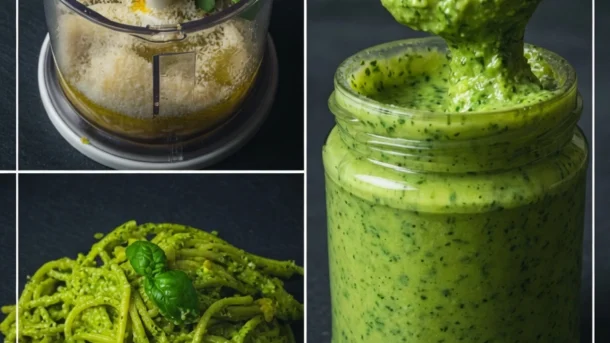
Fresh basil, bright lemon zest and juice, garlic, toasted sunflower seeds, and good olive oil, blended into a vivid green sauce in 10 minutes: this Vegan Lemon Pesto is zesty, herby, and completely nut-free. It tastes lighter and fresher than traditional pesto, and it is perfect tossed with pasta, spooned over roasted vegetables, spread on sandwiches, or stirred into soup.
Classic pesto is rich and savory, made with pine nuts and parmesan. This vegan version is built differently. The sunflower seeds replace pine nuts, so it is nut-free and much cheaper, and nutritional yeast gives a savory, cheesy flavor without dairy. The lemon is the star: both the zest and the juice go in, so you get floral lemon aroma and a sharp, clean tang. A handful of parsley mixed with the basil keeps the color bright and the flavor balanced.
The result is a pesto that wakes up simple foods. Put it on plain pasta and you have dinner in 15 minutes. Spoon it over grilled zucchini, roasted potatoes, white beans, or a baked sweet potato and the dish tastes brighter. Thin it with a little water or extra oil, and it becomes a salad dressing.
A few small steps give the best pesto. Toast the sunflower seeds for 3–4 minutes in a dry skillet to bring out their flavor, then cool them before blending, since warm seeds can turn the basil dark and muddy. Zest the lemons before you juice them, because it is much harder the other way around. Add the lemon juice at the end, tasting as you go, since lemons vary in tartness. Blend in pulses and stop while the pesto still has some texture. Over-blending makes it pasty and warms the basil.
To keep the pesto green, store it in a jar with a thin layer of olive oil on top, so air does not touch the surface. It stays vivid for several days in the fridge.
Allergen note: this recipe is vegan, dairy-free, egg-free, gluten-free, and nut-free as written. Sunflower seeds are seeds, not tree nuts, but they can be processed in facilities that handle nuts, so check the label if allergies are severe. The pasta serving suggestion contains gluten unless you use gluten-free pasta.
Recipe Information
| Prep Time | Cook Time | Total Time | Makes | Calories |
|---|---|---|---|---|
| 10 mins | 4 mins (toasting seeds) | 15 mins | about 1 cup (enough for 8 oz / 225g of pasta) | ~90 kcal per tablespoon |
Ingredients
For the Lemon Pesto
- ⅓ cup (45g) raw sunflower seeds
- 2 cups (50g) packed fresh basil leaves
- ½ cup (15g) packed fresh parsley leaves
- 2 garlic cloves, peeled
- Zest of 2 lemons (about 2 tbsp)
- 3 tbsp lemon juice, plus more to taste
- 3 tbsp nutritional yeast
- ½ cup (120ml) extra virgin olive oil
- ½ tsp salt, to taste
- ¼ tsp black pepper
- 1–2 tbsp cold water, if needed
For Lemon Pesto Pasta (Serves 3–4)
- 8 oz (225g) pasta, such as spaghetti, linguine, or fusilli
- ½ cup (120g) lemon pesto
- ½ cup pasta cooking water
- 1 cup peas or chopped asparagus, optional
- Extra lemon zest and black pepper, to serve
Instructions
- Toast the seeds. Toast the sunflower seeds in a dry skillet over medium heat for 3–4 minutes, stirring often, until golden and fragrant. Transfer to a plate and let them cool completely.
- Zest and juice. Zest the lemons first, then juice them.
- Blend. In a food processor, pulse the cooled seeds, garlic, and nutritional yeast until finely chopped. Add the basil, parsley, lemon zest, salt, and pepper, and pulse until a coarse paste forms.
- Add oil. With the processor running, slowly pour in the olive oil until the pesto is smooth but still a little textured. Scrape down the sides as needed.
- Finish. Add the lemon juice and blend briefly. Taste and adjust the salt and lemon. Add a tablespoon of cold water if you want a looser pesto.
- Make the pasta. Cook the pasta in well-salted water until al dente. Scoop out ½ cup of the cooking water before draining. If using peas or asparagus, add them to the pot for the last 2 minutes.
- Toss. Return the pasta to the pot off the heat. Add the pesto and splash in the pasta water, tossing until the sauce is glossy and coats every strand. Do not heat the pesto in the pan, since it can turn bitter and brown.
- Serve. Top with extra lemon zest and black pepper. Serve right away.
Pro Tips for the Best Lemon Pesto
- Toast and cool the seeds. Warm seeds darken the basil.
- Zest the lemons before juicing them.
- Use fresh, dry basil, since wet leaves make a watery pesto.
- Pulse rather than blend continuously, so the pesto stays lightly textured.
- Add the lemon juice last and taste, since lemons vary.
- Use a good extra virgin olive oil, but not a very bitter one, which can overpower the herbs.
- Toss with pasta off the heat, and use the starchy pasta water to make it creamy.
- Cover the surface of the stored pesto with oil to keep it green.
A Few Notes on Ingredients
Sunflower seeds give a rich, mild, buttery base and make the pesto nut-free. Fresh basil gives the classic pesto flavor. Parsley adds freshness and helps the color. Nutritional yeast gives a savory, cheesy flavor. Lemon zest holds most of the lemon aroma, while the juice adds sourness, so use both. If you do not have a food processor, a high-speed blender works, but use the pulse setting and add the oil gradually.
Flavor Variations
- Nut Version: Use pine nuts, walnuts, or cashews instead of sunflower seeds. This is not nut-free.
- Pumpkin Seed Pesto: Use pumpkin seeds (pepitas).
- Greens: Replace half the basil with baby spinach or arugula.
- Spicy: Add a pinch of chili flakes.
- Creamy: Blend in a spoonful of silken tofu or white beans. Silken tofu contains soy.
- Dressing: Thin with 2 tablespoons of water and 1 tablespoon of oil.
- Mint: Replace the parsley with fresh mint.
Ways to Use Lemon Pesto
- Toss with pasta or gnocchi
- Spoon over roasted potatoes or grilled zucchini
- Spread on sandwiches, toast, or wraps
- Stir into soups or grain bowls
- Drizzle over white beans or chickpeas
- Use as a pizza sauce
- Mix with vegan yogurt for a dip
Nutritional Highlights (Per Tablespoon of Pesto)
| Calories | Protein | Carbs | Fiber | Fat |
|---|---|---|---|---|
| ~90 kcal | 1g | 1g | 0.5g | 9g |
Values are estimates and vary by ingredient. Pesto is rich in olive oil, so it is calorie-dense and is used in small amounts.
Storage
- Refrigerator: Store in an airtight jar with a thin layer of olive oil on top for up to 5 days.
- Freezer: Freeze in ice cube trays, then transfer to a bag for up to 3 months. Thaw in the fridge or at room temperature.
- Color: Pesto may darken slightly over time. Stir it and add a little lemon juice to refresh it.
- Pasta: Leftover pasta is best eaten fresh, but will keep in the fridge for 3 days.
Frequently Asked Questions
Why did my pesto turn brown?
Basil darkens when exposed to air and heat. Cover the surface with oil, store it in the fridge, and do not heat it directly.
Is this pesto nut-free?
Yes. It uses sunflower seeds, which are not tree nuts. Check labels if you have a severe allergy, since they may be processed alongside nuts.
Why is my pesto bitter?
It could be over-blending, a very bitter olive oil, or too much lemon zest including the white pith. Zest only the yellow part, and add oil gradually.
Can I make it without a food processor?
Yes. Use a blender with the pulse setting, or chop everything finely and mix by hand for a rustic pesto.
Can I freeze it?
Yes. Freeze it in portions for up to 3 months.
How is this different from your other pesto recipes?
This is a bright, nut-free pesto with lots of lemon zest and juice, made with sunflower seeds. Our Vegan Pesto Sauce is a separate pesto recipe, and our Roasted Gnocchi Burst Tomato Pasta with Cashew Pesto uses a cashew-based pesto, so it is not nut-free.
Tried this recipe? Leave a comment below and let us know how it turned out! Tag us on Instagram and Facebook — we love seeing your plant-powered creations. Browse all recipes on Easy Vegan Recipes — new recipes posted every single week!