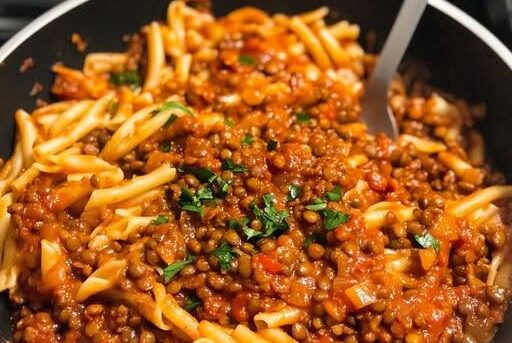
vegan bolognese

Vegan Lentil Bolognese with Walnuts, Red Wine and Slow-Simmered Tomato Sauce

hearty vegan lentil bolognese

Thick, rich, and deeply savory, this Vegan Lentil Bolognese tastes like it has been simmering all afternoon, yet it is ready in about 45 minutes. Green lentils and finely chopped walnuts give the sauce a hearty, meaty texture, while a base of carrot, celery, onion, and garlic builds the classic Italian flavor. Tossed with spaghetti or tagliatelle and topped with vegan parmesan, it is comfort food at its best.

The secret to a bolognese that tastes authentic is layering flavor. Vegetables are cooked slowly until sweet, tomato paste is caramelized in the pan, and a splash of red wine is cooked down to add depth. A little soy sauce and a spoonful of miso or Marmite bring the rich, savory umami that normally comes from meat, and a bay leaf and dried herbs add classic aroma. A small amount of plant milk stirred in at the end gives the sauce that silky, velvety finish.

Lentils are budget-friendly, filling, and packed with protein and fiber, so this sauce is also great for meal prep. It thickens and improves overnight, freezes beautifully, and works as a filling for lasagna, stuffed peppers, baked potatoes, and zucchini boats.

This recipe is 100% vegan, dairy-free, and easily made gluten-free.


Recipe Information

Prep TimeCook TimeTotal TimeServingsCalories
15 mins30 mins45 mins6~430 kcal (with pasta)

Ingredients

For the Lentil Bolognese

  • 2 tbsp olive oil
  • 1 large yellow onion, finely diced
  • 2 medium carrots, finely diced
  • 2 stalks celery, finely diced
  • 5 cloves garlic, minced
  • 3 tbsp tomato paste
  • ½ cup (120ml) dry red wine (or extra broth)
  • 1 can (800g) crushed tomatoes
  • 1½ cups (about 300g) cooked green or brown lentils (about ¾ cup dry), or 1 can drained
  • ½ cup (55g) walnuts, finely chopped
  • 1½ cups (360ml) vegetable broth
  • 1 tbsp soy sauce or tamari
  • 1 tsp white miso paste (optional)
  • 1 tsp maple syrup
  • 2 tsp dried oregano
  • 1 tsp dried basil
  • 1 tsp dried thyme
  • 2 bay leaves
  • 1 tsp salt, to taste
  • ½ tsp black pepper
  • ¼ cup (60ml) unsweetened plant milk (optional, for a creamy finish)
  • 2 tbsp chopped fresh basil or parsley

For the Pasta

  • 400g spaghetti, tagliatelle, or pappardelle (egg-free)
  • Salt for the pasta water

To Serve

  • Vegan parmesan
  • Fresh basil
  • Chili flakes
  • Garlic bread
  • Green salad

Optional Additions

  • 200g mushrooms, finely chopped
  • Pinch of smoked paprika
  • Sun-dried tomatoes
  • Splash of balsamic vinegar

Instructions

  1. Build the base. Heat the oil in a large, deep skillet or Dutch oven over medium heat. Add the onion, carrot, and celery and cook for 8–10 minutes, stirring often, until very soft and starting to caramelize. Add the garlic and cook for 1 minute.
  2. Toast the tomato paste. Stir in the tomato paste and cook for 2 minutes until it darkens to a deep red-brown.
  3. Deglaze. Pour in the red wine and scrape up the browned bits from the bottom of the pan. Simmer for 2–3 minutes until mostly reduced.
  4. Simmer the sauce. Add the crushed tomatoes, lentils, walnuts, broth, soy sauce, miso, maple syrup, herbs, bay leaves, salt, and pepper. Bring to a boil, then reduce the heat to low and simmer, partially covered, for 20–25 minutes, stirring occasionally, until thick and rich.
  5. Finish the sauce. Remove the bay leaves, stir in the plant milk and fresh basil, and taste. Adjust with more salt, a pinch of sugar, or a splash of vinegar as needed.
  6. Cook the pasta. Boil the pasta in well-salted water until al dente. Reserve ½ cup of the pasta water, then drain.
  7. Combine. Toss the pasta with the bolognese sauce, adding splashes of pasta water to loosen the sauce and make it glossy.
  8. Serve. Top with vegan parmesan, fresh basil, and chili flakes, and serve with garlic bread.

Pro Tips for the Best Lentil Bolognese

  • Cook the vegetables slowly. A soft, sweet base is what makes the sauce taste rich.
  • Caramelize the tomato paste. Cooking it until dark adds depth and removes the raw taste.
  • Use green or brown lentils. They hold their shape better than red lentils.
  • Chop the walnuts finely. They melt into the sauce and add richness and body.
  • Add umami. Soy sauce and miso give the sauce a savory, meaty taste.
  • Simmer low and slow. Longer cooking means more flavor.
  • Toss with pasta water. The starch helps the sauce cling to every strand.

Why This Bolognese Is a Smart Weeknight Dinner

Lentils are one of the most affordable sources of plant protein, and they provide fiber, folate, iron, and potassium. Walnuts add healthy omega-3 fats, and carrots, celery, and tomatoes contribute vitamin A, vitamin C, and lycopene.

Compared with a traditional meat sauce, this version has no cholesterol and less saturated fat. A serving of the sauce provides about 14 grams of plant protein and 9 grams of fiber, and it is simple to scale up for meal prep.


Flavor Variations

  • Mushroom Lentil Bolognese: Add finely chopped mushrooms for extra umami.
  • Spicy Arrabbiata Style: Add plenty of chili flakes and a splash of vinegar.
  • Lentil Lasagna Filling: Layer the sauce with noodles and vegan béchamel.
  • Nut-Free Version: Replace the walnuts with finely chopped mushrooms or sunflower seeds.

Nutritional Highlights (Per Serving, with pasta)

CaloriesProteinCarbsFiberFat
~430 kcal17g69g9g9g

Storage

  • Refrigerator: Store the sauce in an airtight container for up to 5 days.
  • Freezer: Freeze the sauce for up to 3 months. Thaw overnight and reheat on the stove.
  • Reheating: Warm gently with a splash of water or broth if it has thickened.
  • Make ahead: The flavor improves after a day, so it is ideal for meal prep.

Frequently Asked Questions

Can I make it without wine?

Yes. Replace it with vegetable broth and a teaspoon of balsamic vinegar.

Can I use canned lentils?

Yes. Use two 400g cans, drained and rinsed. They are ready to use, so reduce the broth slightly.

Can I use red lentils?

Red lentils break down and make a smoother, softer sauce. Brown or green lentils give a more textured result.

Can I make it gluten-free?

Use gluten-free pasta and tamari instead of soy sauce.

Can I make it nut-free?

Yes. Replace the walnuts with mushrooms or sunflower seeds.

How do I make it thicker?

Simmer uncovered for 5–10 minutes, or mash some of the lentils into the sauce.


Tried this recipe? Leave a comment below and let us know how it turned out! Tag us on Instagram and Facebook — we love seeing your plant-powered creations. Looking for more easy vegan pasta dishes? Browse all recipes on Easy Vegan Recipes — new recipes posted every single week!
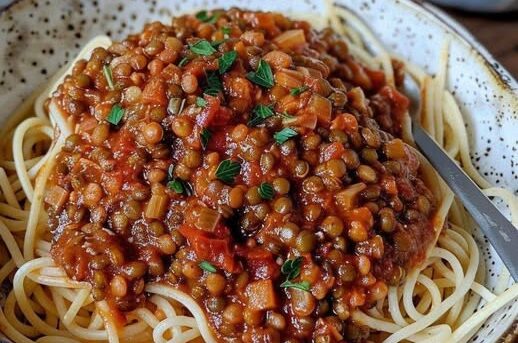
Hearty Vegan Spaghetti Bolognese with Mushroom Walnut Ragu, Red Wine and Slow-Simmered Tomato

vegan spaghetti bolognese

Rich, savory, and slow-simmered to perfection, this Vegan Spaghetti Bolognese is a classic Italian-style meat sauce made entirely from plants. Finely chopped mushrooms and walnuts replace the ground meat, creating a thick, hearty ragu with a deep, meaty texture and a flavor that tastes like it simmered all afternoon, even though it is ready in about 45 minutes.

A traditional bolognese starts with a soffritto, a base of finely diced onion, carrot, and celery cooked slowly until sweet and soft. That is where this sauce begins too. Then come browned mushrooms and toasted walnuts for savory depth and texture, tomato paste cooked until brick red, a splash of red wine, crushed tomatoes, and herbs. A spoonful of soy sauce and a little miso or nutritional yeast add the umami that makes the sauce taste so satisfying.

The secret to a great bolognese is patience in the first ten minutes: browning the mushrooms well and caramelizing the tomato paste. After that, the sauce simmers on its own, getting thicker and richer as it goes. Toss it with al dente spaghetti and a splash of pasta water, and the sauce clings to every strand.

Serve it with a sprinkle of vegan parmesan and fresh basil, a crisp green salad, and warm garlic bread. It is perfect for family dinners and meal prep, and leftovers are even better the next day.

This bolognese is 100% vegan, dairy-free, egg-free, and easy to make gluten-free with gluten-free pasta.


Recipe Information

Prep TimeCook TimeTotal TimeServingsCalories
15 mins35 mins50 mins6 servings~460 kcal

Ingredients

For the Mushroom Walnut Bolognese

  • 2 tbsp olive oil
  • 1 large yellow onion, finely diced
  • 2 medium carrots, finely diced
  • 2 stalks celery, finely diced
  • 4 cloves garlic, minced
  • 1 lb (450g) cremini mushrooms, finely chopped (or pulsed in a food processor)
  • 1 cup (100g) walnuts, toasted and finely chopped
  • 3 tbsp tomato paste
  • ½ cup (120ml) dry red wine (or vegetable broth)
  • 1 can (28 oz / 800g) crushed tomatoes
  • 1 cup (240ml) vegetable broth
  • 2 tbsp soy sauce or tamari
  • 1 tbsp white miso paste (optional)
  • 2 tsp dried oregano
  • 1 tsp dried basil
  • 1 tsp smoked paprika
  • 2 bay leaves
  • 1 tsp sugar or maple syrup
  • 1 tsp salt, plus more to taste
  • ½ tsp black pepper

For the Pasta

  • 1 lb (450g) spaghetti
  • 1 tbsp salt, for the pasta water

To Finish

  • Fresh basil leaves
  • Vegan parmesan
  • Red pepper flakes
  • Olive oil, for drizzling

To Serve

  • Garlic bread
  • Green salad
  • Roasted vegetables
  • Extra vegan parmesan

Optional Additions

  • Dried porcini mushrooms, soaked
  • Lentils for extra protein
  • Splash of plant milk for creaminess
  • Fresh parsley

Instructions

  1. Toast the walnuts. Toast the walnuts in a dry skillet over medium heat for 4–5 minutes until fragrant. Cool, then chop finely.
  2. Make the soffritto. Heat the olive oil in a large, deep pot over medium heat. Add the onion, carrots, and celery with a pinch of salt and cook for 8–10 minutes, until soft and sweet.
  3. Add garlic. Stir in the garlic and cook for 1 minute.
  4. Brown the mushrooms. Add the chopped mushrooms and cook for 8–10 minutes, stirring occasionally, until all the moisture has cooked off and they are deeply browned.
  5. Cook the paste. Add the tomato paste and stir for 2 minutes until it darkens to a brick red color.
  6. Deglaze. Pour in the red wine and scrape up any browned bits. Simmer for 2–3 minutes until mostly evaporated.
  7. Add the rest. Stir in the walnuts, crushed tomatoes, broth, soy sauce, miso, oregano, basil, paprika, bay leaves, sugar, salt, and pepper.
  8. Simmer. Reduce the heat to medium-low, partially cover, and simmer for 25–30 minutes, stirring occasionally, until thick and rich. Add a splash of water if it gets too thick.
  9. Cook the pasta. Meanwhile, boil the spaghetti in well-salted water until al dente. Reserve 1 cup of pasta water, then drain.
  10. Combine. Remove the bay leaves. Toss the pasta with the sauce over low heat, adding pasta water a splash at a time until glossy.
  11. Serve. Top with fresh basil, vegan parmesan, and a drizzle of olive oil.

Pro Tips for the Best Vegan Bolognese

  • Chop the mushrooms finely. A fine, even chop gives a more meat-like texture.
  • Cook off the mushroom moisture. Browned mushrooms taste meaty, while steamed ones taste watery.
  • Toast the walnuts. It deepens their flavor and removes any bitterness.
  • Cook the tomato paste. This adds rich, sweet depth.
  • Simmer long enough. Twenty-five to thirty minutes thickens and blends the flavors.
  • Use pasta water. The starch helps the sauce coat the noodles.
  • Season in layers. Taste and adjust at the end.

Why This Bolognese Is a Smart Choice

Mushrooms provide B vitamins, selenium, and umami, while walnuts add omega-3 fats, protein, and a meaty chew. Carrots, celery, and tomatoes contribute fiber and antioxidants like lycopene.

Compared to a traditional meat sauce, this version has no cholesterol and far less saturated fat. A serving provides about 14 grams of plant protein and 7 grams of fiber, especially with whole wheat pasta.


Flavor Variations

  • Lentil Mushroom Bolognese: Add 1 cup of cooked brown lentils.
  • Spicy Bolognese: Add chili flakes and a diced fresh chili.
  • Creamy Bolognese: Stir in ¼ cup of cashew cream at the end.
  • Bolognese Bake: Layer with pasta and vegan cheese and bake.

Nutritional Highlights (Per Serving)

CaloriesProteinCarbsFiberFat
~460 kcal14g68g7g14g

Storage

  • Refrigerator: Store the sauce for up to 5 days.
  • Freezer: Freeze the sauce for up to 3 months. Thaw overnight and reheat gently.
  • Reheating: Warm on the stove with a splash of water or broth.
  • Make ahead: The sauce tastes best the next day, so make it ahead for easy dinners.

Frequently Asked Questions

What can I use instead of red wine?

Use vegetable broth with a teaspoon of balsamic or red wine vinegar for acidity.

Can I make it nut-free?

Yes. Replace the walnuts with cooked lentils, sunflower seeds, or extra mushrooms.

Can I make it gluten-free?

Use gluten-free pasta and tamari instead of soy sauce.

Can I make it in a slow cooker?

Yes. Brown the vegetables and mushrooms first, then simmer everything in the slow cooker on low for 6–8 hours.

Why is my sauce watery?

Simmer longer with the lid off to reduce, and make sure the mushrooms cooked down fully.

How is this different from your lentil bolognese?

This sauce is built on mushrooms and walnuts for a meaty, rich texture, while our Vegan Lentil Bolognese uses lentils for a heartier, protein-rich sauce.


Tried this recipe? Leave a comment below and let us know how it turned out! Tag us on Instagram and Facebook — we love seeing your plant-powered creations. Looking for more comforting vegan pasta? Browse all recipes on Easy Vegan Recipes — new recipes posted every single week!

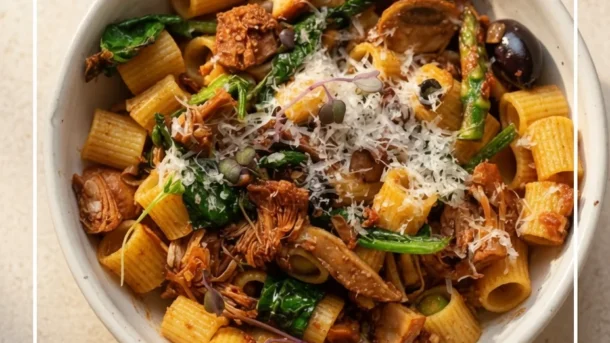
Jackfruit Meat Ragu

jackfruit meat ragu

There are pasta sauces you make because dinner needs to happen. And then there are pasta sauces like this Vegan Jackfruit Meat Ragu — the kind that simmers low and slow into a deeply rich, deeply red, deeply savory sauce of such extraordinary body and depth that it coats every strand of pasta in a way that only a proper long-cooked ragu can, while pulling apart into long, tender, meaty strands of jackfruit that are almost indistinguishable in texture from slow-cooked beef. This is that ragu. The one that converts people. The one that makes the whole apartment smell extraordinary for hours. The one that teaches people what jackfruit is genuinely capable of when it is given the time, the technique, and the seasoning it deserves.

This recipe uses young green jackfruit — shredded into long, fibrous strands and seared until caramelized before being slow-cooked in a rich tomato sauce with red wine, garlic, and herbs into a proper, full-bodied ragu that has the texture, substance, and deep savory character of a slow-cooked Bolognese. The sauce is finished with a splash of plant milk — the classic trick of Italian nonnas — which adds a subtle creaminess and rounds the acidity of the tomatoes.

What makes this ragu so outstanding is the searing step — browning the shredded jackfruit in a very hot pan before it goes into the sauce produces a caramelized, slightly charred exterior on each strand that adds depth of flavor and a more genuinely meaty character than simply simmering raw jackfruit in sauce would ever achieve.

This recipe is 100% vegan, ready in about 60 minutes, and absolutely magnificent served over pappardelle, tagliatelle, or rigatoni with a generous dusting of vegan parmesan.


Recipe Information

Prep TimeCook TimeTotal TimeServingsCalories
15 mins45 mins60 mins4~380 kcal

Ingredients

For the Ragu

  • 2 cans (560g drained) young green jackfruit in water or brine, drained and rinsed
  • 1 large onion, finely diced
  • 1 medium carrot, finely diced
  • 2 stalks celery, finely diced
  • 5 cloves garlic, minced
  • 2 tbsp olive oil
  • 2 tbsp tomato paste
  • 1 can (400g) crushed tomatoes
  • ½ cup (120ml) dry red wine or extra vegetable broth
  • ½ cup (120ml) vegetable broth
  • ¼ cup (60ml) plant milk (stirred in at the end)
  • 2 tsp soy sauce
  • 1 tsp dried oregano
  • 1 tsp dried thyme
  • 1 bay leaf
  • Salt and black pepper to taste

For Seasoning the Jackfruit

  • 1 tbsp soy sauce
  • 1 tsp smoked paprika
  • ½ tsp garlic powder
  • ½ tsp onion powder
  • Black pepper

To Serve

  • 400g pappardelle, tagliatelle, or rigatoni, cooked
  • Vegan parmesan or nutritional yeast
  • Fresh basil leaves
  • A drizzle of good olive oil

Instructions

  1. Prepare the jackfruit. Drain and rinse the jackfruit thoroughly. Pat dry with kitchen towels — as dry as possible. Using your hands or two forks, shred the jackfruit into long, fibrous strands, discarding any hard seed pods. Toss the shredded jackfruit with soy sauce, smoked paprika, garlic powder, onion powder, and black pepper.
  2. Sear the jackfruit. Heat 1 tablespoon of olive oil in a large, heavy pot or Dutch oven over high heat. Add the seasoned jackfruit in a single layer — work in batches if needed — and cook undisturbed for 3–4 minutes until deeply caramelized and golden on one side. Stir and cook for 2–3 more minutes until golden all over. Remove and set aside.
  3. Build the soffritto. Reduce heat to medium and add the remaining olive oil to the same pot. Add the onion, carrot, and celery — the classic Italian soffritto — and cook for 7–8 minutes until very soft and golden. Add the garlic and cook for 60 seconds until fragrant.
  4. Build the sauce. Add the tomato paste and stir for 2 minutes until darkened slightly. Pour in the red wine and let it reduce for 2–3 minutes. Add the crushed tomatoes, vegetable broth, soy sauce, oregano, thyme, and bay leaf. Stir well.
  5. Simmer low and slow. Return the seared jackfruit to the pot. Bring to a simmer then reduce heat to the lowest setting. Cover and cook for 25–30 minutes, stirring occasionally, until the sauce has thickened and deepened in color and the jackfruit strands have absorbed the surrounding flavors completely.
  6. Finish with plant milk. Remove the bay leaf. Stir in the plant milk for creaminess and to round the acidity. Taste and season generously with salt and black pepper.
  7. Serve. Toss the ragu through freshly cooked pasta and serve immediately with a generous dusting of vegan parmesan, fresh basil, and a drizzle of olive oil.

Pro Tips

  • Dry the jackfruit as thoroughly as possible before searing — excess moisture prevents proper caramelization and produces steamed rather than seared jackfruit.
  • Sear over high heat and do not move the jackfruit for the first 3–4 minutes — letting a proper golden crust form on the bottom before stirring is what creates the meaty character.
  • Build the soffritto slowly — properly cooked, golden soffritto is the flavor foundation of a great Italian ragu and cannot be rushed.
  • The plant milk stirred in at the end is a genuine game changer — it adds a subtlety and roundness to the finished sauce that makes it taste far more complex than the ingredients list suggests.
  • Use a good quality red wine if possible — it adds depth that vegetable broth alone cannot replicate.

What Makes Jackfruit Work as a Meat Substitute

Young green jackfruit has a fibrous, pulled texture when shredded that is closer to slow-cooked meat than any other plant-based ingredient available. Unlike ripe jackfruit which is sweet and distinctly tropical, young green jackfruit has a mild, almost neutral flavor that absorbs surrounding seasonings completely during cooking, producing a result that tastes of whatever it is cooked in rather than of jackfruit itself.

The key to maximizing this quality is the searing step — the Maillard reaction that occurs when the shredded jackfruit surfaces make contact with a screaming hot pan produces the same flavor compounds that give slow-braised meat its deep, complex, savory character, transforming the mild jackfruit into something genuinely rich and satisfying before it even enters the sauce.


Flavor Variations

  • Spicy Arrabbiata Jackfruit Ragu: Add chili flakes and a diced jalapeño for a spicy version inspired by pasta all’arrabbiata.
  • Mushroom and Jackfruit Ragu: Add finely diced mushrooms to the soffritto for additional umami depth alongside the jackfruit.
  • White Wine Jackfruit Ragu: Replace the red wine with white wine and the crushed tomatoes with a smaller amount of tomato paste for a lighter, more delicate version.

Nutritional Highlights (Per Serving — without pasta)

CaloriesProteinCarbsFiberFat
~380 kcal8g42g7g10g

Storage

  • Refrigerator: Store the ragu separately from the pasta in an airtight container for up to 5 days. The sauce deepens considerably in flavor during storage and is often better on day 2 or 3. Reheat gently on the stovetop with a splash of broth.
  • Freezer: This ragu freezes beautifully for up to 3 months. Cool completely before transferring to freezer-safe containers. Thaw overnight and reheat gently.
  • Meal prep: Make a large batch at the beginning of the week for the most effortless pasta dinners — reheat and toss with freshly cooked pasta each evening in under 10 minutes.

Frequently Asked Questions

Where do I find young green jackfruit?

Young green jackfruit in water or brine is widely available in tins at Asian grocery stores, health food stores, and increasingly in mainstream supermarkets. Look specifically for “young green jackfruit” — not ripe jackfruit in syrup, which is sweet and unsuitable for savory cooking.

Can I make this ragu without wine?

Yes — replace the wine with additional vegetable broth and a tablespoon of balsamic vinegar for depth. The finished sauce will be slightly less complex but still deeply delicious.

How do I make the jackfruit even more meaty in texture?

For the most convincing texture, after searing spread the jackfruit on a baking sheet and roast at 400°F (200°C) for 15 minutes before adding to the sauce. This additional step dries the jackfruit further and produces an even more fibrous, meaty character.


Tried this recipe? Leave a comment below and let us know how it turned out! Tag us on Instagram and Facebook — we love seeing your plant-powered creations. Looking for more deeply satisfying vegan pasta and dinner recipes? Browse all recipes on Easy Vegan Recipes — new recipes posted every single week!