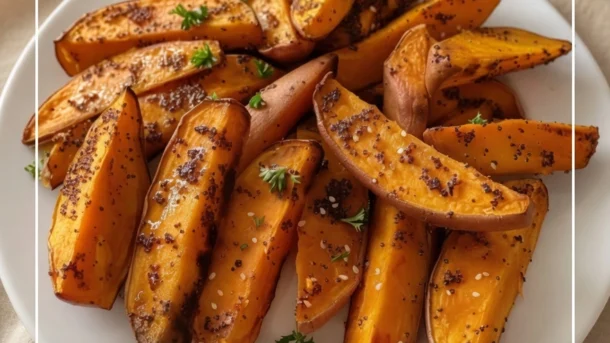
There are side dishes you make because something needs to accompany the main. And then there are side dishes like these Vegan Sweet Potato Wedges — the kind that upstage everything else on the table, that get eaten directly from the baking sheet before they even make it to the serving bowl, that combine the most extraordinary caramelized sweetness with a crispy, spiced exterior that shatters when bitten into and gives way to the softest, most yielding, most intensely sweet interior imaginable. These are those wedges. The ones that become the reason people come back for seconds when they thought they were already full. The ones that make sweet potato converts out of everyone who tries them. The ones that prove definitively and irrevocably that the humble sweet potato — treated with respect, seasoned with intention, and roasted at the correct temperature — is one of the most spectacular ingredients in the entire plant-based kitchen.
These wedges are everything a great roasted sweet potato should be and then considerably more. The exterior is genuinely, authentically crispy — a result of the specific combination of cornstarch coating, high oven temperature, and sufficient space on the baking sheet that allows the hot oven air to circulate completely around every wedge simultaneously. The interior is soft, yielding, and so intensely sweet that it tastes almost caramelized from the inside — a result of the natural sugars in the sweet potato concentrating during the long, hot roasting process into something that borders on confectionery. And the spice blend — smoked paprika, garlic powder, cumin, and a touch of cayenne — provides a warmth and depth that transforms the natural sweetness of the potato into something genuinely complex and sophisticated.
What makes these wedges so genuinely outstanding is the cornstarch coating. A thin dusting of cornstarch applied to the oiled wedges before roasting creates a barrier that sets to a crispy crust in the hot oven — drawing moisture away from the surface of the potato and creating the golden, crunchy exterior that distinguishes extraordinary roasted sweet potato wedges from the soft, pale, disappointing ones that give roasted sweet potato an undeserved reputation for sogginess.
This recipe is 100% vegan, naturally gluten-free, ready in just 35 minutes, and absolutely spectacular served with virtually anything — as a side dish for burgers and sandwiches, alongside curries and stews, as a snack with dipping sauce, or simply eaten straight from the pan standing at the kitchen counter because the smell made waiting impossible.
Recipe Information
| Prep Time | Cook Time | Total Time | Servings | Calories |
|---|---|---|---|---|
| 10 mins | 25 mins | 35 mins | 4 | ~220 kcal |
Ingredients
For the Wedges
- 4 medium sweet potatoes (approximately 800g total), scrubbed clean
- 3 tbsp olive oil or avocado oil
- 2 tbsp cornstarch
- 1 tsp smoked paprika
- 1 tsp garlic powder
- ½ tsp ground cumin
- ½ tsp onion powder
- ¼ tsp cayenne pepper (adjust to heat preference)
- 1 tsp fine salt
- ½ tsp black pepper
Optional Seasonings
- 1 tsp dried rosemary, finely chopped
- 1 tsp dried thyme
- ½ tsp cinnamon (adds beautiful warmth)
- 1 tsp nutritional yeast (adds savory depth)
- ½ tsp chili flakes
For the Dipping Sauce
- ½ cup (120g) vegan mayonnaise
- 1 tbsp sriracha or hot sauce
- 1 tbsp lime juice
- 1 tsp garlic powder
- ½ tsp smoked paprika
- Salt to taste
Optional Toppings After Roasting
- Fresh parsley or cilantro, finely chopped
- Flaky sea salt scattered over
- Drizzle of tahini and lemon
- Vegan parmesan or nutritional yeast
- Chili flakes for heat and color
- Fresh lime wedges for squeezing
To Serve
- Alongside vegan burgers and sandwiches
- With vegan aioli or chipotle mayo
- Next to curries and grain bowls
- As a snack with multiple dipping sauces
- In a Buddha bowl with roasted vegetables
- Alongside vegan BBQ dishes
Instructions
- Preheat the oven properly. Preheat your oven to 425°F (220°C) and place two large baking sheets inside to heat while the oven comes to temperature. Preheating the baking sheets is critical — placing cold wedges onto a hot pan creates immediate contact heat that starts the crisping process from the bottom the moment they touch the surface.
- Cut the wedges. Scrub the sweet potatoes clean — there is no need to peel them as the skin becomes deliciously crispy during roasting and adds both texture and nutrition. Cut each potato in half lengthwise then cut each half into 3–4 wedges depending on the size of the potato. Aim for wedges approximately 2–3cm thick at the widest point — thinner wedges crisp more but risk burning, thicker wedges stay softer inside which is also delicious but different.
- Dry the wedges. Place the cut wedges on a clean kitchen towel and pat completely dry — removing as much surface moisture as possible. Dry wedges roast and crisp dramatically better than wet ones. Surface moisture creates steam in the oven which prevents crisping and produces the pale, soft wedges that give roasted sweet potato a bad reputation.
- Season the wedges. Place the dried wedges in a large bowl. Drizzle with the olive oil and toss to coat every surface evenly in a thin layer of oil. Sprinkle the cornstarch over the oiled wedges and toss again until every wedge has a thin, even coating of cornstarch — no white clumps should remain visible. Add the smoked paprika, garlic powder, cumin, onion powder, cayenne, salt, and pepper and toss one final time until the spices are evenly distributed across all surfaces.
- Arrange on the hot baking sheets. Carefully remove the preheated baking sheets from the oven using oven mitts. Arrange the seasoned wedges in a single layer across both sheets — skin side down where possible — ensuring no wedges are touching or overlapping. Spacing is non-negotiable for crispy wedges — wedges that touch each other steam rather than roast and produce soft rather than crispy results. Use two baking sheets rather than one crowded sheet.
- Roast to crispy golden perfection. Place the baking sheets in the preheated oven and roast for 15 minutes. Remove from the oven and flip each wedge carefully with tongs or a thin spatula — they should release easily from the pan if properly crisped on the bottom. If they stick wait another 2 minutes — they will release when ready. Return to the oven and roast for a further 8–12 minutes until deeply golden, caramelized at the edges, and crispy on all surfaces. The edges should be beginning to char very slightly — this charring is desirable and contributes significantly to the extraordinary caramelized flavor.
- Make the dipping sauce. While the wedges roast whisk together the vegan mayonnaise, sriracha, lime juice, garlic powder, smoked paprika, and salt until completely combined and smooth. Taste and adjust — more sriracha for heat, more lime for brightness. Transfer to a small serving bowl.
- Serve immediately. Transfer the roasted wedges directly from the baking sheet to a serving platter or bowl. Scatter flaky sea salt and fresh herbs over the surface immediately — the salt adheres best to the hot surface. Add a squeeze of fresh lime and serve immediately with the dipping sauce alongside. Sweet potato wedges lose their crispiness relatively quickly as they cool — serve within 5 minutes of removing from the oven for the best texture.
Pro Tips for the Crispiest Vegan Sweet Potato Wedges
- Preheat the baking sheets in the oven. This single technique — borrowed from professional restaurant kitchens — makes a more significant difference to the crispiness of roasted vegetables than almost any other factor. The immediate contact heat from the preheated pan starts the crisping process from the bottom the moment the wedge touches it, producing a crispier bottom surface than a cold pan can ever achieve.
- Use cornstarch without exception. The cornstarch coating is what separates crispy sweet potato wedges from soft ones. Cornstarch absorbs surface moisture from the potato and sets to a light, crispy coating in the hot oven that oil alone cannot produce. Do not substitute flour which produces a thicker, doughier coating rather than the light, crispy result cornstarch achieves.
- Never crowd the pan. This is the most repeated advice in roasted vegetable cooking because it is the most important and most frequently ignored. Every wedge must have clear space around it — hot air must circulate freely around all surfaces simultaneously for the roasting rather than steaming effect that produces crispiness. Two baking sheets are better than one crowded sheet every time.
- Roast at the highest temperature your oven allows. 425°F (220°C) is the minimum for genuinely crispy sweet potato wedges. A lower temperature produces soft, pale, steamed-style wedges regardless of how long they are cooked. The high heat is what caramelizes the natural sugars and creates the golden, slightly charred edges that make these wedges so extraordinarily flavorful.
- Flip once and only once. Flipping the wedges once during cooking — at the halfway point — allows both surfaces to develop a crispy crust while the interior cooks through gently. Flipping more frequently disrupts the crust formation and produces less evenly crisped wedges.
- Do not peel the sweet potatoes. The skin becomes wonderfully crispy during roasting and adds both textural interest and nutritional value — sweet potato skin is rich in fiber, potassium, and antioxidants. Scrub thoroughly rather than peeling for the best result.
The Extraordinary Nutritional Power of Sweet Potato
Sweet potato is one of the most nutritionally impressive vegetables available anywhere in the plant kingdom — and understanding what makes it so remarkable helps explain why these wedges are so much more than simply a delicious side dish.
The beta-carotene content of sweet potato is one of its most extraordinary qualities. A single medium sweet potato provides over 400% of the daily recommended Vitamin A intake in the form of beta-carotene — the orange pigment compound that the body converts to Vitamin A as needed. Beta-carotene is a powerful antioxidant that supports immune function, vision health, skin integrity, and cellular protection from oxidative damage. The fat in the olive oil used to roast the wedges actually increases the absorption of beta-carotene significantly — fat-soluble vitamins require dietary fat to be absorbed from the digestive tract.
Sweet potatoes are also an exceptional source of Vitamin C — providing approximately 35% of the daily recommended intake per serving — alongside meaningful amounts of potassium, manganese, Vitamin B6, and dietary fiber. The fiber content — approximately 4 grams per serving — supports healthy digestion, feeds beneficial gut bacteria, and promotes the gradual release of the sweet potato’s natural sugars into the bloodstream rather than the rapid spike that refined carbohydrates produce.
The natural sugars in sweet potato — primarily sucrose, fructose, and glucose — are accompanied by fiber, vitamins, and minerals that fundamentally change how the body processes them compared to the isolated sugars in refined sweet foods. This combination of natural sweetness and nutritional substance is what makes sweet potato such a valuable ingredient in plant-based cooking — it provides the satisfaction of sweetness with the nutritional profile of a genuinely nourishing whole food.
Smoked paprika contributes capsaicin compounds with anti-inflammatory properties alongside Vitamins A and E. Garlic powder provides allicin precursors with antimicrobial and cardiovascular protective properties. Cumin contributes thymoquinone with antioxidant properties and enhanced iron absorption.
Flavor Variations
- Honey Garlic Sweet Potato Wedges: Toss the roasted wedges in a glaze of vegan honey or maple syrup, minced garlic, soy sauce, and sesame oil in the final 5 minutes of roasting for a sticky, sweet-savory version that is particularly spectacular with sesame seeds and sliced scallions scattered over.
- Za’atar Sweet Potato Wedges: Replace the spice blend with za’atar seasoning and finish with a drizzle of tahini, a squeeze of lemon, and fresh chopped parsley for a Middle Eastern-inspired version that is outstanding alongside hummus and warm pita.
- Tandoori Sweet Potato Wedges: Replace the spice blend with tandoori masala and serve with a cooling coconut yogurt mint dip for an Indian-inspired version with a beautiful deep red color and a warmly spiced character.
- Parmesan Sweet Potato Wedges: Toss the seasoned wedges in 3 tablespoons of nutritional yeast before roasting for a savory, umami-rich version with a beautiful golden crust that pairs magnificently with marinara sauce for dipping.
Nutritional Highlights (Per Serving)
| Calories | Protein | Carbs | Fiber | Fat |
|---|---|---|---|---|
| ~220 kcal | 3g | 38g | 5g | 8g |
At just 220 calories per serving these wedges deliver extraordinary nutritional value — over 400% of the daily Vitamin A requirement, 35% of Vitamin C, meaningful amounts of potassium, manganese, and B6, and 5 grams of dietary fiber alongside their extraordinary flavor. The olive oil contributes heart-healthy monounsaturated fats that support the absorption of the fat-soluble beta-carotene. The spice blend contributes anti-inflammatory capsaicin, cardiovascular-protective allicin precursors, and antioxidant compounds. This is a side dish that nourishes as deeply as it satisfies.
Storage
- Best fresh: Sweet potato wedges are at their crispiest within 10 minutes of coming out of the oven. They soften as they cool — serve immediately for the best texture experience.
- Refrigerator: Store cooled wedges in an airtight container in the refrigerator for up to 4 days. Reheat in a hot oven at 400°F (200°C) for 8–10 minutes or in an air fryer at 375°F (190°C) for 4–5 minutes to restore crispiness. Do not microwave which makes them irreversibly soft.
- Freezer: Freeze roasted wedges in a single layer until solid then transfer to a freezer bag for up to 2 months. Reheat from frozen in a 400°F (200°C) oven for 15–18 minutes until heated through and re-crisped.
- Meal prep: Roast a large batch at the beginning of the week and store in the refrigerator for quick reheating throughout the week. They pair with virtually every plant-based meal — curry, grain bowls, sandwiches, salads — making them one of the most versatile meal prep items available.
Frequently Asked Questions
Why are my sweet potato wedges soft instead of crispy?
Soft wedges are caused by one of four things — insufficient drying before seasoning, no cornstarch coating, a crowded baking sheet, or oven temperature too low. Ensure the wedges are completely dry before oiling, coat thoroughly in cornstarch, spread with generous space between each wedge on two baking sheets, and roast at the full 425°F (220°C).
Do I need to peel the sweet potatoes?
No — the skin of sweet potato is completely edible, nutritious, and becomes deliciously crispy during roasting. Scrub the potatoes thoroughly under running water to remove any dirt. If you prefer peeled wedges the recipe works equally well — the exterior will be slightly less textured without the skin.
Can I make these in an air fryer?
Yes — air fryer sweet potato wedges are outstanding. Season as directed and air fry in a single layer at 400°F (200°C) for 15–18 minutes, shaking the basket every 5 minutes for even crisping. The air fryer produces wedges that are arguably crispier than oven-roasted ones and cooks them in significantly less time.
What sweet potatoes work best for wedges?
Medium-sized sweet potatoes with a uniform shape produce the most evenly sized wedges and the most consistent cooking results. The orange-fleshed variety — Beauregard or Jewel cultivars — produce the sweetest, most vibrantly colored wedges. Purple sweet potatoes produce a dramatically beautiful wedge with a slightly drier, nuttier flavor.
Can I prepare the wedges in advance?
Yes — cut, dry, and season the wedges up to 4 hours in advance and store in a single layer on parchment-lined baking sheets in the refrigerator. Roast directly from the refrigerator — the cold wedges may need an additional 3–5 minutes of roasting time. Do not oil and season more than 4 hours in advance as the salt draws moisture from the potato and can make the exterior less crispy.
What dipping sauces work best with sweet potato wedges?
The sriracha mayo in this recipe is the ideal pairing — its creamy richness and gentle heat complement the sweet, caramelized wedges perfectly. Other outstanding options include chipotle vegan aioli, tahini with lemon and garlic, vegan ranch dressing, hummus, mango chutney, and vegan sour cream with chives.
Tried this recipe? Leave a comment below and let us know how it turned out! Tag us on Instagram and Facebook — we love seeing your plant-powered creations. Looking for more crispy, vibrant vegan side dish recipes? Browse all recipes on Easy Vegan Recipes — new recipes posted every single week!