plant-based pasta dinner

Vegan Cannelloni Recipe

vegan cannelloni recipe

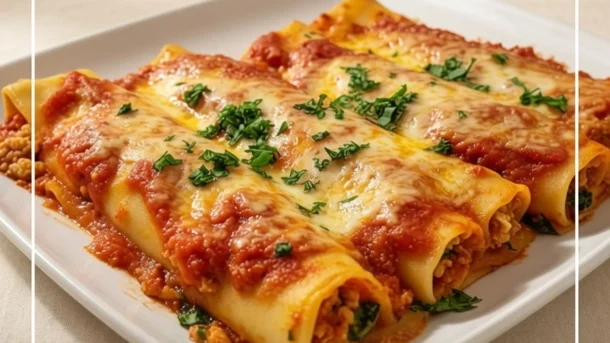
There are pasta dinners that feel genuinely special. And then there are pasta dinners like this Vegan Cannelloni — the kind that comes out of the oven bubbling with rich tomato sauce, with pasta tubes so generously filled with creamy ricotta-style cashew and spinach filling that they have expanded slightly in the dish, their tops blistered and golden where the sauce has caramelized against them. This is that dinner. The one that looks like it took considerably more effort than it actually did. The one that makes a weeknight feel like a dinner party. The one that disappears from the baking dish before anyone realizes they have had seconds.

This recipe fills dried cannelloni tubes with a rich filling built on cashew ricotta, wilted spinach, and herbs — a filling so satisfying and so deeply flavored that it rivals any dairy-based ricotta in both texture and taste — then nestles them in a generous, garlicky tomato sauce and bakes until the pasta is perfectly tender, the filling is set, and the top is golden and slightly crisped at the edges.

What makes this cannelloni so outstanding is the cashew ricotta — blended from soaked cashews with lemon juice, nutritional yeast, and garlic into a smooth, creamy, subtly tangy filling that behaves identically to dairy ricotta in this application, holding its shape inside the pasta tubes while baking into a rich, satisfying filling of extraordinary flavor.

This recipe is 100% vegan, ready in about 65 minutes, and absolutely magnificent served directly from the baking dish at the table with a simple green salad alongside.


Recipe Information

Prep TimeCook TimeTotal TimeServingsCalories
25 mins40 mins65 mins4~480 kcal

Ingredients

For the Cashew Ricotta Filling

  • 1½ cups (195g) raw cashews, soaked in boiling water for 30 minutes then drained
  • 3 tbsp nutritional yeast
  • 2 tbsp lemon juice
  • 1 clove garlic
  • ½ tsp salt
  • ¼ tsp black pepper
  • 3 tbsp water, to reach consistency

For the Spinach Filling Mix-in

  • 3 cups (90g) fresh spinach, wilted and squeezed very dry
  • ¼ tsp nutmeg
  • Salt and pepper

For the Tomato Sauce

  • 1 can (400g) crushed tomatoes
  • 1 can (400g) diced tomatoes
  • 4 cloves garlic, minced
  • 1 medium onion, finely diced
  • 2 tbsp olive oil
  • 1 tsp dried oregano
  • 1 tsp dried basil
  • 1 tsp sugar or maple syrup
  • Salt and pepper

For Assembly

  • 250g dried cannelloni tubes (approximately 16–18 tubes)
  • ½ cup (60g) vegan mozzarella, shredded (optional topping)
  • Fresh basil for garnish

Instructions

  1. Make the cashew ricotta. Blend the drained cashews, nutritional yeast, lemon juice, garlic, salt, pepper, and water in a high-speed blender until smooth and creamy — similar in consistency to thick ricotta. Taste and adjust salt and lemon. Set aside.
  2. Prepare the spinach. Wilt the spinach in a dry pan over medium heat for 2–3 minutes. Transfer to a clean towel and squeeze very thoroughly until almost completely dry. Roughly chop and mix into the cashew ricotta along with the nutmeg. Season generously.
  3. Make the tomato sauce. Heat the olive oil in a wide pan over medium heat. Add the onion and cook for 5 minutes until softened. Add the garlic and cook for 60 seconds. Add both cans of tomatoes, oregano, basil, and sugar. Simmer for 10 minutes until slightly reduced. Season generously.
  4. Preheat the oven. Preheat to 375°F (190°C). Spread a thin layer of tomato sauce across the base of a deep baking dish.
  5. Fill the cannelloni. Transfer the spinach ricotta filling to a piping bag or a zip-lock bag with the corner snipped off. Pipe the filling into each dry cannelloni tube, filling generously from both ends if needed. Alternatively use a small spoon, though a piping bag is significantly faster and less messy.
  6. Assemble. Nestle the filled cannelloni tubes in a single layer over the sauce base in the baking dish. Pour the remaining tomato sauce over the top, ensuring every tube is covered — exposed pasta will not soften properly during baking. Top with shredded vegan mozzarella if using.
  7. Bake covered then uncovered. Cover tightly with foil and bake for 30 minutes. Remove the foil and bake for a further 10 minutes until the sauce is bubbling, the top is golden, and a knife inserted into the thickest tube meets no resistance.
  8. Rest and serve. Let rest for 5 minutes before serving. Garnish with fresh basil and serve directly from the baking dish.

Pro Tips

  • Use a piping bag to fill the cannelloni — it is the single change that makes this recipe dramatically easier than using a spoon, which is slow and messy.
  • Ensure every tube is completely covered in tomato sauce before baking — any exposed pasta will remain hard and undercooked in the finished dish.
  • Squeeze the spinach until completely dry before adding to the ricotta — excess moisture makes the filling too wet and can cause the tubes to burst during baking.
  • Cover tightly with foil for the first 30 minutes — the steam trapped under the foil is what cooks the pasta through from the inside.

The History of Cannelloni

Cannelloni is one of the most beloved baked pasta dishes in Italian cooking, originating in the Southern Italian tradition of stuffed and baked pasta that also produced manicotti, lasagne, and stuffed shells. The name derives from the Italian word canna, meaning cane or tube, referring to the cylindrical pasta shape that characterizes the dish. Traditional fillings include ricotta and spinach, meat and béchamel, and various regional combinations, all united by the technique of filling the tubes before baking them in sauce until the pasta softens and the filling sets into a rich, unified whole. This vegan version is entirely faithful to the spinach ricotta tradition, producing a result indistinguishable in character from the dairy original.


Flavor Variations

  • Mushroom and Walnut Cannelloni: Replace half the spinach with finely chopped sautéed mushrooms and add crushed toasted walnuts to the filling for a richer, earthier version.
  • Pumpkin and Sage Cannelloni: Add roasted pumpkin puree to the cashew ricotta and season with sage for a beautiful autumn version.
  • Béchamel Topped Cannelloni: Make a simple vegan béchamel from plant milk and vegan butter to pour over the top of the cannelloni instead of or alongside the tomato sauce.

Nutritional Highlights (Per Serving)

CaloriesProteinCarbsFiberFat
~480 kcal16g58g6g20g

Storage

  • Refrigerator: Store covered in the baking dish or in an airtight container for up to 4 days. Reheat covered in the oven at 350°F (175°C) for 20 minutes.
  • Freezer: Assemble completely, cover tightly, and freeze for up to 2 months before baking. Bake from frozen at 375°F (190°C) covered for 50 minutes then uncovered for 15 minutes.
  • Make ahead: Assemble up to 24 hours before baking and refrigerate covered. Add 10 extra minutes to the covered baking time when cooking from cold.

Frequently Asked Questions

Can I use fresh pasta sheets instead of dried tubes?

Yes — blanch fresh lasagne sheets briefly, fill and roll them into tubes, then bake as directed. This produces a more delicate, silkier pasta layer than dried tubes.

Why are my cannelloni still hard after baking?

Hard cannelloni is caused by insufficient sauce coverage, under-baking, or foil that was not sealed tightly enough. Ensure every tube is submerged in sauce, bake for the full time, and seal the foil tightly to trap steam.

Can I make this nut-free?

Yes — replace the cashew ricotta with a mixture of firm tofu blended smooth with nutritional yeast, lemon juice, and salt for a nut-free filling with a similar texture.


Tried this recipe? Leave a comment below and let us know how it turned out! Tag us on Instagram and Facebook — we love seeing your plant-powered creations. Looking for more impressive vegan pasta and Italian dinner recipes? Browse all recipes on Easy Vegan Recipes — new recipes posted every single week!
Vegan Roasted Tomato Spaghetti with Spinach and Chickpeas

roasted tomato spaghetti with spinach and chickpeas

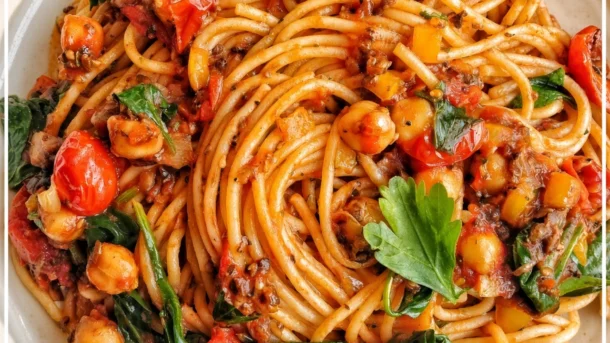
There are pasta dinners you make on autopilot. And then there are pasta dinners like this Vegan Roasted Tomato Spaghetti with Spinach and Chickpeas — the kind that starts with a tray of halved cherry tomatoes and a full head of garlic roasted at high heat until the tomatoes have collapsed into jammy, caramelized pools of intense sweetness and the garlic has softened into something almost buttery, and that becomes, once all of it is tossed through spaghetti with wilted spinach and golden chickpeas, one of the most deeply satisfying bowls of pasta you will ever put on a weeknight table. This is that dinner. The one where the roasting does all the real work and the assembly takes five minutes. The one where a handful of pantry staples — pasta, canned chickpeas, a bag of spinach, a punnet of cherry tomatoes — becomes something that tastes significantly more sophisticated than any of those individual ingredients could ever suggest on their own.

The secret is the roasting. Roasting cherry tomatoes at high heat drives off their water rapidly and caramelizes their natural sugars into deep, sweet-savory complexity that no amount of time simmering on the stove can replicate. The juices that pool on the baking sheet as the tomatoes collapse are concentrated tomato essence — intensely flavored, naturally thickened, and mixed with the roasted garlic oil that runs from the garlic head during cooking, they become the foundation of a sauce that coats every strand of spaghetti in something genuinely extraordinary.

The chickpeas, roasted alongside the tomatoes until their skins are beginning to crisp and their centers are tender and almost creamy, provide protein, texture, and a golden, nutty character that transforms this from a light vegetable pasta into a genuinely filling, nutritionally complete dinner.

This recipe is 100% vegan, naturally dairy-free, ready in just 40 minutes with mostly hands-off time, and the kind of dinner that earns a permanent place in your weekly rotation from the very first time you make it.


Recipe Information

Prep TimeCook TimeTotal TimeServingsCalories
10 mins30 mins40 mins4~450 kcal

Ingredients

For Roasting

  • 600g (about 21oz) cherry tomatoes, halved
  • 1 full head of garlic, top sliced off to expose cloves
  • 1 can (400g) chickpeas, drained, rinsed, and patted dry
  • 4 tbsp olive oil, divided
  • 1 tsp dried oregano
  • 1 tsp dried chili flakes
  • 1 tsp salt
  • ½ tsp black pepper
  • 1 tsp smoked paprika

For the Pasta

  • 400g spaghetti
  • 150g (5oz) baby spinach
  • 3 tbsp pasta cooking water (reserved before draining)
  • 1 tbsp lemon juice
  • 1 tbsp balsamic vinegar (optional, for depth)
  • Salt and black pepper to taste

To Serve

  • Fresh basil leaves
  • Vegan parmesan or nutritional yeast
  • Extra virgin olive oil
  • Chili flakes

Instructions

  1. Preheat the oven. Preheat to 425°F (220°C). Line a large baking sheet with parchment paper.
  2. Roast the tomatoes, garlic, and chickpeas. Spread the halved cherry tomatoes cut-side up on the baking sheet. Nestle the garlic head (cut-side up) in the center. Add the drained, dried chickpeas around the tomatoes. Drizzle everything with 3 tablespoons of olive oil. Scatter over the oregano, chili flakes, smoked paprika, salt, and pepper. Roast for 28–32 minutes until the tomatoes have collapsed and are caramelized at the edges, the chickpeas are golden, and the garlic is soft and fragrant.
  3. Cook the pasta. While everything roasts, bring a large pot of heavily salted water to a boil. Cook the spaghetti according to package directions until al dente. Before draining, scoop out 3 tablespoons of pasta cooking water and set aside. Drain the pasta.
  4. Extract the roasted garlic. When the baking sheet comes out of the oven, squeeze the softened garlic cloves out of their skins directly onto the baking sheet. Use a fork to mash them roughly into the roasted tomato juices and olive oil on the sheet — this becomes the base of your sauce. Add the lemon juice and balsamic vinegar if using and stir.
  5. Wilt the spinach. Return the drained pasta to its pot over low heat. Add the baby spinach in large handfuls and toss with the residual heat until wilted — about 1–2 minutes.
  6. Combine. Add the roasted tomato mixture (including all the juices from the baking sheet) and the chickpeas to the pasta and spinach. Add the reserved pasta water and the remaining tablespoon of olive oil. Toss everything together thoroughly until the spaghetti is evenly coated in the jammy, garlicky sauce. Taste and adjust seasoning.
  7. Serve. Divide between bowls. Top with fresh basil, vegan parmesan or a generous scatter of nutritional yeast, extra chili flakes, and a drizzle of good olive oil.

Pro Tips

  • Dry the chickpeas thoroughly before roasting. Wet chickpeas steam in the oven rather than roasting and stay soft rather than developing the golden, slightly crispy exterior that makes them so satisfying in this dish. Pat them dry with paper towel and spread them with space between each one.
  • Don’t skip the pasta water. The starchy pasta cooking water emulsifies with the tomato juices and olive oil to create a glossy sauce that clings to the spaghetti rather than pooling at the bottom of the bowl. Even 3 tablespoons makes a significant difference.
  • Scrape every drop from the baking sheet. The caramelized tomato juices and garlic-infused oil on the parchment paper are the most intensely flavored part of the entire dish — use a spatula to scrape them all into the pasta.
  • Roast the garlic whole. A whole head of garlic roasted cut-side up produces cloves that are sweet, mellow, and spreadable rather than sharp and pungent — a completely different flavor profile that is essential to this recipe.

Why Roasting Transforms Cherry Tomatoes

A raw cherry tomato is pleasant — sweet, slightly acidic, juicy. A roasted cherry tomato is something else entirely. At the high temperatures of oven roasting, three fundamental changes happen simultaneously that produce the extraordinary flavor concentration this recipe depends on. First, the water inside the tomato — which makes up roughly 94% of its weight — evaporates rapidly, concentrating the remaining sugars, acids, and flavor compounds into a fraction of the original volume. Second, the natural sugars at the cut surface undergo caramelization, converting into complex, sweet-savory caramel compounds that did not exist in the raw tomato. Third — and most significantly — the Maillard reaction occurs at the edges and surfaces where the tomato’s amino acids react with its reducing sugars under heat, producing hundreds of new aromatic flavor molecules responsible for the deeply savory, almost meaty character of a properly roasted tomato. The result is a tomato that is between 8 and 12 times more intensely flavored per gram than the raw fruit, with a completely different, far more complex flavor profile. This is why the sauce in this recipe — built from the juices of those collapsed, caramelized tomatoes mixed with roasted garlic — tastes as though it simmered for hours rather than roasted for 30 minutes.


Flavor Variations

  • Roasted Tomato Spaghetti with Olives and Capers: Add a handful of black olives and a tablespoon of capers to the baking sheet in the last 10 minutes of roasting for a puttanesca-inspired version.
  • Creamy Roasted Tomato Spaghetti: Stir 80ml of coconut cream or cashew cream through the pasta in the final step for a richer, creamier sauce.
  • Roasted Tomato Linguine with White Beans: Replace the chickpeas with canned white cannellini beans for a softer, creamier protein that blends more completely into the sauce.

Nutritional Highlights (Per Serving)

CaloriesProteinCarbsFiberFat
~450 kcal18g68g9g13g

This pasta delivers an exceptional 18 grams of plant-based protein per serving from the chickpeas combined with the pasta, making it one of the most nutritionally complete vegan pasta dishes available. The chickpeas also contribute 9 grams of dietary fiber per serving — nearly a third of the recommended daily intake — along with iron, folate, and manganese. Baby spinach adds vitamin K, vitamin A, and additional folate.


Storage

  • Refrigerator: Store in an airtight container for up to 4 days. The pasta absorbs the sauce as it sits and becomes thicker — add a splash of water or broth when reheating and toss well.
  • Reheat: Reheat in a skillet over medium heat with a splash of water, tossing until warmed through. Microwave works but slightly softens the chickpeas.
  • Freezer: Not recommended — spaghetti loses texture significantly on freezing and thawing.

Frequently Asked Questions

Can I use a different pasta shape?

Yes — linguine, fettuccine, bucatini, penne, and rigatoni all work well. Wider, flatter shapes catch the chunky tomato sauce particularly well.

Can I add protein besides chickpeas?

Yes — pan-fried tofu cubes, crumbled tempeh sautéed with garlic and soy sauce, or vegan sausage sliced and added to the baking sheet all work beautifully.

My tomatoes released a lot of liquid. Is this normal?

Yes — cherry tomatoes release significant juice during roasting, especially if very ripe. Continue roasting until the liquid has reduced and the tomatoes are caramelized at the edges. If there is still excess liquid when you remove from the oven, drain a little before adding to the pasta to avoid a watery sauce.

Can I use sun-dried tomatoes instead of fresh?

Yes — use 150g of oil-packed sun-dried tomatoes in place of the fresh cherry tomatoes. Skip the roasting and simply sauté the sun-dried tomatoes and squeezed garlic in olive oil before tossing with the pasta for a more intensely flavored, quicker version.


Tried this recipe? Leave a comment below and let us know how it turned out! Tag us on Instagram and Facebook — we love seeing your plant-powered creations. Looking for more addictive vegan dinner recipes? Browse all recipes on Easy Vegan Recipes — new recipes posted every single week!