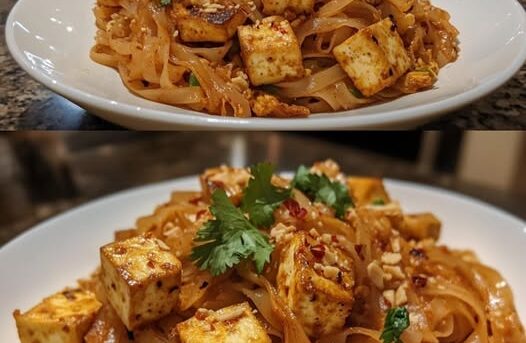
Chewy rice noodles tossed in a glossy peanut tamarind sauce with crispy golden tofu, crunchy bean sprouts, green onions, and a squeeze of fresh lime: this Vegan Pad Thai is sweet, tangy, savory, and a little nutty, and it is ready in about 35 minutes. It tastes like your favorite Thai takeout, with no fish sauce or egg required.
Pad thai is one of the most loved noodle dishes in the world, and its flavor comes from a balance of sweet, sour, salty, and savory. Traditionally that balance comes from tamarind, palm sugar, and fish sauce. This vegan version keeps the tamarind and swaps the fish sauce for soy sauce and a touch of rice vinegar, then adds creamy peanut butter to the sauce, which makes it rich, silky, and clingy.
The sauce is made in one bowl in two minutes: peanut butter, tamarind paste, soy sauce, maple syrup, lime juice, garlic, and a little sriracha for heat. It is whisked with warm water until it is pourable, then it coats the noodles in the pan. Tofu is pressed, cubed, and seared until crisp, which adds protein and texture, and the noodles are cooked, drained, and stir-fried with the sauce so they absorb every bit of flavor.
The toppings finish it. Bean sprouts and green onions add crunch and freshness, chopped roasted peanuts add more crunch, and cilantro and lime wedges make every bite bright. It is a great dish to make for guests, and it reheats well for lunch.
This recipe is dairy-free and egg-free. It contains peanuts and soy. Rice noodles are naturally gluten-free, but soy sauce is not, so use tamari for a gluten-free pad thai. Please check labels on your tamarind paste, peanut butter, and noodles.
Recipe Information
| Prep Time | Cook Time | Total Time | Servings | Calories |
|---|---|---|---|---|
| 15 mins | 20 mins | 35 mins (plus pressing) | 4 | ~540 kcal each |
Ingredients
For the Pad Thai
- 8 oz (225g) flat rice noodles (pad thai noodles, ¼-inch wide)
- 1 block (14 oz / 400g) extra-firm tofu, pressed for 15 minutes and cut into ¾-inch cubes
- 3 tbsp neutral oil, divided
- 2 tbsp cornstarch
- 3 garlic cloves, minced
- 1 shallot, thinly sliced
- 1 medium carrot, julienned or grated
- 2 cups (180g) bean sprouts
- 4 green onions, sliced, white and green parts separated
For the Peanut Tamarind Sauce
- ¼ cup (65g) creamy peanut butter
- 2 tbsp tamarind paste (or 1 tbsp tamarind concentrate)
- 3 tbsp soy sauce or tamari
- 2 tbsp maple syrup or coconut sugar
- 2 tbsp lime juice
- 1 tbsp rice vinegar
- 1–2 tsp sriracha, to taste
- ⅓ cup (80ml) warm water
To Serve
- ¼ cup (35g) roasted peanuts, chopped
- Fresh cilantro
- Lime wedges
- Extra sriracha
- Crushed red pepper flakes
Instructions
- Soak the noodles. Cover the rice noodles with hot (not boiling) water and soak for 8–10 minutes, until pliable but still firm. They will finish cooking in the pan. Drain well.
- Make the sauce. Whisk the peanut butter, tamarind, soy sauce, maple syrup, lime juice, vinegar, and sriracha in a bowl. Whisk in the warm water until smooth and pourable. Taste. It should be sweet, tangy, and salty.
- Crisp the tofu. Toss the tofu cubes with the cornstarch. Heat 2 tablespoons of oil in a large nonstick skillet or wok over medium-high heat. Cook the tofu for 8–10 minutes, turning, until golden and crisp. Remove to a plate.
- Cook the aromatics. Add the remaining oil. Cook the garlic, shallot, white parts of the green onions, and carrot for 2 minutes.
- Add the noodles and sauce. Add the drained noodles and pour in the sauce. Toss constantly for 2–3 minutes, until the noodles are tender and the sauce is glossy and clings to them. If the pan seems dry, add a splash of water.
- Finish. Return the tofu to the pan. Add the bean sprouts and green onion tops. Toss for 30 seconds, just until the sprouts are warm and still crunchy.
- Serve. Divide into bowls. Top with peanuts, cilantro, and extra sriracha, and serve with lime wedges.
Pro Tips for the Best Vegan Pad Thai
- Do not overcook the noodles. Soak them in hot water, not boiling, and let them finish in the pan.
- Cook in batches if your pan is small, so the noodles stir-fry and do not steam.
- Taste the sauce before cooking. Adjust with more lime, sweetener, or soy sauce.
- Use tamarind paste for the classic flavor.
- Press the tofu well for the crispiest texture.
- Add the bean sprouts at the end so they stay crunchy.
- Have everything ready before you start. This dish cooks fast.
- Add a splash of water if the noodles stick.
A Few Notes on Ingredients
Tamarind paste is a sour, fruity paste found in Asian grocery stores and many supermarkets. It gives pad thai its signature tang. If you cannot find it, use 2 tablespoons of lime juice and 1 tablespoon of extra maple syrup, though the flavor will be different. Pad thai noodles are flat rice noodles, and thinner rice noodles also work. Creamy peanut butter without added sugar gives the smoothest sauce. Use tamari to make it gluten-free.
Flavor Variations
- Veggie Version: Add bell pepper, snap peas, or broccoli.
- Spicy Version: Add chili flakes or fresh Thai chilies.
- Nut-Free Version: Use sunflower seed butter and omit the peanuts.
- Protein Version: Add edamame or baked tofu.
- Zucchini Noodle Version: Use spiralized zucchini instead of rice noodles.
- Mushroom Version: Add sautéed mushrooms.
Nutritional Highlights (Per Serving)
| Calories | Protein | Carbs | Fiber | Fat |
|---|---|---|---|---|
| ~540 kcal | 22g | 65g | 6g | 23g |
Storage
- Refrigerator: Store for up to 4 days. The noodles will firm up and soak up sauce.
- Freezer: Not recommended.
- Reheating: Warm in a skillet with a splash of water.
- Make ahead: Make the sauce up to 5 days ahead.
Frequently Asked Questions
What is tamarind paste?
It is a tangy, sweet-sour paste made from tamarind fruit. It is the key flavor in pad thai.
Can I make it without tamarind?
You can use lime juice and extra maple syrup, but it will taste different.
Is pad thai gluten-free?
Rice noodles are gluten-free, but soy sauce is not. Use tamari.
Can I make it nut-free?
Yes. Use sunflower seed butter and leave out the peanuts.
Why are my noodles sticky?
They may have been overcooked or not drained well. Soak them in hot water, not boiling, and toss them with a little oil.
How is this different from your other peanut noodle recipes?
This is a pad thai, with tamarind, rice noodles, bean sprouts, and crispy tofu. Our Whole Wheat Noodles in Coconut Peanut Sauce uses a creamy coconut milk sauce, and our Crispy Tofu with Thai Peanut Sauce uses red curry paste.
Tried this recipe? Leave a comment below and let us know how it turned out! Tag us on Instagram and Facebook — we love seeing your plant-powered creations. Browse all recipes on Easy Vegan Recipes — new recipes posted every single week!
