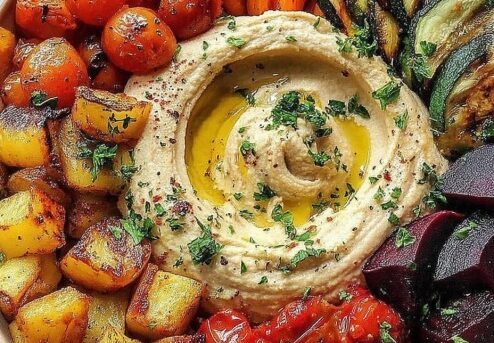
meal prep bowl

Vegan Roasted Veggie and Hummus Bowl with Za’atar Vegetables, Quinoa and Herby Lemon Dressing

roasted veggie and hummus bowl

Fluffy quinoa, za’atar-roasted broccoli, carrots, and chickpeas, a big spoonful of creamy hummus, fresh cucumber and tomato, and a bright herby lemon dressing: this Vegan Roasted Veggie and Hummus Bowl is a Mediterranean-style meal in a bowl that is filling, colorful, and easy to prep ahead. It takes about 40 minutes, and most of that is hands-off roasting.

A good grain bowl is all about contrast. Here, warm roasted vegetables meet cool, crisp cucumber and juicy tomato. Creamy hummus sits against crunchy roasted chickpeas, and the fluffy quinoa soaks up the dressing. Each component is simple, and together they make a bowl with plenty of protein and fiber that keeps you full for hours.

The vegetables are roasted with olive oil and za’atar, a Middle Eastern blend of dried thyme, sesame seeds, and sumac. It gives the broccoli, carrots, and red onion an earthy, tangy flavor, and the high heat brings out their natural sweetness. The chickpeas go on the same pan and turn crisp at the edges. If you cannot find za’atar, use dried oregano or thyme with a pinch of lemon zest, and the bowl will still taste great.

The hummus works as the creamy base of the bowl. Use your favorite store-bought hummus, or make a batch at home. The dressing is a simple mix of olive oil, lemon juice, garlic, parsley, and a touch of maple syrup, with no tahini, so it tastes fresh and light against the rich hummus.

This is an easy meal prep recipe. Cook the quinoa and roast the vegetables on Sunday, store everything in separate containers, and build bowls through the week. It also works well for a dinner party, since everyone can assemble their own.

This bowl uses the same flavors as our Roasted Veggie and Hummus Wraps, but serves them over quinoa with a different set of vegetables and a herby lemon dressing instead of tahini.

This recipe is dairy-free and egg-free, and naturally gluten-free. It contains sesame (hummus and za’atar). It is free of nuts and soy as written, but check the labels of your hummus and za’atar.


Recipe Information

Prep TimeCook TimeTotal TimeServingsCalories
15 mins25 mins40 mins4 bowls~480 kcal each

Ingredients

For the Roasted Vegetables

  • 1 large head broccoli, cut into florets
  • 3 medium carrots, peeled and sliced into ½-inch rounds
  • 1 medium red onion, cut into wedges
  • 1 can (15 oz / 400g) chickpeas, drained, rinsed and patted dry
  • 3 tbsp olive oil
  • 1½ tbsp za’atar
  • ½ tsp garlic powder
  • ½ tsp salt
  • ¼ tsp black pepper

For the Quinoa

  • 1 cup (170g) quinoa, rinsed
  • 2 cups (480ml) water or vegetable broth
  • ¼ tsp salt

For the Herby Lemon Dressing

  • ¼ cup (60ml) extra virgin olive oil
  • 3 tbsp lemon juice
  • 1 small garlic clove, grated
  • ¼ cup finely chopped fresh parsley
  • 1 tsp maple syrup
  • ¼ tsp salt
  • Black pepper, to taste

For the Bowls

  • 1 cup (240g) hummus
  • 1 cup cucumber, diced
  • 1 cup cherry tomatoes, halved
  • Fresh parsley or mint, to garnish
  • Lemon wedges

Instructions

  1. Preheat. Heat the oven to 425°F (220°C). Line two baking sheets with parchment paper.
  2. Season. Toss the broccoli, carrots, and onion with 2 tbsp of the olive oil, 1 tbsp of the za’atar, garlic powder, salt, and pepper. On a second sheet, toss the chickpeas with the remaining oil and za’atar.
  3. Roast. Roast the vegetables for 20–25 minutes, stirring once, until browned at the edges. Roast the chickpeas for 20–25 minutes, shaking halfway, until crisp.
  4. Cook the quinoa. Combine the quinoa, water, and salt in a saucepan. Bring to a boil, cover, and simmer for 15 minutes. Remove from the heat and let it rest, covered, for 5 minutes. Fluff with a fork.
  5. Make the dressing. Whisk the olive oil, lemon juice, garlic, parsley, maple syrup, salt, and pepper.
  6. Assemble. Divide the quinoa between four bowls. Add the roasted vegetables and chickpeas, the cucumber, and the tomatoes. Add a generous scoop of hummus to each bowl.
  7. Finish. Drizzle with the herby dressing, scatter with fresh herbs, and serve with lemon wedges.

Pro Tips for the Best Roasted Veggie Bowls

  • Cut the broccoli and carrots to a similar size so they cook evenly.
  • Use two pans so the vegetables brown instead of steaming.
  • Pat the chickpeas dry for the crispiest result.
  • Rinse the quinoa well to remove its natural bitter coating.
  • Season the quinoa with salt, since it is bland on its own.
  • Add the dressing just before eating.
  • Add hummus last, so it stays creamy and does not melt into the warm grains.
  • Taste the dressing and add lemon or salt to balance.

A Few Notes on Ingredients

Za’atar is sold in most supermarkets and specialty stores. It usually contains sesame seeds, so check the label if you avoid sesame. Quinoa is naturally gluten-free, and brown rice, farro, or couscous also work (farro and couscous contain gluten). Store-bought hummus is a convenient shortcut. Other vegetables such as cauliflower, sweet potato, or zucchini work well in place of the broccoli or carrots.


Flavor Variations

  • Spicy Bowl: Add harissa to the dressing or the hummus.
  • Greens Bowl: Serve over baby spinach or arugula instead of quinoa.
  • Extra Protein: Add baked tofu or tempeh.
  • Pita Bowl: Serve with warm pita or pita chips.
  • Olive Bowl: Add kalamata olives.
  • Sheet Pan Version: Roast everything, including the chickpeas, on two pans and skip the stovetop.

Nutritional Highlights (Per Bowl)

CaloriesProteinCarbsFiberFat
~480 kcal18g58g14g20g

Values are estimates and vary by brand.


Storage

  • Refrigerator: Store the components separately in airtight containers for up to 4 days.
  • Reheating: Warm the vegetables and quinoa in the microwave. Add the hummus, cucumber, tomato and dressing cold.
  • Freezer: Freeze the cooked quinoa and roasted vegetables for up to 2 months. Do not freeze the fresh toppings.
  • Meal prep: Build the bowls in containers, with the dressing in a small jar on the side.

Frequently Asked Questions

Can I make this ahead?

Yes. Store each component separately and assemble when you are ready to eat.

Can I use store-bought hummus?

Yes. A thick, creamy hummus works best.

Can I use a different grain?

Yes. Brown rice, farro, couscous, or bulgur all work. Check gluten if needed.

Is this gluten-free?

Yes, as written, when you use quinoa. Check the labels of your hummus and za’atar.

Can I make it oil-free?

You can roast the vegetables with a little broth, but they will not brown as well.

How is this different from your other hummus recipes?

This is a grain bowl with za’atar-roasted broccoli, carrots and chickpeas, hummus and a herby lemon dressing. Our Roasted Veggie and Hummus Wraps use sweet potato and peppers with a tahini drizzle in a tortilla, and our hummus recipes are the dips themselves.


Tried this recipe? Leave a comment below and let us know how it turned out! Tag us on Instagram and Facebook — we love seeing your plant-powered creations. Browse all recipes on Easy Vegan Recipes — new recipes posted every single week!

Sweet Asian Quinoa Bowl with Sticky Ginger Soy Glazed Tofu, Roasted Broccoli, Edamame and Crunchy Veggies

SWEET ASIAN QUINOA BOWL 

Fluffy quinoa topped with sticky, sweet ginger-soy glazed tofu, roasted broccoli, shelled edamame, shredded carrot, crisp cucumber, and a drizzle of extra glaze with toasted sesame seeds: this Sweet Asian Quinoa Bowl is colorful, high in protein, and ready in about 35 minutes.

The star of the bowl is the sweet Asian glaze. Soy sauce, maple syrup, rice vinegar, fresh ginger, garlic, and toasted sesame oil simmer for a few minutes with a little cornstarch until the sauce turns glossy and thick. It is sweet, salty, tangy, and savory all at once. The same glaze coats the tofu and finishes the whole bowl.

The tofu is cubed and baked until golden and firm, then tossed in the warm glaze so it turns sticky and caramelized at the edges. Broccoli roasts on the same pan, and quinoa cooks while everything is in the oven, so there is almost no waiting.

Fresh toppings keep the bowl balanced. Cool cucumber, sweet shredded carrot, green onions, and sesame seeds add crunch and brightness against the sweet, sticky sauce. Everything keeps well, so this is also a great bowl for meal prep.

This recipe is dairy-free, egg-free, and nut-free. It contains soy (tofu, edamame, and soy sauce) and sesame. It is gluten-free if you use tamari. Please check labels on your tofu, soy sauce, and quinoa.


Recipe Information

Prep TimeCook TimeTotal TimeServingsCalories
15 mins25 mins40 mins4~520 kcal each

Ingredients

For the Quinoa

  • 1½ cups (270g) quinoa, rinsed well
  • 2¼ cups (540ml) water or vegetable broth
  • ½ tsp salt

For the Tofu and Broccoli

  • 1 block (14 oz / 400g) extra-firm tofu, pressed and cut into ¾-inch cubes
  • 1 large head broccoli, cut into florets
  • 2 tbsp neutral oil
  • 1 tbsp cornstarch
  • ½ tsp salt

For the Sweet Asian Glaze

  • ⅓ cup (80ml) soy sauce or tamari
  • ¼ cup (60ml) maple syrup
  • 2 tbsp rice vinegar
  • 1 tbsp toasted sesame oil
  • 1 tbsp fresh ginger, grated
  • 3 garlic cloves, minced
  • 1 tbsp cornstarch mixed with 2 tbsp water
  • Pinch of red pepper flakes (optional)

For the Bowls

  • 1½ cups (225g) shelled edamame, cooked
  • 1 large carrot, shredded
  • 1 cucumber, thinly sliced
  • 3 green onions, sliced
  • 1 tbsp sesame seeds
  • Fresh cilantro or lime wedges, to serve

Instructions

  1. Heat the oven. Heat the oven to 425°F (220°C). Line a large baking sheet with parchment.
  2. Cook the quinoa. Combine the quinoa, water, and salt in a saucepan. Bring to a boil, cover, and simmer on low for 15 minutes. Remove from the heat and let it steam, covered, for 5 minutes. Fluff with a fork.
  3. Bake the tofu and broccoli. Toss the tofu with 1 tablespoon of oil, 1 tablespoon of cornstarch, and salt. Toss the broccoli with the remaining oil. Spread both on the pan. Roast for 22–25 minutes, turning once, until the tofu is golden and the broccoli is charred at the edges.
  4. Make the glaze. While the pan roasts, combine the soy sauce, maple syrup, vinegar, sesame oil, ginger, garlic, and red pepper flakes in a small saucepan. Bring to a simmer. Stir in the cornstarch mixture and cook for 1–2 minutes until thick and glossy.
  5. Glaze the tofu. Toss the baked tofu in about half of the glaze in a bowl or the pan, until sticky and coated.
  6. Assemble. Divide the quinoa among four bowls. Top with the tofu, broccoli, edamame, carrot, and cucumber.
  7. Finish. Drizzle with the remaining glaze. Sprinkle with green onions and sesame seeds, and serve with cilantro and lime.

Pro Tips for the Best Sweet Asian Quinoa Bowl

  • Rinse the quinoa well to remove any bitter taste.
  • Press the tofu so it bakes firm and crisp.
  • Glaze the tofu while it is still hot so it absorbs the sauce.
  • Keep the glaze slightly thin, since it thickens as it cools.
  • Cut the broccoli small so it chars well.
  • Add fresh cucumber just before serving to keep it crunchy.
  • Squeeze lime over the top for a bright finish.
  • Double the glaze if you like extra sauce.

A Few Notes on Ingredients

Quinoa gives a fluffy, protein-rich base. Brown rice works well in its place. Extra-firm tofu holds its shape. Maple syrup gives the glaze its sweetness, and agave works as a swap. Fresh ginger gives the best flavor. Edamame adds extra protein.


Flavor Variations

  • Spicy Version: Add sriracha or chili garlic sauce to the glaze.
  • Peanut Version: Drizzle with a peanut sauce.
  • Chickpea Version: Swap the tofu for roasted chickpeas.
  • Veggie Swap: Use roasted sweet potato, bell pepper, or cabbage.
  • Orange Version: Add a splash of orange juice to the glaze.
  • Gluten-Free: Use tamari.

Nutritional Highlights (Per Serving)

CaloriesProteinCarbsFiberFat
~520 kcal28g62g10g18g

Storage

  • Refrigerator: Store components separately for up to 4 days.
  • Freezer: Freeze cooked quinoa and tofu for up to 2 months.
  • Meal prep: Keep the glaze and fresh vegetables separate until serving.
  • Reheating: Warm the quinoa and tofu in the microwave or a skillet.

Frequently Asked Questions

Can I use rice instead of quinoa?

Yes. Brown or white rice both work.

Can I make it without tofu?

Yes. Use chickpeas, tempeh, or extra edamame.

Is this bowl gluten-free?

It is when made with tamari. Check your quinoa and tofu labels too.

Can I make the sauce ahead?

Yes. It keeps in the fridge for up to 1 week. Warm it before using.

Can I make it in an air fryer?

Yes. Air fry the tofu at 400°F (200°C) for 12 to 15 minutes.

How is this different from your other bowls and tofu recipes?

This is a quinoa bowl with a sweet ginger-soy glaze on baked tofu and roasted broccoli. Our Vegan Teriyaki Fried Rice is a stir-fried rice dish, and our Vegan Spicy Jalapeño Tofu Bowls use a spicy sauce.


Tried this recipe? Leave a comment below and let us know how it turned out! Tag us on Instagram and Facebook — we love seeing your plant-powered creations. Browse all recipes on Easy Vegan Recipes — new recipes posted every single week!

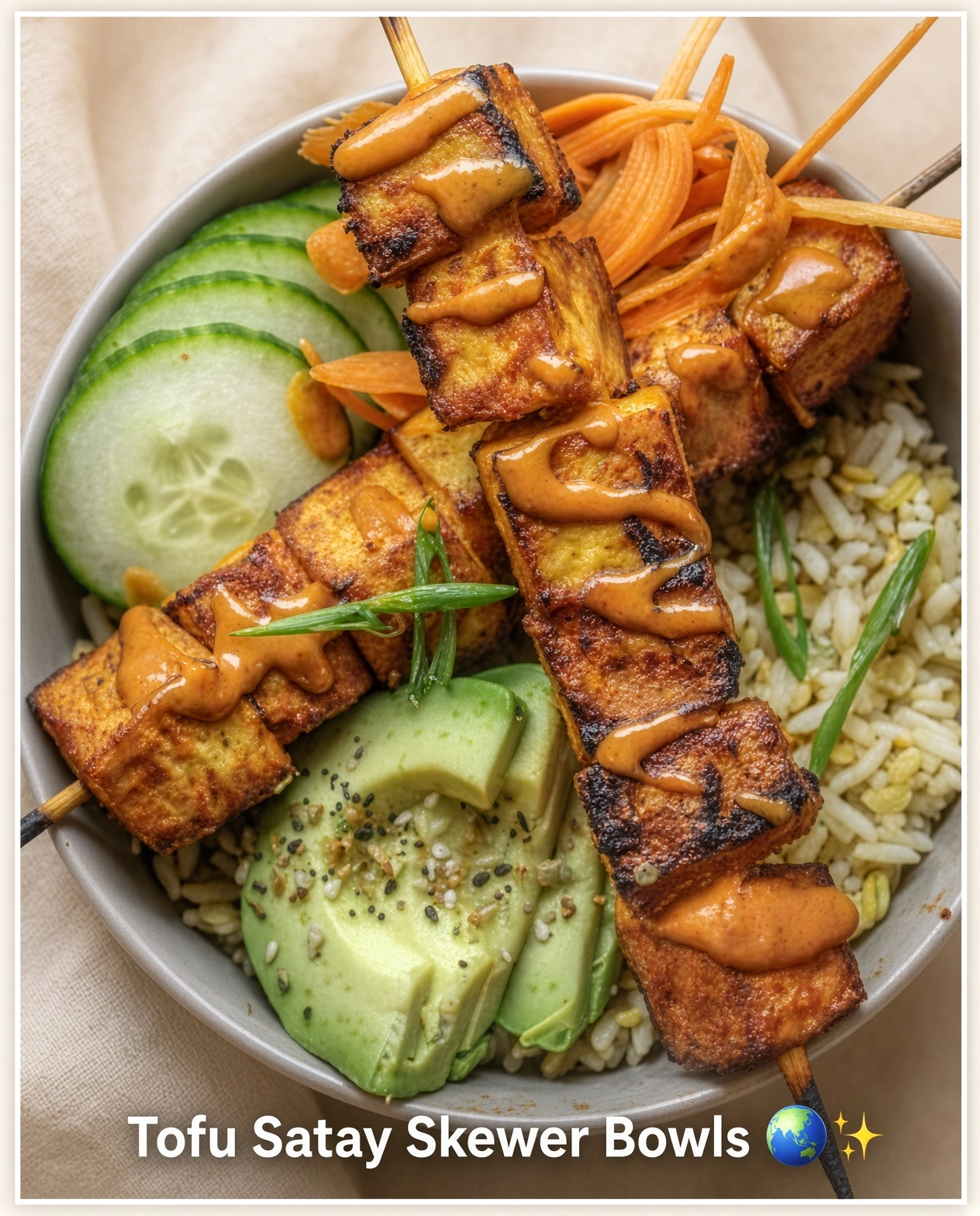
Vegan Tofu Satay Skewer Bowls

tofu satay skewer bowls

Some dinners feel like a restaurant meal made at home. These Vegan Tofu Satay Skewer Bowls are exactly that — golden, charred-edged tofu skewers brushed with a fragrant lemongrass-and-turmeric marinade, laid over fluffy rice with crisp cucumber, shredded carrot, and red cabbage, and finished with a silky, deeply savory peanut satay sauce that you will want to drink straight from the jar.

Satay is one of Southeast Asia’s most beloved street foods, traditionally made with marinated grilled meat and served with a rich peanut dipping sauce. This plant-based version keeps everything that makes satay so addictive — the smoky char, the warm spices, the sweet-salty-tangy peanut sauce — and swaps the meat for firm tofu that has been pressed, marinated, and baked or pan-seared until the edges turn crisp and caramelized.

What makes these bowls work so well is contrast. The tofu is chewy and crisp at the edges, tender inside. The vegetables are cold, crunchy, and fresh. The rice is warm and soft. The peanut sauce is creamy, glossy, and bright with lime. Every forkful has something different going on, and nothing feels heavy.

They are also ideal for meal prep: the marinade, sauce, and pickled vegetables all keep for days, so you can assemble a fresh bowl in minutes on a busy weeknight.

This recipe is 100% vegan, easily gluten-free, packed with plant-based protein, and ready in about 35 minutes plus a short marinating time.


Recipe Information

Prep TimeCook TimeTotal TimeServingsCalories
15 mins20 mins35 mins (+ 30 mins marinating)4~540 kcal

Ingredients

For the Tofu Skewers

  • 2 blocks (700g total) extra-firm tofu, pressed for 20 minutes and cut into 2cm cubes
  • 3 tbsp soy sauce or tamari
  • 2 tbsp maple syrup
  • 2 tbsp lime juice
  • 2 tbsp neutral oil
  • 3 cloves garlic, minced
  • 1 tbsp fresh ginger, grated
  • 1 stalk lemongrass, white part finely minced (or 1 tsp lemongrass paste)
  • 1 tsp ground turmeric
  • 1 tsp ground coriander
  • ½ tsp ground cumin
  • ¼ tsp chili flakes
  • 12 bamboo skewers, soaked in water for 20 minutes

For the Peanut Satay Sauce

  • ½ cup (130g) natural smooth peanut butter
  • 1 cup (240ml) full-fat coconut milk
  • 2 tbsp soy sauce or tamari
  • 2 tbsp maple syrup
  • 2 tbsp lime juice
  • 1 tbsp rice vinegar
  • 2 cloves garlic, minced
  • 1 tsp fresh ginger, grated
  • 1 tsp sriracha or chili garlic sauce (adjust to taste)
  • 2–4 tbsp warm water, to thin

For the Bowls

  • 3 cups (600g) cooked jasmine or basmati rice
  • 1 large cucumber, thinly sliced
  • 2 carrots, shredded or cut into ribbons
  • 2 cups (150g) red cabbage, finely shredded
  • 1 cup (150g) shelled edamame, cooked
  • 1 red bell pepper, thinly sliced
  • 4 spring onions, sliced

To Garnish

  • ¼ cup roasted peanuts, roughly chopped
  • Fresh cilantro or Thai basil
  • Lime wedges
  • Sesame seeds
  • Extra chili flakes

Instructions

  1. Press the tofu. Wrap the tofu blocks in a clean kitchen towel, place a heavy pan or a stack of books on top, and press for 20 minutes. Removing excess water is what allows the tofu to absorb the marinade and crisp up properly instead of steaming.
  2. Mix the marinade. In a large bowl whisk together the soy sauce, maple syrup, lime juice, oil, garlic, ginger, lemongrass, turmeric, coriander, cumin, and chili flakes until smooth.
  3. Marinate the tofu. Cut the pressed tofu into 2cm cubes and gently toss in the marinade until every piece is coated. Let sit for at least 30 minutes, or up to 4 hours in the refrigerator, turning once.
  4. Make the peanut sauce. Whisk the peanut butter, coconut milk, soy sauce, maple syrup, lime juice, rice vinegar, garlic, ginger, and sriracha together in a small saucepan over low heat. Stir for 3–4 minutes until smooth, warm, and glossy. Thin with warm water one tablespoon at a time until it falls from a spoon in a thick ribbon. Taste and adjust — more lime for brightness, more maple for sweetness, more sriracha for heat.
  5. Thread the skewers. Thread 4–5 tofu cubes onto each soaked skewer, leaving a little space between pieces so the heat can reach every side. Reserve the leftover marinade for basting.
  6. Cook the skewers. Oven: bake at 425°F (220°C) on a parchment-lined tray for 20–25 minutes, turning once and brushing with marinade halfway, until deeply golden and crisp at the edges. Grill or grill pan: cook over medium-high heat for 4–5 minutes per side until charred in places. Air fryer: cook at 400°F (200°C) for 12–14 minutes, turning once.
  7. Prep the vegetables. While the tofu cooks, slice the cucumber, shred the carrots and cabbage, slice the bell pepper, and cook the edamame according to package directions. Keeping everything crisp and cold is part of what makes these bowls so good.
  8. Assemble the bowls. Divide the warm rice between four bowls. Arrange the cucumber, carrot, cabbage, edamame, and bell pepper in neat sections on top. Lay three skewers across each bowl.
  9. Finish and serve. Drizzle generously with the warm peanut satay sauce and scatter with chopped peanuts, spring onions, cilantro, and sesame seeds. Serve with lime wedges and extra sauce on the side.

Pro Tips for the Best Tofu Satay Bowls

  • Press the tofu properly. Twenty minutes of pressing makes the difference between crisp, flavorful tofu and soggy, bland tofu. A tofu press is helpful but a towel and a heavy pan work just as well.
  • Choose extra-firm tofu. Firm and silken varieties fall apart on skewers. Extra-firm holds its shape through marinating, threading, and cooking.
  • Soak the skewers. Bamboo skewers soaked for 20 minutes will not scorch under the grill or in a hot oven.
  • Baste halfway through. Brushing the tofu with leftover marinade midway builds a sticky, caramelized glaze that mimics the char of traditional satay.
  • Warm the sauce just before serving. Peanut sauce thickens as it cools. Gently reheat with a splash of water or coconut milk to bring back that silky drizzle.
  • Use natural peanut butter. Peanut butter made from just peanuts and salt gives a cleaner, richer flavor and a smoother sauce than sweetened commercial brands.

Why This Bowl Is Packed With Plant-Based Nutrition

Tofu is one of the most complete plant proteins available. A single serving of these bowls delivers around 28 grams of protein, with all nine essential amino acids, plus meaningful amounts of calcium, iron, and manganese. Tofu also contains isoflavones, which have been studied for cardiovascular and bone health benefits.

Peanuts add monounsaturated fats, vitamin E, niacin, and a further boost of protein, while the coconut milk contributes medium-chain triglycerides for quick energy. Edamame adds fiber, folate, and vitamin K. The raw vegetables — cabbage, carrot, cucumber, and bell pepper — provide vitamin C, beta-carotene, and hydration, and their crunch makes the bowl more filling without extra calories.

Turmeric and ginger in the marinade bring natural anti-inflammatory compounds, and the lime juice improves absorption of the plant-based iron in the tofu and edamame.


Flavor Variations

  • Tempeh Satay Bowls: Swap the tofu for steamed and cubed tempeh for a nuttier, firmer, more protein-dense version.
  • Cauliflower Satay Bowls: Use thick cauliflower steaks or large florets in place of tofu for a lighter, naturally gluten-free option.
  • Noodle Satay Bowls: Replace the rice with rice noodles or soba and toss with a little of the peanut sauce for a cold noodle bowl.
  • Mushroom Satay Skewers: Thread king oyster or large shiitake mushrooms for a meaty, umami-rich alternative.

Nutritional Highlights (Per Serving)

CaloriesProteinCarbsFiberFat
~540 kcal28g54g9g24g

Storage

  • Refrigerator: Store the cooked tofu, rice, vegetables, and sauce in separate airtight containers for up to 4 days. Keeping the components separate preserves the crunch of the vegetables and the crispness of the tofu.
  • Peanut sauce: Keeps in a sealed jar in the refrigerator for up to 7 days. Reheat gently with a splash of water before using.
  • Freezer: The cooked tofu skewers freeze well for up to 2 months. The sauce also freezes beautifully. Thaw overnight in the refrigerator and re-crisp the tofu in a hot oven or air fryer.
  • Meal prep: Marinate the tofu and make the sauce on Sunday, then assemble fresh bowls in under 10 minutes through the week.

Frequently Asked Questions

Can I make these skewers without a grill?

Yes — the oven and air fryer methods both produce crisp, golden tofu with caramelized edges. A grill pan on the stovetop also works very well.

Can I make this recipe nut-free?

Replace the peanut butter with sunflower seed butter or tahini. Use toasted pumpkin seeds instead of chopped peanuts. The flavor will differ slightly but the sauce will still be rich and creamy.

How do I stop the tofu from falling apart on the skewers?

Use extra-firm tofu, press it thoroughly, and cut it into larger 2cm cubes. Thread gently through the center of each piece rather than near an edge.

Is this recipe gluten-free?

It is when you use tamari instead of soy sauce and serve it over rice. Always check labels on sriracha and peanut butter for hidden gluten.

Can I use store-bought satay sauce?

Yes, but check the label — many contain fish sauce or honey. The homemade sauce takes five minutes and tastes noticeably fresher and richer.

What can I serve alongside these bowls?

Try quick-pickled cucumbers, a simple miso soup, or crispy vegan spring rolls. A cold lime-and-mint drink goes beautifully with the peanut sauce.


Tried this recipe? Leave a comment below and let us know how it turned out! Tag us on Instagram and Facebook — we love seeing your plant-powered creations. Looking for more satisfying vegan bowls and dinner recipes? Browse all recipes on Easy Vegan Recipes — new recipes posted every single week!

Vegan Bibimbap with Crispy Tofu, Sautéed Vegetables and Spicy Gochujang Sauce

Vegan Bibimbap

Warm rice topped with colorful sautéed vegetables, crispy tofu, and a spicy-sweet gochujang sauce, this Vegan Bibimbap is a beautiful Korean-inspired bowl that is as fun to make as it is to eat. Each topping is seasoned separately so you get a mix of flavors and textures, and everything is stirred together right before the first bite.

Bibimbap means “mixed rice,” and the magic is in the balance. Spinach, carrots, zucchini, shiitake mushrooms, and bean sprouts are each quickly sautéed with garlic and a touch of sesame oil, while the tofu is pan-fried until golden and crunchy. A spoonful of gochujang sauce, made with Korean chili paste, soy sauce, maple syrup, rice vinegar, and sesame oil, ties everything together with a sweet, savory, and spicy kick.

The recipe looks like a lot of steps, but each vegetable takes only a couple of minutes, and you can prep the toppings ahead. It is a perfect way to use up leftover rice and vegetables, and it is easy to adapt to whatever you have in the fridge.

Serve it in a hot stone bowl for crispy rice at the bottom, or simply in regular bowls. Either way, it is a healthy, filling dinner that feels special.

This recipe is 100% vegan, dairy-free, egg-free, and easily made gluten-free.


Recipe Information

Prep TimeCook TimeTotal TimeServingsCalories
25 mins20 mins45 mins4~520 kcal

Ingredients

For the Rice

  • 2 cups (400g) short-grain or sushi rice, rinsed
  • 2½ cups (600ml) water

For the Crispy Tofu

  • 1 block (400g) extra-firm tofu, pressed and cut into small cubes
  • 2 tbsp cornstarch
  • 1 tbsp soy sauce or tamari
  • 2 tbsp neutral oil

For the Vegetables

  • 5 cups (150g) fresh spinach
  • 2 medium carrots, julienned
  • 1 medium zucchini, julienned
  • 150g shiitake mushrooms, sliced
  • 2 cups (about 150g) bean sprouts
  • 1 tbsp neutral oil for sautéing, divided
  • 4 cloves garlic, minced, divided
  • 2 tbsp soy sauce or tamari, divided
  • 1½ tbsp toasted sesame oil, divided
  • 2 tsp toasted sesame seeds, divided
  • Pinch of salt

For the Gochujang Sauce

  • 3 tbsp gochujang (check that it is vegan)
  • 1 tbsp soy sauce or tamari
  • 1 tbsp toasted sesame oil
  • 1 tbsp maple syrup
  • 1 tbsp rice vinegar
  • 1 clove garlic, grated
  • 1–2 tbsp water (to thin)

To Serve

  • 2 green onions, sliced
  • Toasted sesame seeds
  • Kimchi (check that it is vegan)
  • Nori strips
  • Extra gochujang sauce

Optional Additions

  • Sliced cucumber
  • Pickled radish
  • Avocado slices
  • Sautéed bell pepper

Instructions

  1. Cook the rice. Simmer the rinsed rice with the water, covered, over low heat for 15–18 minutes until tender, or use a rice cooker. Keep warm.
  2. Make the sauce. Whisk together the gochujang, soy sauce, sesame oil, maple syrup, rice vinegar, garlic, and water until smooth. Adjust the sweetness and heat to taste.
  3. Crisp the tofu. Toss the tofu with soy sauce and cornstarch. Heat the oil in a non-stick skillet over medium-high heat and fry for 8–10 minutes, turning, until golden and crisp. Set aside.
  4. Cook the vegetables one by one. In the same pan, heat a little oil over medium heat. Cook each vegetable separately for 1–3 minutes, seasoning each with a pinch of salt, a little garlic, a splash of soy sauce, and a few drops of sesame oil: first the carrots, then the zucchini, then the mushrooms, then the bean sprouts. Wilt the spinach last for 1 minute. Keep each vegetable in its own pile on a plate.
  5. Season the spinach and sprouts. Toss the spinach and bean sprouts with a little sesame oil and sesame seeds.
  6. Assemble. Divide the warm rice among four bowls. Arrange the tofu and vegetables in neat sections on top.
  7. Top. Add a generous spoonful of gochujang sauce in the center, then sprinkle with green onions and sesame seeds.
  8. Mix and eat. Stir everything together thoroughly before eating so every bite has rice, vegetables, tofu, and sauce.

Pro Tips for the Best Bibimbap

  • Cook each vegetable separately. This keeps their colors and flavors distinct.
  • Do not overcook. The vegetables should stay slightly crisp.
  • Use short-grain rice. It is sticky and holds the toppings well.
  • For crispy rice, use a hot pan. Press the rice into an oiled cast-iron or stone bowl and cook it for 3–4 minutes before adding the toppings.
  • Press the tofu well. Dry tofu fries up crisp and holds its texture.
  • Taste the sauce. Gochujang brands vary in heat and sweetness, so adjust before serving.
  • Prep ahead. Vegetables and sauce can be made a day ahead for easy assembly.

Why Bibimbap Is a Balanced Meal

Bibimbap packs in a rainbow of vegetables, which provides a broad range of vitamins, minerals, and antioxidants. Spinach adds iron and vitamin K, carrots add beta-carotene, mushrooms bring B vitamins, and bean sprouts add vitamin C and crunch.

Tofu adds plant protein and calcium, and rice provides energy-giving carbohydrates. A serving provides about 20 grams of protein and 7 grams of fiber, making it a complete and satisfying meal.


Flavor Variations

  • Spicy Kimchi Bibimbap: Add vegan kimchi and a splash of kimchi juice to the sauce.
  • Mushroom Bibimbap: Use only mushrooms, such as shiitake, oyster, and king oyster.
  • Dolsot Style: Serve in a hot stone bowl or cast iron skillet with crispy rice at the bottom.
  • Brown Rice Bowl: Use brown rice for extra fiber and a nuttier flavor.

Nutritional Highlights (Per Serving)

CaloriesProteinCarbsFiberFat
~520 kcal20g78g7g14g

Storage

  • Refrigerator: Store the rice, tofu, vegetables, and sauce in separate airtight containers for up to 4 days.
  • Reheating: Warm the rice and tofu in the microwave or a pan, and serve the vegetables cold or at room temperature.
  • Sauce: Keeps for up to 2 weeks in the fridge.
  • Make ahead: Prep all the toppings and sauce a day ahead, then assemble just before serving.

Frequently Asked Questions

Is gochujang vegan?

Most gochujang is vegan, but a few brands contain animal ingredients. Always check the label.

Can I make it gluten-free?

Use tamari and a gluten-free gochujang, since some contain wheat.

Can I use other vegetables?

Yes. Cucumber, radish, bell pepper, and kale all work well.

Can I use brown rice?

Yes. Brown rice takes longer to cook but gives a nuttier flavor and more fiber.

How do I make the rice crispy?

Press the cooked rice into a hot, oiled cast-iron skillet or stone bowl and cook without stirring for 3–4 minutes.

Can I make it less spicy?

Use less gochujang or replace part of it with miso and a little maple syrup.


Tried this recipe? Leave a comment below and let us know how it turned out! Tag us on Instagram and Facebook — we love seeing your plant-powered creations. Looking for more colorful vegan bowls? Browse all recipes on Easy Vegan Recipes — new recipes posted every single week!