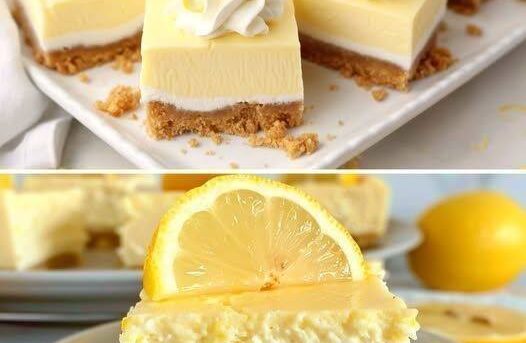
lemon dessert

Vegan Lemon Cheesecake Bars with Buttery Graham Crust and Creamy Cashew Lemon Filling

vegan lemon cheesecake bars

Tangy, creamy, and bright with fresh lemon, these Vegan Lemon Cheesecake Bars have a buttery graham cracker crust and a smooth, velvety filling that tastes just like classic baked cheesecake. They are easy to slice, easy to share, and easy to love, and they are completely dairy-free and egg-free.

The filling is made from soaked cashews blended with fresh lemon juice, lemon zest, coconut cream, sugar, and a little cornstarch. Baked low and slow, it sets into a rich, dense, sliceable cheesecake with a gentle tang. The lemon zest is essential here, since it gives a floral, fragrant lemon flavor that juice alone cannot deliver.

The crust is simple: crushed graham crackers (or vegan cookies) mixed with melted vegan butter and a spoonful of sugar, pressed into the pan and baked until just golden. It gives a buttery, crisp base that contrasts beautifully with the creamy top.

Cut into neat squares, these bars are perfect for potlucks, picnics, baby showers, holidays, and make-ahead entertaining, since they need to chill overnight anyway. Dress them up with a dollop of coconut whipped cream, fresh berries, or a drizzle of lemon glaze.

These bars are 100% vegan, dairy-free, and egg-free.


Recipe Information

Prep TimeBake TimeChill TimeServingsCalories
25 mins35 mins4 hours (or overnight)16 bars~250 kcal each

Ingredients

For the Graham Cracker Crust

  • 1½ cups (150g) graham cracker crumbs or vegan cookie crumbs
  • ⅓ cup (75g) vegan butter, melted
  • 2 tbsp granulated sugar
  • Pinch of salt

For the Lemon Cheesecake Filling

  • 1½ cups (210g) raw cashews, soaked in hot water for 30 minutes (or overnight in cold water) and drained
  • ½ cup (120ml) full-fat coconut cream (the thick part from a chilled can)
  • ⅔ cup (130g) granulated sugar
  • ⅓ cup (80ml) fresh lemon juice (about 2 lemons)
  • 1 tbsp lemon zest
  • 3 tbsp cornstarch
  • ¼ cup (60ml) refined coconut oil, melted
  • 1 tsp vanilla extract
  • ¼ tsp salt
  • Pinch of turmeric, for color (optional)

For the Lemon Glaze (Optional)

  • ½ cup (60g) powdered sugar
  • 1–2 tbsp lemon juice

To Serve

  • Coconut whipped cream
  • Fresh berries
  • Lemon zest curls
  • Mint leaves

Optional Additions

  • A swirl of raspberry jam on top
  • A pinch of ground ginger in the crust
  • Lemon curd spread over the baked filling
  • White chocolate drizzle

Instructions

  1. Prep. Heat the oven to 325°F (165°C). Line an 8×8 or 9×9 inch baking pan with parchment paper, leaving an overhang on two sides for lifting.
  2. Make the crust. Mix the crumbs, melted butter, sugar, and salt until the mixture resembles wet sand. Press firmly into the bottom of the pan using the back of a measuring cup.
  3. Pre-bake. Bake the crust for 10 minutes, then remove and let cool slightly.
  4. Blend the filling. Add the drained cashews, coconut cream, sugar, lemon juice, zest, cornstarch, melted coconut oil, vanilla, salt, and turmeric to a high-speed blender. Blend for 2–3 minutes, scraping down the sides, until perfectly smooth with no graininess.
  5. Fill. Pour the filling over the warm crust and smooth the top. Tap the pan on the counter to release air bubbles.
  6. Bake. Bake for 30–35 minutes, until the edges are set and the center has just a slight jiggle. The top may be pale and may crack slightly, which is fine.
  7. Cool. Cool in the pan on a wire rack for 1 hour.
  8. Chill. Refrigerate for at least 4 hours, or overnight, until completely firm.
  9. Glaze and slice. If using, stir the powdered sugar and lemon juice together and drizzle over the top. Lift out the bars using the parchment and cut into 16 squares with a sharp knife, wiping the blade between cuts.
  10. Serve. Serve chilled with berries or whipped cream.

Pro Tips for the Best Lemon Cheesecake Bars

  • Blend the filling very well. A smooth blend is the secret to a creamy, not grainy, texture.
  • Soak the cashews. Hot water for 30 minutes softens them for easy blending.
  • Use fresh lemon juice and zest. Bottled juice tastes flat.
  • Do not overbake. The center should still jiggle slightly. It sets as it chills.
  • Chill completely. The bars firm up and slice cleanly only after several hours.
  • Use a sharp, clean knife. Wipe between cuts for neat edges.
  • Press the crust firmly. A tight crust holds together when sliced.

A Few Notes on Ingredients

Lemons provide vitamin C and aromatic oils from the zest, while cashews add healthy fats, magnesium, and a naturally creamy texture. Using coconut cream and coconut oil instead of cream cheese and butter keeps the bars dairy free and cholesterol free.

These are a dessert, so enjoy them in small portions. Check that your graham crackers are vegan, since some brands contain honey.


Flavor Variations

  • Blueberry Lemon Cheesecake Bars: Swirl blueberry jam into the filling before baking.
  • Raspberry Lemon Bars: Top with fresh raspberries and a drizzle of glaze.
  • Lemon Coconut Bars: Add shredded coconut to the crust.
  • Lemon Lavender Bars: Add a pinch of culinary lavender to the filling.

Nutritional Highlights (Per Bar)

CaloriesProteinCarbsFiberFat
~250 kcal3g26g1g15g

Storage

  • Refrigerator: Store covered for up to 5 days.
  • Freezer: Freeze for up to 2 months, wrapped tightly. Thaw in the fridge for a few hours.
  • Serving tip: Serve chilled for the cleanest slices.
  • Make ahead: Bake 1–2 days before serving. The flavor improves with time.

Frequently Asked Questions

Can I make these without cashews?

Yes. Use silken tofu plus extra coconut cream, though the texture will be slightly softer.

Why did my cheesecake crack?

Small cracks are normal and do not affect the taste. Avoid overbaking and let it cool gradually to reduce cracking.

Are graham crackers vegan?

Many are, but some contain honey. Check the label or use vegan digestive biscuits.

Can I make them gluten-free?

Use gluten-free graham-style crackers or crushed gluten-free cookies.

Why are my bars soft?

They may need more chilling time or the filling may have been underbaked. Chill at least 4 hours.

How are these different from your creamy lemon squares?

These are baked, dense, creamy cheesecake bars with a cashew filling, while our Best Vegan Creamy Lemon Squares are lighter, custard-like bars with a shortbread-style crust.


Tried this recipe? Leave a comment below and let us know how it turned out! Tag us on Instagram and Facebook — we love seeing your plant-powered creations. Looking for more bright, refreshing vegan desserts? Browse all recipes on Easy Vegan Recipes — new recipes posted every single week!
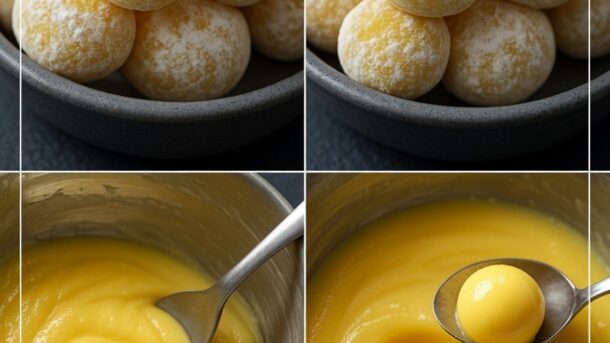
Vegan Lemon White Chocolate Truffles with Fresh Zest and Powdered Sugar Coating

vegan lemon truffles

Creamy, bright, and melt-in-your-mouth soft, these Vegan Lemon White Chocolate Truffles taste like a lemon cheesecake in a bite-sized chocolate. They need only a handful of ingredients, no oven, and about 15 minutes of hands-on time, and they make a beautiful homemade gift.

The truffle center is a simple ganache: vegan white chocolate melted into warm coconut cream, with a little vegan butter for a smooth, glossy texture. Fresh lemon zest and a touch of lemon juice bring the sunny citrus flavor, and a pinch of salt balances the sweetness. After a couple of hours in the fridge, the ganache sets firm enough to roll into balls.

A light coating of powdered sugar gives each truffle a snowy look, and you can roll some in crushed cookies, shredded coconut, or extra lemon zest for variety. They look like they came from a chocolatier, but they are easy enough for a beginner.

There is one trick to know. Lemon juice is acidic and can make white chocolate ganache seize or turn grainy if you add too much. That is why this recipe uses mostly zest, which has a strong lemon flavor and almost no liquid, and just one teaspoon of juice stirred in at the end. For a stronger lemon taste, add a few drops of lemon extract instead of more juice.

Store the truffles in the fridge and let them sit at room temperature for 5–10 minutes before serving, for the creamiest texture.

These truffles are dairy-free and egg-free. They contain coconut. Vegan white chocolate varies by brand and may contain nuts or soy, so please check the label of yours.


Recipe Information

Prep TimeChill TimeTotal TimeServingsCalories
15 mins2 hrs2 hrs 15 minsabout 18 truffles~95 kcal each

Ingredients

For the Lemon Ganache

  • 200g (7 oz) vegan white chocolate, finely chopped (or vegan white chocolate chips)
  • ¼ cup (60ml) full-fat canned coconut cream (the thick part from a chilled can of coconut milk)
  • 1 tbsp vegan butter
  • 2 tsp finely grated lemon zest (about 2 lemons)
  • 1 tsp fresh lemon juice
  • Pinch of fine sea salt
  • ¼ tsp vanilla extract

For Rolling

  • ⅓ cup (40g) powdered sugar
  • 1 tsp lemon zest, optional
  • Crushed vegan cookies or shredded coconut, optional

Instructions

  1. Prep the chocolate. Place the chopped white chocolate in a heatproof bowl.
  2. Heat the cream. Warm the coconut cream and vegan butter in a small saucepan over low heat until steaming and the butter has melted. Do not boil.
  3. Make the ganache. Pour the hot cream over the chocolate. Let it sit for 2 minutes without stirring. Then stir slowly from the center until completely smooth and glossy.
  4. Add the lemon. Stir in the lemon zest, vanilla, and salt. Add the lemon juice last, one drop at a time, stirring well. If the mixture looks grainy, stir in 1 teaspoon of warm coconut cream.
  5. Chill. Cover the bowl and refrigerate for 2 hours, or until firm enough to scoop but not rock hard.
  6. Shape. Scoop out 1-tablespoon portions. Roll quickly between your palms into balls. If the ganache melts from the heat of your hands, chill for 10 minutes and try again.
  7. Coat. Roll each truffle in powdered sugar, mixed with lemon zest if you like. Place on a parchment-lined tray.
  8. Set. Chill for 30 minutes before serving.

Pro Tips for the Best Lemon Truffles

  • Use mostly zest for the lemon flavor and add the juice slowly.
  • Chop the chocolate finely so it melts evenly.
  • Do not boil the coconut cream.
  • Let the hot cream sit on the chocolate before stirring.
  • Chill until firm but scoopable.
  • Cool your hands under cold water before rolling.
  • Roll in powdered sugar just before serving, because it can melt into the surface.
  • Let the truffles soften for 5–10 minutes before eating.

A Few Notes on Ingredients

Vegan white chocolate is made with cocoa butter and plant milk, and brands differ in sweetness and melting. Quality matters, so choose one you enjoy eating on its own. Full-fat coconut cream is the thick layer that rises to the top of a chilled can of coconut milk. Fresh lemon zest gives the best flavor, so use unwaxed lemons if you can. Lemon extract can add stronger flavor without more liquid.


Flavor Variations

  • Lemon Coconut Truffles: Roll in shredded coconut.
  • Lemon Cookie Truffles: Roll in crushed vegan shortbread.
  • Lemon Raspberry Truffles: Add a spoonful of freeze-dried raspberry powder.
  • Dipped Truffles: Dip in melted vegan white chocolate.
  • Lavender Version: Add a pinch of dried culinary lavender.
  • Orange Version: Use orange zest instead of lemon.

Nutritional Highlights (Per Truffle)

CaloriesProteinCarbsFiberFat
~95 kcal1g9g0g6g

Values are estimates and vary by brand.


Storage

  • Refrigerator: Store in an airtight container for up to 7 days.
  • Freezer: Freeze for up to 2 months. Thaw in the fridge.
  • Gifting: Keep chilled until the last minute and pack in a box with parchment.
  • Make ahead: Make the ganache up to 3 days ahead and roll when ready.

Frequently Asked Questions

Why is my ganache grainy?

The lemon juice or the heat may have caused it to separate. Add the juice slowly, and stir in a teaspoon of warm coconut cream to smooth it out.

Can I use lemon juice only?

We recommend mostly zest. Too much juice can split the ganache.

Can I use regular chocolate?

White chocolate gives the bright lemon color and flavor. Dark chocolate would taste very different.

Do I need vegan butter?

It adds smoothness. You can use coconut oil.

Can I freeze them?

Yes. Thaw them in the fridge.

How is this different from your other chocolate treats?

These are lemon white chocolate truffles. Our Vegan Chocolate Peanut Butter Balls are rolled peanut butter chocolate bites, and our Vegan Chocolate Fudge is a cut fudge square.


Tried this recipe? Leave a comment below and let us know how it turned out! Tag us on Instagram and Facebook — we love seeing your plant-powered creations. Browse all recipes on Easy Vegan Recipes — new recipes posted every single week!

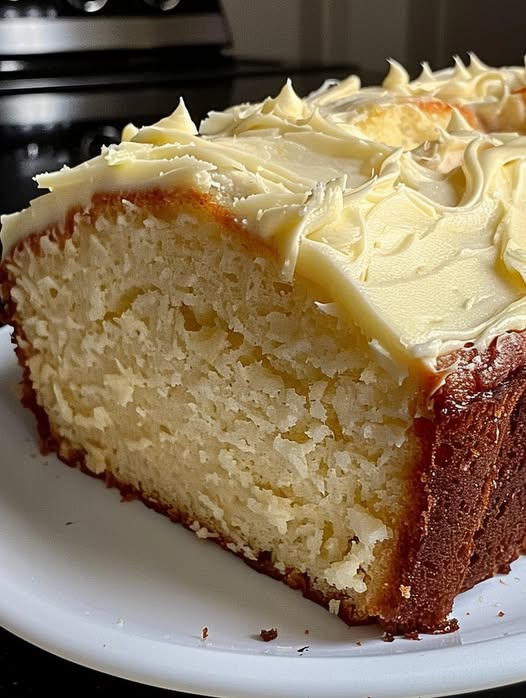
Vegan Viral Lemon Yogurt Cake

vegan lemon cake

There are cakes that require technique and patience and equipment. And then there are cakes like this Vegan Viral Lemon Yogurt Cake — the kind that you mix together in a single bowl in under ten minutes, pour into a loaf pan, and pull from the oven golden and fragrant and crackling with the smell of lemon and vanilla, and slice to reveal a crumb that is so impossibly moist, so tender, and so perfectly lemony that people cannot believe it took you almost no effort at all. This is that cake. The one that has been circulating on food blogs and social media for a reason. The one that requires no mixer, no special ingredients, no skill — just a bowl, a whisk, a loaf pan, and lemons. The one that becomes your answer every time someone asks you to bring something to a gathering, because it travels beautifully, slices cleanly, and makes everyone very happy.

The secret to this cake’s extraordinary texture is the yogurt — plant-based yogurt stirred directly into the batter adds moisture, a gentle tang that amplifies the lemon flavor, and a tenderness to the crumb that oil and plant milk alone simply cannot produce. The yogurt’s natural acidity also reacts with the baking powder to give the cake an extra lift, producing a loaf that rises beautifully into a golden dome with a characteristic crack along the top that is the signature of a properly made yogurt cake. Combined with the zest of two lemons and a generous pour of fresh lemon juice, the result is a cake that is definitively, unapologetically lemony in the most wonderful way.

What makes this recipe so outstanding is the lemon syrup — brushed over the hot cake the moment it comes out of the oven, it soaks into the crumb and creates a moistness and intensity of lemon flavor that no amount of zest in the batter alone could achieve.

This recipe is 100% vegan, naturally dairy-free and egg-free, made in one bowl, ready in under an hour, and one of those recipes you will make so frequently it becomes second nature.


Recipe Information

Prep TimeCook TimeTotal TimeServingsCalories
10 mins45 mins55 mins10~260 kcal

Ingredients

For the Cake

  • 200g (1 cup) granulated sugar
  • Zest of 2 large lemons
  • 240g (1 cup) unsweetened plant-based yogurt (coconut or soy yogurt)
  • 120ml (½ cup) neutral oil (sunflower or light vegetable)
  • 2 tsp vanilla extract
  • 3 tbsp fresh lemon juice
  • 240g (2 cups) all-purpose flour
  • 2 tsp baking powder
  • ½ tsp baking soda
  • ½ tsp salt

For the Lemon Syrup

  • 60ml (¼ cup) fresh lemon juice
  • 50g (¼ cup) granulated sugar

For the Lemon Glaze (Optional)

  • 120g (1 cup) powdered sugar
  • 2–3 tbsp fresh lemon juice
  • 1 tsp lemon zest

Instructions

  1. Prepare. Preheat the oven to 350°F (175°C). Grease a 9×5 inch (23x13cm) loaf pan and line with parchment paper.
  2. Rub the zest into the sugar. Add the lemon zest and granulated sugar to a large bowl. Use your fingertips to rub the zest into the sugar for 1–2 minutes until the sugar is fragrant, slightly damp, and pale yellow — this releases the essential oils from the zest and disperses them throughout the batter for maximum lemon flavor.
  3. Mix the wet ingredients. Add the plant yogurt, oil, vanilla extract, and lemon juice to the lemon sugar and whisk until smooth and well combined.
  4. Add the dry ingredients. Sift the flour, baking powder, baking soda, and salt directly into the wet ingredients. Fold with a spatula until just combined — a few small lumps are fine. Do not overmix.
  5. Bake. Pour the batter into the prepared loaf pan and smooth the top. Bake for 42–48 minutes until a deep golden color, risen and cracked on top, and a toothpick inserted into the center comes out clean.
  6. Make the lemon syrup. While the cake is in its final minutes of baking, combine the lemon juice and sugar in a small saucepan over medium heat. Stir until the sugar dissolves completely and the syrup is clear — about 2 minutes. Remove from heat.
  7. Soak. Remove the cake from the oven. While still hot and in the pan, use a skewer or toothpick to poke holes all over the top of the cake. Pour the warm lemon syrup slowly and evenly over the surface, allowing it to soak in completely. Allow the cake to cool in the pan for 20 minutes before turning out.
  8. Glaze (optional). Once the cake is fully cool, whisk the powdered sugar with lemon juice to a pourable consistency and drizzle over the top. Finish with lemon zest.

Pro Tips

  • Rub the zest into the sugar — this single step doubles the lemon intensity of the finished cake. The abrasion releases the essential oils locked in the zest and infuses them throughout the batter far more effectively than simply adding zest to the batter.
  • Use the yogurt at room temperature — cold yogurt can cause the batter to seize slightly. Take it out of the refrigerator 30 minutes before baking.
  • Apply the lemon syrup while the cake is still hot — a hot cake absorbs syrup; a cool cake repels it. The syrup must go on immediately as the cake comes out of the oven.
  • Do not skip the resting time in the pan — the cake needs 20 minutes to firm up after the syrup soak before it can be turned out without breaking.

Why Yogurt Cake Went Viral

The yogurt cake — gâteau au yaourt in French — is one of the foundational recipes of French home baking: so simple that it is traditionally the first cake French children learn to make, measured not in grams or cups but in the empty yogurt pot used as the measuring vessel for all the other ingredients. In its original form it requires one pot of yogurt and uses that same pot to measure the oil, sugar, and flour. The recipe spread across the internet in the early 2020s as food creators discovered that it produced genuinely excellent results with almost no skill or equipment — a mystery to people accustomed to the idea that good baking requires precision and technique. The answer is the yogurt itself: its fat and acid content produce a cake that is almost impossible to ruin, because the chemistry is forgiving and the moisture is built in. This vegan version uses plant-based yogurt with identical results.


Flavor Variations

  • Lemon Poppy Seed Yogurt Cake: Add 2 tablespoons of poppy seeds to the batter for the classic lemon-poppy combination with added visual interest and a subtle nuttiness.
  • Orange Yogurt Cake: Replace all the lemon with orange — zest, juice, and syrup — for a sweeter, more mellow citrus version that is particularly good in winter.
  • Blueberry Lemon Yogurt Cake: Fold 150g of fresh blueberries tossed in 1 tablespoon of flour into the batter before baking for a berry-studded version with pockets of jammy fruit.

Nutritional Highlights (Per Serving)

CaloriesProteinCarbsFiberFat
~260 kcal3g42g1g10g

Storage

  • Room temperature: Store wrapped or in an airtight container at room temperature for up to 3 days — the syrup keeps the crumb moist and the flavor intensifies.
  • Refrigerator: Store for up to 6 days. The cake is excellent cold, straight from the refrigerator, or allowed to come to room temperature for 20 minutes.
  • Freezer: Freeze individual slices wrapped tightly for up to 3 months. Thaw at room temperature for 1 hour. Freeze without the glaze and add it after thawing.

Frequently Asked Questions

Which plant yogurt works best?

Coconut yogurt produces the richest, most tender crumb. Soy yogurt is the closest to dairy yogurt in protein content and produces an excellent rise. Oat yogurt works well but produces a slightly denser result. Avoid very watery yogurts — the batter should be thick.

Can I make this gluten-free?

Yes — replace the all-purpose flour with a 1:1 gluten-free baking flour blend. The texture will be slightly more dense but the lemon flavor and moisture are unaffected.

Can I bake this in a round cake pan instead of a loaf pan?

Yes — use a 9-inch (23cm) round cake pan and reduce the baking time to 30–35 minutes. Check with a toothpick from 28 minutes. The round version makes a beautiful layer cake base if doubled.


Tried this recipe? Leave a comment below and let us know how it turned out! Tag us on Instagram and Facebook — we love seeing your plant-powered creations. Looking for more easy vegan baking and dessert recipes? Browse all recipes on Easy Vegan Recipes — new recipes posted every single week!