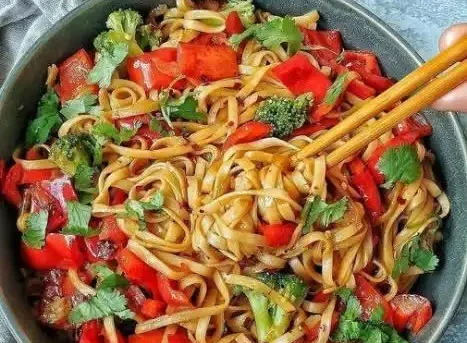
Thick, chewy udon noodles tossed with crisp-tender broccoli, sweet bell peppers, and a glossy garlic ginger sauce make this Vegan Udon Noodles with Broccoli and Bell Peppers a dinner you will want on repeat. It is a one-pan stir-fry that comes together in about 20 minutes, with big savory flavor, plenty of vegetables, and the satisfying bounce of fresh udon in every bite.
Udon is a Japanese wheat noodle known for its thick, soft, springy texture. Unlike thinner noodles, it holds up beautifully to a bold sauce and a quick, high-heat stir-fry, soaking up flavor without falling apart. Pre-cooked or frozen udon, available in most supermarkets, makes this dish especially fast, since the noodles only need a brief rinse or a minute in boiling water.
The sauce is the key. It combines soy sauce, maple syrup, rice vinegar, toasted sesame oil, garlic, and ginger, with a little cornstarch to give it a silky, clingy finish. It is salty, slightly sweet, and deeply aromatic, and it coats every noodle and vegetable in a glossy glaze. A pinch of chili flakes adds gentle heat, and a handful of sesame seeds and spring onions finish the bowl with crunch and freshness.
The vegetables bring color, crunch, and nutrition. Broccoli florets are cooked until bright green and tender, bell peppers stay sweet and juicy, and carrots add extra sweetness. Add crispy tofu, edamame, or mushrooms for extra protein.
This recipe is 100% vegan, takes about 20 minutes, and works well as a weeknight dinner or meal prep lunch.
Recipe Information
| Prep Time | Cook Time | Total Time | Servings | Calories |
|---|---|---|---|---|
| 10 mins | 10 mins | 20 mins | 4 | ~420 kcal |
Ingredients
For the Noodle Stir-Fry
- 3 packs (about 600g) fresh or frozen udon noodles (or 12 oz / 340g dried udon)
- 3 cups (200g) broccoli florets, cut into bite-sized pieces
- 2 bell peppers (red and yellow), thinly sliced
- 1 large carrot, cut into thin matchsticks
- 4 spring onions, sliced, whites and greens separated
- 3 cloves garlic, minced
- 1 tbsp fresh ginger, grated
- 2 tbsp neutral oil
- 1 tbsp sesame seeds
- 1 tsp toasted sesame oil
For the Garlic Ginger Sauce
- ¼ cup (60ml) soy sauce or tamari
- 2 tbsp maple syrup
- 1 tbsp rice vinegar
- 1 tbsp toasted sesame oil
- 1 tsp cornstarch
- ¼ cup (60ml) water or vegetable broth
- ¼ tsp chili flakes or 1 tsp chili garlic sauce
- Black pepper to taste
To Serve
- Extra sesame seeds
- Sliced spring onions
- Lime wedges
- Chili crisp or sriracha
- Fresh cilantro
Optional Add-ins
- Crispy tofu cubes
- Shelled edamame
- Sliced shiitake or cremini mushrooms
- Baby corn or snap peas
- Shredded cabbage
- Crushed peanuts
Instructions
- Prepare the noodles. If using fresh or pre-cooked udon, rinse under hot water to loosen the strands. If using frozen, microwave or boil for 1–2 minutes until loosened. For dried udon, boil according to the package, usually 8–10 minutes, then drain and rinse. Set aside.
- Mix the sauce. Whisk together the soy sauce, maple syrup, rice vinegar, sesame oil, water, cornstarch, and chili flakes until the cornstarch dissolves completely.
- Stir-fry the vegetables. Heat the oil in a large wok or skillet over high heat. Add the broccoli and carrots and stir-fry for 3 minutes until bright and just starting to brown. Add the bell peppers and spring onion whites and cook for another 2 minutes.
- Add the aromatics. Push the vegetables to the sides, add the garlic and ginger to the center, and stir for 30 seconds until fragrant. Toss everything together.
- Add the noodles. Add the udon to the pan and toss for 1–2 minutes to heat through and lightly toast the edges.
- Add the sauce. Stir the sauce again and pour it into the pan. Toss constantly for 1–2 minutes until the sauce thickens, turns glossy, and coats the noodles.
- Finish. Remove from heat and stir in the toasted sesame oil, sesame seeds, and spring onion greens. Taste and adjust with more soy sauce, lime juice, or chili.
- Serve. Divide among bowls, top with extra sesame seeds, spring onions, and a squeeze of lime. Serve hot with chili crisp on the side.
Pro Tips for the Best Udon Stir-Fry
- Use high heat. A very hot pan gives the vegetables a lightly charred flavor and keeps them crisp.
- Do not overcook the broccoli. It should be bright green and tender with a little bite.
- Loosen the noodles first. Udon often comes in a sticky block. Rinsing in hot water makes it much easier to separate.
- Stir the sauce before adding. The cornstarch settles at the bottom, so give it a quick whisk.
- Prep everything before you start. Stir-frying moves quickly, so have all ingredients chopped and the sauce ready.
- Work in batches if needed. Overcrowding the pan steams the vegetables rather than searing them.
- Finish with sesame oil off the heat. This preserves its nutty aroma.
Why Udon Works So Well in Stir-Fries
Udon noodles are thick, soft, and slightly chewy, with a mild flavor that lets the sauce shine. Their surface absorbs seasoning while still keeping a satisfying bite, which makes them ideal for stir-fries, soups, and cold noodle dishes alike.
The sauce balances the four elements of a good stir-fry: salty from soy sauce, sweet from maple syrup, tangy from rice vinegar, and rich from sesame oil. Garlic and ginger bring warmth and aroma, and cornstarch gives the sauce a glossy, cling-to-everything texture.
Broccoli is a nutritional powerhouse, rich in vitamin C, vitamin K, and fiber, and bell peppers add even more vitamin C and antioxidants. With added tofu or edamame, a serving provides around 15 to 20 grams of plant-based protein.
Flavor Variations
- Spicy Peanut Udon: Add 2 tablespoons of peanut butter to the sauce for a creamy, nutty version.
- Teriyaki Udon: Use a thicker teriyaki-style sauce with extra maple syrup and mirin.
- Mushroom Udon: Add sautéed shiitake mushrooms for extra umami and a meaty texture.
- Kimchi Udon: Stir in chopped vegan kimchi at the end for a spicy, tangy kick.
Nutritional Highlights (Per Serving)
| Calories | Protein | Carbs | Fiber | Fat |
|---|---|---|---|---|
| ~420 kcal | 12g | 72g | 6g | 9g |
Storage
- Refrigerator: Store in an airtight container for up to 4 days. The noodles absorb sauce as they sit.
- Reheating: Reheat in a skillet with a splash of water or broth, tossing until hot and glossy again.
- Meal prep: Pack with extra sauce on the side and add before reheating.
- Freezer: Not recommended, since udon becomes soft and the vegetables lose their crunch.
Frequently Asked Questions
Where can I find udon noodles?
Look in the refrigerated or frozen Asian section of most supermarkets, or in the noodle aisle for dried udon. Asian grocery stores carry the widest range.
Can I use another noodle?
Yes. Soba, ramen, rice noodles, or even spaghetti work well. Adjust the cooking time according to the package.
Are udon noodles vegan?
Most udon noodles contain only wheat flour, water, and salt, which makes them vegan. Check the label, as some packaged versions include additives.
Can I make this gluten-free?
Udon is made from wheat, so use gluten-free rice noodles and tamari instead. The texture will be different, but the flavor stays delicious.
How do I make it more filling?
Add crispy tofu, tempeh, edamame, or chickpeas. A handful of crushed peanuts or cashews also adds protein and crunch.
How do I keep the noodles from sticking?
Rinse them under warm water to remove excess starch, and toss with a teaspoon of oil if not cooking right away.
Tried this recipe? Leave a comment below and let us know how it turned out! Tag us on Instagram and Facebook — we love seeing your plant-powered creations. Looking for more quick and easy vegan noodle dinners? Browse all recipes on Easy Vegan Recipes — new recipes posted every single week!