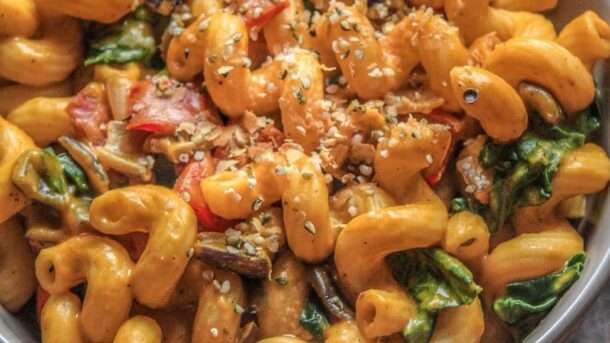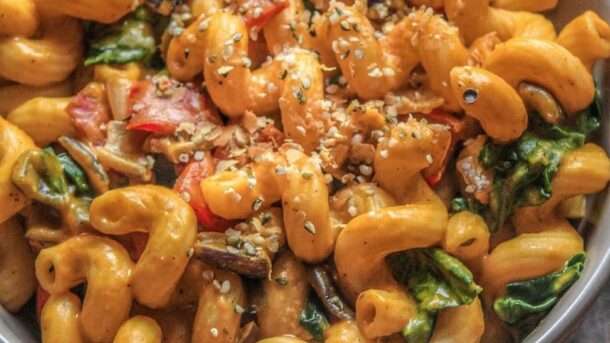
There are baked pastas that are good. And then there are baked pastas like this Vegan Ziti — the kind that comes out of the oven with golden, bubbling edges and a cheese-pull that stops everyone in their tracks, with layer after layer of ziti tubes packed with a rich tomato sauce, creamy vegan ricotta, and a golden, melted cheese top that is so deeply satisfying and so completely over-the-top delicious that it has no business being entirely plant-based. This is that pasta. The one that converts skeptics. The one that you make when you need to feed a crowd and want every single person at the table to be happy. The one that disappears completely from the dish before anyone has thought about seconds.
This recipe builds a proper baked ziti from the ground up — a rich, herb-forward tomato sauce simmered until concentrated and deeply flavored, a homemade tofu-cashew ricotta that is creamy, slightly tangy, and astonishingly convincing, and a generous blanket of melted vegan mozzarella that goes golden and bubbling in the oven and delivers exactly the cheese experience that makes baked pasta one of the most beloved dishes in Italian-American cooking. Layered in a deep baking dish and baked until the top is golden and the sauce is bubbling up around the edges, this ziti is everything a baked pasta should be.
What makes this recipe so outstanding is the ricotta — blended with lemon, nutritional yeast, basil, and garlic into something that is genuinely creamy and subtly cheesy in exactly the way that makes baked ziti so comforting.
This recipe is 100% vegan, naturally dairy-free, feeds a crowd beautifully, reheats magnificently, and is one of those pasta dishes that makes everyone around the table completely content.
Recipe Information
| Prep Time | Cook Time | Total Time | Servings | Calories |
|---|---|---|---|---|
| 20 mins | 50 mins | 70 mins | 6 | ~580 kcal |
Ingredients
For the Tomato Sauce
- 3 tbsp olive oil
- 1 large onion, finely diced
- 4 cloves garlic, minced
- 2 tbsp tomato paste
- 2 cans (800g each) crushed tomatoes
- 1 tsp dried oregano
- 1 tsp dried basil
- ½ tsp chilli flakes
- 1 tsp sugar or maple syrup
- Salt and black pepper to taste
For the Vegan Ricotta
- 400g firm tofu, drained and pressed
- ½ cup (70g) raw cashews, soaked in hot water for 30 minutes and drained
- 3 tbsp nutritional yeast
- 2 tbsp lemon juice
- 1 tsp lemon zest
- 2 cloves garlic
- ½ cup (20g) fresh basil leaves
- ¾ tsp salt
- ¼ tsp black pepper
For the Pasta
- 500g ziti or penne
- Salt for pasta water
For Topping
- 200g vegan mozzarella, shredded or torn
- 2 tbsp vegan parmesan
- Fresh basil to garnish
- Extra virgin olive oil to drizzle
Instructions
- Make the tomato sauce. Heat the olive oil in a large saucepan over medium heat. Add the onion and cook for 8–10 minutes until soft and golden. Add the garlic and tomato paste and cook for 2 minutes until fragrant and the paste has darkened slightly. Pour in the crushed tomatoes, oregano, basil, chilli flakes, and sugar. Season with salt and pepper. Simmer uncovered for 20–25 minutes until the sauce is thick, rich, and deeply flavored. Taste and adjust seasoning.
- Make the vegan ricotta. Combine all ricotta ingredients in a food processor. Pulse until the mixture resembles a slightly chunky ricotta — you want some texture, not a completely smooth paste. Taste and adjust — more lemon for brightness, more nutritional yeast for cheesiness, more salt as needed.
- Cook the pasta. Bring a large pot of heavily salted water to a boil. Cook the ziti for 2 minutes less than the package instructions suggest — it will finish cooking in the oven. Reserve ½ cup of pasta water. Drain.
- Assemble. Preheat the oven to 375°F (190°C). Spread a thin layer of tomato sauce across the bottom of a large, deep baking dish (approximately 9×13 inches / 23x33cm). Add half the cooked ziti and spread into an even layer. Dollop half the ricotta over the pasta in large spoonfuls. Spoon half the remaining sauce over the ricotta. Add the remaining ziti, then the remaining ricotta in spoonfuls, then the remaining sauce. Top with shredded vegan mozzarella and vegan parmesan.
- Bake. Cover tightly with foil and bake for 20 minutes. Remove the foil and bake for a further 15–20 minutes until the cheese is golden and bubbling and the sauce is actively bubbling around the edges.
- Rest and serve. Allow to rest for 10 minutes before serving — this allows the layers to set slightly and makes serving much easier. Garnish with fresh basil and a drizzle of extra virgin olive oil. Serve directly from the dish.
Pro Tips
- Undercook the pasta before baking — pasta that is cooked to al dente before baking will be overcooked and mushy after its time in the oven. Stop 2 minutes early and let the oven finish the job.
- Make the sauce thick — a thin sauce will make the baked ziti watery and soupy. Simmer the sauce until it is visibly thickened and a spoon dragged through it leaves a clear line before adding it to the dish.
- Use the ricotta in spoonfuls, not spread — dropping the ricotta in large dollops rather than spreading it creates distinct pockets of creamy ricotta throughout the finished dish rather than a uniform layer that disappears into the sauce.
- Rest before serving — baked pasta needs 10 minutes to set after coming out of the oven. Cutting into it immediately makes it fall apart and pool in the dish.
The Story of Baked Ziti
Baked ziti is one of the defining dishes of Italian-American cooking — a category of food that is distinctly American in its exuberance and generosity while remaining grounded in the Italian tradition of pasta al forno (oven-baked pasta). Ziti is a long, tubular pasta whose name derives from the Neapolitan word for “bridegrooms” — it was traditionally served at wedding banquets in southern Italy. In Italian-American communities from the mid-twentieth century onward, baked ziti became the quintessential communal dish: easy to make in large quantities, crowd-pleasing to the point of universality, and deeply comforting in a way that speaks to the very best of home cooking. This vegan version carries that tradition forward with completely plant-based ingredients that honor the dish’s spirit of generosity and comfort.
Flavor Variations
- Sausage-Style Baked Ziti: Add crumbled vegan Italian sausage to the tomato sauce for a heartier version with more protein and spiced depth.
- Spinach and Ricotta Ziti: Fold two large handfuls of wilted, squeezed spinach into the ricotta mixture for a classic Italian-American spinach and ricotta combination.
- Spicy Baked Ziti: Double the chilli flakes and add a teaspoon of calabrian chilli paste to the tomato sauce for a version with a proper kick.
Nutritional Highlights (Per Serving)
| Calories | Protein | Carbs | Fiber | Fat |
|---|---|---|---|---|
| ~580 kcal | 24g | 72g | 8g | 22g |
Storage
- Refrigerator: Store covered for up to 5 days. Reheat individual portions in the microwave or reheat the whole dish covered in foil in a 350°F (175°C) oven for 20 minutes.
- Freezer: Freeze the fully assembled, unbaked ziti for up to 3 months — cover tightly with foil. Bake from frozen at 375°F for 60–70 minutes, removing the foil for the last 20 minutes. Or freeze the baked leftovers for up to 3 months and reheat covered.
- Make ahead: Assemble the dish up to 24 hours ahead, cover, and refrigerate unbaked. Bake directly from the refrigerator, adding 10 extra minutes to the covered baking time.
Frequently Asked Questions
Can I use a different pasta shape?
Yes — penne, rigatoni, and mostaccioli all work beautifully as substitutes for ziti in a baked preparation. Any short, tubular pasta holds the sauce and ricotta well.
Can I make the ricotta nut-free?
Yes — replace the cashews with an extra 100g of pressed firm tofu and add an extra tablespoon of nutritional yeast. The texture will be slightly less creamy but still very good.
Why does my baked ziti come out dry?
Dry baked ziti is almost always caused by too little sauce — the pasta absorbs a significant amount of moisture during baking. Use all the sauce the recipe calls for and don’t be tempted to reduce it.
Tried this recipe? Leave a comment below and let us know how it turned out! Tag us on Instagram and Facebook — we love seeing your plant-powered creations. Looking for more addictive vegan snack and appetizer recipes? Browse all recipes on Easy Vegan Recipes — new recipes posted every single week!