There are desserts that simply taste sweet. And then there are desserts like these Vegan Apple Dumplings — the kind that fill the entire house with the smell of warm cinnamon and baked apple, that come out of the oven golden, flaky, and bubbling in a pool of buttery caramel sauce, and that deliver a whole spiced apple wrapped completely in tender pastry in a way that feels both rustic and genuinely special. This is that dessert. The one that turns a handful of apples and a sheet of pastry into something that looks like it took far more effort than it actually did. The one that disappears the moment it is set on the table.
Apple dumplings are a classic American dessert in which whole peeled apples, filled with cinnamon and sugar, are wrapped entirely in pastry and baked in a sweet, buttery sauce until the pastry turns golden and flaky and the apple inside becomes perfectly tender. This vegan version uses a simple vegan pie pastry or store-bought vegan puff pastry and a rich vegan butter caramel sauce, keeping every bit of the cozy, old-fashioned charm of the original.
What makes these dumplings so outstanding is the sauce they bake in — a mixture of vegan butter, brown sugar, and water that thickens in the oven into a sticky, caramel-like syrup that soaks partway up into the pastry, flavoring it from the outside while the cinnamon sugar filling flavors the apple from the inside.
This recipe is 100% vegan, ready in about an hour, and absolutely wonderful served warm with a scoop of vegan vanilla ice cream and a generous spoonful of the caramel sauce from the pan.
Recipe Information
Prep Time
Cook Time
Total Time
Servings
Calories
20 mins
40 mins
60 mins
6
~480 kcal
Ingredients
For the Dumplings
6 small to medium apples (Granny Smith or Honeycrisp), peeled and cored whole
1 sheet vegan puff pastry or 1 batch vegan pie dough, divided into 6 pieces
6 tbsp brown sugar
1½ tsp cinnamon
¼ tsp nutmeg
6 tsp vegan butter, cold, cut into small pieces
2 tbsp plant milk plus 1 tsp maple syrup (for brushing)
For the Caramel Sauce
1 cup (200g) brown sugar
6 tbsp vegan butter
1 cup (240ml) water
½ tsp vanilla extract
Pinch of salt
Optional Toppings
Vegan vanilla ice cream
Extra caramel sauce
A dusting of cinnamon
Instructions
Preheat the oven and prepare the dish. Preheat the oven to 375°F (190°C). Lightly grease a deep baking dish large enough to hold all six dumplings with some space between them.
Core the apples. Using an apple corer or small paring knife, remove the core from each apple, creating a cavity from top to bottom while keeping the apple whole.
Fill the apples. In a small bowl combine the brown sugar, cinnamon, and nutmeg. Spoon this mixture into the cavity of each apple, packing it down, and top each with a small piece of cold vegan butter.
Wrap the apples. Roll out each piece of pastry large enough to fully wrap around an apple. Place an apple in the center, gather the pastry up and around it, pressing to seal completely at the top, trimming excess as needed.
Arrange and brush. Place the wrapped apples in the prepared baking dish, seam side up. Brush each with the plant milk and maple syrup mixture for a golden finish.
Make the caramel sauce. In a saucepan combine the brown sugar, vegan butter, water, vanilla extract, and salt. Bring to a simmer over medium heat, stirring until the sugar dissolves and the mixture is smooth.
Pour and bake. Pour the warm caramel sauce around the dumplings in the baking dish, being careful not to pour it directly over the pastry tops. Bake for 35–40 minutes until the pastry is deeply golden and the apples are tender when pierced with a knife through the pastry.
Serve warm. Spoon some of the caramel sauce from the dish over each dumpling when serving, alongside a scoop of vegan vanilla ice cream if desired.
Pro Tips
Choose apples that hold their shape during baking, such as Granny Smith or Honeycrisp, rather than softer varieties that may collapse.
Seal the pastry completely at the top to prevent the filling from leaking out during baking.
Do not pour the caramel sauce directly over the pastry tops, or it will prevent them from crisping and browning properly.
Check tenderness through the side of the dumpling with a thin knife rather than cutting through the top, to keep the presentation intact until serving.
The History of Apple Dumplings
Apple dumplings have been a staple of American home baking since colonial times, when whole apples wrapped in pastry and baked in a sweetened sauce became a practical and beloved way to use an abundant autumn harvest. The dish remains a classic example of rustic American comfort baking, prized for its simplicity and its ability to turn a single piece of fruit into a complete, satisfying dessert.
Flavor Variations
Maple Pecan Dumplings: Add chopped toasted pecans to the cinnamon sugar filling and replace some of the brown sugar in the sauce with maple syrup.
Spiced Chai Dumplings: Add a pinch of cardamom and ground cloves to the filling for a warmly spiced chai-inspired version.
Caramel Apple Dumplings: Drizzle extra store-bought vegan caramel sauce over the finished dumplings before serving for an even more indulgent result.
Nutritional Highlights (Per Serving)
Calories
Protein
Carbs
Fiber
Fat
~480 kcal
4g
68g
4g
20g
Storage
Refrigerator: Store baked dumplings with their sauce in an airtight container for up to 3 days. Reheat in a low oven until warmed through.
Freezer: Freeze baked, cooled dumplings without sauce for up to 2 months. Thaw and reheat in the oven, making fresh sauce to serve alongside.
Frequently Asked Questions
Can I use store-bought vegan pie crust?
Yes — store-bought vegan pie crust or puff pastry both work beautifully and save significant time.
What if my pastry browns too quickly?
Cover loosely with foil for the remaining baking time if the pastry is browning faster than the apples are cooking through.
Can I make these ahead of time?
Yes — assemble the dumplings up to a day ahead and refrigerate unbaked. Bake fresh, adding a few extra minutes to the baking time if starting from cold.
Tried this recipe? Leave a comment below and let us know how it turned out! Tag us on Instagram and Facebook — we love seeing your plant-powered creations. Looking for more cozy vegan dessert recipes? Browse all recipes on Easy Vegan Recipes — new recipes posted every single week!
There are desserts that taste pleasant. And then there are desserts like these Best Vegan Creamy Lemon Squares — the kind that deliver such a sharp, bright, intensely lemony filling over such a perfectly crumbly, buttery shortbread base that the contrast between the two stops you completely on the first bite. This is that lemon square. The one that makes everything else taste a little flat afterward. The one that is equally spectacular served at a summer picnic, a holiday dessert table, or sliced into small squares and eaten one after another from the refrigerator at midnight because the craving was specific and these are exactly what was needed.
These lemon squares start with a classic vegan shortbread base — cold vegan butter, flour, powdered sugar, and a pinch of salt pressed into a tin and baked until lightly golden — then topped with a filling of fresh lemon juice, lemon zest, coconut cream, and cornstarch cooked into a smooth, intensely lemony curd that sets over the shortbread into a firm, sliceable layer of extraordinary brightness and richness.
What makes these squares so outstanding is the ratio — more lemon than most recipes use and less sweetness than most recipes default to, producing a filling that tastes genuinely, assertively, gloriously lemony rather than merely sweet with a faint citrus note, set into a creamy, silky layer that holds clean edges when sliced.
This recipe is 100% vegan, naturally gluten-free when made with gluten-free flour, ready in about 55 minutes plus chilling, and absolutely magnificent dusted with powdered sugar and served cold in generous squares.
Recipe Information
Prep Time
Cook Time
Chill Time
Total Time
Servings
Calories
20 mins
30 mins
2 hours
2 hrs 50 min
16
~190 kcal
Ingredients
For the Shortbread Base
1½ cups (180g) all-purpose flour
⅓ cup (40g) powdered sugar
½ tsp fine salt
½ cup (115g) cold vegan butter, cut into small cubes
For the Creamy Lemon Filling
¾ cup (180ml) fresh lemon juice (from 4–5 large lemons)
Zest of 3 lemons
¾ cup (150g) cane sugar
1 cup (240ml) full-fat coconut cream
4 tbsp cornstarch
¼ tsp turmeric (for color — adds no discernible flavor)
Pinch of salt
2 tbsp vegan butter (stirred in at the end for gloss)
For Finishing
Powdered sugar for dusting
Extra lemon zest for garnish (optional)
Instructions
Preheat and prepare the tin. Preheat the oven to 350°F (175°C). Line a 20cm (8-inch) square baking tin with parchment paper, leaving overhang on two sides for easy removal.
Make the shortbread base. In a bowl combine the flour, powdered sugar, and salt. Add the cold vegan butter cubes and rub into the flour quickly with your fingertips until the mixture resembles fine, sandy breadcrumbs that hold together when pressed. Press firmly and evenly into the prepared tin to form a uniform base approximately 8mm thick.
Blind bake the base. Bake the shortbread base for 18–20 minutes until set and very lightly golden at the edges. It should feel firm and dry to the touch. Remove from the oven and let cool for 5 minutes while making the filling — the base does not need to cool completely.
Make the lemon filling. In a medium saucepan whisk together the lemon juice, lemon zest, sugar, coconut cream, cornstarch, turmeric, and salt until the cornstarch is completely dissolved. Place over medium heat and cook, whisking continuously without stopping, until the mixture thickens dramatically and large bubbles begin to appear on the surface — approximately 8–10 minutes. Remove from heat and whisk in the vegan butter cubes until melted and incorporated.
Pour over the base. Pour the hot lemon filling immediately over the still-warm shortbread base. Smooth the surface with an offset spatula. The filling should be thick enough to flow slowly rather than running freely.
Chill until set. Allow to cool at room temperature for 20 minutes then refrigerate for a minimum of 2 hours, ideally overnight, until the filling is completely firm and set throughout.
Slice and dust. Lift the set lemon square slab out of the tin using the parchment overhang. Using a sharp knife dipped in hot water and wiped dry between each cut, slice into 16 even squares. Dust generously with powdered sugar immediately before serving.
Pro Tips
Whisk the filling continuously without stopping from the moment the pan goes on the heat — any pause allows the cornstarch to settle and form lumps on the bottom of the pan.
Pour the filling over a warm rather than cold shortbread base — this helps the filling adhere to and set against the base rather than separating into a distinct layer.
Use fresh lemon juice only — bottled lemon juice produces a flat, one-dimensional filling that is noticeably inferior to the bright, complex flavor of fresh.
Chill for the full 2 hours minimum before slicing — cutting into partially set lemon squares produces ragged, messy edges. A fully set square slices perfectly cleanly.
Dip the knife in hot water and wipe between every cut for the sharpest, most professional edges.
Why These Lemon Squares Are the Best Version
Most lemon square recipes err on the side of too much sweetness and too little lemon, producing a dessert that is pleasant but not particularly memorable. This recipe specifically inverts that ratio — using significantly more fresh lemon juice and zest than standard and less sugar — producing squares where the lemon is the dominant, forward flavor and the sweetness exists to balance and round it rather than to overwhelm it. This produces the specific, sharp, bright, almost electric lemon flavor that makes a truly great lemon square genuinely difficult to stop eating.
Flavor Variations
Lime Squares: Replace the lemon juice and zest with fresh lime juice and lime zest for a more tropical, slightly more tart version with a beautiful pale green filling.
Lemon Lavender Squares: Add 1 teaspoon of culinary dried lavender to the filling while cooking and strain out before pouring for a fragrant, floral version.
Raspberry Lemon Squares: Press a layer of fresh raspberries onto the shortbread base before adding the filling for a raspberry-lemon combination that is spectacular in summer.
Nutritional Highlights (Per Square)
Calories
Protein
Carbs
Fiber
Fat
~190 kcal
1g
26g
0g
9g
Storage
Refrigerator: Store in an airtight container in a single layer for up to 5 days. These squares are best served cold — the filling is firmer and more sliceable and the contrast with the shortbread base is more pronounced when chilled.
Freezer: Freeze in a single layer until solid then transfer to a freezer-safe container with parchment between layers for up to 2 months. Thaw in the refrigerator overnight before serving.
Dusting: Dust with powdered sugar immediately before serving rather than in advance — the powdered sugar absorbs moisture from the filling during storage and becomes invisible and damp if added too early.
Frequently Asked Questions
Why is my filling not setting firmly?
Filling that does not set is caused by insufficient cornstarch, insufficient cooking time, or not chilling for long enough. Ensure the filling has thickened dramatically on the stovetop with visible large bubbles before pouring, and chill for the full 2 hours minimum.
Can I make these gluten-free?
Yes — use a 1:1 gluten-free flour blend for the shortbread base. The filling is naturally gluten-free. The shortbread may be slightly more crumbly than the regular version but still delicious.
Why did the filling separate from the base?
This usually happens when cold filling is poured over a cold or fully cooled base. Pouring hot filling over a still-warm base helps them bond as they cool together. A thin layer of jam brushed over the cooled shortbread before adding the filling can also help adhesion.
Tried this recipe? Leave a comment below and let us know how it turned out! Tag us on Instagram and Facebook — we love seeing your plant-powered creations. Looking for more bright, indulgent vegan dessert bar recipes? Browse all recipes on Easy Vegan Recipes — new recipes posted every single week!
There are desserts that take you back to a specific moment — a grandmother’s kitchen, a summer barbecue, a Sunday afternoon that smelled of vanilla and ripe bananas. And then there are desserts like this Vegan Banana Pudding — the kind that captures every single one of those feelings and delivers them in a bowl so beautiful, so deeply nostalgic, and so profoundly satisfying that people go quiet for a moment on the first spoonful and then immediately ask for the recipe. This is that dessert. The one that tastes like a memory. The one that is simultaneously the most comforting and the most elegant thing on the dessert table. The one that makes people stop and say — with genuine, unreserved disbelief — that this is entirely plant-based.
This is a banana pudding of extraordinary classical beauty — layers of silky, vanilla-scented custard pudding made from scratch with oat milk and coconut cream, alternating with crisp vanilla wafer cookies that soften slowly into the pudding into something that is neither quite cookie nor quite cake but something entirely and magnificently its own, and generous slices of ripe, fragrant banana that perfume every layer with their sweet, tropical presence, all crowned with a cloud of whipped coconut cream so light and so voluminous that it trembles when the dish is set on the table. It is stunning to look at. It is extraordinary to eat. And it takes thirty minutes to make.
What makes this pudding so genuinely outstanding is the from-scratch vanilla custard. Unlike instant pudding mixes — which rely on artificial flavors, colorings, and stabilizers to achieve their characteristic texture — this custard is made the classical way: oat milk warmed with vanilla bean, enriched with coconut cream, thickened with cornstarch and a touch of agar agar into a pudding of such extraordinary silkiness and depth of flavor that it is in a completely different category from anything that comes from a packet. The flavor is clean, pure, and deeply vanilla — with a richness from the coconut cream that makes every spoonful feel genuinely indulgent.
This recipe is 100% vegan, naturally gluten-free when made with gluten-free vanilla wafers, made without refined sugar in the custard, ready in just 30 minutes of active preparation plus chilling time, and absolutely, completely, magnificently worth every moment it requires.
Recipe Information
Prep Time
Cook Time
Chill Time
Servings
Calories
15 mins
15 mins
4 hours
6
~420 kcal
Ingredients
For the Vanilla Custard Pudding
3 cups (720ml) unsweetened oat milk
1 cup (240ml) full-fat coconut cream
½ cup (100g) cane sugar or coconut sugar
4 tbsp cornstarch
1 tsp agar agar powder (for additional firmness — optional but recommended)
2 tsp pure vanilla extract or seeds from 1 vanilla bean
¼ tsp turmeric (purely for the classic yellow color — adds no flavor)
Pinch of salt
2 tbsp vegan butter (stirred in at the very end for extraordinary richness)
4–5 ripe but firm bananas, sliced into coins approximately 1cm thick
200g vegan vanilla wafer cookies (Nilla wafers style — check for vegan varieties)
1 tbsp lemon juice (toss with banana slices to prevent browning)
For Topping
Additional banana slices for decoration
Crushed vanilla wafer cookies
Extra whipped coconut cream
Fresh mint leaves
A light dusting of cinnamon or nutmeg
Vegan caramel drizzle (optional but extraordinary)
Instructions
Refrigerate the coconut cream overnight. Place both cans of full-fat coconut cream in the coldest part of the refrigerator for a minimum of 8 hours — ideally 24 hours. The cold separates the solid coconut fat from the liquid, making it possible to whip it into the light, stable cream that crowns this pudding. This is the one step that cannot be rushed — plan ahead.
Make the vanilla custard. In a medium heavy-bottomed saucepan whisk together the oat milk, coconut cream, sugar, cornstarch, agar agar if using, turmeric, and salt until the cornstarch is completely dissolved with no lumps remaining — this pre-whisking before heat is applied prevents lumps from forming during cooking. Place over medium heat and cook, whisking continuously and reaching every corner of the pan, until the mixture thickens to a pudding consistency — approximately 8–10 minutes. The pudding is ready when it coats the back of a spoon thickly and a line drawn through it with a finger holds its shape cleanly.
Finish the custard. Remove from heat immediately and stir in the vanilla extract and vegan butter until completely incorporated. The butter adds a richness and gloss to the finished pudding that makes it feel genuinely luxurious. Pour through a fine mesh sieve into a clean bowl to remove any lumps and produce a perfectly smooth custard. Press a sheet of plastic wrap directly onto the surface of the custard — preventing a skin from forming — and allow to cool for 15 minutes before using while still slightly warm.
Prepare the banana slices. Slice the bananas into coins approximately 1cm thick and toss immediately with the lemon juice in a bowl — the acid prevents the banana from oxidizing and turning brown, keeping the slices fresh and visually beautiful throughout the chilling time. The lemon flavor is completely undetectable in the finished pudding.
Whip the coconut cream. Open the refrigerated coconut cream cans without shaking. Scoop only the solid white coconut fat from the top of each can into a large cold mixing bowl — discard or save the liquid at the bottom for smoothies. Whip on high speed with a hand mixer or stand mixer for 2–3 minutes until light, fluffy, and holding soft peaks. Add the powdered sugar, vanilla extract, and salt and whip for a further 60 seconds until the cream is thick, stable, and gloriously voluminous. Refrigerate until assembly.
Assemble the pudding. Use a large trifle bowl, deep rectangular dish, or individual serving glasses — clear vessels show the beautiful layers most dramatically. Begin with a layer of vanilla wafer cookies covering the entire base. Add a layer of banana slices arranged in a single, even layer over the cookies. Pour or ladle a generous layer of the warm custard over the bananas — enough to fill between the banana slices and come just above them. Repeat the layers — cookies, bananas, custard — until all ingredients are used finishing with a final layer of custard on top.
Add the whipped coconut cream. Spoon or pipe the whipped coconut cream over the top of the assembled pudding in generous, billowing clouds. Use the back of a spoon to create beautiful swoops and peaks in the cream for the most visually spectacular presentation. Alternatively pipe the cream using a large star tip for a more elegant, decorated finish.
Decorate and chill. Arrange additional banana slices decoratively over the whipped cream. Scatter crushed vanilla wafer crumbs over the entire surface. Add fresh mint leaves for color and a light dusting of cinnamon or nutmeg. Drizzle with vegan caramel if using. Cover loosely and refrigerate for a minimum of 4 hours — ideally overnight. During this chilling time the custard sets completely, the cookies soften into the custard into something magnificently between cookie and cake, and the flavors meld into the extraordinary unified whole that makes banana pudding so deeply satisfying.
Serve beautifully. Serve directly from the refrigerator — banana pudding is at its finest when cold, when the custard is perfectly set, the cream is at its firmest, and the cookies have softened to their ideal texture. Scoop generous portions ensuring every serving contains all layers — cookie, banana, custard, and cream — in every spoonful.
Pro Tips for the Most Extraordinary Vegan Banana Pudding
Whisk the custard continuously and without stopping. The moment you stop whisking a custard cooking over direct heat is the moment lumps begin to form. Whisk continuously — reaching every corner and edge of the pan — from the moment the pan goes on the heat until the moment it comes off. A silicone whisk that conforms to the curved bottom of the saucepan is the ideal tool for this application.
Use ripe but firm bananas. The ideal banana for pudding is fully yellow with just the beginning of brown spots — ripe enough to be sweet and fragrant but firm enough to hold its shape during assembly and chilling rather than turning mushy. Underripe bananas lack sweetness. Overripe bananas collapse during chilling and produce an unappetizing texture.
Press plastic wrap directly onto the custard surface. This simple step — placing the plastic wrap in direct contact with the custard surface rather than over the top of the bowl — prevents the custard skin that forms when custard cools exposed to air. A skin-free custard produces a perfectly smooth, silky pudding layer that is visually and texturally superior in every respect.
Chill for the full 4 hours minimum — overnight is better. The transformation that happens during the chilling period is one of the most remarkable in all of dessert making — the cookies absorb moisture from the custard and soften from crispy wafers into something that is simultaneously yielding and substantial — and this transformation requires sufficient time to complete fully. A pudding chilled for only 1–2 hours will have crunchy cookies and a looser custard. A pudding chilled overnight will have perfectly softened cookies and a firmly set, magnificently silky custard.
Assemble in a clear vessel always. The layered beauty of banana pudding — the alternating ivory custard, golden banana, and pale cookie layers — is one of its most appealing qualities and can only be appreciated through a clear glass or bowl. A trifle bowl is the most spectacular presentation. Individual mason jars or clear glasses are beautiful for individual servings and particularly elegant for dinner party desserts.
Add the decorated banana slices to the top immediately before serving. Banana slices used for decoration on the very top of the pudding will begin to brown during the chilling period despite the lemon juice treatment — add the decorative top banana slices in the final 30 minutes before serving for the most visually beautiful presentation.
The Timeless Appeal of Banana Pudding
Banana pudding is one of the most beloved desserts in American culinary history — a preparation so deeply embedded in Southern food culture in particular that it has transcended its regional origins to become one of the most universally recognized and requested desserts across the entire country. Its origins trace to the late nineteenth century when vanilla custard pudding — a staple of American home cooking — began to be layered with the increasingly available and affordable banana, creating a combination that proved so immediately and universally appealing that it became a classic almost instantaneously.
The genius of banana pudding lies in its textural evolution during the chilling period. When first assembled the dessert has three distinct textures — crispy cookies, silky custard, and firm banana. After four hours of chilling these three textures have begun to meld and transform — the cookies have absorbed custard moisture and softened into something halfway between a cookie and a cake, the custard has set to a firm, sliceable consistency, and the bananas have released some of their natural sugars into the surrounding custard, perfuming every layer with their characteristic sweetness. After overnight chilling the transformation is complete — the pudding has become a unified whole that is entirely different from and entirely more extraordinary than the sum of its assembled parts.
This vegan version honors every element of the classical preparation while replacing the dairy custard with an oat milk and coconut cream custard that is — in the context of a layered, chilled pudding — indistinguishable from its dairy counterpart in richness, silkiness, and depth of vanilla flavor. The whipped coconut cream replaces whipped dairy cream with a result so similar in texture and flavor that blind tasters consistently identify it as dairy. The vegan vanilla wafers provide the same textural journey from crispy to softened that makes banana pudding so uniquely satisfying.
This is not a lesser version of a great dessert. It is a great dessert. The bananas are real. The vanilla is real. The joy is completely, entirely real.
Flavor Variations
Chocolate Banana Pudding: Replace one cup of the oat milk with chocolate oat milk and add 3 tablespoons of raw cacao powder to the custard for a deeply chocolate version that is particularly spectacular with a layer of vegan chocolate ganache between the custard and whipped cream layers.
Caramel Banana Pudding: Replace the vanilla custard with a caramel custard made by cooking the sugar until it caramelizes to a deep amber before adding the oat milk — creating a butterscotch-flavored custard that pairs magnificently with the banana and whipped cream for an extraordinarily indulgent caramel banana experience.
Tropical Banana Pudding: Add a layer of diced mango and toasted coconut between the banana and custard layers and replace the vanilla wafers with coconut shortbread cookies for a tropical-inspired version that is particularly spectacular in summer and pairs beautifully with a passion fruit drizzle over the whipped cream.
Peanut Butter Banana Pudding: Swirl 3 tablespoons of natural peanut butter into the warm custard before assembling and add a layer of chopped roasted peanuts between the banana and custard layers for a version inspired by the classic Elvis combination of peanut butter and banana that is one of the most addictive dessert flavors imaginable.
Nutritional Highlights (Per Serving)
Calories
Protein
Carbs
Fiber
Fat
~420 kcal
5g
62g
3g
18g
At 420 calories per serving this pudding delivers the genuine indulgence of a classic dessert alongside meaningful nutrition from its whole food ingredients. The bananas provide potassium — one of the most important minerals for cardiovascular and muscle function — alongside Vitamins B6 and C, manganese, and prebiotic fiber that feeds beneficial gut bacteria. The oat milk base contributes beta-glucan fiber with well-documented cholesterol-lowering properties and meaningful amounts of iron and B vitamins. The coconut cream provides medium-chain triglycerides that support metabolic health and rapid energy availability. The vanilla — used generously in this recipe — contributes vanillin, a powerful antioxidant compound with anti-inflammatory properties that has been studied for neuroprotective effects.
Storage
Assembled pudding: Cover tightly with plastic wrap and store in the refrigerator for up to 3 days. The pudding actually improves for the first 24 hours as the cookies continue to soften and the flavors deepen and meld. Beyond 3 days the banana slices begin to brown noticeably and the cookie layers become too soft — the pudding is best consumed within 3 days of assembly.
Custard separately: The vanilla custard stores in an airtight container in the refrigerator for up to 5 days — press plastic wrap directly onto the surface to prevent a skin from forming. Reheat gently in a saucepan over low heat with a splash of oat milk, whisking continuously, if you wish to use it warm for another application.
Whipped coconut cream: Store in an airtight container in the refrigerator for up to 3 days. It will firm considerably during storage — allow to sit at room temperature for 5 minutes and whisk briefly to restore its original lightness before using.
Individual servings: Assembled individual puddings in sealed mason jars or glasses keep beautifully in the refrigerator for up to 3 days — making them an outstanding make-ahead dessert for dinner parties, meal prep, or packed lunches. Add the decorative banana slices and cookie crumb topping in the final 30 minutes before serving.
Frequently Asked Questions
Why did my custard turn out lumpy?
Lumpy custard is almost always caused by one of two things — the cornstarch was not fully dissolved in the cold milk before heating, or the custard was not stirred continuously during cooking. Whisk the cornstarch and cold milk together very thoroughly before applying heat and whisk continuously and without stopping throughout the entire cooking process. If lumps do form despite continuous stirring strain the finished custard through a fine mesh sieve while still warm — this removes virtually all lumps and produces a perfectly smooth result.
How ripe should the bananas be for banana pudding?
Fully yellow bananas with just the beginning of brown spots are ideal — they are sweet enough to contribute genuine banana flavor to the pudding, firm enough to hold their shape during the chilling period, and fragrant enough to perfume the surrounding custard with their characteristic aroma. Avoid very green bananas which are starchy and flavorless, and very overripe bananas which will turn mushy and brown quickly during the chilling period.
Can I make this pudding without coconut cream?
Yes — replace the coconut cream in the custard with additional oat milk and add 2 tablespoons of cashew butter for richness. For the whipped topping use a commercial vegan whipped cream from a can, aquafaba whipped with cream of tartar and powdered sugar, or a whipped cashew cream made from blended soaked cashews with vanilla and powdered sugar. The coconut cream version is the most consistently successful and most similar to dairy whipped cream but these alternatives are all viable.
Can I use instant vegan pudding mix instead of making the custard from scratch?
Yes — a good quality vegan instant pudding mix prepared with oat milk produces a perfectly acceptable custard layer that saves significant time and effort. The from-scratch custard in this recipe is superior in flavor depth and texture but the instant version is an excellent shortcut for occasions when time is limited. Add a teaspoon of vanilla extract and a tablespoon of coconut cream to the instant pudding mixture for a richer, more flavorful result.
What vegan vanilla wafers should I use?
Several brands produce vegan vanilla wafer cookies that perform beautifully in banana pudding. Check the ingredients list for any dairy, eggs, or honey — many standard vanilla wafer cookies are accidentally vegan. If dedicated vegan vanilla wafers are unavailable in your area substitute with vegan shortbread cookies, vegan digestive biscuits, or vegan graham crackers — all produce excellent results with a slightly different but equally delicious character in the finished pudding.
Can I serve this pudding warm?
Traditional banana pudding is served chilled — the chilling period is essential for the cookie softening and custard setting that define the dessert. However the warm custard alone served immediately after cooking over sliced bananas and vanilla wafers with whipped coconut cream on top produces a delicious warm banana pudding trifle that is a completely different but equally wonderful dessert experience — particularly spectacular served warm in winter with the cold whipped coconut cream providing an extraordinary temperature contrast.
Tried this recipe? Leave a comment below and let us know how it turned out! Tag us on Instagram and Facebook — we love seeing your plant-powered creations. Looking for more dreamy, indulgent vegan dessert recipes? Browse all recipes on Easy Vegan Recipes — new recipes posted every single week!
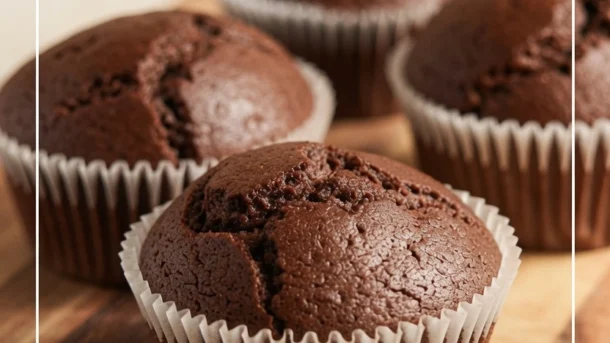
There are muffins you bake because breakfast needs something sweet. And then there are muffins like these Vegan Flourless Chocolate Muffins — the kind that come out of the oven with a slightly cracked, deeply dark top and an interior so dense, so fudgy, and so intensely chocolatey that they taste far more like a brownie than anything that should reasonably be called a muffin. This is that muffin. The one that proves flourless baking is not a compromise but a genuinely different and in many ways superior category of chocolate treat. The one that is so rich and satisfying that a single muffin genuinely, completely satisfies a chocolate craving.
These muffins use almond flour and oat flour in place of all-purpose flour, with flax eggs and almond butter providing binding and richness in the absence of both gluten and eggs. The result is a deeply fudgy, dense, intensely chocolate muffin that is naturally gluten-free, higher in protein and fiber than a standard muffin, and somehow tastes more indulgent despite being made from ingredients that are genuinely more nourishing.
What makes these muffins so outstanding is the texture — the combination of melted dark chocolate, almond butter, and the two alternative flours produces a crumb that is fudgy and dense in a way that wheat flour simply cannot replicate, creating a muffin that is categorically different from a standard chocolate muffin in the best possible way.
This recipe is 100% vegan, naturally gluten-free, ready in just 30 minutes, and absolutely wonderful eaten slightly warm when the chocolate is still soft and the fudgy texture is at its most spectacular.
Recipe Information
Prep Time
Cook Time
Total Time
Servings
Calories
10 mins
20 mins
30 mins
10
~210 kcal
Ingredients
For the Muffins
150g vegan dark chocolate (70% cocoa), melted and cooled slightly
¼ cup (25g) oat flour (certified gluten-free if needed)
2 tbsp cocoa powder
1 tsp baking powder
¼ tsp fine salt
Optional Add-ins
½ cup (85g) vegan chocolate chips folded through for extra indulgence
¼ tsp espresso powder to intensify the chocolate flavor
A pinch of flaky sea salt pressed onto each muffin before baking
¼ cup (30g) chopped toasted walnuts or pecans folded through
Instructions
Preheat the oven. Preheat the oven to 350°F (175°C). Line a 10-hole muffin tin with paper liners.
Make the flax eggs. Combine the flaxseed meal and water, stir, and let rest for 5 minutes until gel-like.
Melt the chocolate. Melt the dark chocolate in a heatproof bowl over a pot of gently simmering water, stirring until smooth. Let cool for 5 minutes.
Combine wet ingredients. In a large bowl whisk together the melted chocolate, almond butter, sugar, prepared flax eggs, plant milk, and vanilla extract until smooth and well combined.
Add dry ingredients. Add the almond flour, oat flour, cocoa powder, baking powder, and salt to the wet mixture. Fold until just combined — the batter will be thick and dense. Fold in any optional add-ins.
Fill and bake. Divide the batter evenly between the 10 lined muffin holes — it will be considerably thicker than standard muffin batter. Smooth the tops slightly. Bake for 18–22 minutes until the tops are set and a slight crack has formed on the surface. The centers will seem underdone — this is correct. They firm up to a fudgy consistency as they cool.
Cool before eating. Let cool in the tin for 10 minutes before transferring to a wire rack. These muffins are good warm but genuinely spectacular once fully cooled, when the fudgy center texture has fully set.
Pro Tips
Do not overbake — flourless chocolate muffins firm up considerably during cooling and should be removed from the oven when they still look underdone in the center.
Allow the melted chocolate to cool slightly before adding to the other wet ingredients — hot chocolate can begin to cook the flax eggs.
Use good quality dark chocolate with at least 70% cocoa — the chocolate is the dominant flavor in this recipe and its quality is directly reflected in the finished muffin.
Let the muffins cool fully before eating for the best fudgy texture — eating them warm produces a slightly gooey, almost molten center that is also delicious but different in character.
Why Flourless Chocolate Baking Works
Removing wheat flour from a chocolate muffin does not produce a lesser version — it produces a fundamentally different product with its own distinct appeal. Without the gluten network that wheat flour creates, flourless chocolate muffins cannot trap as much air and therefore cannot rise to a light, cakey texture. Instead they set around their fat, chocolate, and nut flour base into a dense, fudgy, concentrated mass that delivers more chocolate flavor per bite than a conventional muffin, with a texture that is closer to a ganache or truffle than a standard baked good.
This is not a compromise. It is a different category.
Flavor Variations
Peanut Butter Chocolate Muffins: Replace the almond butter with natural peanut butter for a classic peanut butter and chocolate combination.
Mocha Chocolate Muffins: Add 1 teaspoon of espresso powder to the batter for a deep coffee-chocolate mocha character.
Orange Chocolate Muffins: Add the zest of an orange to the batter for a chocolate-orange version that is particularly spectacular for the holiday season.
Nutritional Highlights (Per Muffin)
Calories
Protein
Carbs
Fiber
Fat
~210 kcal
6g
20g
4g
13g
Storage
Room temperature: Store in an airtight container for up to 3 days. The texture improves during storage as the fudgy center sets further.
Refrigerator: Keeps for up to 6 days. Bring to room temperature or warm briefly before eating.
Freezer: Freeze individually wrapped muffins for up to 2 months. Thaw at room temperature or microwave for 30 seconds.
Frequently Asked Questions
Can I use a different nut butter instead of almond butter?
Yes — peanut butter produces a slightly stronger flavor, cashew butter produces a milder result, and tahini produces a more neutral, slightly sesame-flavored version. All work well with the same quantities.
Why are my muffins falling apart?
Flourless muffins are more fragile than conventional muffins, especially when warm. Let them cool fully in the tin before removing and handling. They firm up considerably once completely cool.
Can I make these without oat flour?
Yes — replace the oat flour with additional almond flour in the same quantity for a fully nut-flour-based muffin with a slightly richer, more tender result.
Tried this recipe? Leave a comment below and let us know how it turned out! Tag us on Instagram and Facebook — we love seeing your plant-powered creations. Looking for more indulgent vegan chocolate and gluten-free dessert recipes? Browse all recipes on Easy Vegan Recipes — new recipes posted every single week!
There are desserts that look ordinary going into the oven and come out as something genuinely surprising. And then there are desserts like this Vegan Strawberry Pudding Cake — the kind that bakes into a single dish that separates all by itself into a soft, cakey top layer and a warm, luscious strawberry pudding sauce beneath it, with no effort or technique beyond simply pouring the batter into a dish and letting the oven do something almost magical. This is that dessert. The one that makes people ask how you got two distinct layers from one pour. The one that comes out bubbling with jammy strawberry sauce beneath a tender, golden sponge and tastes like the best summer dessert imaginable.
A pudding cake is one of the most wonderfully deceptive preparations in baking — a single batter, poured into a dish with boiling water poured over the top, that separates during baking into a cakey layer above and a glossy, saucy pudding below. This strawberry version builds on that technique with fresh or frozen strawberries, a light vanilla sponge batter, and a strawberry sugar layer that dissolves into the sauce as the cake bakes.
What makes this pudding cake so outstanding is the textural contrast between the layers — a slightly crisp, cakey top giving way to the soft interior of the sponge, and then the warm, glossy, intensely strawberry sauce beneath that pools in the spoon when served and turns a simple bowl of cake into something genuinely special.
This recipe is 100% vegan, ready in just 45 minutes, and absolutely magnificent served warm with a scoop of vegan vanilla ice cream that melts into the hot strawberry sauce in the most extraordinary way.
Recipe Information
Prep Time
Cook Time
Total Time
Servings
Calories
15 mins
30 mins
45 mins
6
~290 kcal
Ingredients
For the Cake Batter
1 cup (120g) all-purpose flour
½ cup (100g) cane sugar
1½ tsp baking powder
¼ tsp fine salt
½ cup (120ml) plant milk
3 tbsp melted coconut oil or neutral vegetable oil
1 tsp pure vanilla extract
1 cup (150g) fresh or frozen strawberries, hulled and halved
For the Pudding Layer
½ cup (100g) cane sugar
1 tbsp cornstarch
1 cup (240ml) boiling water
1 tbsp strawberry jam or preserves
To Serve
Vegan vanilla ice cream
Extra fresh strawberries
A dusting of powdered sugar
Instructions
Preheat the oven. Preheat the oven to 350°F (175°C). Lightly grease a deep 20cm (8-inch) square or round baking dish.
Arrange the strawberries. Scatter the halved strawberries evenly across the base of the prepared baking dish.
Make the cake batter. In a bowl whisk together the flour, sugar, baking powder, and salt. Add the plant milk, melted oil, and vanilla extract and stir until just combined into a smooth batter. Pour the batter evenly over the strawberries in the baking dish.
Make the pudding layer. In a small bowl combine the sugar and cornstarch. Scatter this mixture evenly over the top of the batter — do not stir. Dot the strawberry jam over the surface. Then carefully pour the boiling water evenly over the entire surface — again, do not stir. This is the step that looks wrong but is correct.
Bake. Place in the preheated oven and bake for 28–32 minutes until the top is set and lightly golden and the sauce is visibly bubbling around the edges.
Rest and serve. Let rest for 5 minutes before serving. Spoon into bowls ensuring each serving gets both the cakey top and the strawberry pudding sauce from beneath. Serve warm with vegan vanilla ice cream.
Pro Tips
Do not stir after adding the boiling water — the separation into two distinct layers depends entirely on leaving the layers undisturbed so they can separate properly during baking.
Use ripe, sweet strawberries for the most vibrant sauce — if your strawberries are slightly tart, increase the pudding layer sugar by a tablespoon.
Serve immediately after the brief rest, as the pudding sauce is at its most fluid and abundant while hot — it absorbs more into the cake layer as it cools.
A deep dish is important — the pudding layer bubbles vigorously during baking and needs room to expand without overflowing.
The Science Behind the Magic
The “magic” of a pudding cake is actually a straightforward application of density and heat. The boiling water dissolves the sugar layer on top and creates a liquid that sinks through the batter during baking because it is denser than the unbaked sponge. Meanwhile the batter, which contains baking powder, rises upward and sets into the cakey layer as it bakes. The result is a self-separating dessert that looks effortful and produces two genuinely different textures from a single preparation.
Flavor Variations
Blueberry Pudding Cake: Replace the strawberries with fresh or frozen blueberries and add a pinch of cinnamon to the batter.
Lemon Strawberry Pudding Cake: Add the zest of a lemon to the batter and a tablespoon of lemon juice to the boiling water for a brighter, citrus-forward version.
Mixed Berry Pudding Cake: Use a mixture of strawberries, raspberries, and blackberries for a more complex, layered berry flavor.
Nutritional Highlights (Per Serving)
Calories
Protein
Carbs
Fiber
Fat
~290 kcal
3g
52g
2g
7g
Storage
Best fresh: This dessert is at its best served warm, straight from the oven, when the pudding sauce is at its most fluid and abundant.
Refrigerator: Store covered for up to 3 days. Reheat individual portions in the microwave for 60–90 seconds before serving; the pudding sauce will loosen again when warmed.
Freezer: Not recommended, as the pudding layer does not freeze and thaw well.
Frequently Asked Questions
Why didn’t my cake separate into two layers?
This is almost always caused by stirring after adding the boiling water, using a dish that is too shallow, or underbaking. Do not stir at any point after adding the water, use a deep dish, and bake until the top is properly set and the edges are visibly bubbling.
Can I use frozen strawberries?
Yes — add directly from frozen without thawing. The cake may need an extra 3–5 minutes of baking time since the frozen fruit releases more liquid.
Can I make this gluten-free?
Yes — use a 1:1 gluten-free flour blend in the batter. The pudding layer is already gluten-free.
Tried this recipe? Leave a comment below and let us know how it turned out! Tag us on Instagram and Facebook — we love seeing your plant-powered creations. Looking for more magical vegan dessert recipes? Browse all recipes on Easy Vegan Recipes — new recipes posted every single week!
There are desserts that require a hot oven and careful timing. And then there are desserts like this No-Bake Vegan Cherry Dream Cheesecake — the kind that comes together in thirty minutes without turning on a single appliance beyond a blender, that chills in the refrigerator into a perfectly smooth, sliceable cheesecake with a buttery cookie base and a cloud of vanilla cream cheese filling, all crowned with a glossy, jewel-like cherry topping that is so deeply, vibrantly beautiful that it belongs on the cover of a magazine. This is that cheesecake. The one that requires almost no effort and produces maximum impact. The one that makes people assume you spent far longer than you actually did.
This cheesecake layers a simple pressed cookie and butter crust with a whipped cashew and vegan cream cheese filling that sets in the refrigerator into a smooth, creamy, sliceable layer, topped with a vibrant cherry compote made from fresh or frozen cherries cooked briefly into a glossy, deep burgundy sauce that pools beautifully over the white cream and sets around the edges into something that is both genuinely delicious and genuinely beautiful.
What makes this cheesecake so outstanding is its effortlessness — no baking, no water bath, no careful temperature monitoring — just blending, pressing, pouring, and waiting, producing a result that looks and tastes like a professionally made dessert with a fraction of the effort.
This recipe is 100% vegan, completely no-bake, ready in 30 minutes of active preparation plus chilling time, and absolutely magnificent served ice cold from the refrigerator on a hot summer day.
Recipe Information
Prep Time
Chill Time
Total Time
Servings
Calories
30 mins
6 hours
6.5 hours
12
~390 kcal
Ingredients
For the Cookie Crust
250g vegan vanilla sandwich cookies or digestive biscuits
5 tbsp vegan butter, melted
For the Cream Cheese Filling
1½ cups (195g) raw cashews, soaked in boiling water for 30 minutes then drained
400g vegan cream cheese, softened
½ cup (120ml) full-fat coconut cream
¾ cup (90g) powdered sugar
2 tsp pure vanilla extract
3 tbsp lemon juice
1 tsp agar agar powder dissolved in 3 tbsp warm water
Pinch of salt
For the Cherry Topping
400g fresh or frozen pitted cherries
⅓ cup (65g) cane sugar
1 tbsp lemon juice
1 tsp pure vanilla extract
1½ tbsp cornstarch mixed with 3 tbsp water
Optional Garnish
Fresh whole cherries arranged on top
Vegan whipped cream around the edge
A light dusting of powdered sugar
Instructions
Make the cookie crust. Pulse the cookies in a food processor until fine crumbs form. Add the melted vegan butter and pulse until the mixture holds together when pressed. Press firmly into the base and slightly up the sides of a greased 23cm (9-inch) springform pan. Refrigerate while preparing the filling.
Make the cheesecake filling. Blend the drained cashews, softened vegan cream cheese, coconut cream, powdered sugar, vanilla extract, lemon juice, and salt in a high-speed blender for 90 seconds until completely smooth and silky. Add the dissolved agar agar and blend for a further 30 seconds to incorporate.
Pour and chill. Pour the filling over the prepared crust and smooth the top with an offset spatula. Refrigerate for a minimum of 6 hours, or ideally overnight, until completely firm and set.
Make the cherry topping. Place the cherries, sugar, and lemon juice in a saucepan over medium heat. Cook for 8–10 minutes, stirring occasionally, until the cherries have softened and released a deep burgundy syrup. Add the vanilla extract and cornstarch slurry and stir for 1–2 minutes until the sauce has thickened to a glossy, spoonable consistency. Cool completely to room temperature.
Top and serve. Once the cheesecake is fully set, spoon the cooled cherry topping over the surface. Arrange fresh whole cherries if desired. Slice with a hot, dry knife for the cleanest slices.
Pro Tips
Blend the filling for the full 90 seconds for a completely smooth, lump-free result — any cashew graininess in a no-bake cheesecake is more noticeable than in a baked version.
The agar agar is essential for a no-bake cheesecake that sets firmly enough to slice cleanly — do not omit or substitute with gelatin.
Cool the cherry topping completely before adding it to the set cheesecake to prevent it softening and destabilizing the cream filling surface.
Chill for the full 6 hours — a no-bake cheesecake needs this time to set properly, especially in the center.
Why No-Bake Cheesecake Is Perfect For Summer
No-bake cheesecakes have a distinct advantage over baked versions in warm weather — they require no oven, making them genuinely suitable for hot summer days when the last thing anyone wants to do is heat the kitchen, and they are served ice cold directly from the refrigerator, making them refreshing in a way a warm-from-the-oven dessert simply cannot be.
Flavor Variations
No-Bake Blueberry Dream Cheesecake: Replace the cherry topping with a blueberry compote for a different berry combination.
No-Bake Strawberry Dream Cheesecake: Replace the cherry topping with a vibrant strawberry sauce for a classic summer version.
No-Bake Mango Dream Cheesecake: Replace the cherry topping with fresh mango puree and diced mango for a tropical version.
Nutritional Highlights (Per Serving)
Calories
Protein
Carbs
Fiber
Fat
~390 kcal
6g
42g
2g
23g
Storage
Refrigerator: Store covered for up to 5 days. The cheesecake holds its texture beautifully and is arguably even better on day 2 once all the flavors have fully melded.
Freezer: Freeze without the cherry topping for up to 2 months. Thaw overnight in the refrigerator and add fresh cherry topping before serving.
Make ahead: This is an ideal make-ahead dessert — assemble the cheesecake up to 2 days in advance and refrigerate, adding the topping on the day of serving.
Frequently Asked Questions
Can I use canned cherries instead of fresh or frozen?
Yes — drain canned cherries well before using and reduce the sugar in the topping significantly, as canned cherries are typically packed in heavy syrup and are already sweet.
Can I make this without agar agar?
Agar agar is the key setting agent in this no-bake cheesecake. Without it the filling will be too soft to slice cleanly. If unavailable, 1 teaspoon of kappa carrageenan can be used as an alternative.
Why is my no-bake cheesecake not setting?
This is usually caused by agar agar that was not dissolved properly, or insufficient chilling time. Dissolve the agar agar in warm water until completely clear before adding, and chill for the full 6 hours minimum.
Tried this recipe? Leave a comment below and let us know how it turned out! Tag us on Instagram and Facebook — we love seeing your plant-powered creations. Looking for more effortless vegan no-bake dessert recipes? Browse all recipes on Easy Vegan Recipes — new recipes posted every single week!
There are desserts that impress. And then there are desserts like this Vegan Chocolate Tart — the kind that silences a room the moment it is set on the table, that makes people lean forward before they have even been served a slice, that delivers with every single forkful a depth of chocolate flavor so intense, so pure, and so completely satisfying that the word dessert feels wholly inadequate. This is that tart. The one that looks like it came from a Parisian patisserie window. The one that tastes like the finest chocolate truffle you have ever eaten but in slice form. The one that no one believes for a single second is entirely plant-based until you tell them — and even then they ask you to say it again.
This is a tart of extraordinary elegance and extraordinary simplicity. A buttery, crisp chocolate shortcrust pastry shell — made from almond flour, coconut oil, and raw cacao — filled with a ganache of such silky, glossy, intensely chocolatey perfection that it sets in the refrigerator into something that is simultaneously firm enough to slice cleanly and yielding enough to melt completely on the tongue within seconds. The ganache is made from just three ingredients — dark vegan chocolate, full-fat coconut cream, and a touch of maple syrup — and it is one of the most extraordinary things you will ever make from three ingredients.
What makes this tart so genuinely outstanding is the quality of its restraint. There is nothing superfluous here. No unnecessary ingredients competing for attention. No elaborate techniques masking mediocre flavors. Just the finest dark chocolate you can find, treated with the respect it deserves, allowed to be exactly what it is — extraordinary — in the most beautiful vessel possible.
This recipe is 100% vegan, naturally gluten-free when made with almond flour, ready in just 30 minutes of active preparation plus chilling time, and absolutely magnificent served with fresh raspberries, a dusting of flaky sea salt, and a scoop of vegan vanilla ice cream.
Recipe Information
Prep Time
Cook Time
Chill Time
Servings
Calories
20 mins
12 mins
2 hours
8
~380 kcal
Ingredients
For the Chocolate Tart Shell
2 cups (200g) almond flour
3 tbsp raw cacao powder or cocoa powder
3 tbsp coconut oil, melted
2 tbsp maple syrup
1 tsp pure vanilla extract
Pinch of salt
For the Chocolate Ganache Filling
300g vegan dark chocolate (70% cocoa or higher — quality is everything here)
1 can (400ml) full-fat coconut cream
2 tbsp maple syrup
1 tsp pure vanilla extract
¼ tsp fine sea salt
1 tbsp coconut oil (for extra gloss)
Optional Toppings
Fresh raspberries or strawberries
Flaky sea salt scattered over the surface
Edible gold leaf for extraordinary occasions
Freeze-dried raspberry powder dusted over
Vegan white chocolate drizzle for visual contrast
Toasted crushed hazelnuts or almonds around the edge
Fresh mint leaves
Cocoa powder dusted through a fine sieve
To Serve
Vegan vanilla ice cream
Vegan whipped coconut cream
Fresh berry compote
A drizzle of raspberry coulis
Strong espresso or coffee alongside
Instructions
Preheat the oven and prepare the tin. Preheat your oven to 350°F (175°C). Grease a 23cm (9-inch) loose-bottomed tart tin generously with coconut oil — the loose bottom is essential for removing the finished tart cleanly and presenting it beautifully. Line the base with a circle of parchment paper for additional insurance.
Make the chocolate tart shell. In a large bowl combine the almond flour, cacao powder, and salt. Whisk together until evenly combined and lump-free. Add the melted coconut oil, maple syrup, and vanilla extract and mix with a fork until the mixture comes together into a soft, slightly sticky dough that holds its shape when pressed. The dough should feel like slightly damp sand — firm enough to press into the tin but not so wet that it sticks to your fingers excessively.
Press the shell into the tin. Transfer the dough to the prepared tart tin and press evenly across the base and up the sides using your fingers and the back of a spoon — working to achieve a completely uniform thickness of approximately 4–5mm throughout. Pay particular attention to the corners where the base meets the sides — these areas tend to be thicker than the rest and will take longer to cook if left too thick. Use a flat-bottomed glass to smooth and compress the base for the most even result.
Blind bake the shell. Prick the base all over with a fork — approximately 20 pricks across the surface — to prevent the base from puffing during baking. Place in the preheated oven and bake for 10–12 minutes until the shell is set, dry to the touch, and smells deeply of toasted chocolate. It should feel firm when gently pressed in the center. Do not overbake — the shell will firm further as it cools and an overbaked almond flour shell becomes brittle and crumbly. Allow to cool completely in the tin before adding the filling.
Make the chocolate ganache. Place the chopped dark chocolate in a large heatproof bowl. Pour the full-fat coconut cream into a small saucepan and heat over medium heat until it just reaches a simmer — small bubbles appearing around the edges of the pan. Do not allow it to boil vigorously. Pour the hot coconut cream immediately over the chopped chocolate and leave completely undisturbed for 3 full minutes — this resting time allows the heat of the cream to melt the chocolate gently and evenly without the need for stirring.
Emulsify the ganache. After 3 minutes begin stirring from the center of the bowl outward in slow, deliberate circular motions — never beating or whisking which incorporates air and dulls the glossy surface. Stir until the ganache is completely smooth, uniformly glossy, and flowing like liquid silk. Add the maple syrup, vanilla extract, salt, and coconut oil and stir gently to incorporate. The finished ganache should be deeply glossy, completely smooth, and intensely fragrant of dark chocolate.
Pour the ganache into the shell. Pour the warm ganache into the completely cooled tart shell in a single, slow, steady pour — starting from the center and allowing it to flow outward to the edges naturally. Tap the tin gently on the counter three or four times to release any air bubbles and level the surface. If any bubbles remain on the surface pass a kitchen torch briefly over them or touch each one with the tip of a toothpick to break them.
Add toppings and chill. Arrange any desired toppings — fresh raspberries, a scatter of flaky sea salt, a dusting of freeze-dried raspberry powder — over the surface of the ganache while it is still warm and fluid enough to hold them in place. Transfer to the refrigerator and chill for a minimum of 2 hours — ideally 4 hours or overnight — until the ganache is completely set and firm enough to slice cleanly.
Unmould and serve beautifully. Remove the tart from the refrigerator 15 minutes before serving — allowing it to come slightly toward room temperature improves both the texture and the flavor of the ganache dramatically. Place the tart tin on a tall glass or can and allow the outer ring to drop away. Slide onto a serving plate or cake stand. Slice with a sharp knife dipped in hot water and wiped dry between each cut for the cleanest, most professional slices. Serve with vegan vanilla ice cream or whipped coconut cream alongside.
Pro Tips for a Perfect Vegan Chocolate Tart
Use the best quality dark chocolate you can afford. The ganache is three ingredients — the chocolate is the overwhelming majority of the flavor. A mediocre chocolate produces a mediocre ganache regardless of technique. Look for dark chocolate with a minimum of 70% cocoa solids, a short ingredients list, and ideally single-origin cacao for the most complex, nuanced flavor.
Heat the coconut cream to a simmer — not a boil. Boiling coconut cream can cause the fat to separate from the liquid, producing a grainy, split ganache rather than the silky, emulsified result this recipe achieves. Heat just until the first small bubbles appear around the edges then pour immediately.
Rest the cream on the chocolate for the full 3 minutes. This resting period — without touching, stirring, or disturbing the mixture — allows the heat of the cream to distribute evenly through the chocolate and melt it gently from the outside in. Stirring too soon while the chocolate is still partially unmelted produces a grainy, lumpy ganache.
Stir from the center outward in slow circles. This specific stirring technique — starting at the center and moving outward in slow, deliberate circles — produces a perfectly emulsified ganache with maximum gloss. Stirring vigorously or in random directions incorporates air and produces a matte, duller surface.
Cool the shell completely before filling. A warm shell causes the ganache to melt and absorb into it rather than sitting in a clean, defined layer above it. The shell must be at room temperature — ideally slightly cool — before the ganache is poured.
Dip the knife in hot water between slices. This professional technique produces clean, sharp slices with the ganache cut rather than dragged. Dip, wipe dry, cut, repeat — the difference in presentation between slices cut with a dry knife and slices cut with a hot, dry knife is significant and completely worth the extra 5 seconds per slice.
The Art and Science of Chocolate Ganache
Ganache is one of the most elegant preparations in all of confectionery — and understanding the science behind it explains why this three-ingredient filling is so extraordinarily good and why the specific technique used to make it matters so much.
Ganache is an emulsion — a stable suspension of fat droplets in a water-based liquid — created when the fat in chocolate and the fat in cream are combined in the presence of the emulsifying compounds naturally present in cocoa. The lecithin in dark chocolate acts as a natural emulsifier, allowing the fat and water phases to combine into a smooth, stable, glossy liquid that sets to a firm, silky solid as it cools.
The quality of the emulsion — and therefore the quality of the finished ganache — depends entirely on the technique used to create it. Stirring from the center outward in slow circles begins the emulsification process at the point of highest fat concentration in the bowl and gradually incorporates the surrounding liquid into a stable emulsion. Beating or whisking incorporates air into the mixture, disrupts the emulsion structure, and produces a ganache that is matte rather than glossy and grainy rather than silky.
The ratio of chocolate to cream in this recipe — approximately 300g of chocolate to 400ml of coconut cream — produces a ganache that is soft enough to pour and spread easily when warm but firm enough to slice cleanly after chilling. A higher chocolate-to-cream ratio produces a firmer ganache suitable for truffles. A lower ratio produces a pourable sauce. This specific ratio is calibrated for a tart filling that holds its shape when sliced while melting completely on the tongue within seconds of tasting.
The coconut cream in this recipe performs identically to dairy cream in the ganache-making process — its fat content, water content, and temperature behavior are sufficiently similar to dairy cream that the emulsification chemistry proceeds in exactly the same way. The subtle sweetness of the coconut complements rather than competes with the bitterness of the dark chocolate, adding a gentle tropical note that makes this vegan ganache arguably more interesting in flavor than its dairy counterpart.
Flavor Variations
Salted Caramel Chocolate Tart: Before pouring the chocolate ganache spread a generous layer of salted date caramel over the cooled tart shell. Pour the ganache over the caramel layer and chill as directed for a tart with a molten caramel surprise beneath the chocolate that is one of the most extraordinary dessert combinations imaginable.
Raspberry Chocolate Tart: Arrange a layer of fresh raspberries over the cooled tart shell before pouring the ganache — the berries will be suspended in the chocolate as it sets, creating a tart with a beautiful ruby interior and a bright, fruity tartness that cuts through the richness of the chocolate perfectly.
Mint Chocolate Tart: Add half a teaspoon of pure peppermint extract to the ganache in place of the vanilla for a mint chocolate tart with a cool, refreshing character that is particularly spectacular decorated with fresh mint leaves and a dusting of cacao powder.
Orange Chocolate Tart: Add the zest of two large oranges and a tablespoon of Grand Marnier or fresh orange juice to the ganache for a version inspired by the classic chocolate-orange combination — particularly spectacular served with candied orange peel decorating the surface.
Nutritional Highlights (Per Serving)
Calories
Protein
Carbs
Fiber
Fat
~380 kcal
7g
28g
5g
28g
At 380 calories per serving this tart delivers genuine indulgence alongside meaningful nutrition from its whole food ingredients. The almond flour shell provides protein, healthy monounsaturated fats, Vitamin E, and magnesium alongside its buttery, crisp texture. The dark chocolate filling provides an extraordinary concentration of flavonoid antioxidants — particularly epicatechin and catechin — that have been studied for cardiovascular protective properties, blood pressure reduction, and mood enhancement through serotonin stimulation. The coconut cream contributes medium-chain triglycerides alongside the richness that makes this tart so deeply satisfying.
Storage
Refrigerator: Store the tart covered loosely with plastic wrap in the refrigerator for up to 5 days. Remove 15 minutes before serving to allow the ganache to soften slightly to the perfect texture. The tart actually improves on day 2 as the flavors deepen and the ganache reaches its ideal texture.
Freezer: This tart freezes beautifully for up to 2 months. Freeze without toppings — add fresh toppings after thawing. Freeze sliced or whole on a baking sheet until solid then wrap tightly in plastic wrap and foil. Thaw overnight in the refrigerator.
Room temperature: The tart can be kept at cool room temperature for up to 4 hours for serving at a dinner party — the ganache softens to an extraordinarily luxurious, almost mousse-like texture at room temperature that is in some ways even more spectacular than the firmer refrigerator version.
Individual slices: Slice the tart before storing for the most convenient serving system — individual slices wrapped in parchment paper keep perfectly in the refrigerator for up to 5 days and make an extraordinary make-ahead dessert for dinner parties or special occasions.
Frequently Asked Questions
Can I make this tart without a tart tin?
Yes — a springform cake tin of similar diameter works well as an alternative. The sides will be straight rather than fluted but the tart will be equally delicious. Individual tart tins — 8–10cm diameter — produce beautiful personal-sized tarts that are particularly elegant for dinner party desserts.
Why did my ganache turn grainy?
A grainy ganache is caused by one of three things — the cream was too hot when poured over the chocolate causing the cocoa butter to separate, the mixture was stirred too vigorously incorporating air and disrupting the emulsion, or the cream and chocolate were not at compatible temperatures when combined. If the ganache seizes or turns grainy add a tablespoon of warm coconut cream and stir gently from the center — this usually rescues the emulsion and restores smoothness.
Can I use milk chocolate instead of dark?
Yes — vegan milk chocolate produces a sweeter, creamier, less intense ganache that is particularly appealing to anyone who finds dark chocolate too bitter. Reduce the maple syrup to one tablespoon as milk chocolate is significantly sweeter than dark. The finished tart will be lighter in color and flavor with a more approachable, crowd-pleasing character.
How do I know when the tart shell is properly baked?
The shell is properly baked when it is set and dry to the touch, the edges have pulled very slightly away from the sides of the tin, and the kitchen smells of toasted chocolate and almond. It should feel firm when very gently pressed in the center but not hard or brittle. Remember it will firm further as it cools — a shell that feels slightly soft when hot will be perfectly crisp when cool.
Can I make this tart nut-free?
Yes — replace the almond flour with oat flour made from blending rolled oats to a fine powder in a food processor. Add an additional tablespoon of coconut oil to compensate for the lower fat content of oat flour. The shell will be slightly less rich than the almond flour version but still delicious and completely nut-free.
Can I make the ganache without coconut cream?
Yes — any high-fat plant milk works in ganache making though the results vary. Oat cream produces a good result with a neutral flavor. Cashew cream — made from blended soaked cashews with water — produces an extraordinarily rich, neutral-tasting ganache that many consider superior to the coconut cream version. Avoid low-fat plant milks which do not contain sufficient fat to properly emulsify with the chocolate.
Tried this recipe? Leave a comment below and let us know how it turned out! Tag us on Instagram and Facebook — we love seeing your plant-powered creations. Looking for more stunning vegan dessert recipes? Browse all recipes on Easy Vegan Recipes — new recipes posted every single week!
There are brownies you bake because something chocolatey is needed. And then there are brownies like these Vegan Chocolate Peanut Butter Brownie Bars — the kind that come out of the oven dense and fudgy and glossy on top, sliced to reveal a thick layer of creamy peanut butter rippling through the center of each bar, finished with a thin chocolate ganache that sets to a barely-there sheen over the entire surface. This is that brownie. The one that combines two of the most universally beloved flavors on the planet in a single bar so deeply satisfying that one piece is never quite enough. The one that disappears from the tin before it has properly cooled.
These bars layer a rich, fudgy vegan chocolate brownie batter with a thick peanut butter filling that sets into a distinct, creamy layer during baking, all finished with a glossy chocolate ganache topping. The result is a bar that delivers three genuinely distinct layers — fudgy brownie, creamy peanut butter, and glossy ganache — in every single bite.
What makes these bars so outstanding is the peanut butter layer — thickened with powdered sugar and a touch of coconut oil into a consistency that holds its shape as a distinct layer during baking rather than sinking into the brownie batter, ensuring that every single square has a generous, visible stripe of peanut butter throughout.
This recipe is 100% vegan, ready in just 45 minutes, naturally dairy-free and egg-free, and absolutely magnificent eaten at room temperature when the layers are at their most distinct and the ganache has set to a perfectly glossy finish.
Recipe Information
Prep Time
Cook Time
Chill Time
Total Time
Servings
Calories
20 mins
25 mins
30 mins
75 mins
16
~290 kcal
Ingredients
For the Brownie Batter
1 cup (120g) all-purpose flour
½ cup (45g) cocoa powder
1 cup (200g) cane sugar
½ tsp baking powder
¼ tsp fine salt
½ cup (120ml) neutral vegetable oil
½ cup (120ml) plant milk
1 tsp pure vanilla extract
1 tsp apple cider vinegar
½ cup (85g) vegan chocolate chips
For the Peanut Butter Layer
1 cup (260g) natural smooth peanut butter
½ cup (60g) powdered sugar
2 tbsp coconut oil, melted
½ tsp vanilla extract
Pinch of salt
For the Chocolate Ganache Topping
150g vegan dark chocolate, finely chopped
½ cup (120ml) full-fat coconut cream
1 tbsp maple syrup
Instructions
Preheat the oven and prepare the pan. Preheat the oven to 350°F (175°C). Line a 20cm (8-inch) square baking pan with parchment paper, leaving overhang on the sides for easy removal.
Make the brownie batter. In a large bowl whisk together the flour, cocoa powder, sugar, baking powder, and salt. Add the oil, plant milk, vanilla extract, and apple cider vinegar. Stir until just combined and smooth. Fold in the chocolate chips.
Make the peanut butter layer. In a bowl combine the peanut butter, powdered sugar, melted coconut oil, vanilla extract, and salt. Mix until smooth and thick — the mixture should be firm enough to spread without sinking into the brownie batter.
Assemble the bars. Pour the brownie batter into the prepared pan and spread evenly. Drop the peanut butter mixture in large spoonfuls across the surface of the brownie batter, then spread gently into an even layer using an offset spatula or the back of a spoon, being careful not to mix the layers together.
Bake. Bake for 22–26 minutes until the edges are set and a toothpick inserted in the brownie layer (avoiding the peanut butter) comes out with just a few moist crumbs. Do not overbake — the bars firm up considerably as they cool.
Make the ganache. While the bars cool, heat the coconut cream in a small saucepan until just simmering. Remove from heat, add the chopped chocolate, and let sit for 2 minutes undisturbed. Stir gently from the center outward until completely smooth and glossy. Stir in the maple syrup.
Top and chill. Pour the ganache over the cooled bars and spread to the edges. Refrigerate for 30 minutes until the ganache has set.
Slice and serve. Lift the bars out using the parchment overhang and slice into 16 squares with a sharp knife dipped in hot water between cuts.
Pro Tips
Do not overbake the brownie layer — remove when the edges are set but the center still looks slightly underdone, as the bars continue to firm during cooling and chilling.
Make the peanut butter layer thick enough to hold its shape — if it seems too soft, add additional powdered sugar one tablespoon at a time.
Spread the peanut butter layer gently to avoid mixing it into the brownie batter — keep the layers distinct for the most dramatic visual and textural result.
Dip the knife in hot water and wipe between slices for the cleanest, most professional cuts through the ganache layer.
Why Peanut Butter and Chocolate Work So Well Together
As with all peanut butter and chocolate combinations, the appeal lies in the complementary balance of flavors — the bitterness of dark chocolate balanced by the sweetness of the brownie, against the rich, slightly salty, intensely nutty peanut butter that provides depth, texture, and the specific sweet-salty contrast that makes this pairing so universally addictive.
Flavor Variations
Almond Butter Brownie Bars: Replace the peanut butter with almond butter for a subtler, more delicate nut flavor.
Salted Caramel Brownie Bars: Replace the peanut butter layer with a thick salted date caramel for a different but equally indulgent variation.
Raspberry Brownie Bars: Replace the peanut butter layer with a thick raspberry jam spread for a chocolate-raspberry combination.
Nutritional Highlights (Per Bar)
Calories
Protein
Carbs
Fiber
Fat
~290 kcal
6g
30g
3g
17g
Storage
Room temperature: Store in an airtight container for up to 3 days. The ganache remains set at cool room temperature.
Refrigerator: Keeps for up to 1 week; bring to room temperature for 10 minutes before serving for the best texture.
Freezer: Freeze individually wrapped bars for up to 2 months. Thaw in the refrigerator overnight before serving.
Frequently Asked Questions
Can I make these bars gluten-free?
Yes — use a 1:1 gluten-free flour blend in the brownie batter. The other layers are naturally gluten-free.
Why is my peanut butter layer sinking into the brownie?
This is caused by a peanut butter mixture that is too soft or a brownie batter that is too thin. Ensure the peanut butter layer is thick and firm before spreading, and add extra powdered sugar if needed to stiffen it.
Can I skip the ganache topping?
Yes — the bars are delicious without the ganache, though it adds a professional finish and an extra layer of chocolate indulgence.
Tried this recipe? Leave a comment below and let us know how it turned out! Tag us on Instagram and Facebook — we love seeing your plant-powered creations. Looking for more indulgent vegan brownie and dessert bar recipes? Browse all recipes on Easy Vegan Recipes — new recipes posted every single week!
There are treats you make once out of curiosity. And then there are treats like these Vegan Chocolate Peanut Butter Balls — the kind that disappear from the refrigerator faster than you made them, that people reach for one of and then immediately reach for a second and then a third before the first has even been fully appreciated, that combine two of the most universally beloved flavors on the planet in a single, perfect, bite-sized package so deeply satisfying and so completely irresistible that calling them a treat feels like a vast understatement. These are those balls. The ones that get requested at every gathering. The ones that convert people who claim they do not like health food into people who eat six of them before realizing what has happened. The ones that taste so indulgently, so unapologetically rich and chocolatey and peanut-buttery that no one believes for a single second that they are made from four ingredients and require zero baking.
These are no-bake truffles of extraordinary simplicity and extraordinary deliciousness — a center of creamy natural peanut butter blended with oats, maple syrup, and vanilla into a dough so fudgy and rich and deeply peanut-buttery that it is difficult not to eat it directly from the bowl before it ever becomes a ball — rolled into perfect spheres, chilled until firm, and then dipped in a shell of dark vegan chocolate that sets to a satisfying snap around the creamy peanut butter center and makes each bite a perfect two-texture experience of crisp chocolate and yielding, creamy, intensely flavored filling.
What makes these treats so genuinely outstanding is their deceptive simplicity. Four main ingredients. No oven required. Twenty minutes of active preparation. And the result is something that tastes like it came from a professional chocolatier — with a richness and depth of flavor that commercial peanut butter cups and chocolate candies simply cannot match because the ingredients here are real, whole, and of infinitely higher quality than anything in a commercial candy bar.
This recipe is 100% vegan, naturally sweetened with maple syrup, made without refined sugar in the filling, ready in just 20 minutes plus chilling time, gluten-free when made with certified gluten-free oats, and absolutely, completely, magnificently impossible to stop eating.
Recipe Information
Prep Time
Chill Time
Total Time
Servings
Calories
20 mins
30 mins
50 mins
6
~320 kcal
Ingredients
For the Peanut Butter Centers
1½ cups (390g) natural smooth peanut butter (room temperature — runny peanut butter works best)
1 cup (90g) rolled oats, blended to a fine flour in a food processor
4 tbsp maple syrup
1½ tsp pure vanilla extract
½ tsp salt (essential — do not reduce)
2–4 tbsp oat flour or coconut flour (as needed to achieve the right consistency)
For the Chocolate Shell
250g vegan dark chocolate (70% cocoa or higher — quality matters enormously here)
1 tbsp coconut oil (added to melted chocolate for a thinner, glossier, snappier shell)
¼ cup (35g) finely chopped roasted peanuts (adds beautiful crunch)
2 tbsp desiccated coconut
1 tbsp chia seeds (boosts fiber and nutrition invisibly)
½ tsp cinnamon (adds beautiful warmth)
2 tbsp vegan protein powder (for extra protein)
For Topping and Decoration
Flaky sea salt — scattered over the chocolate before it sets
Crushed roasted peanuts pressed into the wet chocolate
White vegan chocolate drizzle for visual drama
Freeze-dried raspberry powder for color contrast
Cacao nibs pressed into the surface
Gold or silver edible luster dust for extraordinary occasions
Instructions
Make the peanut butter filling. In a large mixing bowl combine the natural peanut butter, blended oat flour, maple syrup, vanilla extract, and salt. Mix with a spatula until everything is completely combined into a smooth, cohesive dough. The mixture should be firm enough to roll into balls that hold their shape — similar in consistency to cookie dough. If the mixture is too soft and sticky add oat flour one tablespoon at a time until it firms to a rollable consistency. If the mixture is too dry and crumbly add maple syrup or a teaspoon of coconut oil to loosen. The consistency varies depending on the natural peanut butter brand — some are thicker and some are runnier so adjust as needed.
Taste and adjust. This step is important — taste the peanut butter dough and adjust the seasoning. More salt for depth and to amplify the peanut flavor. More maple syrup for sweetness. More vanilla for aromatic complexity. The filling should taste deeply peanut-buttery, pleasantly sweet, warmly vanilla-scented, and noticeably salty — all in perfect balance. This is the flavor foundation of the entire treat and it deserves careful attention.
Portion and roll the balls. Line a large baking sheet or flat plate with parchment paper. Using a tablespoon or small cookie scoop portion the peanut butter dough into equal amounts — approximately 1.5 tablespoons each. Roll each portion between your palms into a smooth, even sphere. If the dough sticks to your hands refrigerate for 10 minutes to firm before rolling. Place the rolled balls on the prepared parchment-lined tray as you work.
First chill. Place the tray of rolled peanut butter balls in the freezer for 15–20 minutes until completely firm and cold. This chilling step is essential — firm, cold centers dip in chocolate far more easily and cleanly than room-temperature ones, producing a thinner, more even chocolate shell and preventing the centers from softening and losing their shape during the dipping process.
Melt the chocolate. Place the chopped vegan dark chocolate and coconut oil in a heatproof bowl set over a pot of gently simmering water — ensuring the bottom of the bowl does not touch the water. Stir gently and continuously until the chocolate is completely melted, smooth, and glossy. Alternatively melt in the microwave in 30-second intervals, stirring between each, until completely smooth. Add the coconut oil and stir to incorporate — the oil thins the chocolate slightly and produces a glossier, snappier shell that sets more cleanly around the peanut butter centers.
Dip the chilled balls in chocolate. Remove the chilled peanut butter balls from the freezer. Working quickly one at a time drop a ball into the melted chocolate and use two forks or a dipping tool to roll it until completely coated. Lift the ball from the chocolate allowing excess to drip back into the bowl and return to the parchment-lined tray. Work efficiently — the cold centers will cause the chocolate to set quickly, which is desirable for a clean finish.
Add toppings immediately. Before the chocolate sets on each ball add any desired toppings — a pinch of flaky sea salt, crushed peanuts pressed gently into the surface, a drizzle of white vegan chocolate. Work quickly as the chocolate sets within 30–60 seconds of the cold center touching the warm chocolate.
Final chill. Place the chocolate-dipped balls in the refrigerator for a minimum of 20 minutes until the chocolate shell is completely set and firm. The finished balls should have a distinct snap when bitten — if the chocolate shell is soft the balls need additional chilling time.
Pro Tips for Perfect Vegan Chocolate Peanut Butter Balls
Use natural peanut butter with only one or two ingredients. Natural peanut butter — made from only peanuts and salt — has a runnier, more pourable consistency than commercial peanut butter brands that contain added palm oil and sugar. This natural consistency is what produces the richest, most intensely peanut-flavored centers. Commercial peanut butters with added hydrogenated oils produce a stiffer dough that can taste flat and artificial compared to the extraordinary depth of natural peanut butter.
Salt the filling aggressively. Salt is the single most important seasoning in peanut butter confectionery — it amplifies the natural peanut flavor dramatically and creates the sweet-salty contrast that makes peanut butter and chocolate combinations so uniquely addictive. The half teaspoon of salt in this recipe may seem like a lot for a sweet treat but it is precisely the right amount for this quantity of peanut butter. Taste and trust the process.
Freeze the centers before dipping — always. This step is non-negotiable. Room-temperature peanut butter centers are too soft to dip cleanly — they lose their spherical shape in the warm chocolate, absorb excess chocolate, and the finished balls have an uneven, lumpy appearance. Frozen centers dip perfectly and produce beautifully smooth, even chocolate shells with a professional finish.
Use good quality dark chocolate with a high cocoa content. The chocolate shell is half of this entire recipe and its quality is directly reflected in the finished treat. A 70% or higher cocoa content dark chocolate produces a shell with genuine bitterness and complexity that perfectly balances the sweetness of the peanut butter center. Low-quality chocolate produces a shell that is too sweet and lacks the depth that makes this combination so extraordinary.
Add coconut oil to the melted chocolate. One tablespoon of coconut oil added to the melted chocolate produces a thinner, more fluid dipping chocolate that coats the centers more evenly and thinly, and sets to a glossier, snappier shell than pure melted chocolate alone. This single addition elevates the finished balls from homemade to genuinely professional in appearance and texture.
Work in a cool kitchen. Warm kitchens slow the setting of the chocolate shell and can cause the peanut butter centers to soften during dipping. If your kitchen is warm work in smaller batches of 6–8 balls at a time, returning the remaining balls to the freezer between batches, and refrigerating the dipped balls immediately after finishing each batch.
The Perfect Chemistry of Chocolate and Peanut Butter
The combination of chocolate and peanut butter is one of the most beloved flavor pairings in the entire world of confectionery — and understanding the food science behind why this combination is so universally irresistible helps explain why these balls are so genuinely addictive.
At the most fundamental level the chocolate and peanut butter combination works because it satisfies multiple pleasure systems simultaneously. The sweetness of the chocolate and maple syrup activates the brain’s reward pathways through dopamine release — producing the immediate pleasure response associated with sweet foods. The bitterness of the dark chocolate provides a contrasting, sophisticated note that prevents the sweetness from becoming cloying and keeps the palate engaged. The fat content — from both the chocolate and the peanut butter — coats the mouth and carries flavor compounds to taste receptors with extraordinary efficiency, amplifying every flavor note simultaneously.
The salt in the peanut butter filling plays a specific neurological role that is often underestimated. Salt suppresses bitterness while simultaneously amplifying sweetness and the perception of other flavors — a mechanism so powerful that adding salt to the peanut butter center makes the chocolate taste sweeter, the peanut flavor taste richer, and the entire combination taste more intense and satisfying than any individual element could achieve alone.
Peanut butter contributes an aromatic complexity that is derived from the Maillard reaction compounds produced during roasting — the same chemical process that creates the complex aromas of coffee, bread, and roasted meat. These compounds interact with the flavonoids in dark chocolate — particularly epicatechin and catechin — to create a combined aromatic profile of extraordinary complexity that registers on the palate as deeply satisfying in a way that neither ingredient achieves independently.
This is food that satisfies through chemistry as much as through pleasure — and it does so entirely through plants.
Flavor Variations
Almond Butter Chocolate Balls: Replace the peanut butter with natural almond butter for a subtler, more elegant version with a beautiful almond fragrance and a slightly lighter, more delicate flavor that is particularly spectacular finished with a single toasted almond pressed into the chocolate shell.
Dark Chocolate Truffle Centers: Add 2 tablespoons of raw cacao powder to the peanut butter filling for a double chocolate version with a deeply chocolatey center inside a dark chocolate shell that is one of the most intensely chocolate experiences possible in plant-based confectionery.
Coconut Peanut Butter Balls: Add 3 tablespoons of desiccated coconut to the filling and roll the finished chocolate-dipped balls in toasted coconut immediately after dipping for a tropical version with extraordinary texture and a beautiful coconut aroma.
Salted Caramel Peanut Butter Balls: Press a small cube of date caramel into the center of each peanut butter ball before rolling and dipping for a version with a molten, salted caramel surprise at the center of every ball that is one of the most extraordinary confectionery experiences imaginable.
Nutritional Highlights (Per Serving — 3 balls)
Calories
Protein
Carbs
Fiber
Fat
~320 kcal
10g
28g
4g
20g
At 320 calories per serving of three balls these treats deliver a genuinely satisfying confectionery experience alongside meaningful nutrition. The natural peanut butter provides 10 grams of plant-based protein per serving alongside heart-healthy monounsaturated fats, magnesium, phosphorus, zinc, niacin, and resveratrol. The oat flour contributes beta-glucan fiber with documented cholesterol-lowering properties alongside B vitamins and iron. The dark chocolate provides an extraordinary concentration of flavonoid antioxidants — particularly epicatechin — that have been studied for cardiovascular protective properties, blood pressure reduction, and mood enhancement through the stimulation of serotonin production. These are treats that indulge and nourish simultaneously — the finest possible combination.
Storage
Refrigerator: Store in an airtight container in the refrigerator for up to 2 weeks. Place parchment paper between layers to prevent the balls from sticking together. Remove from the refrigerator 5 minutes before serving — the chocolate shell is at its most satisfying snap and the peanut butter center is at its creamiest slightly below room temperature rather than at full refrigerator coldness.
Freezer: These balls freeze beautifully for up to 3 months — making them the ideal make-ahead treat for celebrations, gifts, or simply having something extraordinary available whenever the craving strikes. Freeze in a single layer on a baking sheet until solid then transfer to a freezer-safe container or bag. Thaw in the refrigerator for 30 minutes before serving or eat directly from frozen for a particularly satisfying, ice-cream-like texture.
Gifting: These balls make extraordinary edible gifts. Arrange in a small box or tin lined with parchment paper, finish with a ribbon, and store refrigerated until gifting. They travel well when kept cold and remain beautiful and delicious for up to 2 weeks — making them a perfect holiday, birthday, or host gift.
Room temperature: The balls can be kept at cool room temperature for up to 3 days — the chocolate shell remains firm and the peanut butter center stays at an ideal creamy consistency. Avoid warm environments above 75°F (24°C) where the chocolate may soften and lose its snap.
Frequently Asked Questions
Why is my peanut butter filling too sticky to roll?
A sticky filling is almost always the result of using a very runny natural peanut butter or insufficient oat flour. Add oat flour or coconut flour one tablespoon at a time, mixing thoroughly between additions, until the dough firms to a consistency that holds its shape when rolled. Alternatively refrigerate the dough for 20 minutes to firm before rolling — cold dough is significantly easier to work with than room-temperature dough.
Can I use crunchy peanut butter instead of smooth?
Yes — crunchy natural peanut butter produces a filling with a beautiful, slightly textured quality from the peanut pieces throughout. The filling will be slightly less smooth when rolled but equally delicious and the peanut pieces add a satisfying crunch that contrasts beautifully with the smooth chocolate shell.
How do I get a perfectly smooth chocolate shell?
A perfectly smooth chocolate shell requires thin, fluid melted chocolate, cold centers that allow the chocolate to set quickly without running, and a gentle tapping motion to remove excess chocolate after dipping. If the chocolate becomes too thick during dipping reheat gently over the double boiler for 30 seconds and stir to restore fluidity. Tempering the chocolate — a specific heating and cooling process — produces the glossiest, most professional finish but requires a thermometer and practice.
Can I make these balls without oats?
Yes — replace the blended oat flour with almond flour, coconut flour, or rice flour in the same quantity. Each alternative produces a slightly different texture in the finished center — almond flour produces a more tender, slightly crumbly center, coconut flour produces a denser, more coconut-flavored center, and rice flour produces a center closest in texture to the oat version. All are delicious.
Can I use milk chocolate instead of dark chocolate?
Yes — use vegan milk chocolate if you prefer a sweeter, creamier shell. Vegan milk chocolate is widely available in specialty stores and online. The finished balls will be significantly sweeter than the dark chocolate version — reduce the maple syrup in the filling by one tablespoon to maintain the balance between the sweet shell and the filling. The contrast between sweet milk chocolate and salty peanut butter is a different but equally wonderful flavor experience.
How do I make these balls without a microwave or double boiler?
Place the chopped chocolate and coconut oil in a heatproof bowl and set it over a pot of barely simmering water — ensuring the bottom of the bowl does not touch the water — for a gentle double boiler effect. Stir continuously until completely melted. Alternatively place the chocolate in a warm oven at 200°F (93°C) for 5–8 minutes until softened enough to stir smooth. A hair dryer held 15cm from the bowl and directed at the chocolate for 3–4 minutes also works surprisingly well as an emergency melting method.
Tried this recipe? Leave a comment below and let us know how it turned out! Tag us on Instagram and Facebook — we love seeing your plant-powered creations. Looking for more indulgent, no-bake vegan dessert and treat recipes? Browse all recipes on Easy Vegan Recipes — new recipes posted every single week!
There are desserts that feel like home. And then there are desserts like this Vegan Blueberry Cobbler — the kind that comes out of the oven bubbling and fragrant and so deeply, warmly inviting that people are already reaching for bowls before it has properly cooled, that fills the kitchen with the most extraordinary aroma of caramelized blueberry and warm butter and vanilla as it bakes, and that delivers with every single spoonful a combination of jammy, intensely sweet blueberry filling and golden, biscuity, tender cobbler topping that is one of the most satisfying dessert experiences imaginable. This is that cobbler. The one that makes summer feel complete. The one that has been requested at every gathering since the first time it was made. The one that tastes like the very best version of every blueberry dessert you have ever eaten, distilled into a single baking dish.
This is a cobbler of extraordinary simplicity and extraordinary deliciousness — a bubbling, deeply purple blueberry filling thickened with just enough cornstarch to hold its shape when spooned into a bowl while still flowing in slow, generous ribbons of juice around the golden cobbler biscuits that sit on top, their crispy, slightly caramelized tops giving way to the softest, most tender, buttermilk-style interiors that absorb the blueberry juices from below into something that is simultaneously biscuit and cake and pudding all at once. It is genuinely one of the finest things you will make all summer.
What makes this cobbler so genuinely outstanding is the cobbler topping. Made with vegan butter, oat milk curdled with apple cider vinegar into a plant-based buttermilk, and a touch of coconut sugar that caramelizes in the oven into a barely-there golden crust — these biscuits are extraordinary on their own and transcendent in combination with the blueberry filling beneath them. They are dropped onto the filling in rustic, irregular mounds rather than rolled and cut — a technique that produces a more tender, more interesting, more genuinely homemade result than any precision cutting could achieve.
This recipe is 100% vegan, ready in just 45 minutes, made with fresh or frozen blueberries, naturally adaptable to gluten-free, and absolutely magnificent served warm with a generous scoop of vegan vanilla ice cream that melts into the hot blueberry filling in the most extraordinary way.
Recipe Information
Prep Time
Cook Time
Total Time
Servings
Calories
15 mins
30 mins
45 mins
6
~320 kcal
Ingredients
For the Blueberry Filling
6 cups (900g) fresh or frozen blueberries (do not thaw if frozen)
⅓ cup (65g) cane sugar or coconut sugar
2 tbsp cornstarch
1 tbsp lemon juice
Zest of 1 lemon
1 tsp pure vanilla extract
¼ tsp cinnamon
Pinch of salt
For the Cobbler Topping
1½ cups (180g) all-purpose flour
¼ cup (50g) cane sugar plus 1 tbsp for sprinkling
1½ tsp baking powder
¼ tsp baking soda
¼ tsp fine salt
½ tsp cinnamon
⅓ cup (75g) cold vegan butter, cut into small cubes
½ cup (120ml) oat milk
1 tsp apple cider vinegar
1 tsp pure vanilla extract
Optional Add-ins for the Filling
1 cup (150g) fresh raspberries mixed with blueberries
1 tbsp bourbon or dark rum (adds beautiful depth)
¼ tsp cardamom (adds beautiful floral warmth)
1 tbsp maple syrup in place of some sugar
Fresh basil leaves torn through the warm filling
Optional Toppings for the Cobbler Biscuits
1 tbsp turbinado sugar sprinkled over before baking
1 tsp lemon zest mixed into the biscuit dough
2 tbsp sliced almonds pressed into the tops
To Serve
Vegan vanilla ice cream — the classic and essential pairing
Whipped coconut cream
Vegan custard poured over the top
Plain coconut yogurt for a lighter option
A drizzle of maple syrup
Fresh blueberries and mint alongside
Instructions
Preheat the oven. Preheat your oven to 375°F (190°C). Lightly grease a 23 x 33cm (9 x 13 inch) baking dish or a similar sized deep casserole dish with vegan butter or coconut oil. A dish with some depth is important — the blueberry filling bubbles significantly during baking and needs room to expand without overflowing.
Make the vegan buttermilk. Combine the oat milk and apple cider vinegar in a small bowl or measuring jug, stir briefly, and set aside for 5 minutes. The acid causes the plant milk to curdle slightly — creating a vegan buttermilk that produces a more tender, more flavorful cobbler topping than plain milk alone.
Make the blueberry filling. In a large bowl combine the blueberries, sugar, cornstarch, lemon juice, lemon zest, vanilla extract, cinnamon, and salt. Toss gently until the blueberries are evenly coated and the cornstarch has completely dissolved into the juices. Pour the blueberry mixture into the prepared baking dish and spread in an even layer. The filling will look sparse at this stage — it compresses and releases juice dramatically during baking.
Make the cobbler biscuit dough. In a large bowl whisk together the flour, sugar, baking powder, baking soda, salt, and cinnamon. Add the cold cubed vegan butter and work it into the flour using your fingertips — pressing each piece of butter between your fingers and thumbs until the mixture resembles coarse, sandy crumbs with some pea-sized pieces of butter still visible. These larger butter pieces are what create the flaky, layered texture of the finished biscuits — do not work the butter in too completely.
Add the wet ingredients. Pour the vegan buttermilk and vanilla extract over the flour and butter mixture and fold gently with a spatula until just combined — the dough should be shaggy, slightly sticky, and rough rather than smooth. Do not overmix — overworked biscuit dough produces tough, dense biscuits rather than the light, tender result this recipe achieves.
Top the filling with the biscuit dough. Drop the cobbler dough over the blueberry filling in large, irregular spoonfuls — approximately 6 to 8 generous mounds distributed evenly across the surface. Do not spread or flatten — the irregular, rustic mounds bake into beautifully varied textures with crispy peaks, tender valleys, and jammy blueberry-soaked edges that are the defining characteristic of a great cobbler. Leave gaps between the dough mounds — the blueberry filling should be visible between them and will bubble up through these gaps during baking.
Sprinkle and bake. Sprinkle the remaining tablespoon of sugar evenly over the cobbler biscuits — this creates the barely-there caramelized crust that makes the tops so irresistible. Place in the center of the preheated oven and bake for 28–35 minutes until the cobbler topping is deeply golden, the biscuits have puffed and set, and the blueberry filling is bubbling vigorously around the edges and through the gaps — the bubbling is essential and indicates the cornstarch has activated and the filling has properly thickened.
Rest briefly before serving. Remove from the oven and allow to rest for 10 minutes before serving — the filling is extraordinarily hot directly from the oven and resting allows it to thicken slightly from its liquid state to the jammy, spoonable consistency that makes it so spectacular. Serve warm — directly from the baking dish at the table — with generous scoops of vegan vanilla ice cream that melt into the hot blueberry filling in the most extraordinary way.
Pro Tips for the Perfect Vegan Blueberry Cobbler
Use cold vegan butter for the biscuit topping always. The temperature of the butter is one of the most critical factors in cobbler biscuit success. Cold butter — cut into the flour quickly before it has time to warm — creates steam pockets during baking that produce the flaky, layered texture that distinguishes great cobbler biscuits from dense, cakey ones. Room temperature butter produces a uniform, greasy dough with none of this texture.
Do not spread or flatten the biscuit dough. The dropped, irregular mounds of dough bake into beautifully varied textures — crispy peaks, tender centers, jammy edges — that a smoothed or rolled topping simply cannot achieve. The rusticity is intentional and is what makes homemade cobbler so much more interesting than any commercial version.
Leave gaps between the biscuit mounds. The blueberry filling visible between the biscuit mounds bubbles up through these gaps during baking — basting the edges of the biscuits in blueberry juice and creating those extraordinary jammy, purple-stained cobbler edges that are arguably the best bites in the entire dish.
Use frozen blueberries directly from the freezer. Frozen blueberries added directly from the freezer without thawing hold their shape better during baking, release their juice more gradually, and produce a filling with more body and structure than thawed berries which collapse into mush and produce a watery filling.
Bake until the filling is visibly bubbling. The bubbling of the blueberry filling is not merely aesthetic — it indicates that the filling has reached the temperature at which the cornstarch activates and thickens the blueberry juices into a glossy, coating sauce rather than a thin, watery liquid. A cobbler removed from the oven before the filling is bubbling will have a thin, runny filling that pools rather than holds when served.
Serve warm — not hot, not cold. Cobbler served immediately from the oven is too hot to eat comfortably and the filling is too liquid to serve cleanly. Cobbler served cold loses all the extraordinary contrast between the warm, jammy filling and the cool, melting ice cream. The 10-minute rest produces the perfect serving temperature — warm enough to melt the ice cream dramatically, cool enough to eat immediately and enjoy every element of the dish at its best.
The Story of Cobbler in American Baking
Cobbler is one of the most beloved and most distinctly American desserts in the entire baking canon — a preparation born of necessity and improvisation that became a classic through the sheer power of how extraordinarily delicious it is when made well.
The origins of cobbler trace to the early nineteenth century American frontier where British settlers attempting to recreate the suet puddings and steamed dumplings of their homeland found themselves without the proper equipment and many of the correct ingredients. The solution was characteristically practical — a simple biscuit or dumpling dough dropped onto stewed or fresh fruit and baked in a dutch oven or camp fire until the topping set and the fruit beneath it became jammy and intensely concentrated in flavor.
The name cobbler is thought to derive from the irregular, cobblestone-like appearance of the dropped biscuit topping — each mound a different size and shape, like the varied stones of a cobbled street — though some food historians argue it derives from the British word cobbler meaning to mend or patch, a reference to the patched appearance of the topping over the fruit beneath.
What distinguishes cobbler from crumble, crisp, and buckle — the other great American fruit bake traditions — is the biscuit topping. Where a crumble uses a dry, sandy, streusel-like topping and a crisp adds oats for additional texture, a cobbler uses a soft, wet, buttermilk-style biscuit dough that bakes into something simultaneously crispy on top and tender throughout — absorbing the fruit juices from below as it cooks into a genuinely extraordinary hybrid of biscuit and pudding that has no equivalent in any other baking tradition.
This vegan version honours every element of the classical preparation — the jammy, intensely flavored fruit filling, the dropped biscuit topping, the bubbling, caramelized edges — while replacing the dairy and eggs with plant-based alternatives that perform identically and produce a cobbler that is indistinguishable in flavor and texture from the finest dairy version.
Flavor Variations
Mixed Berry Cobbler: Replace half the blueberries with raspberries, blackberries, and sliced strawberries for a vibrant mixed berry version with more complex, layered fruit flavor and a beautiful deep purple filling.
Peach and Blueberry Cobbler: Add 2 cups of diced fresh peach to the blueberry filling for a classic Southern-inspired combination that is particularly spectacular in late summer when both fruits are at their peak.
Lemon Blueberry Cobbler: Add the zest of two additional lemons to both the filling and the biscuit dough and replace 2 tablespoons of the oat milk with fresh lemon juice for a brighter, more citrus-forward version that is particularly refreshing in summer.
Lavender Blueberry Cobbler: Add 1 teaspoon of culinary dried lavender to the blueberry filling for a sophisticated, floral version with a beautiful Provençal character that is particularly elegant for dinner party desserts.
Nutritional Highlights (Per Serving)
Calories
Protein
Carbs
Fiber
Fat
~320 kcal
4g
54g
5g
10g
At 320 calories per serving this cobbler delivers genuine summer dessert satisfaction alongside meaningful nutrition from its whole food ingredients. Blueberries are among the most antioxidant-rich foods available — providing extraordinary concentrations of anthocyanins that have been studied for their ability to reduce inflammation, protect brain cells from oxidative damage, improve memory and cognitive function, and support cardiovascular health. A single serving of this cobbler provides approximately one and a half cups of blueberries — a genuinely significant dose of these extraordinary compounds. The lemon juice and zest contribute Vitamin C and limonene with antioxidant and anti-cancer properties. The oat milk base contributes beta-glucan fiber.
Storage
Serve fresh: Blueberry cobbler is at its absolute peak within 2 hours of coming out of the oven — when the topping is still slightly crispy, the filling is warm and jammy, and the contrast with cold ice cream is at its most spectacular. Make it fresh whenever possible.
Refrigerator: Store covered with plastic wrap or in an airtight container in the refrigerator for up to 4 days. The topping softens during refrigeration as it absorbs moisture from the filling — the texture changes but the flavor remains extraordinary. Reheat individual portions in a 350°F (175°C) oven for 10 minutes or in a microwave for 90 seconds.
Freezer: Cobbler freezes well for up to 2 months. Cool completely before wrapping tightly in plastic wrap and foil. Thaw overnight in the refrigerator and reheat in a 350°F (175°C) oven for 15–20 minutes until heated through and the topping has regained some crispiness.
Make ahead: The blueberry filling can be prepared up to 24 hours in advance and stored in the refrigerator. Make the biscuit topping fresh on the day of baking — the leavening in the biscuit dough loses its effectiveness if stored before baking.
Frequently Asked Questions
Can I use frozen blueberries instead of fresh?
Yes — frozen blueberries work beautifully in cobbler and in many ways produce a better result than out-of-season fresh blueberries. Add them directly from frozen without thawing — thawed berries release too much liquid and produce a watery filling. You may need to add an additional teaspoon of cornstarch when using frozen berries to account for the additional moisture they release during baking.
Why is my cobbler topping raw in the middle?
An undercooked cobbler topping is caused by biscuit mounds that are too thick, oven temperature too low, or insufficient baking time. Drop the biscuit dough in mounds no thicker than 2–3cm, ensure the oven is fully preheated to the correct temperature, and bake until a toothpick inserted in the center of the largest biscuit mound comes out clean. If the topping is browning too quickly before the center is cooked, cover loosely with foil for the remaining baking time.
Can I make individual cobblers?
Yes — divide the blueberry filling between 6 individual ramekins and top each with one large mound of biscuit dough. Reduce the baking time to 20–25 minutes. Individual cobblers are particularly elegant for dinner party desserts — each guest receives their own perfectly formed cobbler with its own bubbling filling and golden biscuit topping.
How do I know when the cobbler is done?
The cobbler is done when the biscuit topping is deeply golden and set — dry rather than shiny on top — and a skewer inserted in the center of the largest biscuit comes out clean. Most importantly the blueberry filling should be visibly bubbling vigorously around the edges and through the gaps between the biscuits. If the topping is golden but the filling is not yet bubbling, continue baking until it is.
Can I make this cobbler gluten-free?
Yes — replace the all-purpose flour in the biscuit topping with a 1:1 gluten-free flour blend and add half a teaspoon of xanthan gum if your blend does not already contain it. The cornstarch in the filling is already gluten-free. The gluten-free biscuit topping will be slightly more delicate in texture than the regular version but still delicious, golden, and beautifully flavored.
Can I reduce the sugar in this recipe?
Yes — the sugar in the filling can be reduced to 3 tablespoons for a less sweet, more tart filling that allows the natural flavor of the blueberries to dominate. The sugar in the biscuit topping can be reduced to 2 tablespoons. Do not eliminate the sugar entirely as it contributes to the texture and browning of the biscuits as well as their flavor.
Tried this recipe? Leave a comment below and let us know how it turned out! Tag us on Instagram and Facebook — we love seeing your plant-powered creations. Looking for more comforting vegan dessert and baking recipes? Browse all recipes on Easy Vegan Recipes — new recipes posted every single week!
We use cookies on our website to give you the most relevant experience by remembering your preferences and repeat visits. By clicking “Accept”, you consent to the use of ALL the cookies.
This website uses cookies to improve your experience while you navigate through the website. Out of these, the cookies that are categorized as necessary are stored on your browser as they are essential for the working of basic functionalities of the website. We also use third-party cookies that help us analyze and understand how you use this website. These cookies will be stored in your browser only with your consent. You also have the option to opt-out of these cookies. But opting out of some of these cookies may affect your browsing experience.
Necessary cookies are absolutely essential for the website to function properly. These cookies ensure basic functionalities and security features of the website, anonymously.
Cookie
Duration
Description
cookielawinfo-checkbox-analytics
11 months
This cookie is set by GDPR Cookie Consent plugin. The cookie is used to store the user consent for the cookies in the category "Analytics".
cookielawinfo-checkbox-functional
11 months
The cookie is set by GDPR cookie consent to record the user consent for the cookies in the category "Functional".
cookielawinfo-checkbox-necessary
11 months
This cookie is set by GDPR Cookie Consent plugin. The cookies is used to store the user consent for the cookies in the category "Necessary".
cookielawinfo-checkbox-others
11 months
This cookie is set by GDPR Cookie Consent plugin. The cookie is used to store the user consent for the cookies in the category "Other.
cookielawinfo-checkbox-performance
11 months
This cookie is set by GDPR Cookie Consent plugin. The cookie is used to store the user consent for the cookies in the category "Performance".
viewed_cookie_policy
11 months
The cookie is set by the GDPR Cookie Consent plugin and is used to store whether or not user has consented to the use of cookies. It does not store any personal data.
Functional cookies help to perform certain functionalities like sharing the content of the website on social media platforms, collect feedbacks, and other third-party features.
Performance cookies are used to understand and analyze the key performance indexes of the website which helps in delivering a better user experience for the visitors.
Analytical cookies are used to understand how visitors interact with the website. These cookies help provide information on metrics the number of visitors, bounce rate, traffic source, etc.
Advertisement cookies are used to provide visitors with relevant ads and marketing campaigns. These cookies track visitors across websites and collect information to provide customized ads.