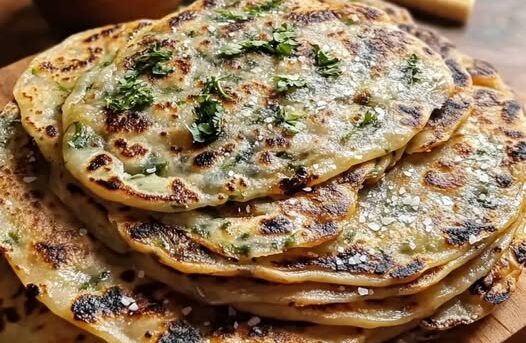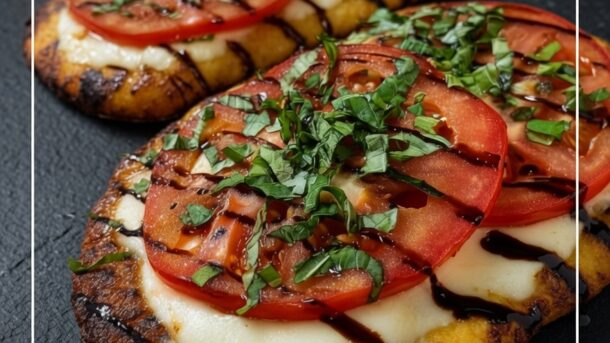
There is a version of this flatbread that is made with store-bought dough, jarred sauce, and a scatter of whatever is in the refrigerator — and it is fine. And then there is this version, which is something else entirely: a thin, cracker-crisp flatbread with a blistered, charred edge and a base so light and airy that it shatters slightly at the first bite; a tomato sauce that has been cooked down from whole crushed tomatoes into something so sweet, so bright, and so deeply savory that it is worth making in a double batch just to have extra in the refrigerator; a vegan mozzarella that stretches and melts and browns in a way that no bought vegan mozzarella does, because it is made from cashews and tapioca and a handful of pantry ingredients in under 5 minutes and then spread directly onto the flatbread before going under a very hot grill; and a finish of fresh basil torn directly over the hot flatbread the moment it comes out of the oven so that the heat of the crust wilts the leaves just slightly, releasing the basil’s volatile oils into every bite without destroying the brightness of the fresh herb. Together, these four elements — the cracker-crisp crust, the concentrated tomato sauce, the stretchy melting mozzarella, and the fresh basil — produce a flatbread that is the best possible version of one of the greatest flavor combinations in the history of cooking, and it is fully, uncompromisingly, deliciously vegan.
The secret is the cold-ferment stretch technique. The flatbread dough in this recipe is mixed the evening before and left in the refrigerator overnight — a minimum 8-hour cold ferment, and up to 48 hours for even more complex flavor. Cold fermentation is slower than room-temperature fermentation: the yeast is active at refrigerator temperatures but sluggish, and the slow, long fermentation that results produces a dough with a far more complex flavor than a quick-rise dough achieves in 1–2 hours at room temperature. The carbon dioxide produced during the long cold ferment creates a more open, more irregular gluten network, which translates to a flatbread with larger, more irregular air pockets and a crumb structure that is simultaneously crisp at the surface and slightly chewy just beneath it — the exact texture that makes a great flatbread so satisfying to eat. The technique also makes the dough significantly easier to stretch: cold, long-fermented dough is more relaxed and more extensible than fresh dough, which tends to spring back when stretched. When the cold-fermented dough is brought to room temperature for 30 minutes before stretching, it stretches thin and stays thin without snapping back, producing the flat, even base that is essential for a flatbread that bakes evenly and crisps uniformly rather than having thick edges and a dense center. Cold fermentation is also the most forgiving technique in bread baking — the dough can sit in the refrigerator for up to 48 hours without overproofing, giving complete flexibility about when the flatbreads are baked.
What makes this recipe so outstanding is the vegan mozzarella — a cashew and tapioca mozzarella that is made by blending soaked cashews with nutritional yeast, tapioca starch, lemon juice, apple cider vinegar, garlic, and salt into a completely smooth liquid, then cooking briefly in a saucepan until the tapioca starch activates and the mixture transforms from a thin, pourable liquid into a thick, stretchy, gooey mass that pulls like real mozzarella, browns like real mozzarella under a hot grill, and has a mild, creamy, slightly tangy flavor that is remarkably similar to fresh mozzarella’s gentle dairy note. The tapioca starch is the ingredient that makes this possible: tapioca produces a uniquely stretchy, stringy gel when heated that no other starch replicates in quite the same way — cornstarch gels firmly, arrowroot gels clear and slightly slippery, but tapioca gels stretchy, and it is that stretch that makes this mozzarella behave like the real thing on a hot flatbread rather than simply melting into an undifferentiated pool. The mozzarella is spooned onto the flatbread in large, irregular dollops — not spread into a uniform layer, because the irregular distribution means some bites are creamy and rich and dominated by the mozzarella, and others are dominated by the tomato, and the variation makes the eating experience significantly more interesting than a uniformly coated flatbread.
This recipe is 100% vegan, dairy-free, and egg-free. It produces four individual flatbreads (each approximately 25–30cm / 10–12 inches in diameter) that are best eaten immediately from the oven while the crust is at peak crispness and the mozzarella is still warm and stretchy.
Recipe Information
| Prep Time | Cook Time | Total Time | Servings | Calories |
|---|---|---|---|---|
| 20 mins | 12 mins | 32 mins (+ overnight ferment) | 4 flatbreads | ~520 kcal |
Ingredients
For the Cold-Ferment Flatbread Dough (Make the Night Before)
- 2½ cups (315g) strong bread flour (the higher protein content of bread flour develops more gluten than all-purpose flour, giving the flatbread its chew; all-purpose flour works but produces a slightly less structured, less chewy result)
- 1 tsp instant yeast (also called fast-action or rapid-rise yeast — it does not need to be dissolved in water first)
- 1 tsp fine salt
- 1 tsp granulated sugar (feeds the yeast during the long ferment)
- 1 tbsp olive oil
- ¾ cup (180ml) lukewarm water (approximately 38°C / 100°F — too hot kills the yeast; too cold slows the initial mixing phase; if in doubt, use tap water that feels warm but not hot against the inside of the wrist)
- Plus: a little extra flour for shaping, and olive oil for the baking surface
For the Quick Tomato Sauce
- 1 can (400g / 14oz) whole peeled tomatoes (whole peeled tomatoes have a better flavor than pre-chopped tinned tomatoes, which are often made from lower-grade fruit; crush them by hand into the pan)
- 2 tbsp olive oil
- 3 cloves garlic, finely minced
- ½ tsp dried oregano
- ½ tsp dried basil
- ½ tsp caster sugar (balances the tomatoes’ acidity)
- ¼ tsp fine salt
- ¼ tsp ground black pepper
- Pinch of red chilli flakes (optional, but adds a background warmth that makes the sauce more complex)
For the Cashew Tapioca Mozzarella
- ¾ cup (105g) raw cashews, soaked in cold water for 4 hours or in boiling water for 30 minutes, then drained and rinsed (soaking softens the cashews for completely smooth blending — if using a high-powered blender such as a Vitamix or Blendtec, soaking can be reduced to 15 minutes in boiling water)
- ½ cup (120ml) water
- 3 tbsp tapioca starch (also called tapioca flour — do not substitute cornstarch or arrowroot, as neither produces the same stretchy, stringy texture)
- 2 tbsp nutritional yeast
- 1 tbsp fresh lemon juice
- 1 tsp apple cider vinegar
- ½ tsp fine salt
- ¼ tsp garlic powder
- 2 tbsp refined coconut oil or vegan butter (adds richness and helps the mozzarella brown under the grill)
For Finishing
- Large handful fresh basil leaves, torn
- Extra-virgin olive oil, for drizzling
- Flaky sea salt, for finishing
- Freshly ground black pepper
- Optional: thin slices of ripe tomato or sundried tomatoes, placed on top of the mozzarella before grilling
Instructions
- Make the flatbread dough (the night before). In a large bowl, whisk together the flour, instant yeast, salt, and sugar. Make a well in the center and add the olive oil and lukewarm water. Mix with a wooden spoon or your hands until a shaggy dough forms, then turn out onto an unfloured surface and knead for 5–6 minutes until smooth, elastic, and slightly tacky but not sticky. Shape into a ball, place in a lightly oiled bowl, cover tightly with plastic wrap or a damp kitchen towel, and refrigerate overnight (minimum 8 hours, maximum 48 hours). The dough will rise slowly in the refrigerator.
- Make the tomato sauce. Heat the olive oil in a small saucepan over medium heat. Add the minced garlic and cook for 60 seconds until fragrant and just beginning to turn golden. Add the crushed whole peeled tomatoes (crush them by squeezing in your fist over the pan), dried oregano, dried basil, sugar, salt, pepper, and chilli flakes. Cook over medium heat, stirring occasionally, for 15–18 minutes until the sauce has reduced and thickened significantly — it should coat the back of a spoon heavily and not be watery. Taste and adjust. Cool before using (a hot sauce steams the dough base and prevents it crisping properly). The sauce keeps in the refrigerator for up to 5 days.
- Make the cashew tapioca mozzarella. Drain the soaked cashews and place in a blender with the water, tapioca starch, nutritional yeast, lemon juice, apple cider vinegar, salt, and garlic powder. Blend on high for 2–3 minutes until completely smooth — stop and scrape down the sides twice; any remaining cashew granules will produce an uneven mozzarella. Pour the smooth liquid into a small saucepan and add the coconut oil. Cook over medium heat, stirring constantly with a silicone spatula, for 4–5 minutes. The mixture will appear smooth and liquid for the first 2–3 minutes, then will suddenly begin to clump, pull away from the sides of the pan, and transform into a thick, stretchy, cohesive mass — this is the tapioca starch activating. Continue stirring vigorously for 1–2 further minutes until the mozzarella is smooth, shiny, and pulling away from the pan in stretchy strings. Remove from heat and set aside.
- Prepare to bake. Remove the dough from the refrigerator 30 minutes before baking to allow it to come to room temperature and relax. Preheat the oven to its maximum temperature (typically 240–250°C / 475°F) with a baking stone, inverted heavy baking sheet, or cast iron pan inside — the hot surface is essential for a crisp base. If using a grill/broiler for the final stage, preheat that too.
- Shape the flatbreads. Divide the dough into 4 equal portions. On a lightly floured surface, use your hands to gently stretch each portion into a thin oval or round approximately 25–30cm (10–12 inches) in diameter and 2–3mm thick. Do not use a rolling pin for the final shaping — the hands feel the resistance of the dough and adjust pressure accordingly, producing a more even, more irregularly beautiful flatbread than a pin. If the dough resists and springs back, cover it with a cloth and let it rest for 5 minutes before continuing.
- Top and bake. Carefully slide the stretched flatbread onto the preheated hot baking surface (use a pizza peel dusted with semolina, or slide it onto parchment paper and transfer using the parchment). Spread 3–4 tablespoons of tomato sauce thinly and evenly over the surface, leaving a 1cm border. Dollop the cashew mozzarella in large, irregular spoonfuls over the tomato sauce — approximately 6–8 spoonfuls per flatbread; resist the temptation to spread it into a uniform layer. Bake at maximum oven temperature for 8–10 minutes until the crust edges are deeply golden and charred in spots and the mozzarella is bubbling and browning.
- Finish and serve. Remove from the oven. Immediately tear fresh basil leaves directly over the hot flatbread. Drizzle with a thin thread of extra-virgin olive oil. Scatter with flaky sea salt and a few grinds of black pepper. Serve immediately — flatbread at peak crispness lasts approximately 5 minutes before the crust begins to soften from the toppings’ steam.
Pro Tips
- The hotter the oven, the better — flatbread baked at 240°C (475°F) on a preheated surface crisps in 8 minutes; flatbread baked at 180°C (350°F) on a cold sheet takes 20 minutes and produces a pale, soft result that lacks the blistered, charred character of a proper flatbread. If your oven has a convection/fan setting, use it — the circulating air accelerates crisping at the surface and is the difference between a flatbread and a pizza.
- Stretch the dough by hand, not with a rolling pin — a rolling pin compresses the gluten structure and pushes out the gas bubbles that the overnight ferment has developed, producing a denser, flatter result. Hand-stretching preserves those bubbles, which expand into the characteristic irregular air pockets and blisters during baking.
- Add the fresh basil after the oven, not before — basil contains volatile aromatic compounds that evaporate rapidly above 60°C (140°F); basil baked on a flatbread for 10 minutes at 240°C tastes of nothing. Added directly to the hot surface the moment the flatbread comes out, it wilts gently and releases its oils without losing them.
- The mozzarella can be made up to 3 days ahead and refrigerated in a sealed container — it firms considerably when cold. Before using, microwave for 20–30 seconds and stir until soft and scoopable again, or bring to room temperature for 30 minutes.
Flatbread and Mozzarella: Two Ancient Foods That Found Each Other in Naples
The story of flatbread and mozzarella finding each other is the story of Naples in the late eighteenth century — but both of the ingredients that made that meeting possible have histories that run far deeper and further than the Neapolitan port city where they were first combined. Flatbread is among the oldest prepared foods in the archaeological record: unleavened flatbreads made from ground grain and water have been found at Neolithic sites across the Middle East, Europe, and Central Asia dating to at least 10,000 BCE, predating pottery (the breads were baked on flat stones beside open fires) and representing one of the earliest examples of grain processing for human consumption. The introduction of leavening — whether through wild yeast contamination, sourdough culture, or the addition of beer barm — followed considerably later, but the flatbread tradition has persisted everywhere that grain is grown, from the lavash of Armenia to the roti of South Asia to the injera of Ethiopia, each expressing the same fundamental idea (grain, water, heat) through the lens of local culture and available grain. Mozzarella’s history is more precisely located: it is a product of the Campania region of southern Italy, where water buffalo (Bubalus bubalis) were introduced (probably by the Normans or the Lombards, depending on which historian you consult) sometime in the medieval period, and where the technique of pasta filata — stretching and folding curd in hot whey until it reaches a smooth, elastic consistency — was developed to process buffalo milk into a fresh cheese that was mild, moist, and extraordinarily meltable. The first documented mention of mozzarella in Campania dates to the twelfth century; by the eighteenth century it was a common street food in Naples, sold fresh from the cheese-makers’ workshops. The flatbread that became pizza was also a Neapolitan street food — the poor man’s meal of the vicoli (the narrow alleyways of Naples’ old city) — and the combination of the two, with tomato (newly arrived from the Americas and initially regarded with deep suspicion by Europeans who believed it to be poisonous) added as a third element, produced the Margherita pizza that is now the most reproduced dish in the world.
Flavor Variations
- Vegan Roasted Garlic and Mushroom Flatbread: Replace the tomato sauce with a white sauce (blend 100g soaked cashews with 120ml water, 2 cloves roasted garlic, 2 tbsp nutritional yeast, salt, and lemon juice until smooth; no cooking required) and top with 200g of thinly sliced cremini or portobello mushrooms sautéed until golden. Finish with fresh thyme and a drizzle of truffle oil.
- Vegan Caramelized Onion and Olive Flatbread: Slowly caramelize 2 large onions in olive oil with a pinch of sugar and salt over low heat for 40 minutes until deeply sweet and golden. Spread over the tomato sauce in place of or alongside the mozzarella, and scatter with sliced Kalamata olives, capers, and fresh rosemary. Finish with flaky salt — a Provençal-style pissaladière variation.
- Vegan Pesto and Sundried Tomato Flatbread: Replace the tomato sauce with a generous spread of vegan pesto (blend 60g fresh basil + 30g pine nuts or walnuts + 2 cloves garlic + 3 tbsp nutritional yeast + 4 tbsp extra-virgin olive oil + salt + lemon juice until smooth) and top with the cashew mozzarella and sliced sundried tomatoes packed in oil. The pesto’s herby brightness is a completely different register from the cooked tomato version.
Nutritional Highlights (Per Flatbread)
| Calories | Protein | Carbs | Fiber | Fat |
|---|---|---|---|---|
| ~520 kcal | 16g | 62g | 5g | 23g |
Storage
- Flatbread dough: After the overnight cold ferment, the dough keeps in the refrigerator for up to 48 hours total. It can also be portioned and frozen (after dividing into 4 balls, place on a parchment-lined tray to freeze solid, then transfer to a freezer bag) for up to 2 months. Thaw overnight in the refrigerator and bring to room temperature for 30 minutes before stretching.
- Tomato sauce: Keeps in a sealed jar in the refrigerator for up to 5 days, or frozen for up to 3 months.
- Cashew mozzarella: Keeps in a sealed container in the refrigerator for up to 3 days. It firms considerably when cold; reheat gently in the microwave for 20–30 seconds or in a saucepan with a tablespoon of water over low heat until soft and scoopable again.
- Baked flatbread: Best eaten immediately. Leftover baked flatbread can be refrigerated for up to 1 day and reheated in a hot oven (220°C / 425°F) directly on the oven rack for 4–5 minutes — it will regain most of its crispness, though not all. Do not microwave baked flatbread; microwaving makes it steam and go soft irreversibly.
Frequently Asked Questions
Can I make this without a baking stone or heavy baking sheet?
Yes — a cast iron skillet or griddle preheated on the stove and then transferred to the oven works well. Alternatively, invert a heavy baking sheet and preheat it in the oven for at least 20 minutes before adding the flatbread; the difference in crispness between a preheated surface and a cold one is significant and worth the 20-minute wait. As a last resort, a room-temperature baking sheet lined with parchment produces a paler, less crisp result but a perfectly edible flatbread.
My cashew mozzarella isn’t stretching — what went wrong?
The stretchy texture of the mozzarella depends on the tapioca starch reaching the correct temperature and being stirred vigorously and continuously during the cooking stage. If the mozzarella has clumped but is not stretchy: it was not stirred vigorously enough during the activation stage (the stretching develops from the mechanical working of the activated starch, similar to the pasta filata technique used for traditional mozzarella). Return it to the heat with 1 tablespoon of water and stir vigorously for 2 further minutes. If the mozzarella is still liquid after 6 minutes of cooking: either the tapioca starch was measured inaccurately (tablespoon measures should be leveled), or a different starch was used — only tapioca produces this stretchy result.
Can I use shop-bought vegan mozzarella instead?
Yes — commercial vegan mozzarella (brands like Violife, Sheese, or Follow Your Heart are widely available) works well on this flatbread and is a legitimate shortcut that produces a very good result. The homemade cashew mozzarella has a creamier, richer flavor and a more convincing stretch, but the flatbread is excellent either way. If using commercial vegan mozzarella, slice or tear it and distribute over the flatbread in the same irregular pattern as described for the homemade version.
Can I make these flatbreads without yeast?
Yes — for a yeasted-dough-free version, make a simple unleavened flatbread by combining 2 cups of all-purpose flour, 1 tsp baking powder, ½ tsp salt, 2 tbsp olive oil, and ¾ cup of warm water. Mix, knead for 2 minutes until smooth, divide into 4, and stretch immediately (no resting required). The result is thinner, crispier, and less chewy than the cold-ferment version — more cracker-like than bread-like — and bakes in 6–7 minutes at maximum oven temperature. It lacks the complex flavor that cold fermentation develops but is a genuinely excellent quick alternative.
Tried this recipe? Leave a comment below and let us know how it turned out! Tag us on Instagram and Facebook — we love seeing your plant-powered creations. Looking for more addictive vegan snack and appetizer recipes? Browse all recipes on Easy Vegan Recipes — new recipes posted every single week!