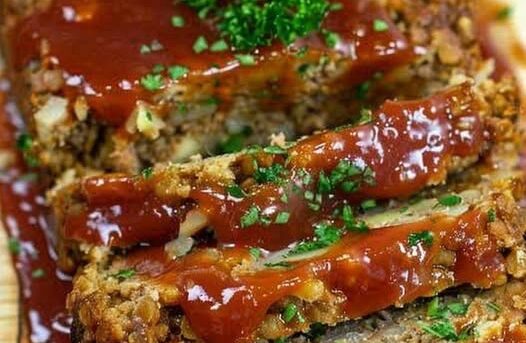
Savory, hearty, and brushed with a sticky sweet-and-tangy tomato glaze, this Vegan Lentil Loaf is the plant-based answer to classic meatloaf. It slices cleanly, holds together beautifully, and tastes deeply savory, with a tender inside and a lightly caramelized top. It needs just one bowl, simple pantry ingredients, and about an hour from start to finish.
The loaf is built on cooked brown or green lentils, which give it a meaty texture and plenty of protein. Rolled oats and breadcrumbs soak up moisture and bind everything, while finely chopped walnuts add richness and a pleasant bite. Sautéed onion, carrot, celery, and garlic build a savory base, and soy sauce, tomato paste, thyme, and smoked paprika add the umami depth that makes it taste like comfort food.
A ground flaxseed “egg” holds the loaf together without any eggs, and the glaze, a simple mix of ketchup, maple syrup, apple cider vinegar, and a touch of mustard, turns glossy and sticky in the oven, just like the classic.
Serve slices with mashed potatoes, roasted vegetables, and gravy for a cozy Sunday dinner, or tuck leftover slices into sandwiches the next day. It is also a favorite for holidays and potlucks.
This recipe is 100% vegan, dairy-free, egg-free, and easily made gluten-free.
Recipe Information
Prep Time
Cook Time
Total Time
Servings
Calories
20 mins
45 mins
1 hr 5 mins
6 slices
~340 kcal
Ingredients
For the Lentil Loaf
1½ cups (about 300g) cooked brown or green lentils (about ¾ cup dry), drained well
1 tbsp olive oil
1 medium yellow onion, finely diced
1 medium carrot, finely grated
1 stalk celery, finely diced
4 cloves garlic, minced
¾ cup (70g) rolled oats
½ cup (55g) walnuts, finely chopped
½ cup (30g) breadcrumbs
2 tbsp tomato paste
2 tbsp soy sauce or tamari
1 tbsp ground flaxseed mixed with 3 tbsp water (flax egg)
1 tsp smoked paprika
1 tsp dried thyme
1 tsp onion powder
½ tsp salt, to taste
¼ tsp black pepper
2 tbsp chopped fresh parsley
For the Sticky Tomato Glaze
⅓ cup (80g) ketchup
1 tbsp maple syrup
1 tbsp apple cider vinegar
1 tsp Dijon mustard
½ tsp garlic powder
Pinch of smoked paprika
To Serve
Mashed potatoes
Roasted green beans or broccoli
Vegan mushroom gravy
Fresh parsley
Cranberry sauce
Optional Additions
Sautéed mushrooms
Chopped sun-dried tomatoes
Vegan cheese in the center
Cooked chestnuts
Instructions
Preheat and prep. Heat the oven to 375°F (190°C). Line a 9×5 inch loaf pan with parchment paper, leaving overhang so you can lift the loaf out.
Make the flax egg. Mix the ground flaxseed with 3 tablespoons of water and let it thicken for 5–10 minutes.
Sauté the vegetables. Heat the oil in a skillet over medium heat. Add the onion, carrot, and celery and cook for 6–8 minutes until soft. Add the garlic and cook for 1 minute. Let cool slightly.
Mash the lentils. In a large bowl, mash about two thirds of the lentils with a fork or potato masher, leaving the rest whole for texture.
Combine. Add the sautéed vegetables, oats, walnuts, breadcrumbs, tomato paste, soy sauce, flax egg, spices, salt, pepper, and parsley. Mix well until the mixture holds together when pressed. If it is too wet, add 1–2 tablespoons of oats. If it is too dry, add a splash of broth.
Pack the pan. Press the mixture firmly into the loaf pan and smooth the top.
Make the glaze. Whisk together the ketchup, maple syrup, vinegar, mustard, garlic powder, and paprika. Spread half of the glaze over the top of the loaf.
Bake. Bake for 30 minutes, then brush on the remaining glaze and bake another 15–20 minutes until the top is sticky and caramelized and the edges are firm.
Rest. Let the loaf rest in the pan for 15 minutes before lifting it out and slicing. This helps it hold together.
Serve. Slice with a sharp knife, garnish with parsley, and serve warm with mashed potatoes and gravy.
Pro Tips for the Best Lentil Loaf
Drain the lentils well. Excess water makes the loaf mushy.
Mash some, not all. A mix of mashed and whole lentils gives the best texture.
Sauté the vegetables first. This removes moisture and builds flavor.
Pack the mixture firmly. Pressing firmly helps the slices hold together.
Rest for 15 minutes. This is the key to clean slices.
Glaze in two stages. Half at the start and half near the end gives a sticky, glossy top.
Use a sharp serrated knife. It slices cleanly without crumbling the loaf.
Why Lentil Loaf Is a Smart Dinner
Lentils are rich in plant protein, fiber, folate, iron, and potassium, which keeps you full and supports digestion. Walnuts add healthy omega-3 fats, and oats contribute soluble fiber, which supports heart health.
Compared with a meat-based meatloaf, this version has no cholesterol and much less saturated fat. A serving provides about 15 grams of plant protein and 9 grams of fiber, so it makes a filling main dish.
Flavor Variations
Mushroom Lentil Loaf: Add 200g of finely chopped, sautéed mushrooms for deeper umami.
BBQ Lentil Loaf: Replace the glaze with barbecue sauce.
Italian Lentil Loaf: Add basil, oregano, and sun-dried tomatoes, and top with marinara.
Nut-Free Version: Replace the walnuts with sunflower seeds or extra oats.
Nutritional Highlights (Per Slice)
Calories
Protein
Carbs
Fiber
Fat
~340 kcal
15g
46g
9g
11g
Storage
Refrigerator: Store sliced or whole in an airtight container for up to 5 days.
Freezer: Wrap slices individually and freeze for up to 3 months. Thaw overnight in the fridge.
Reheating: Warm slices in a 350°F (175°C) oven for 10–15 minutes, or pan-fry for 2 minutes per side.
Make ahead: Assemble the loaf up to 1 day ahead, cover, and bake when ready.
Frequently Asked Questions
Why is my lentil loaf falling apart?
It may be too wet, or it was not rested long enough. Drain the lentils well, add more oats if needed, and rest the loaf for 15 minutes before slicing.
Can I use canned lentils?
Yes. Use two 400g cans, drained and rinsed well, and pat them dry.
Can I make it gluten-free?
Use gluten-free oats and breadcrumbs, and tamari instead of soy sauce.
Can I make it nut-free?
Yes. Replace the walnuts with sunflower seeds or extra oats.
Can I use red lentils?
Brown or green lentils hold their shape better. Red lentils turn very soft and make a mushier loaf.
Can I make it ahead?
Yes. Assemble the loaf up to a day ahead, then bake when ready.
Tried this recipe? Leave a comment below and let us know how it turned out! Tag us on Instagram and Facebook — we love seeing your plant-powered creations. Looking for more hearty vegan dinners? Browse all recipes on Easy Vegan Recipes — new recipes posted every single week!
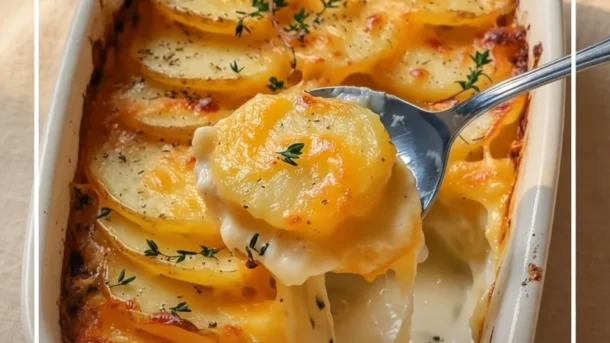
There are side dishes that complete a meal. And then there are side dishes like these Vegan Scalloped Potatoes — the kind that become the meal, that make everything else on the table a pleasant supporting act to the real event happening in the baking dish, that come out of the oven bubbling and golden and smelling so extraordinarily of caramelized cream and garlic and herbs that people are already seated and ready before you have even called them to the table. This is that dish. The one that makes holiday tables feel genuinely special. The one that gets requested at every family gathering from the moment it first appears. The one that is so deeply, warmly, extravagantly comforting that eating it feels like being taken care of in the most fundamental and delicious way possible.
These are scalloped potatoes of extraordinary luxury and extraordinary deliciousness — thin, even slices of tender potato layered in a deep baking dish with a cashew cream sauce of such silky, garlic-scented richness that it is completely and utterly indistinguishable from the finest dairy cream, seasoned generously with fresh thyme, garlic, nutmeg, and an extraordinary amount of nutritional yeast that creates a deep, savory, almost cheesy depth throughout every layer, and baked until the top is deeply golden and slightly crisped while the layers beneath are completely yielding, perfectly tender, and bathed in a sauce that has thickened around them into something that is simultaneously sauce and custard and pure comfort.
What makes this recipe so genuinely outstanding is the cashew cream sauce. Raw cashews soaked briefly in boiling water and blended with garlic, nutritional yeast, lemon, and vegetable broth into the most velvety, dairy-free cream imaginable — a cream so rich, so silky, and so deeply flavored that it performs every function that dairy cream performs in scalloped potatoes, including the slow thickening during baking as its proteins and starches concentrate around the potato layers into a sauce of extraordinary body and richness. There is no compromise here. No thinness. No absence. Just a different and in many ways more interesting path to the same extraordinary result.
This recipe is 100% vegan, naturally gluten-free, ready in 75 minutes of largely unattended baking, and absolutely magnificent served as a holiday side dish, a weeknight comfort dinner, or the centrepiece of any gathering where you want to demonstrate beyond any possible doubt that plant-based cooking is not about deprivation but about genuine, luxurious abundance.
Recipe Information
Prep Time
Cook Time
Total Time
Servings
Calories
20 mins
55 mins
75 mins
6
~380 kcal
Ingredients
For the Cashew Cream Sauce
1½ cups (200g) raw cashews, soaked in boiling water for 20 minutes then drained
2 cups (480ml) vegetable broth
1 cup (240ml) unsweetened oat milk
6 tbsp nutritional yeast
4 cloves garlic, minced
2 tbsp lemon juice
1 tbsp white miso paste
1 tsp onion powder
½ tsp nutmeg
½ tsp salt
¼ tsp white pepper
For the Potato Layers
1.2kg (about 6 medium) Yukon Gold or Russet potatoes, peeled and very thinly sliced
1 medium white onion, very thinly sliced
4 cloves garlic, very thinly sliced
2 tbsp fresh thyme leaves (or 1 tsp dried thyme)
1 tbsp fresh rosemary, very finely chopped
Salt and black pepper for seasoning between layers
For the Top
½ cup (60g) vegan cheese, shredded (optional but spectacular)
1 tbsp vegan butter, cut into small pieces
Extra fresh thyme for garnish
Smoked paprika for color
Optional Add-ins Between Layers
1 cup (150g) frozen spinach, thawed and squeezed dry
1 cup (100g) mushrooms, thinly sliced and sautéed
½ cup (60g) sun-dried tomatoes, roughly chopped
1 medium leek, thinly sliced and softened in olive oil
To Serve
As a holiday side dish alongside roasted vegetables
With a simple green salad
As a main course with crusty bread
Alongside vegan roasts and mains
With steamed green beans or asparagus
At any gathering as the star side dish
Instructions
Preheat the oven and soak the cashews. Preheat your oven to 375°F (190°C) and grease a deep 23 x 33cm (9 x 13 inch) baking dish generously with vegan butter or olive oil. Place the cashews in a bowl, cover with boiling water, and soak for 20 minutes. This soaking time is essential — properly soaked cashews blend to a completely smooth, silky cream. Under-soaked cashews produce a grainy sauce.
Slice the potatoes. While the cashews soak slice the potatoes into very thin, even rounds — approximately 3mm (⅛ inch) thick. A mandoline produces the most consistently thin, even slices and is strongly recommended for this recipe. Consistent slice thickness is critical — uneven slices produce unevenly cooked layers with some pieces perfectly tender while others are still firm. Place the sliced potatoes in a bowl of cold water to prevent browning while you prepare the sauce.
Make the cashew cream sauce. Drain the soaked cashews and place in a high-speed blender with the vegetable broth, oat milk, nutritional yeast, minced garlic, lemon juice, white miso paste, onion powder, nutmeg, salt, and white pepper. Blend on the highest speed for 90 seconds until completely smooth, silky, and flowing with absolutely no graininess or texture remaining. Taste the sauce — it should be deeply savory, slightly tangy, richly flavored, and with a pronounced cheesy depth from the nutritional yeast. Adjust seasoning confidently — this sauce needs to season the entire dish.
Sauté the aromatics. Heat a small amount of olive oil in a skillet over medium heat. Add the thinly sliced onion and cook for 4–5 minutes until softened. Add the sliced garlic and cook for 60 seconds until fragrant. Set aside.
Begin layering. Drain the potato slices and pat dry with kitchen towels — removing surface moisture produces more even cooking and better absorption of the cream sauce. Begin building the layers in the prepared baking dish. Start with a thin layer of cashew cream sauce spread across the base of the dish. Add a single layer of overlapping potato slices — arrange them like overlapping scales, each slice covering approximately half of the previous one for the most even, beautiful presentation. Scatter some of the softened onion and garlic mixture over the potatoes. Season generously with salt and pepper. Scatter fresh thyme and rosemary. Pour a generous ladle of cashew cream sauce over the layer — enough to just cover the potatoes.
Continue layering. Repeat the layering process — potatoes, onion, herbs, seasoning, cream sauce — until all ingredients are used, finishing with a layer of potatoes on top. Pour the remaining cashew cream sauce over the final potato layer — it should come just to the top of the potatoes but not overflow. Press the top layer of potatoes gently into the sauce with the back of a spoon.
Top and cover. If using vegan cheese scatter it evenly over the top potato layer. Dot with the small pieces of vegan butter. Scatter extra thyme leaves and a light dusting of smoked paprika over the surface. Cover the baking dish tightly with aluminum foil — the steam trapped under the foil during the first stage of baking is what cooks the potatoes through to complete tenderness before the top is allowed to brown.
Bake covered then uncovered. Bake covered for 40 minutes until the potatoes are just tender when pierced through the foil with a thin knife — the knife should meet only slight resistance. Remove the foil and bake uncovered for a further 15–20 minutes until the top is deeply golden, slightly crisped at the edges, and the sauce is bubbling vigorously around the sides of the dish.
Rest before serving. Remove from the oven and allow to rest for 10 minutes before serving — this resting time allows the sauce to thicken and set slightly, producing cleaner, more beautiful servings rather than the flowing, loose result of a dish served immediately from the oven. Garnish with fresh thyme leaves and serve directly from the baking dish at the table.
Pro Tips for Perfect Vegan Scalloped Potatoes
Slice the potatoes on a mandoline. Consistent, paper-thin slices are the foundation of great scalloped potatoes — and consistent slices require a mandoline or extremely careful, skilled knife work. Uneven slices produce uneven cooking with some layers perfectly tender and others still firm when the dish is done. A mandoline set to 3mm produces the ideal slice for this recipe.
Season every layer generously. Scalloped potatoes require confident, layered seasoning — salt added only to the sauce will not penetrate every layer evenly. Season each potato layer with salt and pepper before adding the sauce for a dish that is uniformly, deeply seasoned throughout rather than well-seasoned on top and bland in the middle.
Use Yukon Gold potatoes. Yukon Gold potatoes have a naturally buttery flavor, a waxy texture that holds their shape during baking rather than dissolving, and a beautiful golden color that makes the finished dish look particularly appetizing. Russet potatoes also work well — they are starchier and produce a slightly softer result. Avoid red-skinned potatoes which stay too firm.
Blend the cashew sauce for the full 90 seconds. A perfectly smooth, completely lump-free cashew cream requires sustained high-speed blending. Any residual graininess in the sauce will be visible in the finished dish and will affect the texture of the cream as it thickens during baking. Blend until the sauce flows like thick dairy cream with absolutely no texture remaining.
Cover tightly for the first 40 minutes. The steam trapped under the foil during the first stage of baking is essential for cooking the potato layers through to complete tenderness. Uncovering too early produces undercooked potatoes beneath a beautifully browned top — a common and deeply frustrating mistake. Keep covered until the potatoes are just tender before removing the foil to brown the top.
Rest for 10 minutes before serving. The sauce in freshly baked scalloped potatoes is liquid and flowing — resting for 10 minutes allows it to thicken and set to the perfect consistency for serving. A dish served immediately from the oven produces servings that fall apart. A dish rested for 10 minutes produces beautiful, layered servings that hold their shape on the plate.
The History of Scalloped Potatoes
Scalloped potatoes — known in French culinary tradition as gratin dauphinois — is one of the most beloved and most enduringly popular potato preparations in the entire Western culinary canon. The dish originated in the Dauphiné region of southeastern France where it appears in cookbooks as early as the eighteenth century in a form that is essentially identical to the modern preparation — thinly sliced potatoes baked in cream and garlic until tender and golden.
The name scalloped derives from the old English culinary term to scallop — meaning to bake in a sauce in a shallow dish — which was applied to numerous preparations in nineteenth century American cooking. The French original uses nothing more than potatoes, cream, garlic, salt, and pepper — a preparation of such austere simplicity and such extraordinary result that it has remained largely unchanged for over two centuries.
What makes scalloped potatoes so enduringly beloved across cultures and generations is their extraordinary textural transformation during baking. Raw potato slices are firm, starchy, and relatively flavorless. After 55 minutes in a hot oven bathed in cream they become completely yielding, deeply flavored from the garlic and herbs that surround them, and coated in a sauce that has thickened around them during baking into something halfway between cream and custard — simultaneously rich and light, substantial and flowing, warming and luxurious.
This vegan version achieves exactly this transformation through the cashew cream sauce — which behaves during baking in a remarkably similar way to dairy cream, thickening slowly as its proteins concentrate and its starches absorb the moisture released by the potatoes, setting to the characteristic layered, custard-like consistency of the original.
Flavor Variations
Truffle Scalloped Potatoes: Add 2 tablespoons of truffle oil to the cashew cream sauce and finish with a drizzle of additional truffle oil before serving for an extraordinarily luxurious version that is particularly spectacular for holiday entertaining.
Spinach and Artichoke Scalloped Potatoes: Add layers of thawed frozen spinach and roughly chopped artichoke hearts between the potato layers for a version inspired by spinach artichoke dip that is extraordinarily rich and deeply satisfying.
Sweet Potato Scalloped Potatoes: Replace half the regular potatoes with thinly sliced sweet potato for a version with a beautiful orange-and-white layered appearance and a natural sweetness from the sweet potato that contrasts magnificently with the savory cream sauce.
Mushroom Scalloped Potatoes: Add layers of thinly sliced cremini mushrooms sautéed with garlic and thyme between the potato layers for a version with deep, earthy umami richness that makes the finished dish taste significantly more complex than the potato-only version.
Nutritional Highlights (Per Serving)
Calories
Protein
Carbs
Fiber
Fat
~380 kcal
12g
52g
5g
15g
At 380 calories per serving these scalloped potatoes deliver genuine indulgence alongside meaningful nutrition. Potatoes provide complex carbohydrates, Vitamin C, potassium, Vitamin B6, and resistant starch that supports gut microbiome health. The cashew cream sauce contributes 12 grams of plant-based protein per serving alongside heart-healthy monounsaturated fats, magnesium, phosphorus, and zinc. The nutritional yeast provides B vitamins including B12 in fortified varieties alongside all nine essential amino acids. Fresh thyme contributes thymol with potent antimicrobial and antioxidant properties. Garlic contributes allicin with cardiovascular protective and antimicrobial properties.
Storage
Refrigerator: Store cooled scalloped potatoes covered tightly in the baking dish or in an airtight container in the refrigerator for up to 4 days. The dish actually improves significantly on day 2 as the sauce continues to absorb into the potato layers and the flavors deepen and meld. Reheat covered with foil in a 350°F (175°C) oven for 20–25 minutes until heated through, removing the foil for the final 5 minutes to re-crisp the top.
Freezer: Scalloped potatoes freeze well for up to 2 months. Cool completely before covering tightly with plastic wrap and foil. Thaw overnight in the refrigerator and reheat covered in a 350°F (175°C) oven for 30–35 minutes. The texture of the potatoes changes slightly during freezing — they become slightly softer — but the flavor remains excellent.
Make ahead: This is an outstanding make-ahead dish for holidays and entertaining. Assemble completely, cover tightly, and refrigerate for up to 24 hours before baking. Add 10–15 minutes to the covered baking time when cooking from cold. The assembled unbaked dish can also be frozen for up to 1 month — thaw completely in the refrigerator before baking.
Individual portions: Reheat individual portions in a small oven-safe dish at 350°F (175°C) for 15 minutes or in the microwave for 2–3 minutes — adding a splash of plant milk if the sauce has become too thick during storage.
Frequently Asked Questions
What potatoes work best for scalloped potatoes?
Yukon Gold potatoes are the finest choice — their naturally buttery flavor, waxy texture, and beautiful golden color make them ideal for this preparation. They hold their shape during baking without dissolving and their inherent flavor complements the cashew cream sauce beautifully. Russet potatoes produce a slightly softer, starchier result that some people prefer. Avoid red-skinned potatoes which stay too firm even after extended baking.
Why are my scalloped potatoes still firm after baking?
Firm potatoes after the full baking time are caused by potato slices that are too thick, insufficient liquid in the sauce, or potatoes that were not covered tightly during the first stage of baking. Slice potatoes to a maximum of 3mm thickness, ensure the sauce comes just to the top of the final potato layer before baking, and keep the foil on tightly for the full first 40 minutes of baking.
Can I make this recipe without a blender?
Yes — use store-bought vegan cream cheese or vegan heavy cream as the base instead of the cashew cream. Combine 300g of vegan cream cheese with 2 cups of vegetable broth, the nutritional yeast, garlic, lemon juice, and seasonings and whisk vigorously until smooth. The result will be slightly different in flavor but still deeply creamy and delicious.
How thin should I slice the potatoes?
Approximately 3mm (⅛ inch) is the ideal thickness — thin enough to become completely tender during baking and to absorb the cream sauce fully, thick enough to retain some structure and integrity in the finished dish rather than dissolving into mush. A mandoline set to the thinnest setting and then backed up slightly produces the ideal slice consistently.
Can I add cheese to this recipe?
Yes — a generous layer of shredded vegan cheese on top before the final uncovered baking produces a beautiful golden, slightly crisped cheese topping that adds visual drama and additional savory depth. Vegan mozzarella, vegan cheddar, or vegan Gruyère style cheese all work beautifully. Add in the final 15–20 minutes of uncovered baking for the best melt and color.
Is this dish suitable for holiday entertaining?
This is one of the finest dishes available for holiday entertaining — it assembles in advance, bakes largely unattended, improves when made a day ahead, feeds a crowd generously from a single dish, and produces a presentation so beautiful and a flavor so extraordinary that it consistently becomes the most discussed dish at any gathering where it appears.
Tried this recipe? Leave a comment below and let us know how it turned out! Tag us on Instagram and Facebook — we love seeing your plant-powered creations. Looking for more indulgent vegan side dish and comfort food recipes? Browse all recipes on Easy Vegan Recipes — new recipes posted every single week!
We use cookies on our website to give you the most relevant experience by remembering your preferences and repeat visits. By clicking “Accept”, you consent to the use of ALL the cookies.
This website uses cookies to improve your experience while you navigate through the website. Out of these, the cookies that are categorized as necessary are stored on your browser as they are essential for the working of basic functionalities of the website. We also use third-party cookies that help us analyze and understand how you use this website. These cookies will be stored in your browser only with your consent. You also have the option to opt-out of these cookies. But opting out of some of these cookies may affect your browsing experience.
Necessary cookies are absolutely essential for the website to function properly. These cookies ensure basic functionalities and security features of the website, anonymously.
Cookie
Duration
Description
cookielawinfo-checkbox-analytics
11 months
This cookie is set by GDPR Cookie Consent plugin. The cookie is used to store the user consent for the cookies in the category "Analytics".
cookielawinfo-checkbox-functional
11 months
The cookie is set by GDPR cookie consent to record the user consent for the cookies in the category "Functional".
cookielawinfo-checkbox-necessary
11 months
This cookie is set by GDPR Cookie Consent plugin. The cookies is used to store the user consent for the cookies in the category "Necessary".
cookielawinfo-checkbox-others
11 months
This cookie is set by GDPR Cookie Consent plugin. The cookie is used to store the user consent for the cookies in the category "Other.
cookielawinfo-checkbox-performance
11 months
This cookie is set by GDPR Cookie Consent plugin. The cookie is used to store the user consent for the cookies in the category "Performance".
viewed_cookie_policy
11 months
The cookie is set by the GDPR Cookie Consent plugin and is used to store whether or not user has consented to the use of cookies. It does not store any personal data.
Functional cookies help to perform certain functionalities like sharing the content of the website on social media platforms, collect feedbacks, and other third-party features.
Performance cookies are used to understand and analyze the key performance indexes of the website which helps in delivering a better user experience for the visitors.
Analytical cookies are used to understand how visitors interact with the website. These cookies help provide information on metrics the number of visitors, bounce rate, traffic source, etc.
Advertisement cookies are used to provide visitors with relevant ads and marketing campaigns. These cookies track visitors across websites and collect information to provide customized ads.