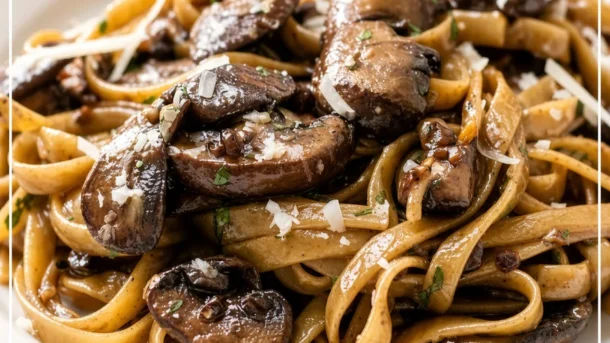
Mushrooms and balsamic vinegar is one of those flavour pairings that seems almost too obvious until you taste it done correctly — and then it becomes one of the combinations you reach for again and again. The earthy, meaty depth of well-cooked mushrooms against the sweet, complex acidity of reduced balsamic vinegar; the two flavours amplifying each other rather than competing; the sauce that clings to the pasta in a dark, glossy coat that looks as impressive as anything that has spent hours on the stove. This balsamic mushroom pasta is 100% plant-based, dairy-free, and egg-free. It serves 4. It is on the table in 30 minutes. It uses one pan for the sauce and one pot for the pasta. It is the kind of weeknight dinner that earns the compliment “you made this in 30 minutes?” — and the answer is yes, because the technique is the reason, not the ingredient list.
The technique is the deglaze-reduce-and-emulsify method. The failure mode of most mushroom pasta recipes is the pale, watery sauce: mushrooms are added to a pan and immediately begin releasing their internal moisture — up to 80–90% of their weight in water — which creates a steamy, liquid environment that prevents the mushrooms from browning and produces a thin sauce that coats nothing and flavours little. The deglaze-reduce-and-emulsify method reverses this through three sequential stages that transform mushroom moisture from an obstacle into a building block. Stage one — the dry sear: mushrooms are cooked in a large, wide pan in a single layer over high heat without any liquid added — no stock, no wine, no water; just oil and heat. In these conditions, the mushroom moisture evaporates from the surface as fast as it is released, keeping the pan surface dry enough to maintain the Maillard browning conditions that produce the deeply golden, almost caramelised mushroom exterior that is the foundation of the sauce’s flavour. If mushrooms are crowded in the pan they steam each other and never brown; if they are given space and high heat they brown rapidly and deeply. Stage two — the balsamic deglaze and reduction: once the mushrooms are golden, balsamic vinegar is added to the hot pan and bubbles violently on contact, dissolving the browned fond from the base of the pan (which carries the concentrated flavour from the mushroom sear) into the liquid; the balsamic then reduces over high heat for 2–3 minutes, concentrating from a thin vinegar into a thick, syrupy glaze that coats the mushrooms in a lacquered shell of sweet-acidic intensity. Stage three — the pasta water emulsification: reserved pasta cooking water, added to the glazed mushrooms alongside the drained pasta, provides the starch that emulsifies the balsamic reduction and any remaining fat in the pan into a cohesive sauce that clings to the pasta strands rather than pooling at the bottom of the bowl.
This recipe serves 4.
Recipe Information
| Prep Time | Cook Time | Total Time | Servings | Calories |
|---|---|---|---|---|
| 10 mins | 20 mins | 30 mins | 4 | ~450 kcal |
Ingredients
For the Pasta
- 400g (14oz) dried pasta — tagliatelle, pappardelle, or rigatoni; tagliatelle and pappardelle coat particularly well with this sauce; rigatoni is the best short-pasta option as its ridges and hollow interior trap the sauce
For the Balsamic Mushroom Sauce
- 700g (25oz) mixed mushrooms — a combination of two or three varieties produces more complex flavour than a single variety; chestnut (cremini) and portobello form the base; shiitake adds umami; oyster adds delicacy and texture; avoid button mushrooms as the sole mushroom — they have too high a water content and too mild a flavour for a sauce that relies on mushroom depth
- 5 cloves garlic, thinly sliced
- 1 medium shallot or ½ small red onion, finely diced
- 3 tbsp olive oil — divided; the pan needs sufficient oil to coat the mushrooms and allow Maillard browning rather than steaming
- 3 tbsp good-quality balsamic vinegar — quality matters here; a thin, sour balsamic produces a sharp, one-dimensional reduction; a thick, slightly sweet aged balsamic (look for “invecchiato” or “riserva” on the label, or a balsamic glaze) produces a rounded, complex reduction; do not substitute balsamic glaze at the same volume — glaze is already reduced, so use 1–2 tbsp
- 2 tbsp soy sauce or tamari — provides additional umami depth that amplifies the mushroom flavour; the soy does not make the dish taste Asian in character but rounds and deepens the overall savouriness of the sauce
- 1 tbsp vegan block butter — added at the end of cooking; enriches the sauce and gives it a glossy finish
- 1 tsp fresh thyme leaves — or ½ tsp dried thyme; thyme has a natural affinity with both mushrooms and balsamic
- 1 tsp fresh rosemary, very finely minced — optional; adds a piney, resinous note; use sparingly
- ½ tsp chilli flakes — optional; adds background warmth
- 1 cup (240ml) pasta cooking water — reserved before draining; essential for emulsifying the sauce
- Sea salt and freshly cracked black pepper
To Serve
- Fresh flat-leaf parsley, roughly chopped — scattered generously over the finished dish
- Nutritional yeast or vegan parmesan-style cheese — for serving
- Extra virgin olive oil — a drizzle over the finished bowl
- Fresh lemon wedges — optional; a squeeze of lemon at the table brightens the richness of the balsamic
Instructions
- Salt the pasta water and cook. Bring a large pot of water to a rolling boil. Salt generously. Cook the pasta according to the packet instructions minus 1 minute — it should be almost done but with a faint chalky core when bitten. Before draining, scoop out at least 1 cup (240ml) of pasta cooking water. Drain the pasta and set aside.
- Prepare the mushrooms. While the water is heating, clean the mushrooms — wipe with a damp cloth rather than washing under running water (washing adds the moisture you are trying to eliminate). Tear larger mushrooms (portobello, oyster) into irregular pieces by hand; slice chestnut and shiitake mushrooms thickly (approximately 5mm). Keeping the pieces large preserves texture in the final dish.
- Sear the mushrooms — dry sear stage. Heat 2 tablespoons of olive oil in the largest wide frying pan or sauté pan available over high heat until the oil is shimmering and almost smoking. Add the mushrooms in a single layer — do not crowd; work in two batches if necessary. Do not stir or move them for the first 2–3 minutes. When the underside is deeply golden and the mushroom has released most of its moisture and contracted to roughly half its original size, toss and cook for a further 1–2 minutes. Remove the first batch and sear the second in the same way, adding the remaining tablespoon of oil if needed. Return all the mushrooms to the pan.
- Add aromatics. Reduce the heat to medium. Push the mushrooms to the edges of the pan. Add the finely diced shallot to the centre and cook for 2 minutes until softened. Add the sliced garlic, thyme, rosemary (if using), and chilli flakes. Cook for 60–90 seconds until the garlic is fragrant and pale golden — not brown.
- Deglaze and reduce — balsamic stage. Increase the heat to high. Pour the balsamic vinegar and soy sauce directly into the pan — the liquid will spit and steam violently. Stir quickly, scraping up all the browned fond from the base of the pan. Let the balsamic reduce, stirring occasionally, for 2–3 minutes until it has thickened to a syrupy consistency and the mushrooms are coated in a dark, glossy glaze. The reduction is ready when a spatula dragged across the base of the pan leaves a clear line for a moment before the glaze flows back.
- Finish with pasta and emulsify — emulsify stage. Add the drained pasta directly to the glazed mushrooms in the pan. Add the reserved pasta cooking water in two or three additions — approximately a third at a time — tossing continuously between additions. Add the vegan block butter. Continue tossing over medium heat for 1–2 minutes until the sauce has emulsified into a cohesive, glossy coating that clings to every strand of pasta. The sauce should look silky and uniform, not watery or greasy. Add more pasta water if the sauce becomes too thick; the pasta continues to absorb liquid as it sits.
- Taste and season. Remove from the heat. Taste and adjust salt and black pepper generously. The balsamic and soy sauce contribute significant saltiness — taste before adding additional salt.
- Serve. Divide between warmed bowls. Scatter generously with fresh parsley. Add a drizzle of extra virgin olive oil and a grating of vegan parmesan or a spoonful of nutritional yeast. Serve immediately with lemon wedges on the side.
Pro Tips
- Cook the mushrooms in batches — this is the most important instruction in the recipe and the one most commonly ignored; a pan crowded with mushrooms cannot maintain the high surface temperature needed for Maillard browning because the collective moisture released by the mushrooms drops the pan temperature and creates a steaming environment; each mushroom piece needs direct contact with a hot, dry pan surface; use the largest pan you own and still cook in two batches if necessary; the patience required is the 3–4 minutes it takes to sear each batch — the flavour payoff is entirely disproportionate to the effort.
- Don’t add salt to the mushrooms during searing — salt draws moisture out of the mushrooms through osmosis, creating a wet, steamy environment in the pan at precisely the moment when you need it dry; add salt after the mushrooms are seared and the balsamic has been added; the soy sauce added with the balsamic provides seasoning at the correct stage.
- Use a large, wide pan — the surface area of the pan is as important as the heat; a small pan forces the mushrooms into a pile rather than a single layer and makes batch cooking necessary even with modest quantities; a large (28–30cm) frying pan or sauté pan allows more mushrooms to sear simultaneously and reduces the total batch time.
- Reduce the balsamic until it coats — the deglaze is only the beginning; the balsamic needs to reduce for 2–3 minutes at high heat after it hits the pan to transform from vinegar into glaze; added as a brief splash and immediately covered with pasta water or stock, it contributes acidity without depth; reduced to a syrup before the pasta is added, it contributes sweetness, complexity, and the glossy coating that makes this sauce look and taste as though it has been working for hours.
Balsamic Vinegar: The Long Patience of Modena
Balsamic vinegar — aceto balsamico — is the product of a fermentation and ageing process so slow, so demanding, and so specific to a small region of northern Italy that the authentic version of the product bears almost no resemblance to the bottle of dark vinegar available in every supermarket in the world. Traditional Balsamic Vinegar of Modena (Aceto Balsamico Tradizionale di Modena, protected under European PDO designation) begins with the must of Trebbiano and Lambrusco grapes grown in the province of Modena in Emilia-Romagna: the must — the crushed grape juice, skins, seeds, and all — is cooked slowly over an open fire until it has reduced to approximately one-third of its original volume, concentrating its sugars to a thick, dark syrup called mosto cotto. This cooked must is then transferred to a battery of barrels made from different woods — traditionally a succession of decreasing sizes, made from oak, cherry, chestnut, mulberry, ash, and juniper — and aged through a process of annual transfers between barrels that concentrates the liquid further each year as it evaporates through the wood. A balsamic labelled “Tradizionale” and bearing the consortium’s certification has been aged for a minimum of 12 years; the “Extra Vecchio” grade has been aged for 25 years or more. The result is a dense, syrupy, deeply complex liquid — sweet and sour simultaneously, with layers of fruit, wood, and age — that is used in Modena not as a salad dressing but as a finishing condiment, applied in drops to sliced aged Parmigiano-Reggiano, strawberries, or grilled meat. What is sold in supermarkets as “balsamic vinegar of Modena” — the commercially produced version, protected under a separate IGP designation — is an entirely different product: wine vinegar with grape must added, aged for as little as 60 days, and thickened with caramel or concentrate. It is useful and widely used (including in this recipe) but it is not what the citizens of Modena mean when they say balsamico. The best commercially available supermarket balsamic — not the cheapest, but the one with the thickest consistency and the most rounded flavour — is the appropriate choice for this pasta; a few tablespoons reduced into the mushroom pan becomes something genuinely excellent.
Flavor Variations
- Creamy Balsamic Mushroom Pasta: After the balsamic reduction, stir in 150ml of vegan single cream or oat cream before adding the pasta. Allow the cream to come to a simmer and reduce slightly before adding the pasta and pasta water. The cream version is richer, paler, and more indulgent — the balsamic acidity cuts through the cream beautifully, preventing the sauce from feeling heavy.
- Balsamic Mushroom and Spinach Pasta: Add 100g of fresh baby spinach to the pan immediately after the balsamic reduction — the spinach wilts in the residual heat in 60–90 seconds. Proceed with adding the pasta and pasta water as directed. The spinach adds colour, iron, and a slightly mineral note that pairs particularly well with the deep, sweet balsamic glaze.
- Balsamic Mushroom and Sun-Dried Tomato Pasta: Add 60g of oil-packed sun-dried tomatoes (drained and roughly chopped) to the pan alongside the garlic. The concentrated sweetness and acidity of the sun-dried tomatoes adds another layer of flavour that amplifies the balsamic reduction rather than competing with it. Finish with fresh basil rather than parsley.
Nutritional Highlights (Per Serving — Based on 4 Servings)
| Calories | Protein | Carbs | Fiber | Fat |
|---|---|---|---|---|
| ~450 kcal | 14g | 68g | 5g | 14g |
Storage
- Best eaten immediately — this pasta is at its best the moment it leaves the pan; the balsamic glaze continues to absorb into the pasta on standing and the emulsified sauce can break if reheated carelessly.
- Refrigerator: Store in a sealed container for up to 3 days. The pasta will absorb all remaining sauce during storage and look dry when cold — this is normal.
- Reheating: Add the cold pasta to a pan with a generous splash of water (3–4 tablespoons) and a small knob of vegan block butter over medium heat. Toss continuously for 2–3 minutes until heated through and the sauce has re-emulsified. A small additional splash of balsamic vinegar (½ teaspoon) added on reheating restores some of the brightness that mellows during storage.
- Freezer: Not recommended — the mushroom texture and the emulsified pasta sauce both suffer significantly through freezing and thawing.
- Mushroom sauce alone: The balsamic mushroom sauce (without pasta) stores beautifully in the refrigerator for up to 4 days and freezes well for up to 2 months. Make the sauce in advance and cook fresh pasta to serve with it — a more flexible approach for batch cooking.
Frequently Asked Questions
Why are my mushrooms releasing lots of water and not browning?
The pan is too small, too cold, or too crowded — all three create the same result: a steamy, wet environment in which the mushrooms cannot brown. Use the largest pan you own, heat it until the oil is shimmering and almost smoking before adding the mushrooms, and cook in batches with space between each piece. Do not stir for the first 2–3 minutes — undisturbed contact with the hot surface is what creates the browning. Do not add salt until after searing.
Can I use dried mushrooms instead of fresh?
Dried mushrooms can be used as a flavour supplement but not as the primary mushroom in this recipe — they produce too concentrated a flavour and too little texture for a pasta sauce that relies on the chew and substance of well-seared fresh mushrooms. Soak 20g of dried porcini mushrooms in 200ml of hot water for 20 minutes; chop the rehydrated mushrooms finely and add them to the pan after searing the fresh mushrooms; strain the soaking liquid through a fine sieve and add it with the pasta water for an exceptional depth of flavour.
Can I use red wine vinegar instead of balsamic?
Red wine vinegar has a sharper, more purely acidic flavour without the sweetness that balsamic develops during its production and reduction. It can be used but produces a noticeably different (more acidic, less rounded) sauce. If substituting, use 2 tablespoons of red wine vinegar and add 1 teaspoon of maple syrup to compensate for the missing sweetness. A balsamic glaze from a bottle (thicker, pre-reduced) is a closer substitute than red wine vinegar.
My sauce is too thick/too thin — how do I fix it?
Too thick: add pasta cooking water one tablespoon at a time, tossing between additions, until the sauce reaches a consistency that coats the pasta without clumping. Too thin: continue tossing over medium heat — the residual starch in the pasta and the pasta water will thicken the sauce within 1–2 minutes of sustained tossing; alternatively, add a small additional splash of balsamic vinegar (½ tablespoon) and reduce briefly.
Tried this recipe? Leave a comment below and let us know how it turned out! Tag us on Instagram and Facebook — we love seeing your plant-powered creations. Looking for more addictive vegan snack and appetizer recipes? Browse all recipes on Easy Vegan Recipes — new recipes posted every single week!