Vegan red lentil kebabs made with spices and herbs. A protein-rich, gluten-free plant-based recipe for meals or snacks.
🧾 Ingredients
1 cup red lentils, rinsed
2 cups water
½ cup onion, finely chopped
2 cloves garlic, minced
¼ cup fresh parsley, chopped
2 tbsp olive oil
½ cup breadcrumbs (or gluten-free crumbs)
1 tsp cumin
1 tsp paprika
½ tsp ground coriander
½ tsp salt
¼ tsp black pepper
1 tbsp lemon juice
👩🍳 Instructions
1️⃣ First, add the red lentils and water to a saucepan. Bring to a boil, then simmer until soft and thick, about 10–12 minutes.
2️⃣ Next, drain any excess liquid and let the lentils cool slightly.
3️⃣ Then, transfer the lentils to a bowl and mash until mostly smooth.
4️⃣ After that, add onion, garlic, parsley, olive oil, breadcrumbs, spices, salt, pepper, and lemon juice. Mix well.
5️⃣ Meanwhile, shape the mixture into oval kebabs or patties.
6️⃣ Next, heat a pan over medium heat with a little oil.
7️⃣ Then, cook the kebabs for 3–4 minutes per side until golden and firm.
8️⃣ Finally, remove from heat and serve warm.
💡 Tips & Variations
For baking, cook at 400°F (200°C) for 20 minutes, flipping halfway.
Alternatively, air fry at 375°F for 12–15 minutes.
For extra spice, add chili flakes or cayenne.
For Mediterranean flavor, mix in cumin and mint.
Additionally, serve with hummus or tahini sauce.
🌟 Benefits of Vegan Red Lentil Kebabs
First, red lentils are rich in plant-based protein. Additionally, they provide fiber for digestion. Moreover, this recipe is naturally gluten-free. Furthermore, lentils support heart health. In addition, these kebabs are budget-friendly and filling. Finally, they make a satisfying meat-free meal.
📊 Nutrition Facts (Per Serving – Approximate)
Calories: 230
Protein: 11g
Carbohydrates: 30g
Fiber: 8g
Fat: 7g
Saturated Fat: 1g
Sugar: 2g
Sodium: 320mg
🧒 Kid-Friendly Version
For kids, reduce the spices and skip garlic if needed. Shape the mixture into small nuggets instead of kebabs. Serve with ketchup or dairy-free yogurt dip for easy dipping.
Soft vegan ube swirl shokupan with fluffy dairy-free Japanese milk bread and naturally sweet purple yam flavor.
🧾 Ingredients
Tangzhong (Water Roux)
3 tbsp bread flour
½ cup plant-based milk
Bread Dough
2½ cups bread flour
¼ cup sugar
2¼ tsp instant yeast
½ tsp salt
½ cup warm plant-based milk
3 tbsp vegan butter, softened
Ube Swirl
½ cup ube halaya (purple yam jam)
1 tbsp plant-based milk
👩🍳 Instructions
1️⃣ First, whisk flour and milk in a saucepan. Cook over low heat until thick. Cool completely.
2️⃣ Next, mix bread flour, sugar, yeast, and salt in a bowl.
3️⃣ Then, add warm milk, vegan butter, and tangzhong. Knead until smooth and elastic.
4️⃣ After that, cover and let the dough rise until doubled, about 1 hour.
5️⃣ Meanwhile, mix ube halaya with milk until spreadable.
6️⃣ Then, roll the dough into a rectangle. Spread ube evenly on top.
7️⃣ Next, roll tightly into a log. Cut lengthwise to expose the swirl.
8️⃣ Afterward, twist gently and place in a greased loaf pan.
9️⃣ Finally, let rise again for 30 minutes. Bake at 350°F (175°C) for 30–35 minutes until golden.
💡 Tips & Variations
For deeper color, add a few drops of ube extract.
Alternatively, swirl in matcha or chocolate spread.
For extra softness, brush with vegan butter after baking.
Additionally, bake in a Pullman pan for classic shokupan shape.
🌟 Benefits of Vegan Ube Swirl Shokupan
First, tangzhong creates an ultra-soft texture. Additionally, ube adds antioxidants and natural sweetness. Moreover, this bread is dairy-free and egg-free. Furthermore, it stays soft longer than regular bread. In addition, it’s versatile for toast, sandwiches, or dessert. Finally, it’s visually stunning and bakery-worthy.
📊 Nutrition Facts (Per Slice – Approximate)
Calories: 210
Protein: 6g
Carbohydrates: 36g
Fiber: 2g
Fat: 5g
Saturated Fat: 2g
Sugar: 9g
Sodium: 180mg
🧒 Kid-Friendly Version
To make this bread kid-friendly, reduce the ube amount for a lighter flavor. Slice thick and serve with fruit jam or dairy-free butter for a fun and colorful snack.
Creamy vegan key lime pie trifle layered with zesty lime, dairy-free cream, and cookie crumbs. A refreshing plant-based dessert.
🧾 Ingredients
Crust Layer
1½ cups vegan graham cracker crumbs
¼ cup melted coconut oil or vegan butter
2 tbsp maple syrup
Key Lime Cream Layer
1½ cups full-fat coconut milk (chilled)
½ cup dairy-free cream cheese
½ cup fresh key lime juice
⅓ cup maple syrup
Zest of 2 limes
1 tsp vanilla extract
Whipped Topping
1 cup coconut cream (chilled)
2 tbsp powdered sugar
👩🍳 Instructions
1️⃣ First, mix graham cracker crumbs, melted coconut oil, and maple syrup until combined.
2️⃣ Next, press the mixture lightly into the bottom of a trifle dish or individual glasses.
3️⃣ Then, blend coconut milk, dairy-free cream cheese, lime juice, maple syrup, lime zest, and vanilla until smooth.
4️⃣ Meanwhile, whip coconut cream with powdered sugar until fluffy.
5️⃣ Afterward, layer lime cream over the crust, followed by whipped topping.
6️⃣ Repeat the layers until the dish is filled.
7️⃣ Finally, chill for at least 2 hours before serving for best texture.
💡 Tips & Variations
For extra tang, add more lime zest.
Alternatively, use lemon juice for a lemon trifle.
For gluten-free, use GF graham crackers.
For added crunch, layer toasted coconut or nuts.
Additionally, serve in jars for parties.
🌟 Benefits of Vegan Key Lime Pie Trifle
First, this dessert is completely dairy-free and egg-free. Additionally, key lime juice adds vitamin C. Moreover, coconut cream provides satisfying richness. Furthermore, it’s a no-bake recipe, saving time and energy. In addition, it’s naturally sweetened with maple syrup. Finally, it’s light, refreshing, and perfect for warm weather.
📊 Nutrition Facts (Per Serving – Approximate)
Calories: 360
Protein: 4g
Carbohydrates: 34g
Fiber: 3g
Fat: 24g
Saturated Fat: 17g
Sugar: 22g
Sodium: 210mg
🧒 Kid-Friendly Version
To make this trifle kid-friendly, reduce lime juice slightly for a milder flavor. Use vanilla cookies instead of graham crackers and top with dairy-free white chocolate chips or colorful fruit.
Quick vegan paratha that’s soft, flaky, and dairy-free. Moreover, it’s easy to make and perfect for breakfast, lunch, or dinner.
🛒 Ingredients You’ll Need (Makes 6 Parathas)
2 cups whole wheat flour
½ tsp salt
1 tbsp oil
¾ cup warm water (as needed)
Extra flour for rolling
Oil for cooking
🔪 Preparing the Dough
First, add flour and salt to a bowl and mix well. Then, add oil and rub it into the flour. Next, slowly add warm water and knead into a soft dough. Afterward, cover and rest the dough for 10–15 minutes for best texture.
🍳 How to Make Quick Vegan Paratha
To begin, divide the dough into equal balls. Then, roll each ball into a small circle, brush lightly with oil, and sprinkle flour.
Next, fold the dough and roll again into a flat disc. After that, heat a pan over medium heat and cook the paratha.
Finally, flip and cook both sides until golden brown, brushing lightly with oil. Serve hot.
⭐ Tips for Soft & Flaky Paratha
Firstly, rest the dough to improve softness.
Additionally, don’t overuse flour while rolling.
Moreover, cook on medium heat for even browning.
Finally, keep cooked parathas covered to retain moisture.
🔄 Variations to Try
Plain Paratha: Skip folding for faster cooking
Herbed Paratha: Add chopped cilantro or green onions
Garlic Paratha: Mix grated garlic into the dough
Stuffed Version: Fill with mashed potatoes or vegetables
Whole-Grain Boost: Mix in oat or millet flour
💚 Health Benefits
Whole wheat flour provides fiber and sustained energy. Moreover, this paratha is cholesterol-free and dairy-free. Because it’s homemade, you control the oil and ingredients. As a result, it’s a healthier alternative to store-bought flatbreads.
There are pasta dishes that define what pasta can be. And then there are dishes like this Vegan Spaghetti Carbonara — the kind that makes you understand in a single forkful exactly why carbonara became one of the most beloved pasta preparations in the entire world, that coats every strand of spaghetti in a sauce so silky, so deeply savory, so perfectly balanced between richness and lightness that it seems to defy the logic of its own simplicity, and that does all of this without a single egg, without a gram of guanciale, and without a trace of Pecorino Romano. This is that carbonara. The one that makes Italians pause. The one that makes people who have eaten the dairy original their entire lives set down their forks and genuinely reconsider what they thought they knew about plant-based cooking. The one that is simultaneously the most technically satisfying and the most deeply delicious pasta you will make all week.
Traditional carbonara is a dish of extraordinary elegance built on a foundation of radical simplicity — eggs, cured pork, Pecorino Romano, black pepper, and pasta cooking water combined with such precise technique that the eggs are cooked by the heat of the pasta alone into a sauce of remarkable silkiness without ever scrambling. It is one of the great technical achievements of Italian cooking and one of the most difficult pasta preparations to execute correctly even with the original ingredients.
This vegan version replicates every sensory element of the original through plant-based means that are arguably more interesting than the dairy equivalents. Silken tofu blended with nutritional yeast, white miso, and turmeric creates a sauce base with the same silky, egg-like consistency and deeply savory flavor that eggs provide in the original. Smoked tempeh or vegan bacon provides the smoky, salty, slightly fatty element that guanciale contributes. Reserved pasta cooking water — starchy, hot, and emulsifying — creates the glossy, coating sauce that is the defining characteristic of great carbonara. And an extraordinary amount of freshly cracked black pepper — more than seems reasonable, more than seems comfortable — provides the specific warm, slightly floral heat that gives carbonara its characteristic depth.
This recipe is 100% vegan, ready in just 25 minutes, and absolutely spectacular served immediately — carbonara waits for no one and no one who is eating this pasta should be made to wait for anything.
Recipe Information
Prep Time
Cook Time
Total Time
Servings
Calories
10 mins
15 mins
25 mins
4
~480 kcal
Ingredients
For the Carbonara Sauce
300g silken tofu, drained
4 tbsp nutritional yeast
1 tbsp white miso paste
1 tbsp lemon juice
1 tsp garlic powder
¼ tsp turmeric (for the characteristic golden color)
½ tsp salt
¼ tsp white pepper
For the Smoky Vegan Bacon
200g smoked tempeh or vegan bacon, diced into small pieces
1 tbsp olive oil
1 tbsp soy sauce or tamari
1 tsp smoked paprika
½ tsp maple syrup
¼ tsp black pepper
For the Pasta
400g spaghetti or linguine
1 tbsp salt (for pasta water)
1 cup (240ml) pasta cooking water, reserved before draining
For Finishing
2 tsp freshly cracked black pepper — this is non-negotiable and should be more than seems reasonable
Additional nutritional yeast for serving
Fresh parsley, finely chopped
Extra black pepper at the table
Optional Add-ins
1 cup (30g) fresh baby spinach (stir in with the sauce)
½ cup (60g) frozen peas (add to pasta water in final minute)
4 cloves roasted garlic, mashed into the sauce
1 tbsp capers for brininess
Vegan Parmesan for serving
Instructions
Make the silken tofu carbonara sauce. Place the drained silken tofu, nutritional yeast, white miso paste, lemon juice, garlic powder, turmeric, salt, and white pepper in a blender. Blend on high speed for 60–90 seconds until completely smooth, silky, and flowing like a thick cream. Taste the sauce — it should be deeply savory, slightly tangy, with a rich umami depth from the miso and nutritional yeast. Adjust seasoning as needed. Set aside.
Cook the smoky vegan bacon. Heat the olive oil in a large skillet over medium-high heat. Add the diced smoked tempeh or vegan bacon and cook for 3–4 minutes, stirring occasionally, until golden and beginning to crisp. Add the soy sauce, smoked paprika, maple syrup, and black pepper and stir to coat. Cook for a further 2 minutes until the tempeh is deeply golden, slightly sticky, and smelling extraordinary. Remove from the pan and set aside — reserve the pan for finishing the pasta.
Cook the pasta. Bring a large pot of generously salted water to a vigorous boil. Add the spaghetti and cook according to package instructions until al dente — tender with just a slight resistance at the center. Before draining reserve at least one full cup of the starchy pasta cooking water — this liquid is the key to the silky, emulsified sauce of great carbonara.
Temper the sauce. This is the most critical step — the technique that separates great vegan carbonara from merely decent pasta with a tofu sauce. Add 3–4 tablespoons of the hot pasta cooking water to the blended tofu sauce and whisk vigorously to combine. This tempering warms the sauce and loosens it to the correct consistency for coating pasta. The starch in the pasta water also helps the sauce emulsify and adhere to the spaghetti more effectively.
Combine pasta and sauce. Drain the pasta and immediately add it to the reserved skillet over the lowest possible heat. Pour the tempered sauce over the hot pasta and toss vigorously and continuously with tongs for 60–90 seconds — coating every strand in the silky sauce. Add the reserved pasta water a splash at a time, tossing between additions, until the sauce flows freely between the strands and coats them in a glossy, silky film. The sauce should not be pooling at the bottom of the pan — it should be coating the pasta in a thin, even layer.
Add the black pepper. Add the full 2 teaspoons of freshly cracked black pepper to the pasta and toss to incorporate throughout. This is the moment where carbonara finds its soul — the pepper is not a background note but a defining flavor that provides the warm, slightly floral heat that is the characteristic of this dish. Add more if you love pepper — traditional Roman carbonara is more aggressively peppered than most people expect.
Add the smoky vegan bacon. Add three quarters of the cooked smoky tempeh to the pasta and toss to distribute evenly throughout. Reserve the remaining quarter for topping each bowl — both for visual appeal and to ensure a visible, generous serving of the smoky element in every bowl.
Serve immediately. Divide the carbonara between warmed bowls — speed is essential here as carbonara thickens rapidly as it cools. Top each bowl with the reserved smoky tempeh, a generous additional crack of black pepper, a dusting of nutritional yeast, and fresh parsley. Serve immediately — carbonara at the table is one of the finest experiences in all of plant-based pasta cooking.
Pro Tips for Perfect Vegan Carbonara
Use silken tofu — no other variety. Firm or extra firm tofu does not blend to the smooth, flowing, egg-like consistency that makes this sauce so silky and so convincing as a carbonara base. Silken tofu — sometimes labelled soft silken or extra soft — contains more water and a finer protein structure that blends to a completely smooth, pourable cream. It is the correct and only suitable choice for this application.
Temper the sauce before adding to the pasta. Adding cold blended tofu sauce directly to hot pasta produces a sauce that clumps and seizes rather than flowing smoothly between the strands. Adding hot pasta water to the sauce first — warming it gradually — produces a silky, flowing sauce that coats the pasta evenly and behaves identically to a properly made egg-based carbonara sauce.
Work over the lowest possible heat. The defining technical challenge of carbonara is cooking the sauce by the residual heat of the pasta alone — without direct heat which would scramble eggs in the traditional version and curdle tofu in the vegan version. Keep the heat at the absolute minimum and work quickly.
Use more black pepper than seems comfortable. Traditional Roman carbonara uses an extraordinary amount of freshly cracked black pepper — enough that the pepper flavor is immediately, prominently present rather than merely a background note. The pepper in carbonara is not seasoning — it is an ingredient. Use freshly cracked pepper from a pepper mill rather than pre-ground for the most vibrant, complex pepper flavor.
Reserve more pasta water than you think you need. The pasta water is the liquid that creates the silky, glossy, emulsified sauce of great carbonara — and you can always use more than you think. Reserve a full cup minimum and use it generously to achieve the flowing, coating consistency that is the hallmark of great carbonara.
Serve in warmed bowls immediately. Carbonara thickens dramatically as it cools — within 2–3 minutes of leaving the pan it begins to set. Warm your serving bowls with hot water for 60 seconds before serving and bring the pot to the table rather than plating in the kitchen whenever possible.
The Art and History of Carbonara
Carbonara is one of the most debated and most fiercely protected pasta preparations in all of Italian cooking — a dish with a contested history, a small number of strictly defined traditional ingredients, and a passionate community of purists who regard any deviation from the original recipe as a culinary transgression of the highest order.
The most widely accepted theory traces carbonara’s origins to Rome in the mid-twentieth century — possibly created during or immediately after World War II when American soldiers stationed in Italy introduced bacon and eggs as rations that Roman cooks incorporated into local pasta preparations. The name is thought to derive from carbone — the Italian word for charcoal — either in reference to the char workers who ate the dish or to the generous amount of black pepper that gives the sauce its characteristic speckled appearance.
The traditional Roman carbonara uses exactly four ingredients beyond the pasta and salt — guanciale (cured pork cheek), eggs (whole eggs and additional yolks), Pecorino Romano, and black pepper. No cream. No garlic. No onion. No parsley. The extraordinary richness and silkiness of the sauce is achieved entirely through the emulsification of the egg yolks with the rendered fat from the guanciale and the starchy pasta cooking water — a technique of such precision and elegance that it remains one of the great achievements of Italian culinary tradition.
This vegan version honours the spirit and the technique of carbonara while replacing every animal product with plant-based alternatives that perform the same functional role. Silken tofu performs the role of eggs — providing the silky, protein-based sauce base that emulsifies with the pasta water and coats the spaghetti. Nutritional yeast and white miso perform the role of Pecorino Romano — providing the salty, savory, umami depth that aged cheese contributes. Smoked tempeh performs the role of guanciale — providing smokiness, saltiness, and a fatty richness that punctuates every forkful. Black pepper remains exactly as it always was — irreplaceable and abundant.
Flavor Variations
Truffle Vegan Carbonara: Add 1 tablespoon of truffle oil to the blended tofu sauce and use exclusively smoked oyster mushrooms instead of tempeh for an extraordinarily luxurious version that is genuinely spectacular for special occasions.
Mushroom Carbonara: Replace the smoked tempeh with 300g of cremini mushrooms sautéed until deeply golden with smoked paprika, soy sauce, and garlic for a lighter, more vegetable-forward version with the same smoky depth.
Lemon and Herb Carbonara: Add the zest of two lemons to the sauce and finish with fresh basil and tarragon for a brighter, more aromatic version that is particularly beautiful in spring and summer.
Broccolini Carbonara: Add blanched broccolini to the pasta when tossing with the sauce for a version that adds nutritional substance, textural variety, and a beautiful green color contrast to the pale, golden sauce.
Nutritional Highlights (Per Serving)
Calories
Protein
Carbs
Fiber
Fat
~480 kcal
24g
64g
4g
12g
At 480 calories per serving this carbonara delivers an outstanding nutritional profile for a pasta dinner — 24 grams of complete plant-based protein from the silken tofu, tempeh, and nutritional yeast, making it one of the highest protein plant-based pasta dishes available. The silken tofu provides all nine essential amino acids alongside calcium, iron, and isoflavones with hormonal balancing properties. The tempeh contributes fermentation-derived probiotic benefits alongside its significant protein content and B vitamins. The nutritional yeast provides B vitamins including B12 in fortified varieties. The white miso contributes beneficial fermentation compounds that support gut microbiome health.
Storage
Serve immediately always. Carbonara is one of the few pasta dishes that genuinely cannot be stored and reheated successfully — the sauce sets to a thick, gluey consistency during storage and does not return to its original silky texture when reheated regardless of how much liquid is added. Make it fresh and serve it immediately — it takes only 25 minutes and is worth every one of them.
Sauce separately: The blended tofu carbonara sauce stores in the refrigerator for up to 4 days in a sealed container. Make a batch of sauce in advance and store it — when ready to eat cook the pasta, make the smoky tempeh, and temper the sauce with hot pasta water as directed for a meal that comes together in under 15 minutes.
Smoky tempeh: The cooked smoky tempeh stores in the refrigerator for up to 5 days and reheats in a hot pan in 2 minutes — making it an outstanding meal prep component that can be used throughout the week in pasta, grain bowls, wraps, and sandwiches.
Leftover pasta: If you do have leftover assembled carbonara reheat in a pan over medium-low heat with a generous splash of water or plant milk, stirring continuously, until loosened and heated through. The texture will be different from fresh but still deeply delicious.
Frequently Asked Questions
Why did my sauce turn out grainy?
A grainy sauce is caused by blending the tofu insufficiently or using a variety other than silken tofu. Blend for the full 90 seconds on the highest speed and ensure you are using silken — not firm or extra firm — tofu. If graininess persists strain the blended sauce through a fine mesh sieve before using.
Can I use a different pasta shape?
Yes — while spaghetti is the most traditional shape for carbonara any long pasta works beautifully. Linguine, tagliatelle, fettuccine, and bucatini are all excellent choices. Shorter shapes like rigatoni or penne also work but capture the sauce differently — in pockets rather than coating — which produces a different but equally delicious result.
How do I prevent the sauce from clumping?
Clumping is prevented by tempering the sauce before adding it to the pasta — stirring hot pasta water into the cold blended sauce to warm it gradually before it touches the hot pasta. Working over the lowest possible heat and tossing continuously and quickly also prevents the proteins in the tofu from setting before they have coated all the pasta.
Can I make this recipe gluten-free?
Yes — use gluten-free spaghetti and replace the soy sauce in the tempeh marinade with tamari. Gluten-free pasta releases slightly different amounts of starch into the cooking water — the sauce may need slightly more pasta water to achieve the correct flowing consistency.
What is white miso paste and where do I find it?
White miso — shiro miso in Japanese — is a fermented soybean paste with a mild, sweet, slightly salty flavor that is significantly less intense than darker miso varieties. It is available in most supermarkets in the Asian foods section or in health food stores. It keeps for months in the refrigerator and is one of the most useful and versatile ingredients in plant-based cooking.
Can I use vegan bacon instead of smoked tempeh?
Yes — store-bought vegan bacon works beautifully in this recipe. Cook according to package instructions until crispy then chop into small pieces and add to the pasta in the same way as the smoked tempeh. The flavor will be slightly different depending on the brand but the smoky, salty element that the vegan bacon contributes is essentially the same.
Tried this recipe? Leave a comment below and let us know how it turned out! Tag us on Instagram and Facebook — we love seeing your plant-powered creations. Looking for more luxurious vegan pasta and Italian-inspired dinner recipes? Browse all recipes on Easy Vegan Recipes — new recipes posted every single week!
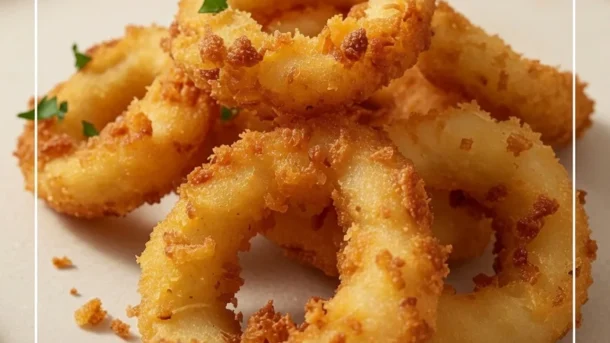
There are snacks you make because something crunchy is needed. And then there are snacks like these Vegan Onion Rings — the kind that come out of the oil shatteringly crisp, deeply golden, with a coating so craggy and satisfying that the sweet, tender onion inside feels like a genuine reward for getting through that incredible crunch first. This is that snack. The one that disappears from the plate the moment it is set down. The one that proves, decisively, that a great onion ring needs absolutely nothing from an egg or a drop of dairy to be extraordinary.
This recipe uses a buttermilk-style plant milk soak to tenderize the onion slightly and help the coating adhere, followed by a seasoned flour and cornstarch dredge that fries up into a thick, crunchy, golden shell. The onion inside stays tender and slightly sweet, contrasting beautifully against the crispy exterior.
What makes these onion rings so outstanding is the double dredge technique — dipping the soaked onion rings into seasoned flour, back into the milk, then into the flour again — which builds a thicker, craggier crust than a single coating ever could, producing a result that rivals any restaurant version.
This recipe is 100% vegan, ready in about 30 minutes, and absolutely wonderful served hot from the fryer with a tangy dipping sauce alongside.
Recipe Information
Prep Time
Cook Time
Total Time
Servings
Calories
15 mins
15 mins
30 mins
4
~310 kcal
Ingredients
For the Onions
2 large yellow onions, cut into 1cm thick rings, separated
For the Buttermilk Soak
1½ cups (360ml) plant milk
1 tbsp apple cider vinegar
For the Coating
1½ cups (180g) all-purpose flour
2 tbsp cornstarch
1 tsp smoked paprika
1 tsp garlic powder
1 tsp onion powder
1 tsp salt
½ tsp black pepper
¼ tsp cayenne pepper (optional)
For Frying
3 cups (720ml) neutral vegetable oil
For the Dipping Sauce
½ cup (120g) vegan mayonnaise
1 tbsp ketchup
1 tsp hot sauce
½ tsp smoked paprika
1 tsp lemon juice
Instructions
Make the buttermilk soak. Combine the plant milk and apple cider vinegar in a bowl and let sit for 5 minutes until slightly thickened. Add the separated onion rings and let soak for 10–15 minutes.
Make the coating. In a wide shallow dish whisk together the flour, cornstarch, smoked paprika, garlic powder, onion powder, salt, pepper, and cayenne if using.
Heat the oil. Pour the oil into a deep, heavy pot to a depth of about 4cm and heat to 350°F (175°C), using a thermometer for accuracy.
Double coat the onion rings. Remove an onion ring from the soak, letting excess drip off, and dredge in the seasoned flour, pressing to coat. Dip briefly back into the milk, then dredge again in the flour, pressing firmly to build a thick, craggy crust. Repeat with all the rings.
Fry in batches. Carefully lower a few coated rings into the hot oil at a time, avoiding overcrowding. Fry for 2–3 minutes per side until deeply golden and crispy. Transfer to a wire rack to drain.
Make the dipping sauce. Whisk together the vegan mayonnaise, ketchup, hot sauce, smoked paprika, and lemon juice until smooth.
Serve immediately. Serve the hot onion rings with the dipping sauce while they are at their crispiest.
Pro Tips
Double coat without exception. The flour-milk-flour sequence is what creates the thick, craggy, restaurant-quality crust on these onion rings.
Maintain oil temperature throughout frying, working in small batches so the oil does not drop too low and produce greasy results.
Drain on a wire rack rather than paper towel, which traps steam and softens the bottom of the coating.
Serve immediately — onion rings lose their crispness relatively quickly once they sit, so timing the frying close to serving makes a real difference.
Why the Double Dredge Matters
A single pass through flour produces a thin, smooth coating that can slide off or crisp unevenly. Dipping back into the liquid and dredging a second time creates small clumps and ridges of flour that expand and crisp dramatically in the hot oil, producing the thick, textured, shatteringly crunchy exterior associated with the best onion rings.
Flavor Variations
Spicy Onion Rings: Increase the cayenne in the coating and add extra hot sauce to the dipping sauce for serious heat.
Beer Battered Style: Replace some of the plant milk in the soak with a vegan beer for a lighter, more aerated crust.
Garlic Parmesan Onion Rings: Toss the freshly fried rings in a mixture of garlic powder and vegan parmesan immediately after frying.
Nutritional Highlights (Per Serving)
Calories
Protein
Carbs
Fiber
Fat
~310 kcal
5g
38g
2g
15g
Storage
Best fresh: Onion rings are at their crispiest within 10 minutes of frying and should be eaten immediately whenever possible.
Refrigerator: Store leftover cooked rings for up to 2 days. Reheat in an air fryer at 375°F (190°C) for 4–5 minutes to restore crispness.
Freezer: Freeze cooked, cooled rings in a single layer for up to 1 month. Reheat from frozen in an air fryer or oven until crispy and heated through.
Frequently Asked Questions
Can I air fry instead of deep frying?
Yes — air fry the double-coated rings at 400°F (200°C) for 10–12 minutes, flipping halfway, for a lighter result with most of the crunch of frying.
Can I make these gluten-free?
Yes — use a gluten-free flour blend with cornstarch in the coating, and check that all other ingredients are certified gluten-free.
Why is my coating falling off in the oil?
This is usually caused by skipping the double dredge or not pressing the flour onto the onion firmly enough. Make sure each coat is pressed on well and consider letting the coated rings rest briefly before frying.
Tried this recipe? Leave a comment below and let us know how it turned out! Tag us on Instagram and Facebook — we love seeing your plant-powered creations. Looking for more crispy, crave-worthy vegan snack recipes? Browse all recipes on Easy Vegan Recipes — new recipes posted every single week!
Homemade vegan peppermint patties coated in rich chocolate. Moreover, they are dairy-free, refreshing, and perfect for holidays or gifts.
📝 Best Meta Description
Homemade vegan peppermint patties coated in rich chocolate. Moreover, they are dairy-free, refreshing, and perfect for holidays or gifts.
🛒 Ingredients You’ll Need (Makes 12–15 patties)
For the Peppermint Filling
2 cups powdered sugar
2 tbsp coconut oil, melted
1½ tbsp plant-based milk
½–¾ tsp peppermint extract
Pinch of salt
For the Chocolate Coating
1 cup dairy-free dark chocolate chips
1 tsp coconut oil
🔪 Preparing the Peppermint Filling
First, add powdered sugar and salt to a mixing bowl. Then, pour in melted coconut oil, plant-based milk, and peppermint extract.
Next, mix until a thick, smooth dough forms. Afterward, chill the dough for 10 minutes to make shaping easier.
🍫 Shaping & Coating the Patties
To begin, roll the dough into small balls and flatten into discs. Then, freeze the patties for 15 minutes until firm.
Meanwhile, melt chocolate and coconut oil together using a double boiler or microwave. Next, dip each patty into the melted chocolate and coat evenly.
Finally, place on parchment paper and refrigerate until set.
⭐ Tips for Perfect Peppermint Patties
Firstly, start with less peppermint extract and adjust to taste.
Additionally, chill the filling well to prevent melting.
Moreover, use dark chocolate for the best contrast.
Finally, store patties in the fridge for a firmer bite.
🔄 Variations to Try
White Chocolate: Use dairy-free white chocolate
Mint-Chocolate Chips: Mix mini chocolate chips into the filling
Holiday Style: Add crushed candy cane on top
Sugar-Reduced: Use powdered erythritol
Extra Creamy: Add a spoon of cashew butter
💚 Health Benefits
These patties are dairy-free and cholesterol-free, making them lighter than traditional versions. Moreover, peppermint may aid digestion and freshness. Because they are homemade, you control the sweetness and ingredients. As a result, they’re a cleaner indulgence.
Crispy garlic soy tofu made with simple ingredients and bold flavor. Moreover, it’s protein-rich, vegan, and perfect for quick meals.
🛒 Ingredients You’ll Need (Serves 3–4)
400 g firm or extra-firm tofu
2 tbsp soy sauce or tamari
1 tbsp cornstarch
1 tbsp vegetable oil
3 cloves garlic, minced
1 tsp maple syrup or sugar
½ tsp black pepper
½ tsp chili flakes (optional)
1 tsp sesame oil (optional)
Spring onions or sesame seeds for garnish
🔪 Preparing the Tofu
First, drain the tofu and press it for 15 minutes to remove excess moisture. Then, cut it into bite-sized cubes. Next, toss the tofu gently with cornstarch until lightly coated.
🍳 How to Make Crispy Garlic Soy Tofu
To begin, heat vegetable oil in a non-stick pan over medium-high heat. Then, add tofu cubes in a single layer and fry until golden and crispy on all sides.
Afterward, reduce heat slightly and add minced garlic. Stir briefly until fragrant. Next, add soy sauce, maple syrup, pepper, chili flakes, and sesame oil.
Finally, toss everything well and cook for 1–2 minutes until the sauce coats the tofu evenly. Garnish and serve hot.
⭐ Tips for Extra Crispiness
Firstly, always use firm or extra-firm tofu.
Additionally, press tofu thoroughly to remove moisture.
Moreover, avoid overcrowding the pan.
Finally, coat lightly with cornstarch for crunch.
🔄 Variations to Try
Spicy Version: Add sriracha or extra chili flakes
Sweet & Savory: Increase maple syrup slightly
Baked Option: Bake at 200°C (400°F) for 25–30 minutes
Gluten-Free: Use tamari instead of soy sauce
Asian-Style: Add ginger and a splash of rice vinegar
💚 Health Benefits
Tofu is rich in plant-based protein, iron, and calcium. Moreover, it supports muscle health and keeps you full longer. Because this dish is vegan and cholesterol-free, it supports heart health. As a result, it’s a nutritious and satisfying meal option.
Hearty vegan lentil soup packed with vegetables and protein. Moreover, it’s healthy, comforting, and perfect for lunch or dinner.
🛒 Ingredients You’ll Need (Serves 4–6)
1 cup dried lentils (red or brown), rinsed
1 tbsp olive oil
1 onion, finely chopped
2 carrots, diced
2 celery stalks, chopped
3 cloves garlic, minced
1 tsp ground cumin
½ tsp paprika
½ tsp turmeric
Salt and black pepper to taste
6 cups vegetable broth
1 cup crushed tomatoes
1 tbsp lemon juice
Fresh parsley for garnish (optional)
🔪 Preparing the Ingredients
First, rinse the lentils thoroughly under cold water. Then, chop all vegetables evenly so they cook at the same time. Next, keep spices measured and ready for smooth cooking.
🍳 How to Make Vegan Lentil Soup
To begin, heat olive oil in a large pot over medium heat. Then, sauté onion, carrots, and celery for 5–6 minutes until softened.
Afterward, add garlic, cumin, paprika, and turmeric. Stir for 30 seconds until fragrant. Next, add lentils, vegetable broth, and crushed tomatoes.
Then, bring to a boil, reduce heat, and simmer for 25–30 minutes until lentils are tender. Finally, season with salt, pepper, and lemon juice. Garnish and serve warm.
⭐ Tips for the Best Lentil Soup
Firstly, use red lentils for a creamier texture.
Additionally, simmer gently to avoid mushy lentils.
Moreover, blend half the soup for extra thickness.
Finally, add lemon juice at the end for brightness.
🔄 Variations to Try
Creamy Version: Stir in coconut milk
Spicy Soup: Add chili flakes or cayenne
Mediterranean Style: Add spinach and oregano
Protein Boost: Add chickpeas or white beans
Low-Sodium: Use homemade or low-salt broth
💚 Health Benefits
Lentils are rich in plant-based protein, fiber, and iron, therefore supporting energy and digestion. Moreover, vegetables add antioxidants and vitamins. Because this soup is vegan and low in fat, it supports heart health. As a result, it’s both comforting and nourishing.
Soft vegan semolina pancakes made without eggs or dairy. Moreover, they are easy to prepare and perfect for breakfast, snacks, or kids.
🛒 Ingredients You’ll Need (Serves 4)
1 cup fine semolina (sooji)
½ cup all-purpose flour or whole wheat flour
1 tbsp sugar (optional)
1 tsp baking powder
¼ tsp baking soda
¼ tsp salt
1 cup unsweetened plant-based milk
2 tbsp vegetable oil
1 tsp vanilla extract (optional)
Oil for cooking
🔪 Preparing the Batter
First, add semolina, flour, sugar, baking powder, baking soda, and salt to a mixing bowl. Then, whisk well to combine the dry ingredients evenly.
Next, pour in plant-based milk, oil, and vanilla extract. Afterward, mix gently until a smooth, pourable batter forms. Finally, let the batter rest for 10–15 minutes, allowing the semolina to soften.
🍳 Cooking the Pancakes
Once rested, heat a non-stick pan over medium heat and lightly grease it. Then, pour a ladle of batter onto the pan and spread gently.
After that, cook until bubbles appear on the surface. Next, flip and cook the other side until golden brown. Repeat until all batter is used.
⭐ Tips for Perfect Semolina Pancakes
Firstly, allow the batter to rest for soft pancakes.
Additionally, adjust batter thickness with milk if needed.
Moreover, cook on medium heat to avoid burning.
Finally, use a non-stick pan for easy flipping.
🔄 Variations to Try
Savory Version: Skip sugar and add salt, pepper, and chopped veggies
Fruit Pancakes: Fold in mashed banana or grated apple
Spiced Pancakes: Add cinnamon or cardamom
Protein Boost: Add a spoon of chickpea flour
Gluten-Free: Use rice flour instead of wheat flour
💚 Health Benefits
Semolina provides energy-boosting carbohydrates and small amounts of protein. Moreover, it supports digestion due to its moderate fiber content. Because this recipe is vegan and egg-free, it is lighter on the stomach. As a result, it’s a balanced option for daily meals.
We use cookies on our website to give you the most relevant experience by remembering your preferences and repeat visits. By clicking “Accept”, you consent to the use of ALL the cookies.
This website uses cookies to improve your experience while you navigate through the website. Out of these, the cookies that are categorized as necessary are stored on your browser as they are essential for the working of basic functionalities of the website. We also use third-party cookies that help us analyze and understand how you use this website. These cookies will be stored in your browser only with your consent. You also have the option to opt-out of these cookies. But opting out of some of these cookies may affect your browsing experience.
Necessary cookies are absolutely essential for the website to function properly. These cookies ensure basic functionalities and security features of the website, anonymously.
Cookie
Duration
Description
cookielawinfo-checkbox-analytics
11 months
This cookie is set by GDPR Cookie Consent plugin. The cookie is used to store the user consent for the cookies in the category "Analytics".
cookielawinfo-checkbox-functional
11 months
The cookie is set by GDPR cookie consent to record the user consent for the cookies in the category "Functional".
cookielawinfo-checkbox-necessary
11 months
This cookie is set by GDPR Cookie Consent plugin. The cookies is used to store the user consent for the cookies in the category "Necessary".
cookielawinfo-checkbox-others
11 months
This cookie is set by GDPR Cookie Consent plugin. The cookie is used to store the user consent for the cookies in the category "Other.
cookielawinfo-checkbox-performance
11 months
This cookie is set by GDPR Cookie Consent plugin. The cookie is used to store the user consent for the cookies in the category "Performance".
viewed_cookie_policy
11 months
The cookie is set by the GDPR Cookie Consent plugin and is used to store whether or not user has consented to the use of cookies. It does not store any personal data.
Functional cookies help to perform certain functionalities like sharing the content of the website on social media platforms, collect feedbacks, and other third-party features.
Performance cookies are used to understand and analyze the key performance indexes of the website which helps in delivering a better user experience for the visitors.
Analytical cookies are used to understand how visitors interact with the website. These cookies help provide information on metrics the number of visitors, bounce rate, traffic source, etc.
Advertisement cookies are used to provide visitors with relevant ads and marketing campaigns. These cookies track visitors across websites and collect information to provide customized ads.